How USCIS Revokes Citizenship from Criminals in 2026?
USCIS revokes citizenship from 10 naturalized criminals in July 2026, including child molesters and fraudsters. This article explains the cases, who is affected, the law behind denaturalization, and what residents of Raleigh, NC should do if concerned about citizenship status.
Published on July 23, 2026
Talk to an immigration attorney
Free call. A clear plan for your case.
Free & confidential · Se habla espanol · 24/7
Have questions? Talk to an attorney - free evaluation.
Call 1-844-967-3536Free Tool
Check Your USCIS Case Status Now
Enter your receipt number - get the official USCIS status in English or Spanish. No registration.
This article provides general legal information, not individualized legal advice. Reading does not create an attorney-client relationship. For advice specific to your situation, contact Vasquez Law Firm.
What recent changes did USCIS announce about revoking citizenship in 2026?
Worried your citizenship will be questioned?
Recent enforcement makes documentation more important than ever. 15-min call to see what proof you need.
In July 2026, the U.S. Citizenship and Immigration Services (USCIS) and the Department of Justice (DOJ) announced denaturalization actions against 10 naturalized U.S. citizens accused of serious crimes. These individuals include child molesters, drug dealers, and fraudsters who allegedly lied or hid criminal conduct during their naturalization process. The government filed complaints to revoke their citizenship and cancel their certificates of naturalization.
This announcement marks a significant enforcement effort to remove individuals who obtained citizenship illegally or by fraud. The complaints were filed in various U.S. district courts nationwide within the last 30 days, highlighting a coordinated federal crackdown.
According to the official release, these denaturalization actions target individuals who "committed fraud during the naturalization process," thereby forfeiting their citizenship rights. DHS Secretary Markwayne Mullin emphasized the government's commitment to using "every tool at our disposal" to denaturalize and remove such criminal aliens.
The cases involve a range of offenses including child sexual abuse, healthcare fraud, immigration fraud, and drug trafficking. This enforcement wave underscores the importance of honesty and good moral character during naturalization.
For more details, see the official USCIS announcement at USCIS News Release, July 22, 2026.
Who is affected by USCIS’s denaturalization actions in 2026?
The denaturalization actions affect 10 individuals naturalized as U.S. citizens who allegedly committed serious crimes and concealed them during their naturalization applications. These include persons from Cuba, Mexico, Pakistan, Peru, and Poland, among others. The accused range in age from 44 to 65 years old.
These cases involve crimes such as child sexual abuse, healthcare fraud, wire fraud, immigration fraud, and drug trafficking. For example, one individual from Mexico was convicted of conspiracy to distribute cocaine, while another from Peru was convicted of repeated sexual abuse of a minor.
Although the complaints were filed in districts including Southern District of Florida, Northern District of Georgia, and Northern District of Texas, the impact of these actions extends to residents of Raleigh, NC and Orlando, FL, where our offices are located. North Carolina has a sizable immigrant population, and these enforcement efforts signal increased scrutiny on naturalization applicants.
In Raleigh, NC, individuals who have obtained citizenship through naturalization should be aware that USCIS and DOJ may review past applications for fraud or concealment of criminal activity. The government alleges these individuals lacked the good moral character required by law at the time of naturalization.
These actions serve as a warning that citizenship obtained through deception or criminal concealment is not secure. The government’s pursuit of denaturalization aims to protect the integrity of U.S. citizenship and public safety.
What does the law say about revoking U.S. citizenship after naturalization?
U.S. citizenship obtained through naturalization can be revoked if it was illegally procured or obtained by concealment of material facts or willful misrepresentation. Under the Immigration and Nationality Act (INA), the government may file denaturalization complaints to cancel certificates of naturalization.
The key legal provision is found in 8 U.S.C. § 1227, which governs deportable aliens and grounds for removal, including denaturalization for fraud. Additionally, the adjustment of status statute, 8 U.S.C. § 1255, sets eligibility criteria including good moral character, which must be maintained during naturalization.
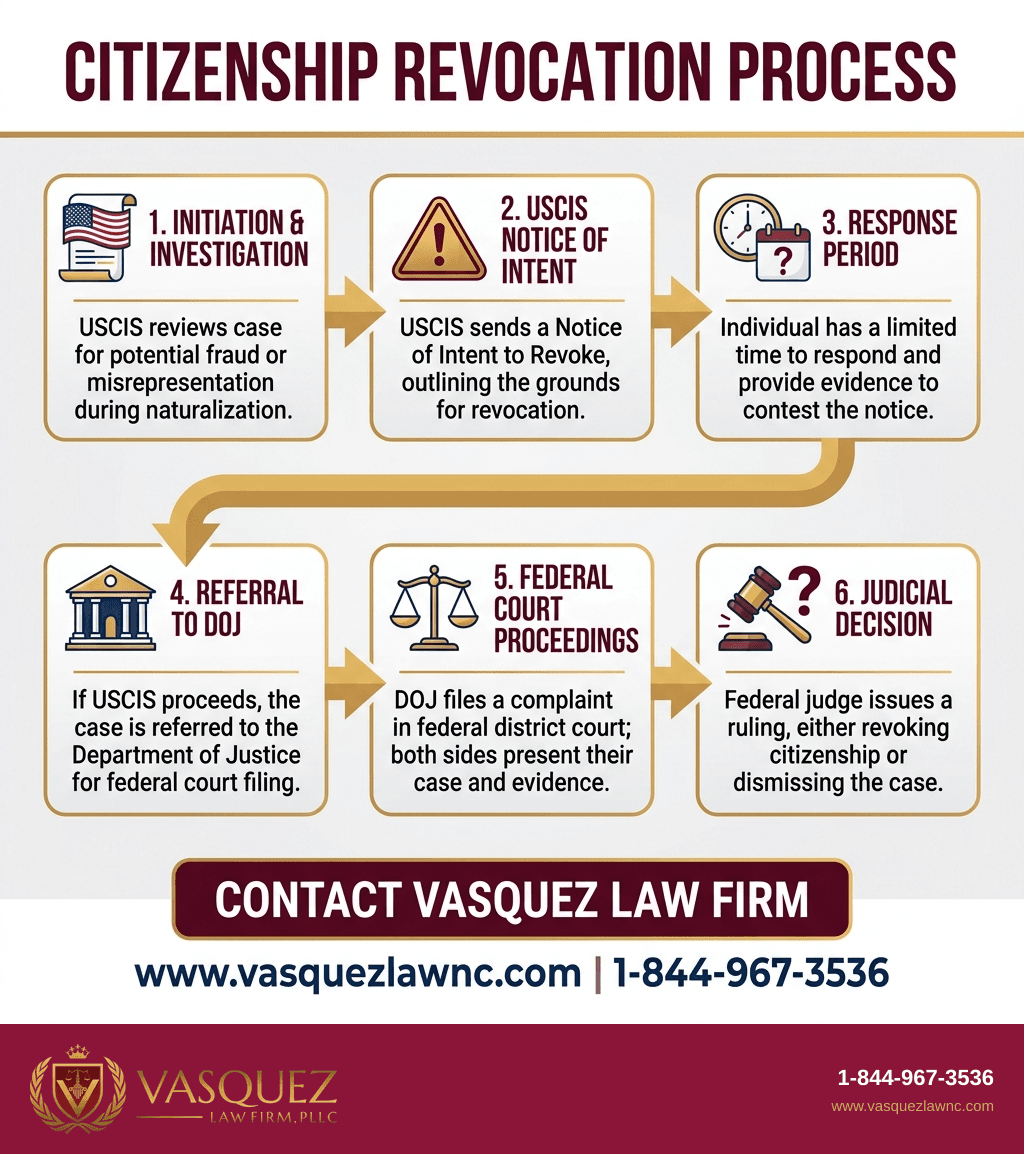
According to the USCIS and DOJ announcement, the government alleges these 10 individuals violated the good moral character requirement and lied under oath during their naturalization interviews. The official release states:
"Under the Immigration and Nationality Act, a naturalized U.S. citizen’s citizenship may be revoked, and certificate of naturalization canceled, if the naturalization was illegally obtained or obtained by hiding important facts or by lying." (Source: USCIS, https://www.uscis.gov/newsroom/news-releases/dhs-and-department-of-justice-announce-move-to-revoke-us-citizenship-from-10-naturalized-criminals)
This legal framework allows the government to challenge citizenship even years after naturalization if fraud or criminal concealment is discovered. The burden is on the government to prove the allegations in federal court.
Denaturalization is a civil proceeding, but it carries serious consequences including loss of citizenship and potential removal from the U.S. It is distinct from criminal prosecution but may follow criminal convictions, as in several of the announced cases.
What should I do if I am concerned about my citizenship status after these denaturalization actions?
If you are a naturalized U.S. citizen concerned about your citizenship status, it is important to act promptly and seek legal advice. At our Raleigh, NC and Orlando, FL offices, we typically see applicants who mistakenly underestimate the importance of full disclosure during naturalization. The most common mistake is failing to report prior arrests or criminal conduct, which can lead to denaturalization years later.
Here are key steps to consider:
- Review your naturalization application: Check whether you disclosed all required information, including any arrests, convictions, or other legal issues.
- Gather documentation: Collect court records, police reports, and any evidence related to your immigration and criminal history.
- Consult an immigration attorney: A qualified lawyer can evaluate your case, advise on risks, and represent you if USCIS or DOJ initiates denaturalization proceedings.
- Respond to government notices: If you receive any communication from USCIS or DOJ about your citizenship, do not ignore it. Timely legal response is critical.
- Maintain good moral character: Avoid any criminal conduct and comply with all immigration laws to protect your status.
Below is a table summarizing the typical grounds for denaturalization and recommended actions:
| Ground for Denaturalization | Example | Recommended Action |
|---|---|---|
| Fraud or misrepresentation | Hiding prior arrests or convictions | Disclose fully, consult attorney |
| Concealment of criminal conduct | Failure to report child abuse or drug offenses | Gather evidence, seek counsel |
| False statements under oath | False testimony during naturalization interview | Prepare defense with lawyer |
| Use of false identity | Using multiple aliases or fake documents | Legal representation essential |
At our Raleigh, NC and Orlando, FL offices, we have helped many clients navigate complex citizenship issues. Early legal intervention can prevent denaturalization or mitigate its consequences. Contact us promptly if you have concerns.
What happens next after USCIS files denaturalization complaints?
Once USCIS and DOJ file a denaturalization complaint in federal court, the case proceeds as a civil trial. The government must prove by clear and convincing evidence that citizenship was illegally obtained or procured by fraud.
The accused individual has the right to defend against the allegations, present evidence, and challenge the government’s case. If the court rules in favor of the government, the individual’s citizenship is revoked, and the certificate of naturalization is canceled.
Following denaturalization, the individual may be subject to removal (deportation) proceedings under immigration law. The government’s goal is to remove those who obtained citizenship through fraud or who pose a threat to public safety.
The USCIS announcement states:
"DHS is committed to ensuring we denaturalize and remove these fraudsters with every tool at our disposal." (Source: USCIS, https://www.uscis.gov/newsroom/news-releases/dhs-and-department-of-justice-announce-move-to-revoke-us-citizenship-from-10-naturalized-criminals)
What's Your Immigration Situation?
Answer 3 questions - we'll tell you your options
Question 1 / 3
What best describes your situation?
Keep Reading
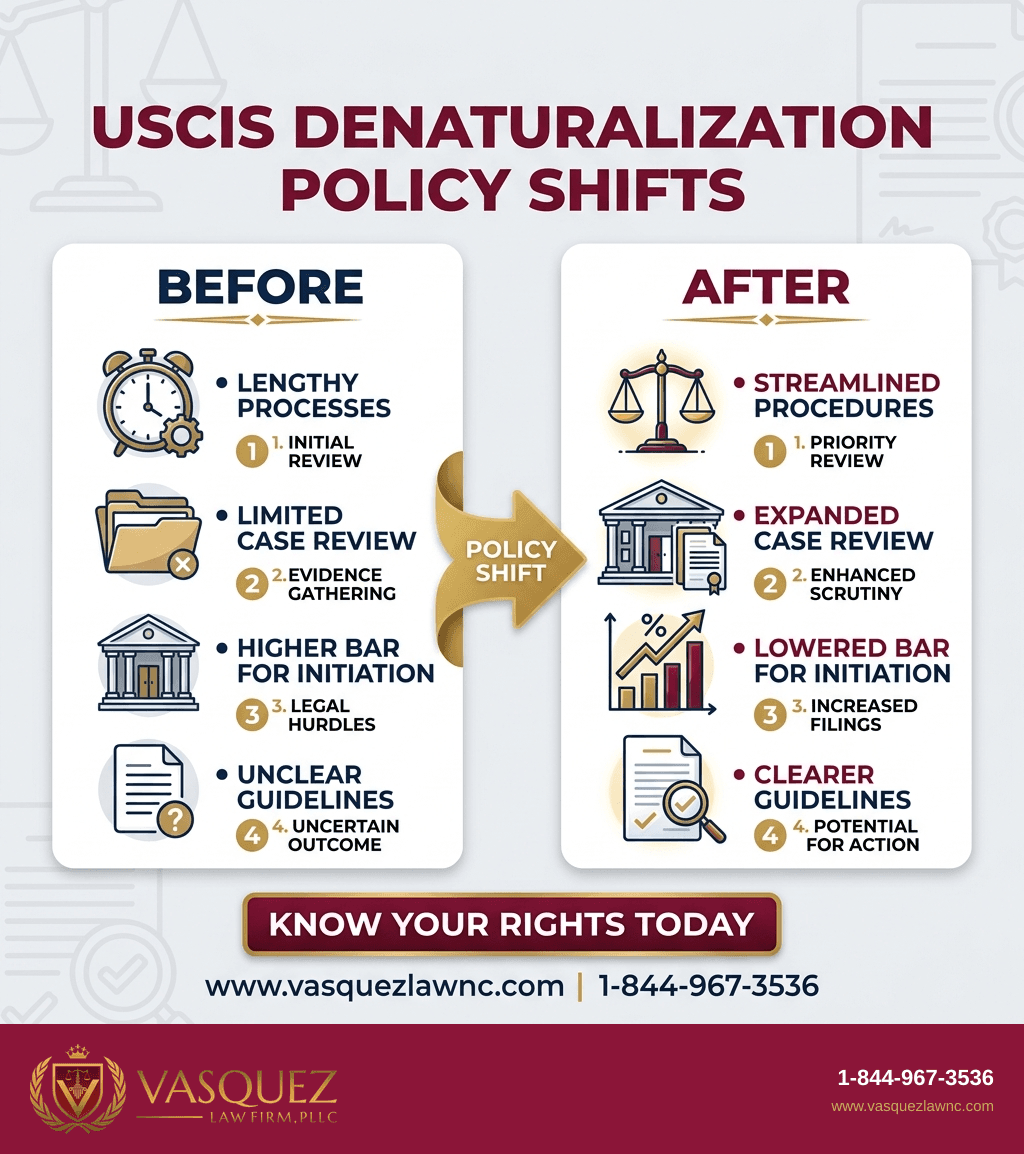
For residents of Raleigh, NC and Orlando, FL, these developments mean increased enforcement and scrutiny of naturalization applications. It is important to stay informed and consult legal counsel if you face any government inquiry.
Frequently Asked Questions about USCIS Denaturalization Actions
What is denaturalization and how does it differ from deportation?
Denaturalization is the legal process of revoking U.S. citizenship obtained through naturalization due to fraud or concealment. Deportation is the removal of a non-citizen from the U.S. Denaturalization often precedes deportation if citizenship was obtained illegally.
Can USCIS revoke citizenship years after naturalization?
Yes. USCIS and DOJ can file denaturalization actions years later if they discover fraud or criminal concealment during the naturalization process. There is no strict time limit for such actions.
What crimes can lead to citizenship revocation?
Crimes involving fraud, child sexual abuse, drug trafficking, and other serious offenses can lead to revocation if concealed during naturalization. Good moral character is a key requirement.
How can I protect my citizenship status?
Be honest and fully disclose all relevant information during naturalization. Consult an immigration attorney if you have a criminal history or concerns about your application.
Where can I report suspected immigration fraud?
You can report suspected immigration benefit fraud to USCIS using the USCIS Tip Form available on their official website.
This article provides general legal information, not individualized legal advice. Reading does not create an attorney-client relationship. For advice specific to your situation, contact Vasquez Law Firm.
Reviewed by William Vasquez, Founder & CEO, Vasquez Law Firm, PLLC.
If you need legal assistance, learn more about speak with an immigration lawyer, or call us at 1-844-967-3536 for a free evaluation.
Related Topics
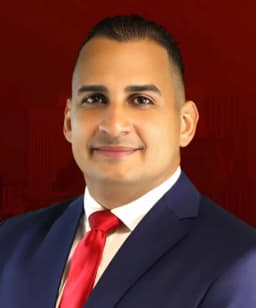
William Vasquez
Founder & CEO, Vasquez Law Firm, PLLC
William Vasquez is the founder and CEO of Vasquez Law Firm, PLLC, a results-driven firm specializing in immigration, criminal defense, personal injury, and workers' compensation. A U.S. Air Force veteran and recipient of the Joint Service Achievement Medal, William is dedicated to fiercely fighting for his clients' rights.
Related Legal Services
Need legal help? Learn more about speak with an immigration lawyer, or contact us for a free evaluation.
You can also visit our North Carolina immigration practice for more information.