Green Card Denials in 2026: How to Protect Your Application
Green Card denials affect many applicants in 2026. Learn why denials happen, how to appeal, and when to contact Vasquez Law for a free evaluation.
Published on July 22, 2026
Talk to an immigration attorney
Free call. A clear plan for your case.
Free & confidential · Se habla espanol · 24/7

Have questions? Talk to an attorney - free evaluation.
Call 1-844-967-3536Free Tool
Check Your USCIS Case Status Now
Enter your receipt number - get the official USCIS status in English or Spanish. No registration.
Green Card Denials in 2026: How to Protect Your Application
Many people applying for green cards across the country, including in Raleigh, NC and Orlando, FL, face denials in 2026. Knowing the common reasons for denial can help you prepare a stronger application or appeal. At Vasquez Law Firm, we help clients with appeals, motions to reopen (requests to review a case again), and new applications after denial. This guide explains the main reasons for denial, timelines, costs, common mistakes, and when to get legal help quickly.
Need help with your case? Our experienced attorneys are ready to fight for you. Se Habla Español.
Or call us now: 1-844-967-3536
Quick Answer
If USCIS denies your green card application, first understand why. Your options may include an appeal (asking for a review), a motion to reopen (asking to look at new evidence), or applying again. Timing and proof are very important.
- Denials often happen because of eligibility or missing documents
- You can appeal or file motions within 30 days after denial
- You can apply again but must fix the reasons for denial
- Getting legal help can increase your chances of approval
- Processes differ between Raleigh, NC and Orlando, FL offices
Understanding Green Card Denials
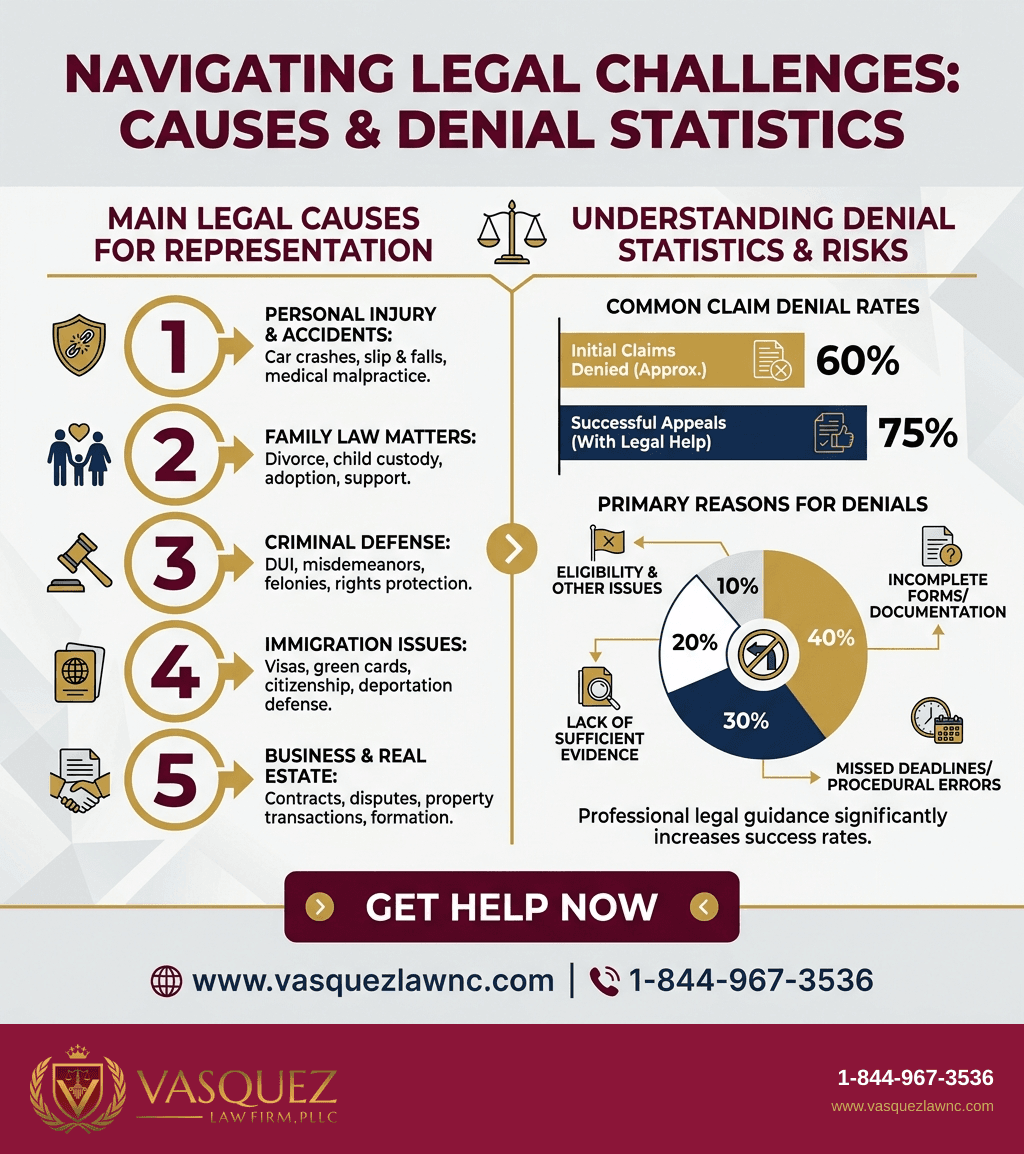
Every year, USCIS denies thousands of green card applications across the U.S., including in North Carolina and Florida. In 2026, denials remain high because of stricter reviews and new policies affecting Dreamers and family-based applicants. People applying in Raleigh and Orlando should know the main reasons their green card might be denied.
Top Reasons for Denial
- Inadmissibility due to Criminal or Security Grounds: If you have certain criminal convictions or charges, USCIS can deny your application under INA § 212(a)(2). Background checks find these issues.
- Lack of Sufficient Evidence: If you do not provide enough proof of a real marriage or eligibility, USCIS may deny your application.
- Application Errors or Misrepresentations: Giving inconsistent or false information on Form I-485 or other papers leads to denial.
- Failure to Attend Required Interviews or Biometrics: Missing appointments causes automatic denial unless you reschedule properly.
- Overstay or Unauthorized Employment History: Staying longer than allowed or working without permission can cause denial under 8 U.S.C. § 1182(a)(9).
For example, an applicant who overstayed their visa by several months and also worked without authorization may face denial unless they qualify for a waiver. Similarly, a marriage-based applicant who fails to submit joint financial records or affidavits proving the legitimacy of their relationship risks denial under insufficient evidence. Applicants with minor criminal offenses, such as DUI, might be deemed inadmissible if they do not properly disclose or seek waivers.
In Raleigh, NC, where many applicants come from diverse communities, USCIS officers often scrutinize marriage-based petitions closely to guard against fraud, leading to denials when documentation is incomplete or inconsistent. In Orlando, FL, with a large population of Dreamers and family-based applicants, denials may rise due to increased enforcement of eligibility rules and background checks.
It is important to remember that USCIS officers have discretion but rely heavily on documentation and background data. Even minor errors or missing documents can trigger denial, so meticulous preparation is essential.
Impact of Trump-Era Policies
Recent policy changes have made USCIS check paperwork and criminal histories more carefully. This affects approval chances. Clinics in Raleigh have helped many adjust to these new rules, but denials still happen often. At Vasquez Law Firm, we watch these changes closely to update our approach.
For instance, policies introduced during the Trump administration increased scrutiny of applicants with any prior immigration violations or criminal records, even minor or old offenses. This means a person who previously might have been approved could now face denial unless they obtain a waiver or provide compelling evidence of rehabilitation.
Additionally, changes to public charge rules and heightened interviews for family-based applicants have led to more requests for evidence and higher denial rates. Applicants who previously qualified under more lenient criteria must now prepare for deeper scrutiny.
It is also worth noting that these policies sometimes vary by field office, with some USCIS locations, including those in Florida and North Carolina, implementing them more rigorously. Applicants should be aware that what might be accepted in one office could be questioned in another, making legal advice and case-specific strategies crucial.
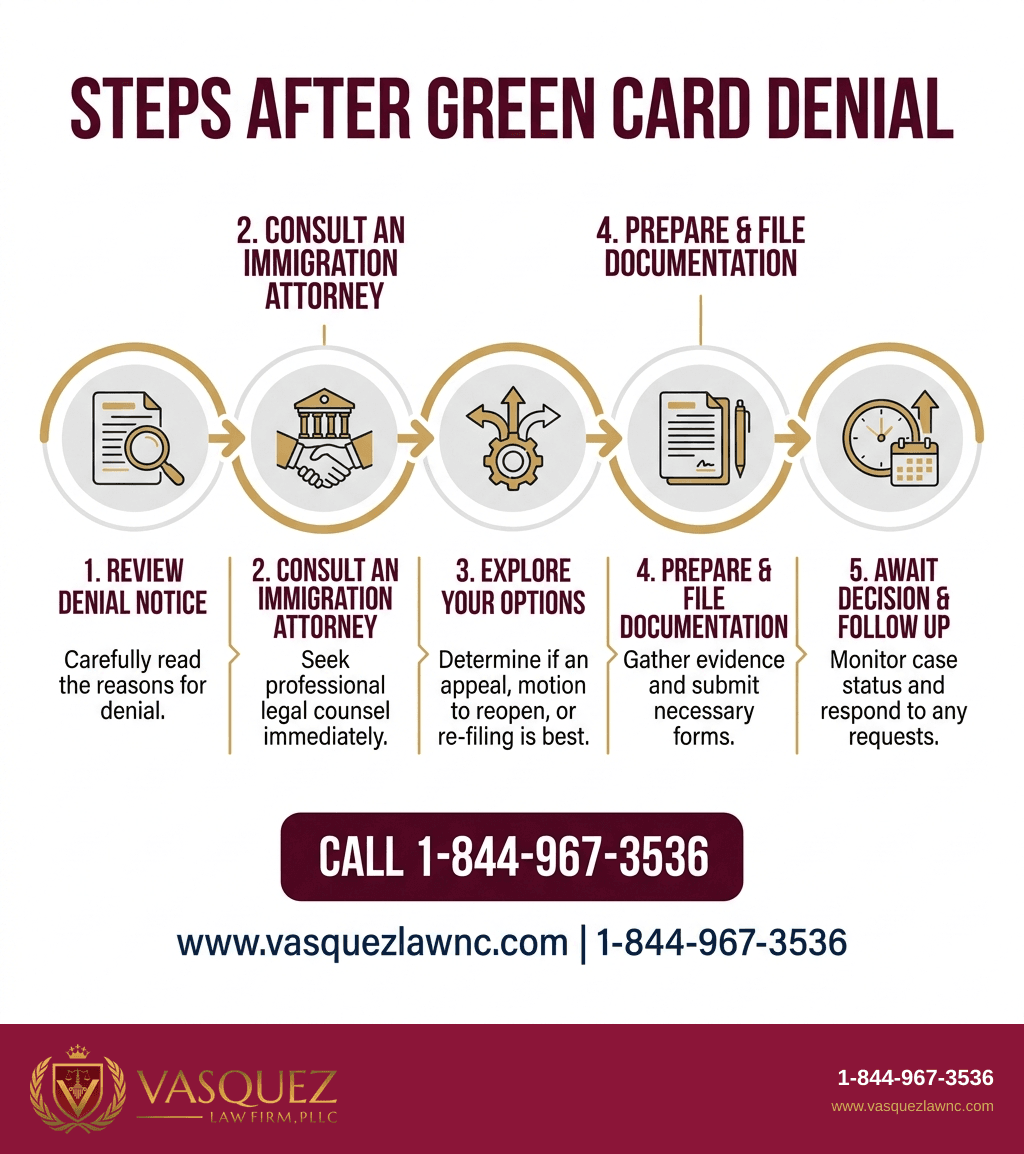
Step-by-step: What to Do After a Denial
When you get a Notice of Intent to Deny (NOID) or a formal denial, act quickly to keep your options open.
1. Review the Denial Notice Thoroughly
The USCIS form will clearly say why your green card was denied. This is important to plan your next steps.
Carefully reading the denial notice helps you understand the exact grounds for denial, whether it relates to missing documents, inadmissibility, or procedural errors. For example, if the denial is due to insufficient evidence of a bona fide marriage, you will know to gather more robust joint financial records or affidavits for your appeal or reapplication.
Sometimes, denial notices include instructions on how to respond or appeal, along with deadlines. Missing these deadlines can forfeit your rights, so mark your calendar and prepare immediately. In cases of complex or multiple reasons for denial, consulting an attorney to interpret the notice can prevent costly mistakes.
2. Consider Filing an Appeal or Motion to Reopen
You usually must file an appeal (Form I-290B) within 30 days of the decision. A motion to reopen lets you show new evidence that was not considered before.
An appeal challenges the decision based on legal or factual errors made by USCIS, while a motion to reopen generally introduces new facts or evidence that could change the outcome. For example, if you were denied because of missing documents but now have affidavits and joint bank statements, a motion to reopen might be the best route.
In some scenarios, applicants may file both an appeal and a motion to reconsider or reopen to cover all bases. However, timing is critical; filing late can mean losing your chance to challenge the denial entirely. Also, note that not all denials are appealable—some require a new application instead.
3. Gather Additional Supporting Evidence
Get documents like sworn statements (affidavits), proof of your relationship, or corrected forms. These can make your new application or appeal stronger.
Examples include joint leases, shared utility bills, photographs together, affidavits from friends and family, and financial records. For criminal inadmissibility, evidence of rehabilitation, court records, or waivers may help. If your denial involved paperwork errors, ensure all forms are complete and truthful.
It is also beneficial to organize your evidence clearly and provide explanations where necessary. For instance, if a document was missing from your original application, explain why and submit the missing item promptly. This thoroughness can persuade USCIS or an immigration judge to reconsider your case.
4. Consult an Immigration Attorney
Lawyers can explain why you were denied and advise the best action, whether appeal, motion, or new application.
An experienced immigration attorney can provide personalized advice based on the facts of your case and the current legal landscape. They can review your denial notice, assess your eligibility for waivers, and prepare strong appeals or new applications. Attorneys also help avoid common pitfalls that lead to further denials or delays.
For example, a lawyer can help navigate complex inadmissibility grounds, prepare for interviews, and communicate effectively with USCIS. They also ensure deadlines are met and that your case is presented in the best possible light.
5. Prepare to Reapply if Necessary
If the denial is final, you can apply again with a well-prepared application. Some denials require waiting before you can reapply.
Reapplication is common, especially after fixing previous deficiencies. For instance, if you were denied for missing evidence, you can submit a new application with all required documentation. However, some grounds of denial trigger bars or waiting periods, such as unlawful presence, which may require waivers or legal strategies before reapplying.
In some cases, reapplying too soon without addressing the denial reasons can result in repeated denials. An attorney can help determine when and how to reapply to maximize your chances of success.
Common Mistakes to Avoid
- Missing the deadline to appeal or file motions
- Not addressing the specific reasons USCIS gave for denial
- Sending incomplete or conflicting evidence
- Missing biometric or interview appointments without rescheduling
- Applying without help from a knowledgeable immigration lawyer
- Failing to tell the truth, which can lead to fraud accusations
- Waiting too long before acting after denial
If you remember only one thing: Always act before deadlines and never apply again without fixing the reasons for denial.
For example, some applicants miss the 30-day appeal deadline and lose their chance to challenge a denial, forcing them to start over. Others submit evidence that contradicts earlier statements, causing USCIS to doubt their credibility. Missing biometrics appointments without proper notice automatically leads to denial with little chance for reconsideration.
Applicants sometimes try to handle complex denials without legal guidance, leading to misunderstandings of eligibility rules or improper filings. Additionally, dishonesty on applications, such as hiding prior arrests or overstays, can result in permanent bars or removal proceedings.
Prompt action, full transparency, and legal assistance are the best ways to avoid these costly mistakes.
Timeline: What to Expect after Denial
- Day 0: USCIS sends denial decision or NOID by mail
- Within 30 days: File Form I-290B appeal or motion to reopen
- 0-60 days after appeal: USCIS receives and reviews your appeal
- 90-180 days after appeal: USCIS makes a final decision or sends case to immigration court
- If sent to court: Hearings are scheduled with the Executive Office for Immigration Review
Processing times vary. Check USCIS processing times for Form I-485 and Form I-290B often.
In some cases, appeals or motions can take longer than six months due to backlogs or complexity. If your case is referred to immigration court, the timeline can extend significantly, depending on court availability and case specifics.
During this period, maintaining lawful status is critical to avoid additional complications. If you are out of status, consult with your attorney about possible options to stay legally in the U.S. while your appeal or motion is pending.
Delays might also occur if USCIS requests additional evidence (RFE) during the appeal process. Responding promptly to RFEs can prevent further delays or denials.
How Vasquez Law Firm Can Help
At Vasquez Law Firm, we combine care with strong representation. Our motto "Yo Peleo – I Fight" shows our promise to protect your rights. Our offices in Raleigh, NC and Orlando, FL offer bilingual help and personal legal plans for green card denial cases.
- Bilingual Support: Se Habla Español – Spanish-speaking lawyers and staff are ready to help
- Service Areas: North Carolina, Florida, and nationwide immigration cases
- Experience: Over 30 years helping clients with complex immigration issues
- Results: Thousands of successful appeals and motions
Attorney Trust and Experience
William J. Vásquez joined the North Carolina State Bar in 2011. He is also admitted to the U.S. Courts of Appeals for the 4th, 5th, and 11th Circuits. The firm has offered dedicated legal help since 2011, giving personal attention to each client.
Our team understands the nuances of immigration law and the emotional toll of denials. We provide tailored strategies to address each client’s unique circumstances, whether it involves criminal inadmissibility waivers, family-based petitions, or complex motions. Our bilingual services ensure clear communication, especially for Spanish-speaking clients.
Past clients have successfully appealed denials based on insufficient evidence or procedural errors, demonstrating our commitment to thorough case preparation and vigorous advocacy. If you face a green card denial, our firm can guide you through every step with experience and compassion.
Don't wait to get the help you need. Call us now for fast support.
Se Habla Español
Frequently Asked Questions
What happens if your green card application is denied?
If your green card application is denied, you will receive a written notice explaining the reasons for the denial. You may have options such as filing an appeal, submitting a motion to reopen or reconsider, or reapplying with additional evidence. It is crucial to consult an immigration attorney promptly to understand deadlines, evaluate your case, and decide the best course of action to protect your immigration status.
How often do green cards get denied in 2026?
While exact statistics fluctuate, green card denials remain relatively common in 2026 due to stricter USCIS reviews and updated policies. Many denials arise from missing documentation, questions about eligibility, or inadmissibility issues. Being aware of typical causes and preparing a thorough application can help reduce the risk of denial significantly.
Why are green card holders being denied entry?
Green card holders can be denied entry to the U.S. if they fail to meet certain requirements at the border, such as having a recent criminal conviction, being subject to removal orders, or having abandoned residency by staying outside the U.S. for extended periods. Customs and Border Protection officers enforce these rules under immigration law, and travelers should carry proper documentation and be prepared to explain any extended absences.
Can you apply again if your green card is denied?
Yes, in most cases, you can apply again after a green card denial, but it is essential to address the reasons for the initial denial in your new application. Some denials may impose waiting periods or bars that require legal waivers or other remedies before reapplying. Consulting with an immigration lawyer ensures you understand eligibility and improve your chances of approval.
What is the most common reason for green card denial?
The most frequent reasons for green card denial include insufficient proof of eligibility (such as failing to prove a bona fide marriage), missing biometrics or interview appointments, providing inconsistent or false information, and inadmissibility due to criminal history or immigration violations. Providing complete, truthful, and well-documented applications reduces the risk of denial.
How do I check visa rejection reasons?
Visa or green card rejection notices from USCIS will state the reasons for denial clearly. Additionally, you might receive a Request for Evidence (RFE) if USCIS needs more documentation. Carefully reviewing these notices and consulting an attorney can help you understand what is lacking and how to address it in an appeal or new application.
What should I do if my marriage green card is denied?
If your marriage-based green card is denied, often because USCIS questions the authenticity of your marriage, you should gather additional evidence such as joint financial records, affidavits from friends and family, photographs, and correspondence. Filing an appeal or motion with this new evidence can improve your chances. Legal assistance is highly recommended to navigate complex requirements and present a convincing case.
Are there deadlines to appeal a green card denial?
Yes, there are strict deadlines to appeal a green card denial. Typically, you have 30 days from the date on the denial notice to file Form I-290B (Notice of Appeal or Motion). Missing this deadline usually forfeits your right to appeal or challenge the decision, making timely action and legal guidance essential.
Sources and References
- U.S. Citizenship and Immigration Services
- Executive Office for Immigration Review
- Legal Information Institute
Take the first step toward justice today. Our team is ready to help.
Start Your Free Evaluation Now
Call us: 1-844-967-3536
Se Habla Español - We are here to help you.
If you need legal assistance, learn more about immigration lawyers in North Carolina, or call us at 1-844-967-3536 for a free evaluation.

William Vasquez
Founder & CEO, Vasquez Law Firm, PLLC
William Vasquez is the founder and CEO of Vasquez Law Firm, PLLC, a results-driven firm specializing in immigration, criminal defense, personal injury, and workers' compensation. A U.S. Air Force veteran and recipient of the Joint Service Achievement Medal, William is dedicated to fiercely fighting for his clients' rights.
Related Legal Services
Need legal help? Learn more about immigration lawyers in North Carolina, or contact us for a free evaluation.
You can also visit immigration legal services throughout NC for more information.