How Denaturalization Works for False Identity Cases in 2026
Denaturalization false identity cases are on the rise, highlighted by a 2026 USCIS case against a man who procured U.S. citizenship under a false name. This article explains the legal grounds, affected individuals, and practical steps for residents of Raleigh, NC and Orlando, FL facing similar issues.
Published on August 12, 2026· Updated September 9, 2026
Talk to an immigration attorney
Free call. A clear plan for your case.
Free & confidential · Se habla espanol · 24/7
Have questions? Talk to an attorney - free evaluation.
Call 1-844-967-3536Free Tool
Check Your USCIS Case Status Now
Enter your receipt number - get the official USCIS status in English or Spanish. No registration.
This article gives general legal information. It is not personal legal advice. Reading it does not create a lawyer-client relationship. For advice about your own case, contact Vasquez Law Firm.
What happened in the latest denaturalization case filed by USCIS in 2026?
Worried your citizenship will be questioned?
Recent enforcement makes documentation more important than ever. 15-min call to see what proof you need.
In 2026, U.S. Citizenship and Immigration Services (USCIS) helped the U.S. Attorney’s Office file a denaturalization case. Denaturalization is the legal process of taking away citizenship. The case was against a man who got U.S. citizenship using a false identity. The man is Harinder Singh, also called Rushpal Singh. He used many names and false information to get immigration benefits and citizenship. The government says he got citizenship illegally by hiding important facts and lying on purpose.
The case was announced on August 12, 2026, by the U.S. Attorney’s Office for the District of Kansas. It shows USCIS’s ongoing work to find and cancel citizenship gained by fraud. The man’s naturalization certificate, which proves citizenship, can be canceled as part of this process.
Harinder Singh first appeared in U.S. immigration records in 1991 under the name Rushpal Singh. He was ordered to leave the country in 1995 but did not leave. Later, he applied for immigration benefits using the name Harinder Singh. He also changed his birth date, entry date, and other details. USCIS approved these applications. This led to lawful permanent resident status and later citizenship under the false identity.
This case shows how USCIS and the Department of Justice work together to find and punish immigration fraud. This fraud harms the trust in U.S. citizenship. It also warns people who try to use false identities to get immigration benefits.
For more details, see the official USCIS announcement: USCIS News Release, August 12, 2026.
Who is affected by denaturalization for false identity in North Carolina?
Denaturalization for false identity mainly affects naturalized U.S. citizens. Naturalized citizens are people who became U.S. citizens after birth. They got citizenship by fraudulent means. In North Carolina, many immigrants try to become citizens. People who hid important facts or used false documents risk losing citizenship. This includes people living in Raleigh, NC and nearby areas.
USCIS data shows North Carolina has more immigrants every year. Thousands apply for citizenship annually. Denaturalization cases are rare compared to all naturalizations. But they have a big effect on those involved. The government focuses on cases with identity fraud. This is because such fraud threatens national security and public trust.
People at risk include those who entered the U.S. under one name but later applied for benefits under another. Also, those who changed birth dates or entry dates, or hid past deportation orders. The case of Harinder Singh, from Kansas, sets an example that applies across the country, including North Carolina.
In Raleigh, NC, USCIS offices handle thousands of citizenship applications each year. Applicants must give correct personal and immigration history information. Not doing so can lead to investigation and possible denaturalization.
People in Raleigh, NC and Orlando, FL (where our Florida office is) should know that denaturalization can start years after naturalization if fraud is found. It is important to keep truthful records and get legal help if you worry about your immigration history.
What does the law say about denaturalization for procuring citizenship under false identity?
U.S. immigration law lets the government cancel citizenship if it was gotten illegally or by lying on purpose. The main law is the Immigration and Nationality Act (INA). This law gives reasons to denaturalize under certain conditions.
Under the INA, "the citizenship of a naturalized U.S. citizen may be revoked, and certificate of naturalization canceled, if the naturalization was illegally procured or procured by concealment of a material fact or by willful misrepresentation." Willful misrepresentation means lying on purpose. This rule was the basis for charges against Harinder Singh in 2026.
The case involves several immigration laws and rules. These include rules about changing immigration status under 8 U.S.C. § 1255 and rules about deportation under 8 U.S.C. § 1227. These laws cover lawful permanent residence and reasons for removal. They connect with denaturalization cases.
The USCIS announcement says:
"Under the Immigration and Nationality Act, the citizenship of a naturalized U.S. citizen may be revoked, and certificate of naturalization canceled, if the naturalization was illegally procured or procured by concealment of a material fact or by willful misrepresentation." (Source: USCIS, https://www.uscis.gov/newsroom/news-releases/denaturalization-case-filed-against-man-who-procured-us-citizenship-under-false-identity)
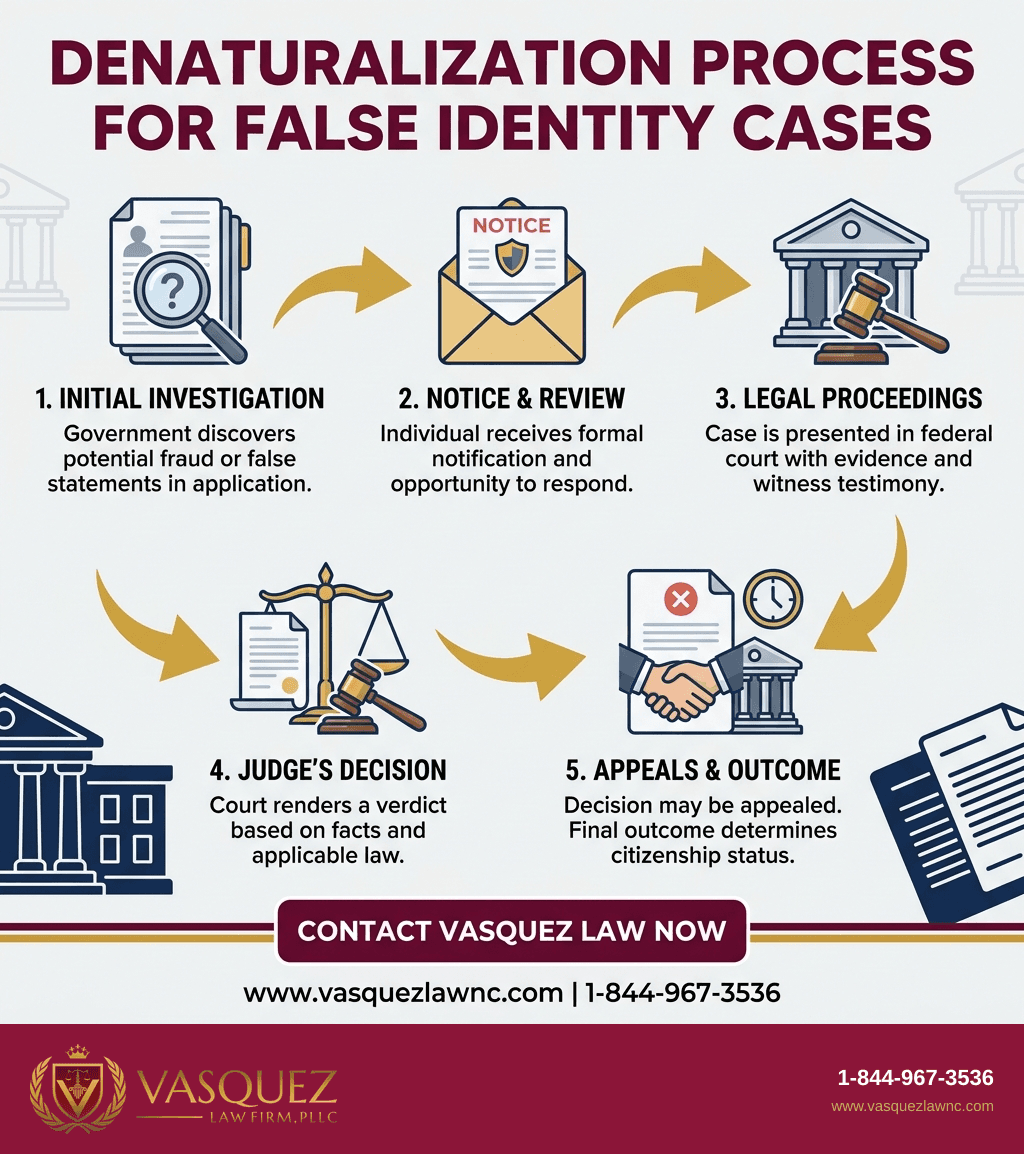
The law requires the government to prove the applicant knowingly hid or lied about important facts. If the government wins, the naturalization certificate is canceled. The person may then face removal (deportation) proceedings.
The legal process starts with a civil lawsuit for denaturalization in federal court. The government must prove fraud or lying by clear and convincing evidence. This is a high standard of proof.
What should you do if you face denaturalization for false identity in Raleigh, NC or Orlando, FL?
If you are a naturalized citizen facing denaturalization charges for false identity or immigration fraud, you must act quickly. Get help from a lawyer with experience. Denaturalization can cause loss of citizenship and deportation. This has serious effects on you and your family.
At our Raleigh, NC and Orlando, FL offices, we often see cases where clients did not understand the long-term risks. They gave wrong information or used multiple identities. The most common mistake is not telling about past immigration history or changes in personal data when applying for benefits.
Here are steps to take if you worry about denaturalization:
- Talk to an immigration lawyer right away. Early legal advice helps you know your rights and options.
- Collect all your immigration papers. Get your naturalization certificate, green card, past applications, and any letters from USCIS.
- Be honest with your lawyer. Telling the full truth lets your lawyer prepare the best defense or plan.
- Do not ignore letters from USCIS or the Department of Justice. Answer quickly to any requests or court orders.
- Think about filing a motion to reopen or appeal if you believe the charges are wrong.
Below is a table showing key differences between lawful naturalization and denaturalization risks:
| Aspect | Naturalization | Denaturalization |
|---|---|---|
| Eligibility | Lawful permanent resident meeting requirements | Fraud or misrepresentation found after naturalization |
| Process | Application, interview, oath ceremony | Civil lawsuit to cancel citizenship |
| Consequences | U.S. citizenship granted | Loss of citizenship, possible deportation |
| Legal standard | More likely than not proof for eligibility | Clear and convincing proof of fraud |
Working with an experienced immigration lawyer in Raleigh, NC or Orlando, FL is very important. The process is complex. Our firm has handled denaturalization defense cases. We can help protect your rights.
What happens next after USCIS files a denaturalization case?
After USCIS helps file a denaturalization case, the case goes to federal court. The government must prove its claims with clear and convincing evidence. The person named in the case will get notice. They can respond and give a defense.
If the court decides citizenship was gotten by fraud or lying, it will cancel the naturalization certificate. Then, the person may face removal (deportation) under immigration law.
The USCIS announcement says:
"The U.S. government seeks to revoke the defendant’s citizenship and cancel his certificate of naturalization." (Source: USCIS, https://www.uscis.gov/newsroom/news-releases/denaturalization-case-filed-against-man-who-procured-us-citizenship-under-false-identity)
After revocation, the person loses all citizenship rights. This includes voting and eligibility for federal benefits. Removal or deportation may follow under 8 U.S.C. § 1227, which covers deportable aliens.
What's Your Immigration Situation?
Answer 3 questions - we'll tell you your options
Question 1 / 3
What best describes your situation?
Keep Reading
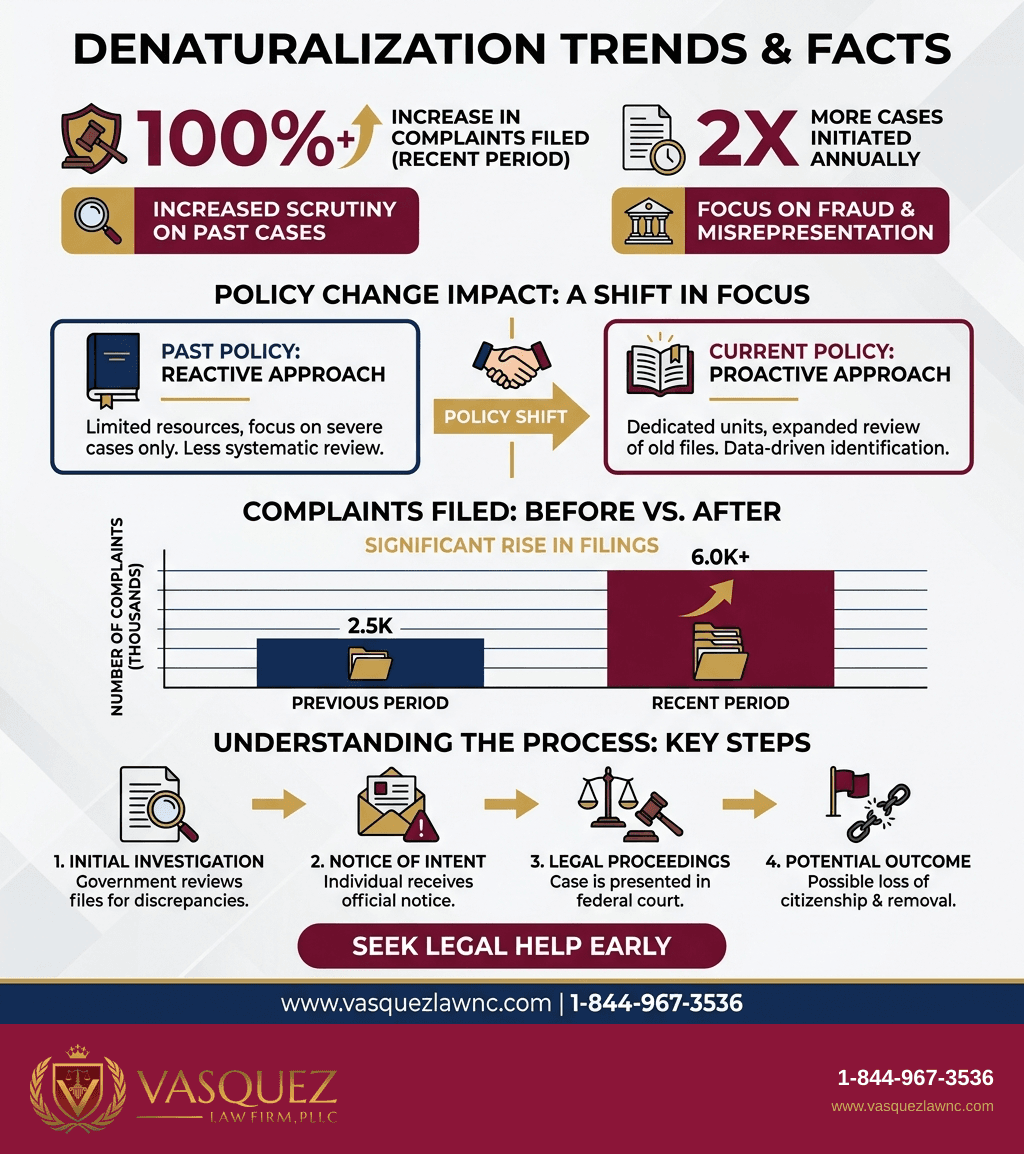
The process can take a long time and be complicated. It may include many hearings and appeals. It is very important to have a lawyer to protect your legal rights.
The announcement does not give exact timelines. These vary by location and case details. People in Raleigh, NC and Orlando, FL should watch for letters from USCIS and the courts carefully.
Frequently Asked Questions about Denaturalization for False Identity
What is denaturalization?
Denaturalization is the legal process of taking away U.S. citizenship. This happens if citizenship was gotten by fraud, lying, or hiding important facts. It can lead to loss of citizenship and possible deportation.
Can USCIS revoke citizenship years after naturalization?
Yes. USCIS can start denaturalization at any time if it finds evidence that citizenship was gotten illegally or by fraud. This can happen many years after naturalization.
What evidence does the government need to revoke citizenship?
The government must prove by clear and convincing evidence that the person got citizenship by lying on purpose or hiding important facts.
What should I do if I receive a denaturalization notice?
Contact an experienced immigration lawyer right away. Do not ignore the notice. Gather all important papers and get ready to answer the claims.
Can denaturalization lead to deportation?
Yes. After citizenship is canceled, the person may face removal proceedings and be deported if immigration laws allow.
This article gives general legal information. It is not personal legal advice. Reading it does not create a lawyer-client relationship. For advice about your own case, contact Vasquez Law Firm.
Reviewed by William Vasquez, Founder & CEO, Vasquez Law Firm, PLLC.
If you need legal help, learn more about our immigration legal services, or call us at 1-844-967-3536 for a free evaluation.
Related Topics

William Vasquez
Founder & CEO, Vasquez Law Firm, PLLC
William Vasquez is the founder and CEO of Vasquez Law Firm, PLLC, a results-driven firm specializing in immigration, criminal defense, personal injury, and workers' compensation. A U.S. Air Force veteran and recipient of the Joint Service Achievement Medal, William is dedicated to fiercely fighting for his clients' rights.
Related Legal Services
Need legal help? Learn more about our immigration legal services, or contact us for a free evaluation.
You can also visit immigration lawyers serving all of North Carolina for more information.