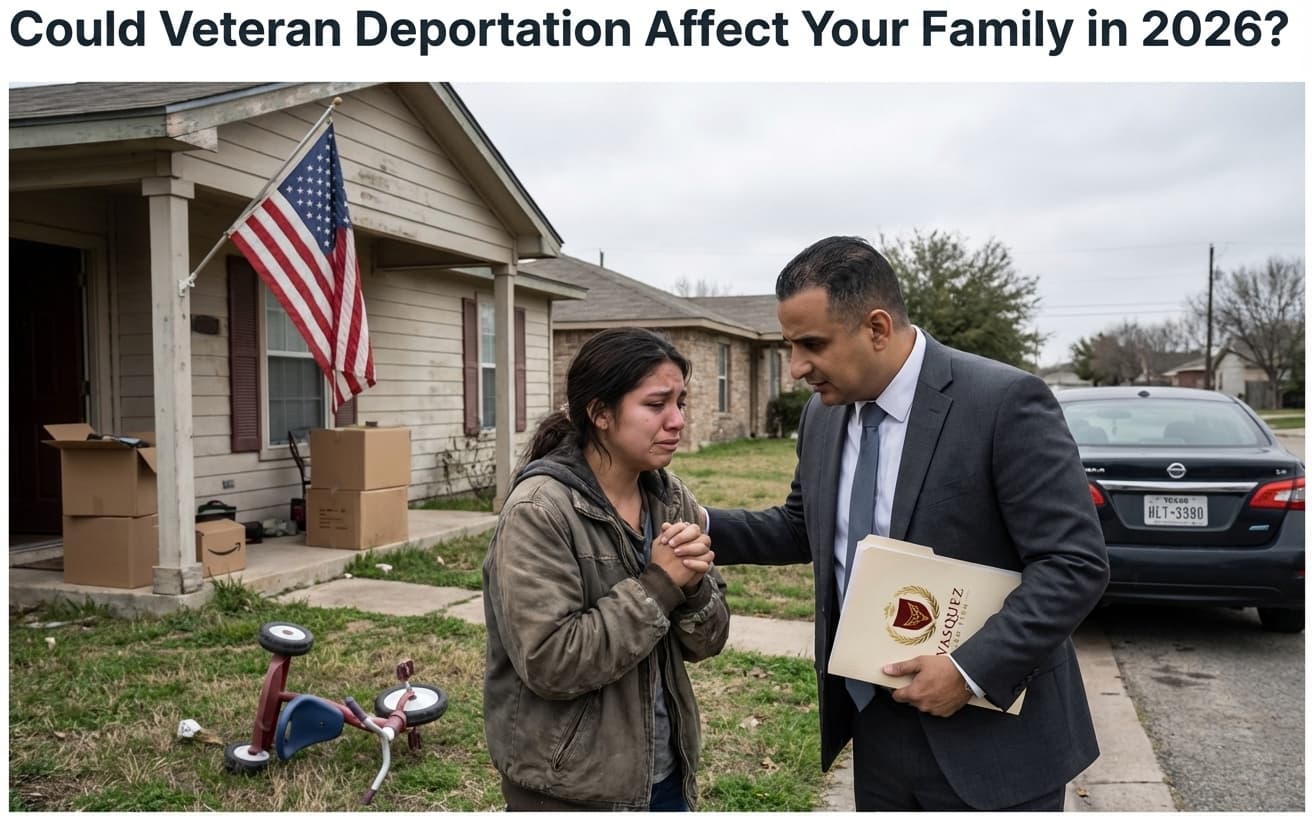
Could Veteran Deportation Affect Your Family in 2026?
Learn about veteran deportation risks and protections for military members and their families in 2026. Contact Vasquez Law Firm for a free immigration consultation.
Published on March 6, 2026
Talk to an immigration attorney
Free call. A clear plan for your case.
Free & confidential · Se habla espanol · 24/7
Have questions? Talk to an attorney - free evaluation.
Call 1-844-967-3536Check your case status now
Look up your immigration case below, then talk to an attorney about what it means — free.
Questions about your result?
Talk to an attorney about your case — free, no obligation.
Could Veteran Deportation Affect Your Family in 2026?
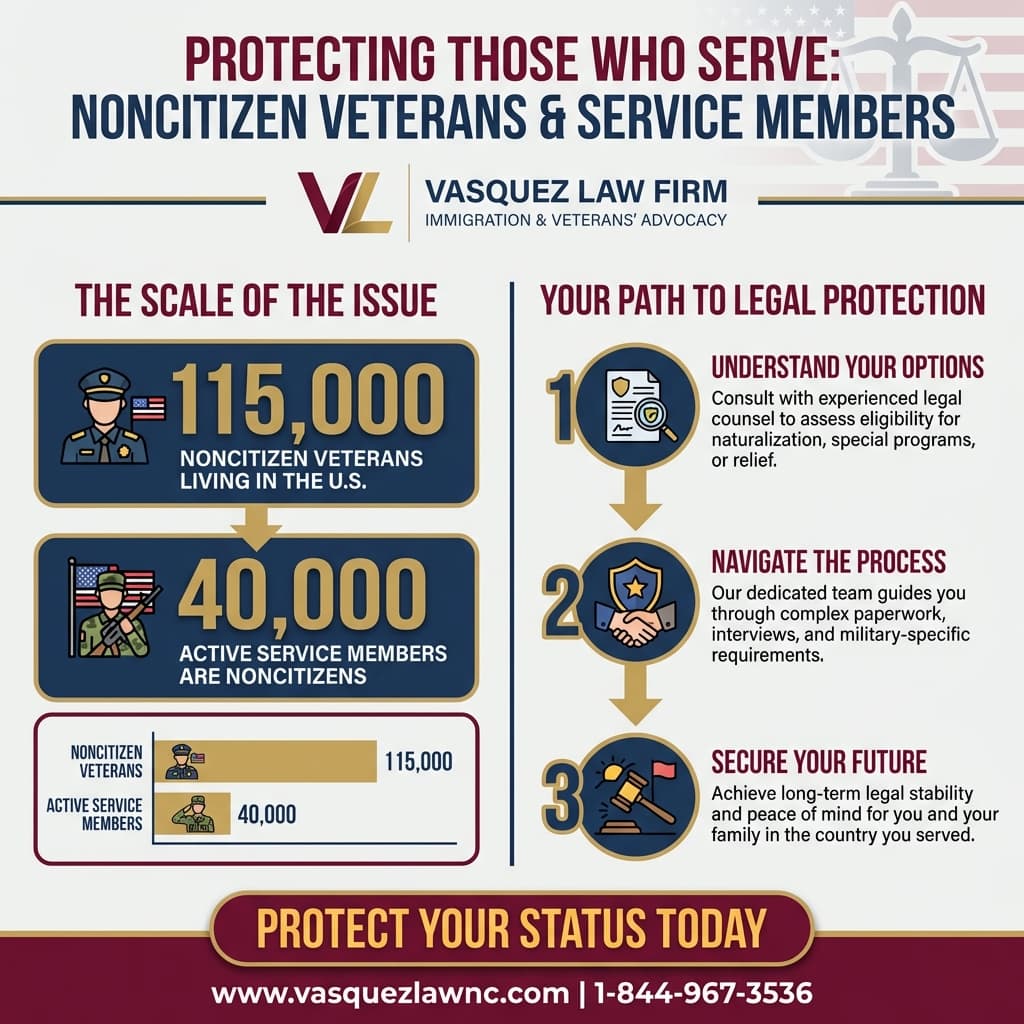
The prospect of veteran deportation is a deeply concerning issue for many military families across North Carolina, Florida, and nationwide. Even after serving our country, non-citizen veterans can face removal proceedings due to past legal issues, often stemming from service-related trauma like PTSD. Understanding the specific laws and protections available is crucial for any veteran or their family members concerned about their immigration status in 2026. Vasquez Law Firm is dedicated to helping these heroes and their loved ones navigate complex immigration challenges.
Need help with your case? Our experienced attorneys are ready to fight for you. Se Habla Español.
Schedule Your Free Case Evaluation
Or call us now: 1-844-967-3536
Quick Answer
Veteran deportation can occur if a non-citizen service member or veteran commits certain crimes, even after honorable discharge. While there are protections and pathways to citizenship, many veterans still face removal. Recent legislative efforts, like the Veteran Deportation Prevention and Reform Act, aim to reduce these cases by offering more legal safeguards and review processes as of 2026.
- Non-citizen veterans are still subject to deportation for certain criminal offenses.
- Service-related trauma can contribute to issues leading to deportation.
- Legal assistance is critical to navigate complex immigration and criminal defense laws.
- The Veteran Deportation Prevention and Reform Act seeks to expand protections.
- Pathways to citizenship exist but require careful legal guidance.
Understanding Veteran Deportation Risks for Non-Citizens
In 2025, a combat veteran with a Purple Heart, suffering from PTSD, faced deportation to a country he hadn't seen since childhood, as highlighted by a New York Times report. This tragic scenario illustrates the harsh reality many non-citizen veterans confront. Despite their service and sacrifice, these individuals can be subject to deportation if they commit certain crimes, particularly those classified as aggravated felonies or crimes involving moral turpitude under U.S. immigration law. The complexities arise because military service itself does not automatically grant U.S. citizenship, although it does offer expedited pathways.
For individuals who are lawful permanent residents but not citizens, any conviction for a deportable offense can trigger removal proceedings. These offenses range from drug crimes to certain violent offenses. The U.S. immigration system, governed by the Immigration and Nationality Act (INA), outlines specific grounds for removability, and these apply to non-citizen veterans just as they do to other non-citizens. The emotional and practical toll on these veterans and their families is immense, often leaving them without the support systems they desperately need. Vasquez Law Firm understands these challenges and provides dedicated support.
Who is at High Risk of Veteran Deportation?
Non-citizen veterans who are lawful permanent residents (Green Card holders) are primarily at risk for deportation. This includes individuals who enlisted while holding a Green Card or those who obtained one through family sponsorship. The key factor is the lack of U.S. citizenship. If these veterans are convicted of certain crimes, especially those considered aggravated felonies under 8 U.S.C. § 1101(a)(43), they can face removal. Common offenses that lead to deportation include drug trafficking, certain theft offenses, and crimes of violence, even if the veteran served honorably.
Many veterans who face deportation often struggle with mental health issues, such as PTSD or traumatic brain injury, which can be direct results of their military service. These conditions can sometimes contribute to behaviors that lead to criminal charges. The legal system often fails to adequately address the underlying service-related issues when determining deportability. This is why specialized legal counsel is crucial to present a comprehensive defense that highlights a veteran's service and mitigating circumstances.
Pathways to Citizenship for Military Members and Veterans
While veteran deportation remains a risk, military service offers specific, expedited pathways to U.S. citizenship. These provisions acknowledge the immense sacrifice of service members and aim to streamline their naturalization process. For example, under 8 C.F.R. § 328, individuals who serve honorably in the U.S. armed forces during specified periods of hostility, or who have completed certain periods of service, can apply for naturalization without meeting the typical residency requirements.
However, many service members, particularly those who served decades ago, were not fully aware of these pathways or did not complete the process before encountering legal issues. The process involves submitting Form N-400, Application for Naturalization, along with Form N-426, Request for Certification of Military or Naval Service, to USCIS. Crucially, any criminal record can complicate this process, making legal guidance indispensable. Attorney Vasquez has over 15 years of experience assisting clients with these complex immigration matters.
The Role of the Veteran Deportation Prevention and Reform Act (2026 Update)
In response to growing concerns, the Veteran Deportation Prevention and Reform Act has been a significant legislative effort aimed at strengthening protections for non-citizen veterans. As of 2026, this proposed bill seeks to expand legal recourse for veterans facing deportation. Key provisions include requiring the Department of Homeland Security (DHS) to identify and track deported veterans, establishing a review process for past deportation orders, and ensuring access to legal counsel and mental health services for veterans in removal proceedings.
While this act is still navigating the legislative process, its intent is clear: to provide a more just and compassionate approach to veterans who have served our nation. For families in Orlando and across North Carolina and Florida, understanding the potential impact of such legislation is vital. It could offer new avenues for relief and a chance for deported veterans to return to the U.S. Our firm closely monitors these legislative developments to best advise our clients.
Common Scenarios Leading to Veteran Deportation
Several situations can unfortunately lead to a non-citizen veteran facing deportation, even after years of honorable service. One common scenario involves a veteran who, after returning from combat, struggles with PTSD and self-medicates, leading to drug-related arrests. Even minor drug possession charges can escalate into deportable offenses, particularly if they are classified as aggravated felonies under immigration law. Another scenario involves veterans who commit non-violent crimes, such as certain types of fraud or theft, which can also trigger removal proceedings.
A veteran might also face deportation if they fail to properly naturalize after their service, perhaps due to a lack of awareness about the process or administrative errors. Later, if they commit a crime, even a minor one, they are treated as any other non-citizen. These cases are particularly heartbreaking because the underlying issues often stem from service-related conditions that were not adequately addressed. Vasquez Law Firm works diligently to present these mitigating factors to immigration courts, advocating for our clients' right to remain in the country they served.
What to Expect in Veteran Deportation Proceedings
If a non-citizen veteran is placed in deportation proceedings, the process can be lengthy and emotionally taxing. It typically begins with a Notice to Appear (NTA) from the Department of Homeland Security, which outlines the charges of removability. The veteran will then appear before an immigration judge at the Executive Office for Immigration Review (EOIR). During these hearings, the veteran can present defenses, such as waivers, cancellation of removal, or applications for naturalization if eligible.
The judge will consider all evidence, including the veteran's military service, criminal history, and any humanitarian factors. The burden of proof generally rests with the government to show removability, but the veteran bears the burden of proving eligibility for any relief from deportation. Having an experienced immigration attorney is paramount, as they can navigate the complex legal arguments and present the strongest possible case. Without legal representation, veterans are significantly more likely to be deported.
Protecting Your Rights and Seeking Legal Help for Veterans
If you or a loved one is a non-citizen veteran facing potential deportation, taking immediate action is crucial. The first step is to seek legal counsel from an immigration attorney experienced in veteran cases. Do not speak to immigration enforcement officials (ICE) without your attorney present. You have the right to remain silent and the right to an attorney. Any statements made can be used against you in removal proceedings. It's also vital to gather all military service records, including DD-214s, and any documentation related to mental health conditions or service-related injuries.
An attorney can review your criminal history and immigration record to identify any potential avenues for relief, such as waivers or applications for naturalization based on military service. They can also advocate for you in immigration court, presenting your case with the seriousness and respect your service deserves. Remember, the goal is to prevent veteran deportation and keep families together. Vasquez Law Firm offers comprehensive immigration services and is ready to assist veterans in North Carolina, Florida, and nationwide.
Don't face your legal challenges alone. Our team is here to help you every step of the way.
Call today: 1-844-967-3536 | Se Habla Español
About Vasquez Law Firm
At Vasquez Law Firm, we combine compassion with aggressive representation. Our motto "Yo Peleo" (I Fight) reflects our commitment to standing up for your rights. We understand the unique challenges faced by immigrant communities and veterans, especially when their freedom and future in the U.S. are at stake. Our team provides dedicated legal support, ensuring every client receives personalized attention and a strong defense.
- Bilingual Support: Se Habla Español - our team is fully bilingual, ensuring clear communication.
- Service Areas: We proudly serve clients in North Carolina, Florida, and offer immigration services nationwide.
- Experience: With over 15 years of dedicated legal experience, we have a proven track record in complex immigration, personal injury, and criminal defense cases.
- Results: We are committed to achieving favorable outcomes, having successfully handled thousands of cases across multiple practice areas.
Attorney Trust and Experience
Attorney Vasquez holds a Juris Doctor degree and is admitted to practice in both the North Carolina State Bar and Florida Bar. With over 15 years of dedicated legal experience, he has built a reputation for providing personalized attention and achieving favorable outcomes for his clients. His deep understanding of immigration law, coupled with a compassionate approach, makes Vasquez Law Firm a trusted advocate for veterans and their families facing deportation challenges. You can learn more about our team at our attorney bio page.
Frequently Asked Questions
Did ICE deport a combat veteran?
Unfortunately, yes, there have been documented cases of U.S. Immigration and Customs Enforcement (ICE) deporting combat veterans. These cases often involve non-citizen veterans who committed certain crimes after their service, triggering removal proceedings. While there are legal protections for veterans, the complexities of immigration law mean that some still fall through the cracks without proper legal representation. These situations highlight the urgent need for specialized legal assistance for at-risk veterans.
Who is at high risk for veteran deportation?
Non-citizen veterans, specifically lawful permanent residents (Green Card holders) who have not naturalized, are at high risk for deportation if they are convicted of certain criminal offenses. These include aggravated felonies, drug offenses, and crimes involving moral turpitude, even if they served honorably. Veterans struggling with service-related issues like PTSD, which can lead to criminal behavior, are particularly vulnerable without legal advocacy.
What is the new bill passed for veterans regarding immigration?
As of 2026, the Veteran Deportation Prevention and Reform Act is a significant legislative effort aimed at protecting non-citizen veterans from deportation. While it has not yet fully passed into law, it proposes measures such as establishing a review process for deported veterans, ensuring access to legal counsel, and requiring DHS to track these cases. This bill represents a crucial step toward providing more robust legal safeguards for those who served.
What nationality is ICE deporting the most?
ICE deportation statistics fluctuate, but historically, individuals from Mexico and Central American countries (such as Guatemala, Honduras, and El Salvador) constitute the largest groups deported. This trend is largely due to geographic proximity, border enforcement efforts, and the significant number of non-citizens from these regions residing in the U.S. These statistics encompass all non-citizens, including veterans from these countries.
Can military service prevent deportation?
Military service can significantly aid in preventing deportation by offering expedited pathways to U.S. citizenship. Non-citizen service members who serve honorably can naturalize under special provisions, often waiving residency requirements. Additionally, military service can be a strong mitigating factor in immigration court, potentially leading to waivers or cancellation of removal for certain offenses. However, it does not provide absolute immunity from deportation, especially for serious crimes.
What is the Deported Veterans Project?
The Deported Veterans Project is an initiative dedicated to advocating for and assisting U.S. military veterans who have been deported. It works to raise awareness, provide support, and facilitate legal efforts to help these veterans return to the United States. Such projects highlight the ongoing human rights concerns surrounding veteran deportation and aim to ensure that those who served our country receive the recognition and support they deserve.
How many veterans have been deported in 2025?
Precise, up-to-date statistics on the exact number of veterans deported in 2025 or 2026 are challenging to obtain, as government agencies do not always disaggregate deportation data by veteran status. However, advocates estimate that thousands of non-citizen veterans have been deported over the past decades. The lack of specific tracking is one reason why legislative efforts like the Veteran Deportation Prevention and Reform Act are so critical, to better understand and address this issue.
What resources are available for deported veterans?
For deported veterans, resources are limited but growing. Organizations like the Deported Veterans Project and various non-profits work to provide legal aid, humanitarian assistance, and advocacy. In some cases, consulates or embassies may offer limited support. The primary goal of many of these groups is to help deported veterans navigate the complex legal processes to potentially return to the U.S. and access the benefits they earned through their service.
Can a veteran be deported even with an honorable discharge?
Yes, unfortunately, a non-citizen veteran can still face deportation even with an honorable discharge. While honorable service provides pathways to citizenship and can be a strong defense in immigration court, it does not automatically grant citizenship or immunity from deportation. If a non-citizen veteran commits a deportable crime, they can still be placed in removal proceedings, regardless of their military service record. Legal counsel is essential to leverage their service history effectively.
What is the difference between a citizen and non-citizen veteran?
The key difference lies in their legal status regarding U.S. nationality. A citizen veteran is born in the U.S. or naturalized, holding full rights and protections, including immunity from deportation. A non-citizen veteran, typically a lawful permanent resident, has served in the U.S. military but does not hold U.S. citizenship. While they share military service, non-citizen veterans remain subject to immigration laws, including grounds for deportation, unlike their citizen counterparts.
Sources and References
- U.S. Citizenship and Immigration Services (USCIS)
- Executive Office for Immigration Review (EOIR)
- 8 U.S. Code § 1101 - Definitions (aggravated felony)
- 8 C.F.R. § 328 - Special Classes of Persons Who May Be Naturalized: Military Service
Ready to take the next step? Contact Vasquez Law Firm today for a free, confidential consultation. We're committed to fighting for your rights and achieving the best possible outcome for your case.
Start Your Free Case Evaluation Now
Call us: 1-844-967-3536
Se Habla Español - Estamos aquí para ayudarle.
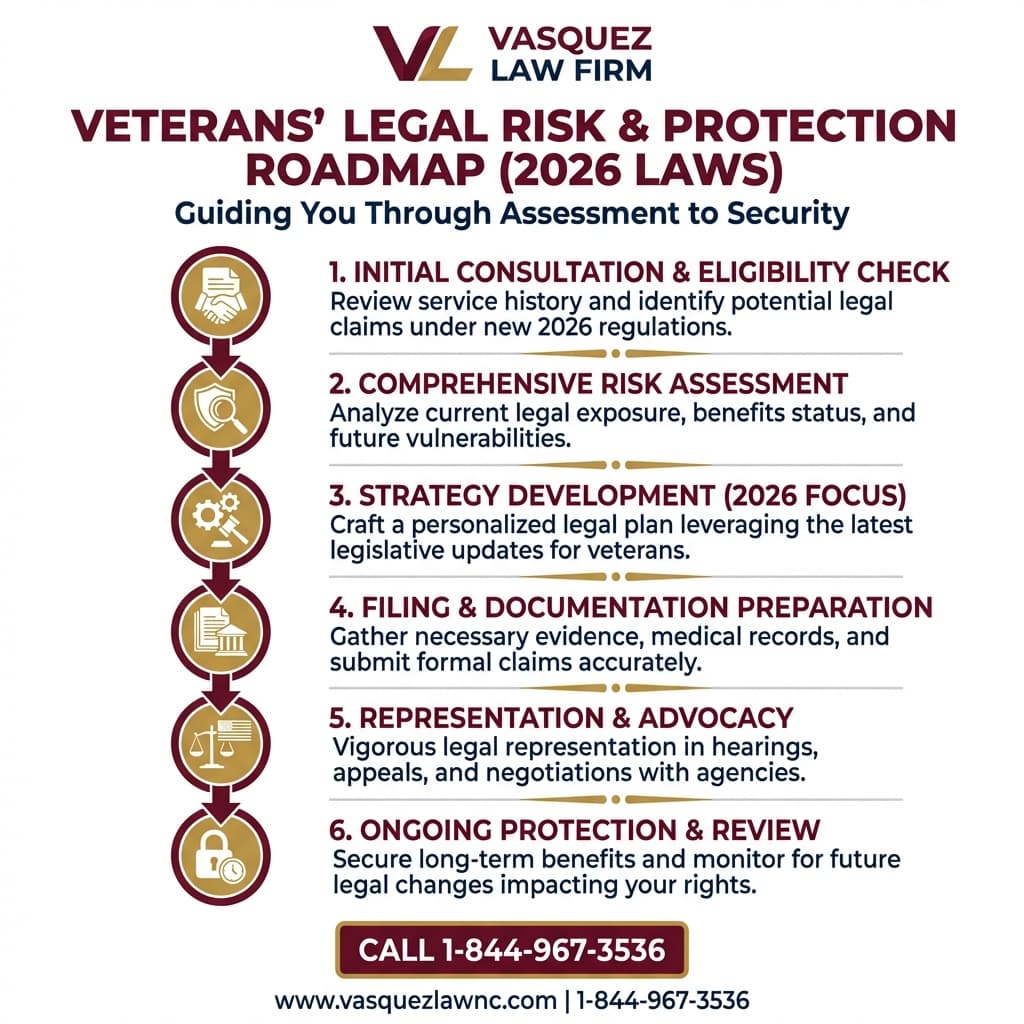
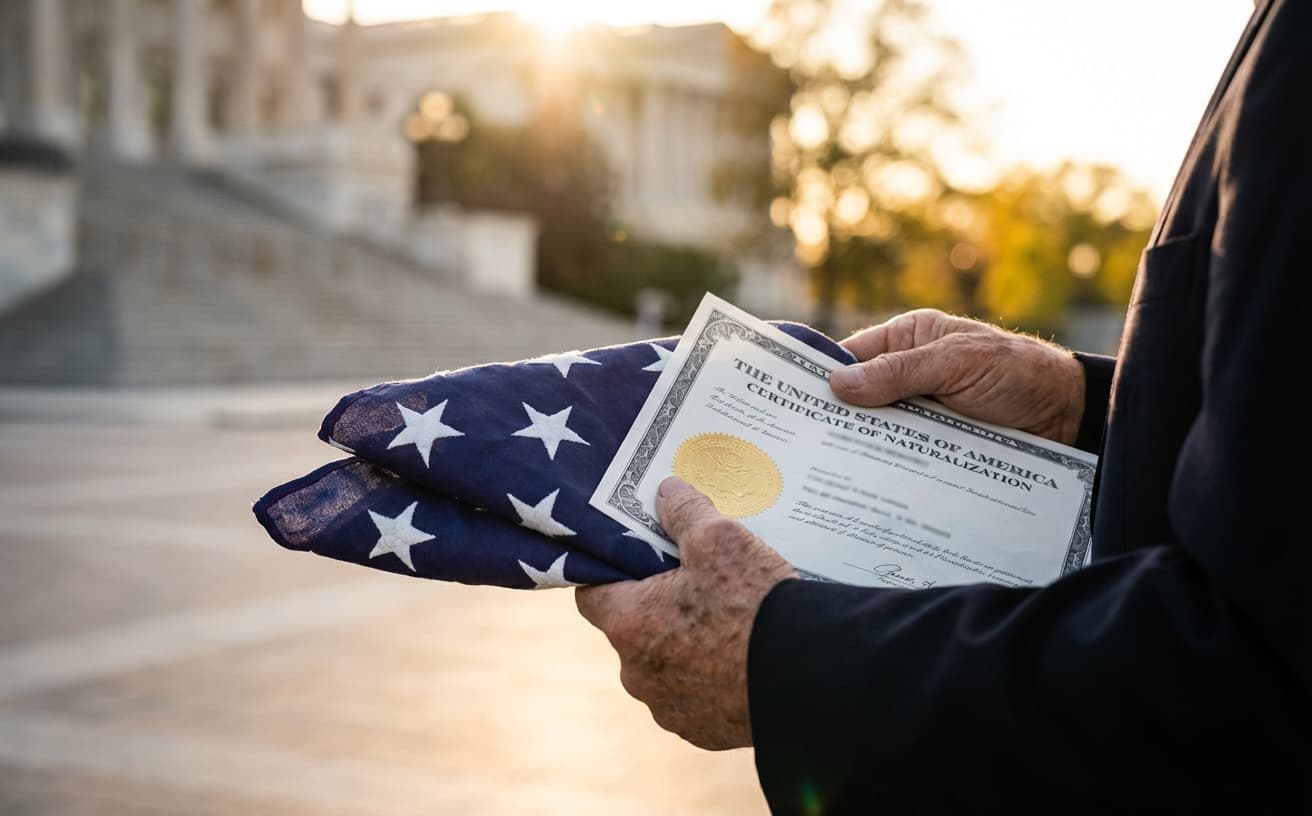

William Vasquez
Founder & CEO, Vasquez Law Firm, PLLC
William Vasquez is the founder and CEO of Vasquez Law Firm, PLLC, a results-driven firm specializing in immigration, criminal defense, personal injury, and workers' compensation. A U.S. Air Force veteran and recipient of the Joint Service Achievement Medal, William is dedicated to fiercely fighting for his clients' rights.
Related Legal Services
Need legal help? Learn more about speak with an immigration lawyer, or contact us for a free evaluation.
You can also visit immigration lawyers serving all of North Carolina for more information.