How the Immigration Ban Could Affect Your Future in 2026
Understand the impact of any potential immigration ban on your family and future in 2026. Get expert legal help from Vasquez Law Firm.
Published on March 5, 2026
Talk to an immigration attorney
Free call. A clear plan for your case.
Free & confidential · Se habla espanol · 24/7
Have questions? Talk to an attorney - free evaluation.
Call 1-844-967-3536Worried how the latest immigration news affects you?
Schedule a confidential case review with an immigration attorney - know exactly where you stand.
How the Immigration Ban Could Affect Your Future in 2026
The concept of an immigration ban can cause significant anxiety and uncertainty for individuals and families seeking to live or remain in the United States. As of 2026, while there isn't a blanket immigration ban in effect, policies can shift rapidly, impacting visa processing, entry, and even the ability to adjust status. Understanding the nuances of these potential restrictions, whether they target specific countries, visa types, or groups of individuals, is crucial for anyone navigating the complex U.S. immigration system. Staying informed about current regulations and preparing for potential changes is key to protecting your immigration journey and securing your future in North Carolina, Florida, or anywhere nationwide.
Need help understanding the latest immigration policies? Our experienced attorneys are ready to fight for you. Se Habla Español.
Schedule Your Free Case Evaluation
Or call us now: 1-844-967-3536
Quick Answer
An immigration ban refers to government policies that restrict or suspend entry for certain individuals or groups into the United States. In 2026, while broad bans are not currently active, specific restrictions can be implemented through executive orders or legislative action, affecting visa issuance, travel, and asylum claims. These measures often target particular nationalities, visa categories, or individuals based on public health, national security, or economic concerns.
- Bans can target specific countries or regions.
- They may affect certain visa types (e.g., immigrant visas, non-immigrant visas).
- Policies can change quickly, requiring constant vigilance.
- Legal challenges often arise, leading to court interventions.
- An immigration lawyer is crucial for navigating these complex situations.
Understanding Immigration Restrictions
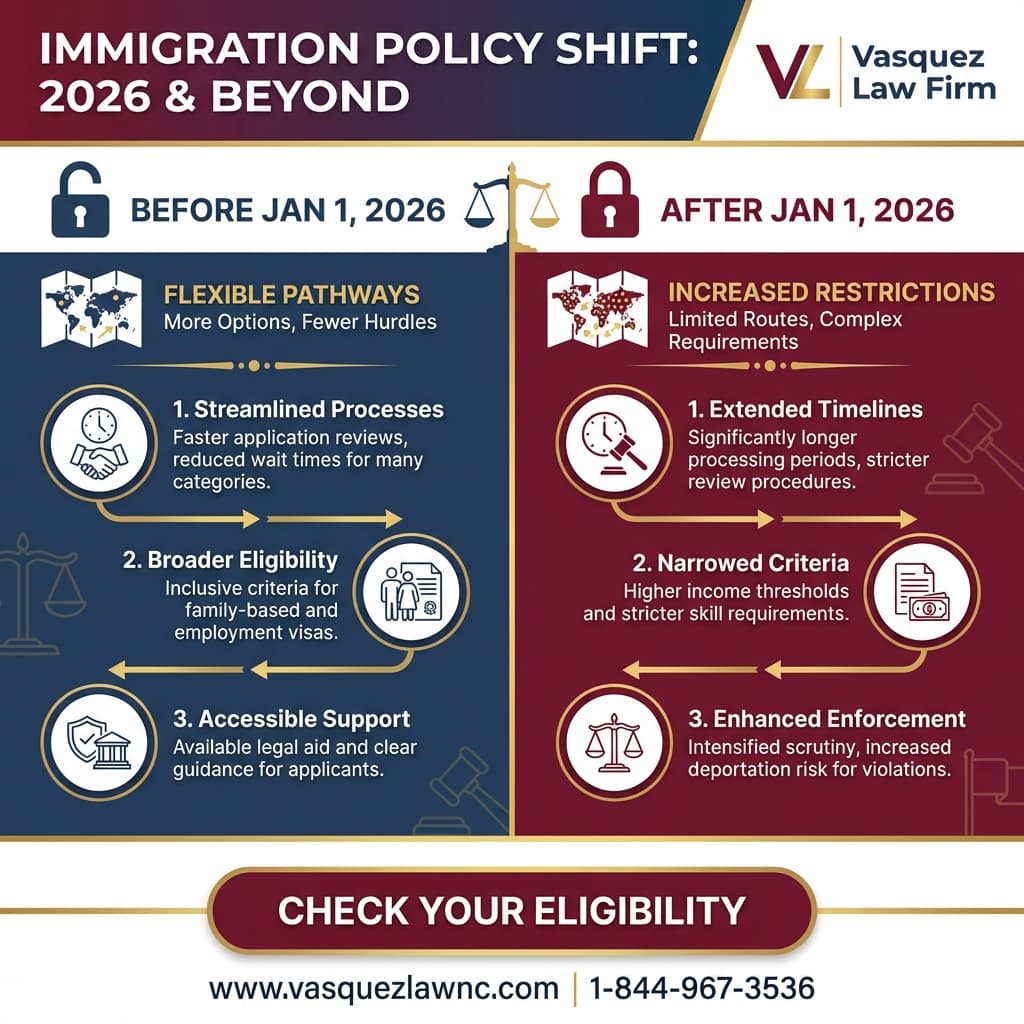
This infographic illustrates the different forms an immigration ban can take, from broad travel restrictions to targeted visa suspensions, and highlights the key areas of impact for immigrants and their families.
What Is an Immigration Ban and How It Works
An immigration ban is a governmental action that restricts or completely stops certain individuals or groups from entering or obtaining immigration benefits in the United States. These bans can be implemented through various legal mechanisms, including presidential proclamations, executive orders, or congressional legislation. They often cite national security, public health, economic concerns, or foreign policy objectives as their rationale.
Historically, the U.S. has seen different forms of immigration restrictions. For example, during the COVID-19 pandemic, travel bans were imposed to limit the spread of the virus, affecting both immigrant and non-immigrant visa applicants. Similarly, previous administrations have issued proclamations suspending entry for nationals of specific countries deemed to pose security risks. These actions demonstrate the broad authority the executive branch holds in shaping immigration policy, though they are frequently challenged in federal courts.
Types of Immigration Restrictions
Immigration bans are not monolithic; they can vary significantly in scope and application. Some bans might focus on specific visa categories, such as immigrant visas for family-based or employment-based petitions, effectively pausing their processing. Others might be geographically targeted, suspending entry for individuals from certain countries, often referred to as a "list of banned countries for U.S. visa." These restrictions can also differentiate between immigrant and non-immigrant visas, impacting tourists, students, and temporary workers differently than those seeking permanent residency.
Furthermore, an immigration ban can be temporary or indefinite, and its implementation often involves complex coordination between agencies like the U.S. Department of State (DOS) and U.S. Citizenship and Immigration Services (USCIS). For instance, a visa suspension might mean that U.S. consulates abroad temporarily cease interviewing applicants or issuing certain types of visas. Understanding the specific nature of any restriction is vital, as it dictates who is affected and what legal remedies might be available. This complexity underscores the need for expert legal guidance.
Impact on Immigrant and Non-Immigrant Visas
Any new immigration ban or visa suspension can have far-reaching consequences for both immigrant and non-immigrant visa applicants. For those seeking permanent residency through an immigrant visa, a ban might halt the processing of their applications, leading to indefinite delays and separation from family members. This can affect individuals waiting for family-sponsored visas, employment-based visas, or diversity visas. The U.S. Department of State provides updates on visa processing, and applicants must monitor these closely.
Non-immigrant visa holders, such as those on H-1B, F-1 (student), or B-2 (tourist) visas, could also face severe disruptions. A travel ban might prevent them from entering or re-entering the U.S., even if their visa is valid. This can strand individuals outside the country, impact their employment or education, and force difficult decisions. The specific language of an immigration ban determines its reach, so careful legal analysis is always required to assess individual situations and plan appropriate responses. Our firm, Vasquez Law Firm, monitors these changes diligently to advise our clients effectively.
Who is Affected by Visa Suspension?
The scope of who is affected by a visa suspension largely depends on the specific details of the policy. Typically, bans might target individuals based on their nationality, their current location, or the type of visa they are seeking. For instance, a ban might specifically mention "U.S. visa ban 75 countries list," meaning citizens from those nations are temporarily unable to obtain visas. This often includes individuals who are already in the application process, leading to significant delays or even denials.
It's important to differentiate between those already holding valid visas or green cards and those applying from abroad. While a ban primarily affects new applications or re-entry, sometimes even existing visa holders can face scrutiny or be denied boarding due to evolving interpretations of policy. U.S. citizens are generally not denied entry to the USA, but they may face enhanced screening. Understanding these distinctions is critical for anyone planning international travel or an immigration process in 2026. Legal counsel can help clarify eligibility and potential risks.
Legal Challenges and Court Interventions
When an administration implements an immigration ban, it often faces immediate legal challenges from civil rights organizations, advocacy groups, and even state governments. These challenges argue that such bans violate constitutional rights, statutory law, or administrative procedures. Federal courts, including district courts, circuit courts of appeals, and ultimately the U.S. Supreme Court, play a critical role in reviewing the legality and scope of these executive actions. This legal back-and-forth can lead to temporary injunctions, modifications of the ban, or even its complete overturn.
For individuals caught in the midst of a ban, these legal battles can offer a glimmer of hope, but they also create prolonged uncertainty. A court ruling might temporarily block parts of a ban, allowing some individuals to proceed with their applications, only for the ruling to be appealed and potentially reversed. This dynamic legal landscape makes it incredibly difficult for immigrants to plan their futures without expert legal guidance. Vasquez Law Firm is committed to staying abreast of these court developments to provide the most current and effective advice to our clients in Smithfield and beyond.
What to Expect from Litigation
Litigation against an immigration ban can be a lengthy and complex process. It often begins with a lawsuit filed in a federal district court, seeking a temporary restraining order or preliminary injunction to stop the ban's enforcement. If successful, this can provide immediate, albeit temporary, relief. However, the government almost always appeals these decisions, moving the case to a federal circuit court of appeals and potentially to the Supreme Court. Each stage of appeal can take months, sometimes years, to resolve.
During this period, the enforceability of the ban can fluctuate, creating a confusing environment for applicants. Some individuals might be able to travel or apply during an injunction, while others might find themselves in limbo if the ban is reinstated. This unpredictable nature means that even a successful legal challenge does not guarantee a swift resolution for all affected individuals. Therefore, having a knowledgeable immigration lawyer who understands the intricacies of these legal battles is indispensable for navigating such challenging times.
Steps to Protect Your Immigration Status
In an environment where an immigration ban could be a possibility, proactive steps are essential to protect your immigration status and future. First and foremost, ensure all your immigration documents are current and securely stored. This includes passports, visas, Green Cards, and any notices from USCIS or the Executive Office for Immigration Review (EOIR). Keep digital and physical copies in a safe, accessible place.
Secondly, stay informed about policy changes. Regularly check official government websites like USCIS.gov and Travel.State.Gov for the latest updates. Be wary of misinformation from unofficial sources. Consulting with an experienced immigration attorney is perhaps the most critical step. An attorney can help you understand how potential bans might affect your specific case, identify any available exemptions, and strategize to mitigate risks. They can also advise on whether it's prudent to expedite an application or explore alternative immigration pathways.
Planning for Uncertainty
Given the unpredictable nature of immigration policy, planning for uncertainty is crucial. If you are considering international travel, especially if you are not a U.S. citizen, consult with an attorney first to understand the risks. Traveling abroad during a potential or active immigration ban could jeopardize your ability to re-enter the U.S. or complete your immigration process. Additionally, if you have family members abroad who are seeking to immigrate, discuss with your lawyer how a ban might impact their applications and what preparatory steps can be taken.
For those in the U.S. on non-immigrant visas, consider options for adjusting status if eligible, or exploring extensions to avoid falling out of status. For example, if you are a student or temporary worker, understanding the "U.S. travel ban update today" is vital. Building a strong legal record and maintaining compliance with all immigration laws are fundamental safeguards. Vasquez Law Firm offers comprehensive legal support to help clients develop robust strategies for their long-term immigration goals, whether in North Carolina, Florida, or across the nation.
Navigating Immigration Policy Changes in 2026
The immigration landscape is constantly evolving, and 2026 is no exception. While a sweeping immigration ban may not be in place, specific policies and executive actions can significantly alter the paths available to immigrants. These changes can range from adjustments in visa processing priorities to new restrictions on certain categories of applicants. Staying ahead of these developments is paramount for anyone with an ongoing immigration case or plans to immigrate.
For instance, there may be ongoing discussions or proposals regarding an "immigration ban countries" list or further limitations on specific visa types. The political climate often influences the rhetoric and reality of immigration enforcement, making it essential to rely on factual information and professional legal advice. Our team at Vasquez Law Firm is dedicated to providing up-to-date information and vigorous representation to ensure our clients are well-prepared for any policy shifts. We serve clients in Smithfield, throughout North Carolina, Florida, and nationwide for immigration matters.
The Role of an Immigration Attorney
In times of potential immigration bans or significant policy shifts, the expertise of an immigration attorney becomes invaluable. An attorney can: 1) interpret complex legal texts and executive orders to explain their specific impact on your case; 2) advise on the best course of action, whether that involves filing an application, appealing a denial, or preparing for potential challenges; 3) represent you in interactions with USCIS, the Department of State, or immigration courts; and 4) provide strategic guidance to protect your long-term immigration goals. Our firm understands the anxiety these changes can cause and offers compassionate yet aggressive advocacy.
When to Call a Lawyer Now
The complexities surrounding an immigration ban or rapidly changing immigration policies make legal counsel essential. Do not wait until it's too late. Contact an experienced immigration attorney immediately if you:
- Have an ongoing visa application or petition that seems to be delayed or affected by recent news.
- Are considering international travel and are not a U.S. citizen.
- Are a non-immigrant visa holder and your status is nearing expiration.
- Have received any notice of intent to deny, revoke, or deport from immigration authorities.
- Are concerned about a potential "10 year immigration ban" or other long-term bars.
- Have family members abroad whose immigration process has stalled.
- Need clarification on any "US visa suspension latest news" or policy updates.
- Are seeking asylum or refugee status and fear new restrictions.
- Have questions about your rights during an ICE encounter.
About Vasquez Law Firm
At Vasquez Law Firm, we combine compassion with aggressive representation. Our motto "Yo Peleo" (I Fight) reflects our commitment to standing up for your rights. We understand the profound impact immigration policies have on individuals and families, and we are dedicated to providing personalized and effective legal solutions.
- Bilingual Support: Se Habla Español - our team is fully bilingual and ready to assist you in your preferred language.
- Service Areas: We proudly serve clients throughout North Carolina, Florida, and offer comprehensive immigration services nationwide.
- Experience: With over 15 years of dedicated legal experience, Attorney Vasquez has a proven track record of helping clients navigate complex legal matters.
- Results: We strive for the best possible outcomes, having successfully handled thousands of cases across immigration, personal injury, criminal defense, family law, and workers' compensation.
Attorney Trust and Experience
Attorney Vasquez holds a Juris Doctor degree and is admitted to practice in both the North Carolina State Bar and Florida Bar. With over 15 years of dedicated legal experience, he has built a reputation for providing personalized attention and achieving favorable outcomes for his clients. His commitment to justice and his deep understanding of immigration law make him a trusted advocate for Dreamers and all those seeking a better future in the U.S.
Don't face your legal challenges alone. Our team is here to help you every step of the way.
Call today: 1-844-967-3536 | Se Habla Español
Frequently Asked Questions
Is the U.S. suspending immigrant visas in 2026?
As of early 2026, there is no nationwide suspension of immigrant visas. However, policies can change. The U.S. Department of State and USCIS constantly update their guidelines, and specific visa categories or countries may face temporary restrictions or processing delays. It is crucial to check official government sources and consult with an immigration attorney for the most current information regarding your specific case and any potential immigration ban.
What countries are suspended for immigration to the U.S. in 2026?
Currently, no specific countries are under a blanket immigration suspension for the U.S. in 2026. However, travel restrictions or visa processing limitations can be implemented for various reasons, including public health or national security concerns. These are typically announced by presidential proclamation or State Department advisories. Always consult the U.S. Department of State's website for the most current list of any restricted countries or areas and consult an attorney.
Are U.S. citizens being denied entry to the USA?
No, U.S. citizens cannot be denied entry to the United States. Even during periods of heightened travel restrictions or an immigration ban, U.S. citizens have an absolute right to enter their own country. However, they may be subject to additional screening or health protocols upon arrival, especially if traveling from areas affected by public health emergencies. This right is fundamental to U.S. citizenship.
What is the 10-year immigration ban?
The 10-year immigration ban, also known as the 10-year bar, is a penalty for certain individuals who have been unlawfully present in the U.S. for more than one year and then depart the country. Upon their departure, they become inadmissible for 10 years. This is not a general immigration ban but a specific ground of inadmissibility. Waivers may be available in certain circumstances, making legal advice essential.
How can an immigration lawyer help with a visa suspension?
An immigration lawyer can provide critical assistance during a visa suspension by clarifying the specific terms of the ban, assessing your eligibility for exemptions or waivers, and advising on alternative immigration pathways. They can help prepare and submit strong applications, challenge denials, and represent you in communications with government agencies. Their expertise is invaluable for navigating complex and rapidly changing policies, ensuring your rights are protected.
What is the difference between an immigration ban and a travel ban?
An immigration ban typically targets individuals seeking to immigrate or obtain specific visas, often suspending the processing of those applications. A travel ban, while sometimes overlapping, generally restricts who can enter the country, regardless of their immigration intent, often for public health or security reasons. Travel bans can affect both immigrant and non-immigrant visa holders, including those seeking to return to the U.S. on valid visas.
Can an immigration ban be challenged in court?
Yes, immigration bans often face legal challenges in federal courts. Advocacy groups, civil rights organizations, and even states frequently sue to block or overturn such policies, arguing they violate constitutional rights or statutory law. These legal battles can lead to temporary injunctions, modifications, or even the complete invalidation of a ban. However, litigation can be lengthy and outcomes are not guaranteed, creating uncertainty for affected individuals.
What should I do if my visa application is affected by a ban?
If your visa application is affected by an immigration ban, the first step is to seek immediate legal counsel from an experienced immigration attorney. They can review your specific situation, explain how the ban applies to you, and advise on any available remedies, such as waivers or appeals. Do not attempt to navigate these complex issues alone, as incorrect actions could jeopardize your case further. Staying calm and seeking professional advice is key.
Are there exemptions to immigration bans?
Many immigration bans include certain exemptions, which can vary widely depending on the specific policy. Common exemptions might include U.S. citizens' spouses or minor children, individuals with critical humanitarian needs, or those whose entry is deemed to be in the national interest. However, qualifying for an exemption often requires submitting specific documentation and meeting strict criteria. An immigration attorney can help determine if you qualify for any applicable exemptions and assist with the application process.
How can I stay updated on U.S. immigration visa news today?
To stay updated on U.S. immigration visa news, regularly check official government websites like USCIS.gov, Travel.State.Gov, and the Department of Justice's Executive Office for Immigration Review (EOIR). Additionally, reputable legal news outlets and immigration law firms, like Vasquez Law Firm, often provide timely analyses of policy changes. Subscribing to newsletters and consulting with an immigration attorney ensures you receive accurate and relevant information as it becomes available.
Sources and References
- U.S. Citizenship and Immigration Services (USCIS)
- U.S. Department of State - Bureau of Consular Affairs
- Executive Office for Immigration Review (EOIR)
- 8 U.S. Code § 1182 - Inadmissible aliens
Need immigration help? Our immigration attorneys can review your case.
Ready to take the next step? Contact Vasquez Law Firm today for a free, confidential consultation. We're committed to fighting for your rights and achieving the best possible outcome for your case.
Start Your Free Case Evaluation Now
Call us: 1-844-967-3536
Se Habla Español - Estamos aquí para ayudarle.


William Vasquez
Founder & CEO, Vasquez Law Firm, PLLC
William Vasquez is the founder and CEO of Vasquez Law Firm, PLLC, a results-driven firm specializing in immigration, criminal defense, personal injury, and workers' compensation. A U.S. Air Force veteran and recipient of the Joint Service Achievement Medal, William is dedicated to fiercely fighting for his clients' rights.
Related Legal Services
Need legal help? Learn more about NC immigration legal team, or contact us for a free evaluation.
You can also visit statewide immigration legal services for more information.


