How Minimum Salary Changes Affect Immigrants in 2026
Understand minimum salary changes for immigrant visas in 2026. Protect your family's future with expert guidance. Contact Vasquez Law for a free consultation.
Published on March 5, 2026
Talk to an immigration attorney
Free call. A clear plan for your case.
Free & confidential · Se habla espanol · 24/7

Have questions? Talk to an attorney - free evaluation.
Call 1-844-967-3536Worried how the latest immigration news affects you?
Schedule a confidential case review with an immigration attorney - know exactly where you stand.
How Minimum Salary Changes Affect Immigrants in 2026
Understanding the implications of minimum salary changes is critical for immigrants and their sponsoring employers in 2026. These adjustments can significantly impact the eligibility for various employment-based visas and family-sponsored green cards, particularly concerning the Affidavit of Support. Staying informed about federal minimum wage and state-specific minimum wage laws is essential to ensure compliance and avoid delays or denials in your immigration process. Whether you are in North Carolina, Florida, or elsewhere in the U.S., these financial requirements are a cornerstone of many immigration applications, designed to ensure immigrants do not become a public charge upon entry. Vasquez Law Firm is here to help you navigate these complex regulations.
Need help understanding minimum salary changes for your immigration case? Our experienced attorneys are ready to fight for you. Se Habla Español.
Schedule Your Free Case Evaluation
Or call us now: 1-844-967-3536
Quick Answer
Minimum salary changes in 2026 directly affect immigration applications, particularly for employment-based visas and family-sponsored green cards requiring an Affidavit of Support. These changes often reflect adjustments to federal poverty guidelines and prevailing wage determinations, necessitating sponsors to meet higher income thresholds. Understanding these new requirements is crucial for a successful application.
- Federal poverty guidelines influence sponsor income requirements.
- Prevailing wage rates are updated annually by the Department of Labor.
- These changes impact H-1B, E-2, L-1 visas, and green card sponsorships.
- Sponsors must demonstrate sufficient income to prevent public charge concerns.
- Consult an immigration attorney to assess your specific situation.
Impact of Minimum Salary Changes on Immigration
The landscape of U.S. immigration is constantly evolving, and minimum salary changes play a significant role in determining eligibility for various immigration benefits. For many visa categories and green card applications, particularly those involving family sponsorship or certain employment-based petitions, the U.S. government requires proof that the immigrant will not become a public charge. This often translates into income requirements that sponsors must meet.
As of 2026, these salary thresholds are subject to annual adjustments, primarily influenced by the Federal Poverty Guidelines (FPG) issued by the Department of Health and Human Services. These guidelines dictate the minimum income a sponsor must earn to support an intending immigrant, typically 125% of the FPG for their household size. For employment-based visas, the Department of Labor’s prevailing wage determinations are crucial, ensuring U.S. workers are not displaced and foreign workers are paid fairly.
Staying informed about these adjustments is not merely a recommendation; it is a necessity for anyone involved in the immigration process. Whether you are an employer seeking to sponsor a foreign worker or a U.S. citizen petitioning for a family member, failing to meet the updated minimum salary requirements can lead to significant delays, Requests for Evidence (RFEs), or even outright denial of an application. The team at Vasquez Law Firm understands these complexities and helps clients navigate these financial hurdles effectively.
Federal Poverty Guidelines 2026 and Sponsorship
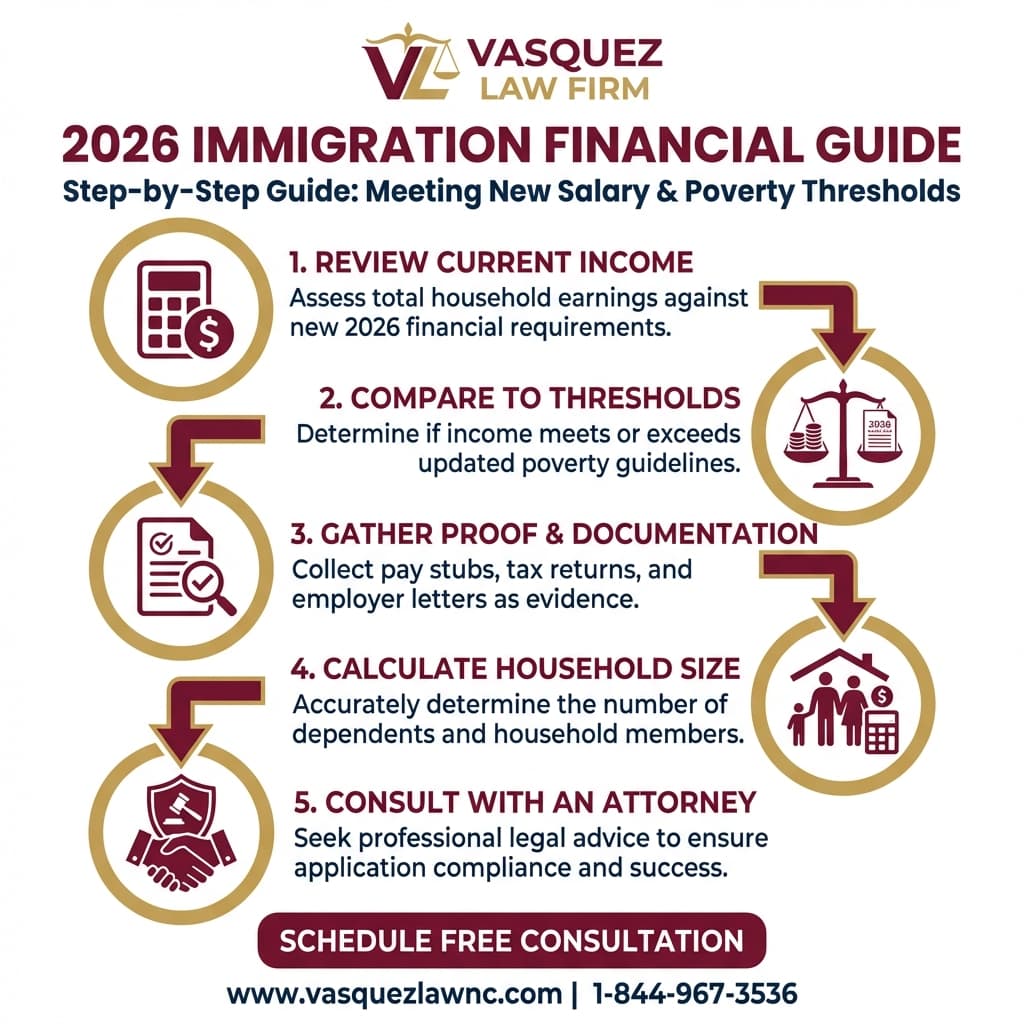
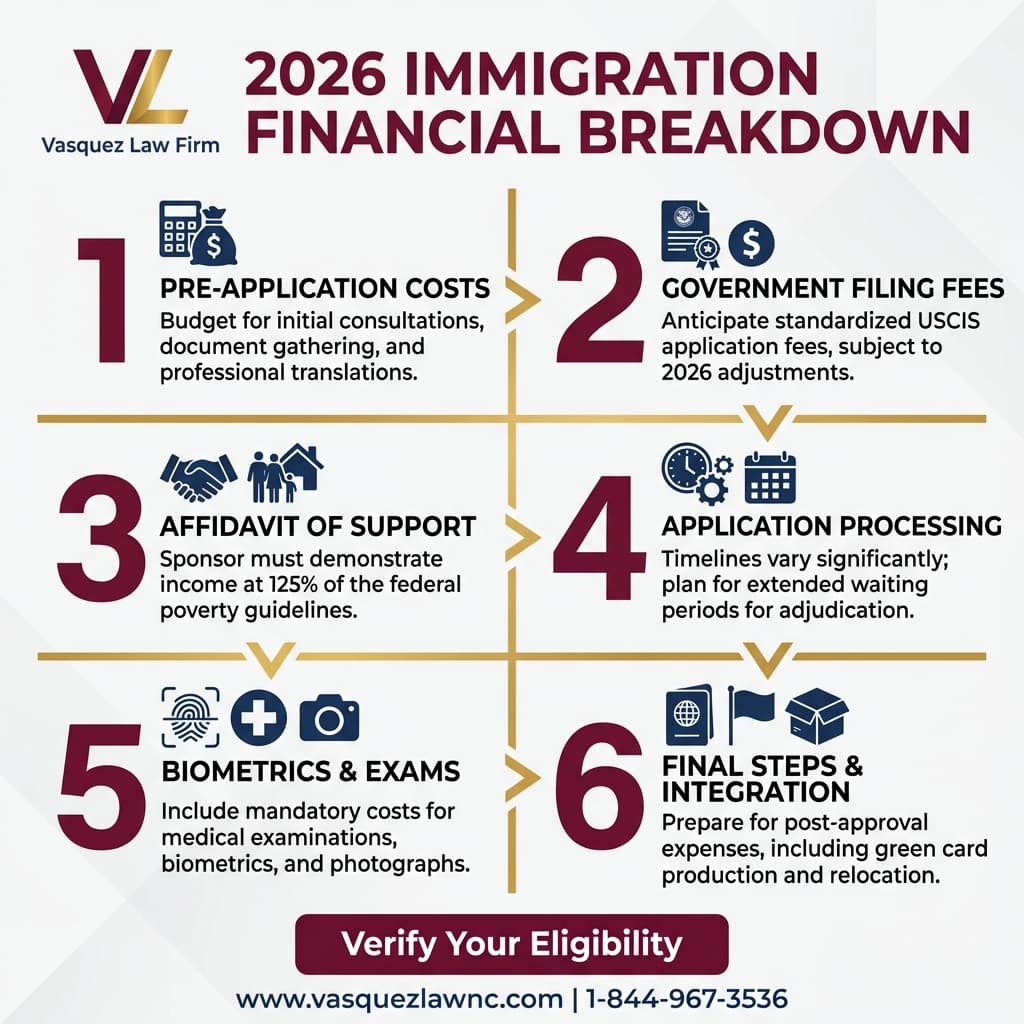
For family-based immigration, the Affidavit of Support (Form I-864) is a cornerstone document where minimum salary changes are most keenly felt. The sponsor, typically the petitioner, must demonstrate an income at or above 125% of the Federal Poverty Guidelines for their household size. For active duty military personnel petitioning for their spouse or child, this threshold is reduced to 100% of the FPG.
These guidelines are updated annually, usually in January, and the 2026 figures will be critical for all new and pending applications. If a sponsor's income falls below the required threshold, they may need to find a joint sponsor or include the value of assets to meet the requirement. This is a common challenge, and understanding how to properly document income and assets is vital for success.
For instance, if the FPG for a household of four in 2026 is $30,000, a sponsor would generally need to show an annual income of at least $37,500. These figures vary based on the number of dependents, including the intending immigrant, and the state of residence for Alaska and Hawaii. The specific requirements can be found in 8 U.S.C. § 1182(a)(4), which addresses public charge inadmissibility, and further detailed in 8 C.F.R. § 213a.
Prevailing Wage Determinations for Employment Visas
For employment-based immigration, particularly nonimmigrant visas like H-1B, H-2B, and E-3, as well as some employment-based green cards, the concept of prevailing wage is paramount. The Department of Labor (DOL) publishes prevailing wage determinations which are the average wage paid to similarly employed workers in a specific occupation in the area of intended employment. These wages are updated regularly and employers must adhere to these minimum salary changes.
Employers sponsoring foreign workers must ensure that the offered wage meets or exceeds the prevailing wage for that occupation and geographic area, or the actual wage paid to other employees with similar experience and qualifications, whichever is higher. This requirement is in place to protect both U.S. workers from unfair competition and foreign workers from exploitation. The DOL's Foreign Labor Certification program is responsible for these determinations.
Failure to pay the prevailing wage can result in significant penalties for employers, including back pay to the employee, fines, and even debarment from participating in future immigration programs. Therefore, employers must diligently track and implement the latest prevailing wage updates. Vasquez Law Firm assists businesses in Smithfield, North Carolina, and across Florida in navigating these complex labor certification and prevailing wage rules to ensure compliance and smooth visa processing.
Key Visa Categories Affected by Salary Changes
Several critical visa categories are directly impacted by adjustments to minimum salary and prevailing wage requirements. These include:
- H-1B Visas: Highly skilled workers in specialty occupations. Employers must pay at least the prevailing wage for the occupation in the specific geographic area.
- E-2 Treaty Investor Visas: While not a direct salary requirement, investors must demonstrate substantial capital investment and the ability of the enterprise to generate more than a marginal income, often implying a certain level of profitability to support themselves and their employees.
- L-1 Intracompany Transferee Visas: For employees transferring from a foreign office to a U.S. office. While there isn't a strict prevailing wage, the salary must be commensurate with similar positions in the U.S. and sufficient to support the transferee and their family.
- EB-2 and EB-3 Employment-Based Green Cards: These categories often require a PERM Labor Certification, which includes a prevailing wage determination by the DOL.
Each of these categories has unique financial considerations that demand careful attention to the latest minimum salary changes and guidelines. Consulting with an immigration attorney is crucial to ensure all financial requirements are met and documented correctly.
Steps to Address Minimum Salary Changes in Your Application
Navigating minimum salary changes in immigration applications requires a proactive approach. Here are key steps individuals and employers should take:
- Stay Informed: Regularly check official government websites, such as USCIS and the Department of Labor, for updates on Federal Poverty Guidelines and prevailing wage determinations in 2026.
- Review Your Income/Assets: If you are a sponsor, calculate your household income and compare it against the latest FPG. If you are an employer, verify that the offered wage for your foreign employee meets the current prevailing wage.
- Gather Comprehensive Documentation: Collect all necessary financial documents, including tax returns, W-2s, pay stubs, and bank statements. For assets, obtain official appraisals or statements of value.
- Consider a Joint Sponsor: If your income falls short, explore the option of a qualified joint sponsor. This individual must meet the income requirements independently and be willing to accept financial responsibility for the immigrant.
- Adjust Salary Offers: Employers should be prepared to adjust salary offers to meet new prevailing wage standards to avoid RFEs or denials.
- Consult an Immigration Attorney: An experienced lawyer can help you understand the specific requirements for your case, identify potential issues, and ensure all documentation is properly prepared and submitted.
Proactive engagement with these steps can significantly streamline your immigration process and prevent common pitfalls associated with financial eligibility. For assistance with your case, learn more about our immigration services.
Common Mistakes to Avoid with Salary Requirements
When dealing with minimum salary changes in immigration, even minor errors can lead to significant setbacks. Avoiding these common mistakes can save you time, stress, and potential denials:
- Underestimating Household Size: Failing to include all dependents, including the intending immigrant and any other individuals claimed on tax returns, can lead to an incorrect FPG calculation.
- Using Outdated Guidelines: Relying on previous year's FPG or prevailing wage rates instead of the most current 2026 figures will result in an RFE or denial.
- Incomplete Financial Documentation: Submitting only one or two pay stubs instead of a full year's tax returns and W-2s can raise doubts about income stability.
- Ignoring Asset Requirements: If relying on assets to meet the income threshold, failing to provide sufficient documentation of ownership and value can be a critical error.
- Incorrectly Calculating Joint Sponsor Income: Assuming a joint sponsor's income is sufficient without verifying their household size and FPG compliance can be a costly mistake.
- Not Addressing Prevailing Wage Updates: Employers who do not regularly check and adjust to new prevailing wage determinations risk non-compliance and legal issues.
- Failing to Seek Legal Advice: Attempting to navigate complex financial requirements without the guidance of an immigration attorney often leads to avoidable errors and delays.
If you only remember one thing: Always use the most current Federal Poverty Guidelines and prevailing wage determinations, and ensure all financial documentation is complete and accurate for your specific immigration application in 2026.
Don't face your legal challenges alone. Our team is here to help you every step of the way.
Call today: 1-844-967-3536 | Se Habla Español
NC, FL, and Nationwide Immigration Notes
The impact of minimum salary changes on immigration applications is primarily governed by federal law, meaning the core requirements for the Affidavit of Support and prevailing wage determinations apply uniformly across the United States, including North Carolina and Florida. However, practical considerations and local legal support can vary.
North Carolina Considerations
In North Carolina, many immigrants and their sponsors reside in areas like Smithfield, Charlotte, or Raleigh. While the federal guidelines remain constant, local economic conditions can influence the ability of sponsors to meet income thresholds. An attorney in North Carolina can provide localized guidance on accessing financial resources or understanding specific employment landscapes that might impact an employer's ability to meet prevailing wage requirements.
Florida Considerations
Similarly, in Florida, with its large immigrant population, understanding the nuances of how federal minimum salary changes interact with local economic realities is important. Whether you are in Miami, Orlando, or Tampa, the federal poverty guidelines and prevailing wage rates are the same as elsewhere in the U.S. However, an immigration attorney familiar with Florida's diverse economic sectors can offer tailored advice for both individual sponsors and businesses operating within the state.
Nationwide Framework for Salary Requirements
It is crucial to remember that immigration law is federal. Therefore, the official sources for minimum salary requirements, such as the Federal Poverty Guidelines from the Department of Health and Human Services and prevailing wage data from the Department of Labor, apply nationwide. While state-specific minimum wage laws exist, they generally do not directly affect federal immigration sponsorship requirements unless a sponsor's income is derived from such wages. The primary concern is always meeting the federal thresholds to avoid public charge inadmissibility under 8 U.S.C. § 1182(a)(4).
When to Call a Lawyer Now About Salary Changes
Given the complexities of minimum salary changes and their direct impact on immigration cases, knowing when to seek legal counsel is crucial. You should contact an immigration attorney immediately if:
- You have received a Request for Evidence (RFE) related to your income or an Affidavit of Support.
- Your income or your sponsor's income is close to the Federal Poverty Guidelines threshold.
- You are an employer and are unsure about the correct prevailing wage for a foreign worker's position.
- You anticipate a change in your financial situation that might affect your sponsorship eligibility.
- You need to find a joint sponsor and require assistance understanding the requirements.
- Your immigration application has been delayed or denied due to financial eligibility issues.
- You are applying for an employment-based visa and need to ensure compliance with DOL wage rules.
- You are confused about how the 2026 minimum salary changes apply to your specific case.
Vasquez Law Firm offers comprehensive legal support to immigrants and employers dealing with these critical financial aspects of immigration. Don't risk your future; get expert advice.
About Vasquez Law Firm
At Vasquez Law Firm, we combine compassion with aggressive representation. Our motto "Yo Peleo" (I Fight) reflects our commitment to standing up for your rights. We understand the profound impact that minimum salary changes and other legal complexities can have on your life and your family's future. Our dedicated team is here to provide the knowledgeable and experienced legal advocacy you need.
- Bilingual Support: Se Habla Español - our team is fully bilingual, ensuring clear communication.
- Service Areas: We proudly serve clients in North Carolina, Florida, and offer nationwide immigration services.
- Experience: With over 15 years of dedicated legal experience, we have a proven track record of helping clients navigate complex legal matters.
- Results: Attorney Vasquez and his team have successfully handled thousands of cases across multiple practice areas, always striving for the best possible outcome.
Attorney Trust and Experience
Attorney Vasquez holds a Juris Doctor degree and is admitted to practice in both the North Carolina State Bar and Florida Bar. With over 15 years of dedicated legal experience, he has built a reputation for providing personalized attention and achieving favorable outcomes for his clients. His deep understanding of immigration law, including the intricacies of financial requirements and minimum salary changes, makes him a trusted advocate for individuals and businesses alike. You can learn more about Attorney Vasquez and our commitment to justice.
Frequently Asked Questions
Is the federal minimum wage changing in 2026?
While the federal minimum wage has been $7.25 per hour since 2009, there are ongoing legislative efforts to increase it. Even if the federal minimum wage itself doesn't change, the Federal Poverty Guidelines, which directly impact immigration sponsorship requirements, are updated annually by the Department of Health and Human Services, reflecting economic shifts and influencing income thresholds for sponsors.
How do minimum salary changes affect family-sponsored green cards?
Minimum salary changes primarily affect family-sponsored green cards through the Affidavit of Support (Form I-864). Sponsors must demonstrate an income at or above 125% of the updated Federal Poverty Guidelines for their household size. If these guidelines increase in 2026, sponsors will need to show a higher income to meet the requirement, potentially requiring a joint sponsor or additional asset documentation.
What is a prevailing wage, and how does it relate to minimum salary changes?
A prevailing wage is the average wage paid to similarly employed workers in a specific occupation in the area of intended employment. It is determined by the Department of Labor and is crucial for many employment-based visas (e.g., H-1B). Annual updates to prevailing wages mean employers must adjust their salary offers to meet new minimums, directly impacting the cost and feasibility of sponsoring foreign workers.
What if my sponsor's income doesn't meet the new minimum salary requirements?
If your sponsor's income falls below the updated 2026 minimum salary requirements, there are several options. They may use assets (like property or bank accounts) to make up the difference, or you might need a joint sponsor. A joint sponsor must independently meet the income requirements and be willing to accept financial responsibility for the immigrant. Consulting an attorney can help explore these options.
Do state minimum wage laws affect federal immigration applications?
Generally, state minimum wage laws do not directly affect the federal income thresholds for immigration sponsorship, which are based on Federal Poverty Guidelines. However, if a sponsor's income is derived from state minimum wage employment, it must still be sufficient to meet the federal FPG requirements. Employers must comply with the higher of federal, state, or prevailing wage laws.
How often are the Federal Poverty Guidelines updated?
The Federal Poverty Guidelines (FPG) are typically updated annually, usually in January, by the U.S. Department of Health and Human Services. These yearly adjustments are crucial for immigration purposes, as they directly influence the minimum income required for sponsors submitting an Affidavit of Support. Staying current with these updates for 2026 is essential for accurate application submissions.
Can I use a co-sponsor for my immigration application if my primary sponsor's income is too low?
Yes, you can use a co-sponsor (also known as a joint sponsor) for your immigration application if the primary sponsor's income does not meet the required Federal Poverty Guidelines. The joint sponsor must also be a U.S. citizen or lawful permanent resident, meet the income requirements independently, and submit their own Form I-864 Affidavit of Support. They share financial responsibility with the primary sponsor.
Where can I find the official 2026 Federal Poverty Guidelines?
The official 2026 Federal Poverty Guidelines will be published by the U.S. Department of Health and Human Services (HHS) on their website, typically in January of 2026. You can find the most current and historical FPG tables directly on the HHS website. It is crucial to refer to these official sources to ensure you are using the correct figures for your immigration application.
Are there different minimum salary requirements for different visa types?
Yes, minimum salary requirements vary significantly depending on the visa type. Family-sponsored visas rely on the Federal Poverty Guidelines for Affidavit of Support. Employment-based visas, such as H-1B, often require employers to pay the prevailing wage determined by the Department of Labor, which can be much higher than federal or state minimum wages. Specific requirements depend on the visa category and occupation.
What happens if I submit an application with outdated salary information?
Submitting an immigration application with outdated salary information, especially regarding Federal Poverty Guidelines or prevailing wage rates, will likely result in a Request for Evidence (RFE) from USCIS or the Department of Labor. This will significantly delay your application processing. In some cases, it could even lead to a denial if the issue is not adequately addressed within the given timeframe, making current information vital.
Sources and References
- U.S. Citizenship and Immigration Services (USCIS)
- U.S. Department of State
- Executive Office for Immigration Review (EOIR)
- 8 U.S.C. § 1182 - Inadmissible aliens
- 8 C.F.R. § 213a - Affidavits of Support by Sponsoring Aliens
Ready to take the next step? Contact Vasquez Law Firm today for a free, confidential consultation. We're committed to fighting for your rights and achieving the best possible outcome for your case.
Start Your Free Case Evaluation Now
Call us: 1-844-967-3536
Se Habla Español - Estamos aquí para ayudarle.


William Vasquez
Founder & CEO, Vasquez Law Firm, PLLC
William Vasquez is the founder and CEO of Vasquez Law Firm, PLLC, a results-driven firm specializing in immigration, criminal defense, personal injury, and workers' compensation. A U.S. Air Force veteran and recipient of the Joint Service Achievement Medal, William is dedicated to fiercely fighting for his clients' rights.
Related Legal Services
Need legal help? Learn more about NC immigration legal team, or contact us for a free evaluation.
You can also visit statewide immigration attorneys for more information.