What Is US Immigration Enforcement and How It Works in 2026
Understand US immigration enforcement in 2026, including detaining, rights, and procedures. Contact Vasquez Law for a free consultation today.
Published on May 24, 2026
Talk to an immigration attorney
Free call. A clear plan for your case.
Free & confidential · Se habla espanol · 24/7

Have questions? Talk to an attorney - free evaluation.
Call 1-844-967-3536Worried how the latest immigration news affects you?
Schedule a confidential case review with an immigration attorney - know exactly where you stand.
What Is US Immigration Enforcement and How It Works in 2026
US immigration enforcement plays a critical role in managing who can legally enter and stay in the country. In 2026, understanding what US immigration enforcement means for residents in Raleigh, NC, and Orlando, FL is essential. This article explains the enforcement agencies’ mission, processes such as detaining, common legal questions, and how to protect your rights during encounters with immigration authorities. Learn practical tips and legal resources available from Vasquez Law Firm to navigate challenges related to immigration and customs enforcement.
Need help with your case? Our experienced attorneys are ready to fight for you. Se Habla Español.
Or call us now: 1-844-967-3536
Quick Answer
US immigration enforcement involves federal agencies like ICE tasked with detaining individuals who violate immigration laws. They operate under strict legal guidelines to protect public safety and national security. You have rights during enforcement encounters, including the right to remain silent and obtain legal counsel. Knowing these rights helps protect you if you face detaining or removal proceedings.
- ICE and Customs enforce immigration laws nationwide
- Detaining occurs only with legal cause
- You can ask if you are free to leave
- Right to an attorney is crucial
- Enforcement respects federal law limits
Understanding US Immigration Enforcement
Imagine you are driving in Raleigh, NC, and you see immigration agents making stops. US immigration enforcement is the collective effort by federal agencies to uphold immigration laws, prevent illegal entry, and remove those without lawful status. Agencies primarily include Immigration and Customs Enforcement (ICE) and Customs and Border Protection (CBP), both part of the Department of Homeland Security.
The mission is to protect America from threats and illegal immigration while ensuring due process. ICE handles domestic enforcement, including detaining people suspected of violating immigration laws inside the country. CBP manages border security, inspecting travelers and goods entering the U.S.
Enforcement is governed by statutes like 8 U.S.C. § 1227, which lists reasons noncitizens may be deported, including criminal convictions or visa violations. Regulations, such as 8 C.F.R. § 287.3, define the powers and duties of immigration officers. Officers must balance enforcement with respecting constitutional rights.
If you live in Raleigh, NC or Orlando, FL, it’s important to understand the role of local law enforcement. Unlike some states with sanctuary policies, North Carolina cooperates with federal immigration authorities, so immigration enforcement actions happen regularly. Florida also has agreements that let federal agents act. Being informed helps you respond appropriately if approached.
Learn more about our immigration legal services to protect your rights in Raleigh and Orlando.
Who Enforces Immigration Laws?
- U.S. Immigration and Customs Enforcement (ICE): Responsible for investigative and enforcement actions inside the U.S., including detaining individuals.
- Customs and Border Protection (CBP): Guards U.S. borders, including airports, seaports, and land crossings.
- Office of the Principal Legal Advisor: Provides legal support to enforcement actions.
Detention and Removal Process
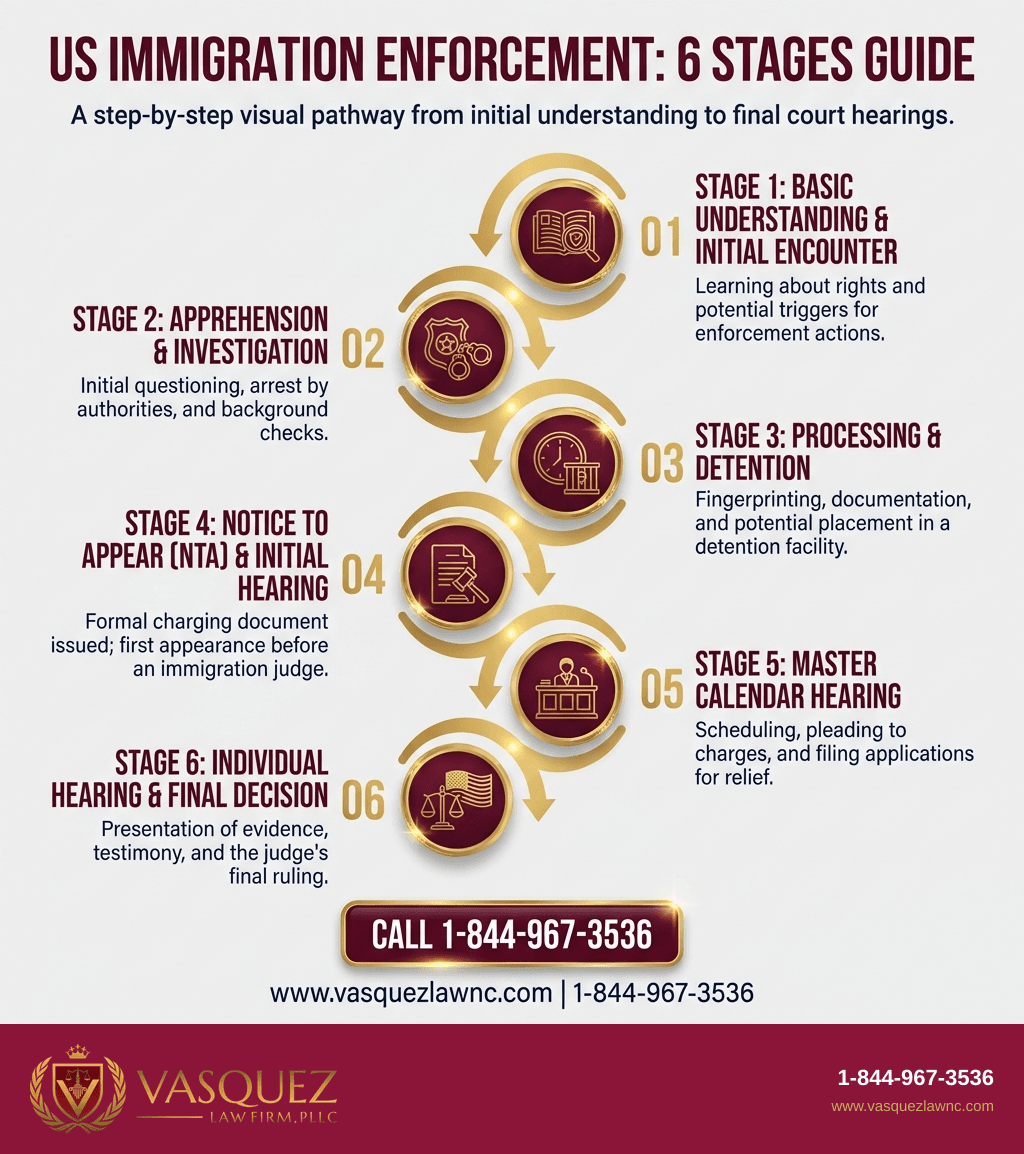
When enforcement officers detain someone, the individual is usually taken to a detention facility. They have the right to a bond hearing unless detained for serious crimes. The Executive Office for Immigration Review (EOIR) conducts removal proceedings where immigration judges decide if a person can stay legally or must be deported.
Vasquez Law Firm’s attorneys help navigate these complex procedures to protect clients’ rights and explore relief options.
Key Steps If Detained by ICE
Consider the case of Maria, detained by ICE at her workplace in Orlando. What should she do? First, it is crucial to know your rights and act calmly. Here are key steps if ICE detains you:
- Stay calm and be respectful: Avoid arguing or resisting as it can worsen your situation.
- Ask if you are free to go: If the agents say yes, you may leave; if no, you can request to speak to a lawyer.
- Do not provide false information or documents: Truthfulness is important as lying can lead to penalties.
- Invoke your right to remain silent: Politely tell agents you want to speak with an attorney before answering questions.
- Contact an attorney immediately: Legal representation is critical to protect your case and explore remedies such as asylum or cancellation of removal.
If you are in Raleigh, NC, or Orlando, FL, contacting Vasquez Law Firm early can help secure your rights and provide tailored legal support.
Bonds and Immigration Court Hearing
After detention, individuals may request a bond hearing where a judge sets bail for release. Not everyone qualifies, especially those with criminal convictions. When cases go to removal hearings, evidence and legal arguments are presented to determine eligibility for relief or deportation. Vasquez Law Firm’s attorneys prepare strong defenses for their clients at this stage.
Legal Rights During Detainment
- Right to an attorney (though not provided free)
- Right to remain silent (5th Amendment protection)
- Right to humane treatment and medical care
- Right to challenge detention and removal in court
Common Mistakes to Avoid During Enforcement Encounters
Many individuals unintentionally harm their immigration cases through common mistakes. These often stem from panic or misinformation. Avoid these errors:
- Talking too much or volunteering information: Anything you say can be used against you. Ask to speak to an attorney before answering.
- Providing false documents: This can result in criminal charges and loss of eligibility for relief.
- Failing to carry valid identification if legally required: Though you are not obligated to carry immigration papers at all times, lack of IDs in some states can trigger stops.
- Ignoring court dates or deportation orders: Missing hearings leads to automatic removal.
- Resisting detention or fleeing: This can lead to additional criminal charges.
If you only remember one thing: Always know and calmly assert your rights, and contact an experienced immigration attorney like those at Vasquez Law Firm promptly.
Timeline: What Happens After Enforcement Actions
After an immigration enforcement encounter, the timeline varies but generally includes:
- Day 0-5: Initial detainment and possible bond request.
- Week 1-4: Preparation of removal proceedings and first court hearing.
- Month 1-6: Potential hearings, submission of evidence, applications for relief.
- Month 6-24: Final judgment or voluntary departure, possible appeals.
Each case is unique and timing may vary significantly based on factors like case complexity and backlog at EOIR.
Costs and Fees: What Impacts the Price
Costs for dealing with immigration enforcement issues include attorney fees and filing fees for relief applications. Factors influencing fees include:
- Complexity of the case and number of hearings
- Type of relief sought (e.g., asylum, cancellation of removal)
- Urgency of response
- Need for expert witnesses or translation services
Vasquez Law Firm offers transparent pricing and free initial consultations to evaluate your case.
NC, FL, and Nationwide Notes
North Carolina Notes
North Carolina actively cooperates with federal ICE enforcement. Detention centers exist nearby, and individuals in Raleigh face regular enforcement actions. Local law enforcement may participate under federal programs. Understanding your rights locally is critical.
Florida Notes
Florida, including Orlando, FL where Vasquez Law Firm assists clients, supports robust immigration enforcement. State and local police often partner with ICE in joint operations. Being prepared with legal counsel is essential.
Nationwide Concepts
Immigration enforcement operates under federal law throughout the country, but policies and priorities can change. The Department of Homeland Security continually updates enforcement guidelines. Always stay informed of changes that could affect your rights.
When to Call a Lawyer Now
- If ICE or Border Patrol questions or detains you
- Upon receiving a Notice to Appear in immigration court
- When facing criminal charges with immigration consequences
- If you fear deportation or removal
- Before signing any immigration documents
- After missing an immigration court date
- If you want to apply for asylum or other immigration relief
- If a family member is detained
- If local police ask immigration-related questions
About Vasquez Law Firm
At Vasquez Law Firm, we combine compassion with aggressive representation. Our motto "Yo Peleo®" (I Fight) reflects our commitment to standing up for your rights.
- Bilingual Support: Se Habla Español — Spanish-speaking attorneys and staff available
- Service Areas: North Carolina, Florida, and nationwide immigration services
- Experience: Over 30 years helping clients navigate complex legal matters
- Results: Thousands of successful cases across multiple practice areas
Attorney Trust and Experience
William J. Vásquez is admitted to the North Carolina State Bar (2011) and to the U.S. Courts of Appeals for the 4th, 5th, and 11th Circuits. Florida-jurisdiction matters at the firm are handled by Florida Bar attorney Harold Estrada-Rodriguez (FL Bar No. 1041171). The firm has provided dedicated legal representation since 2011, with personalized attention to each client's case.
Don't wait to get the help you deserve. Call us now for immediate assistance.
Se Habla Español
Frequently Asked Questions
Can ICE stop me and ask for my ID?
ICE officers can ask for identification if they have reasonable suspicion of immigration violations, but they cannot stop or detain without legal cause. You have the right to remain silent and ask if you are free to go. It is important to remain calm and not provide false information during interactions.
Can I sue ICE for detaining me as a U.S. citizen?
If ICE detains a U.S. citizen by mistake, you may have legal grounds to sue for wrongful detention. However, proving wrongful detention requires clear evidence. Contacting an attorney quickly is critical to protect your rights and seek a remedy.
What is the starting salary for ICE officers?
The starting salary for ICE officers varies but typically begins around $50,000 to $55,000 per year. Salaries increase with experience and rank. ICE is a federal agency under the Department of Homeland Security with competitive compensation packages.
Can ICE legally pull you over during traffic stops?
ICE does not have the authority to conduct routine traffic stops solely for immigration enforcement. However, local law enforcement agencies may cooperate with ICE under certain programs. Always understand your rights during any traffic stop involving immigration questions.
What is the mission of US immigration enforcement?
The mission of US immigration enforcement agencies is to protect America from illegal immigration while upholding laws fairly. This includes detaining those who violate immigration laws and removing individuals who pose threats to public safety or national security.
What should I do if ICE is detaining me?
If ICE detains you, remain calm and do not resist. You have the right to request an attorney and should contact one immediately. Avoid signing documents without legal advice. An attorney can guide you through your options and possible relief from removal.
Are there limits on immigration detention duration?
Yes. ICE detention is subject to limits to prevent indefinite holding. Federal law and court rulings require that detainees receive a timely bond hearing or be released if detention is prolonged without adequate cause.
How do immigration and customs enforcement differ?
Immigration enforcement primarily deals with individuals inside the U.S. who may violate immigration laws, while customs enforcement focuses on goods and people crossing U.S. borders. Both work under the umbrella agency ICE but have distinct responsibilities.
Sources and References
- U.S. Citizenship and Immigration Services
- Executive Office for Immigration Review
- Legal Information Institute
Take the first step toward justice today. Our team is standing by to help.
Start Your Free Evaluation Now
Call us: 1-844-967-3536
Se Habla Español - Estamos aquí para ayudarle.



William Vasquez
Founder & CEO, Vasquez Law Firm, PLLC
William Vasquez is the founder and CEO of Vasquez Law Firm, PLLC, a results-driven firm specializing in immigration, criminal defense, personal injury, and workers' compensation. A U.S. Air Force veteran and recipient of the Joint Service Achievement Medal, William is dedicated to fiercely fighting for his clients' rights.
Related Legal Services
Need legal help? Learn more about how our immigration attorneys can help, or contact us for a free evaluation.
You can also visit North Carolina immigration law firm for more information.