What Trump Green Card Changes Mean for You in 2026
Wondering about Trump green card changes in 2026? Learn how new rules affect your application and renewal. Contact us for a free consultation.
Published on May 23, 2026
Talk to an immigration attorney
Free call. A clear plan for your case.
Free & confidential · Se habla espanol · 24/7
Have questions? Talk to an attorney - free evaluation.
Call 1-844-967-3536Free Tool
Check Your USCIS Case Status Now
Enter your receipt number - get the official USCIS status in English or Spanish. No registration.
What Trump Green Card Changes Mean for You in 2026
Recent changes to green card policies under the Trump administration still affect many immigrants in Raleigh. Understanding these updates in 2026 is crucial for green card seekers and holders navigating the application and renewal processes. This article explains key points, timelines, and what you need to know to protect your status.
Need help with your case? Our experienced attorneys are ready to fight for you. Se Habla Español.
Or call us now: 1-844-967-3536
Quick Answer
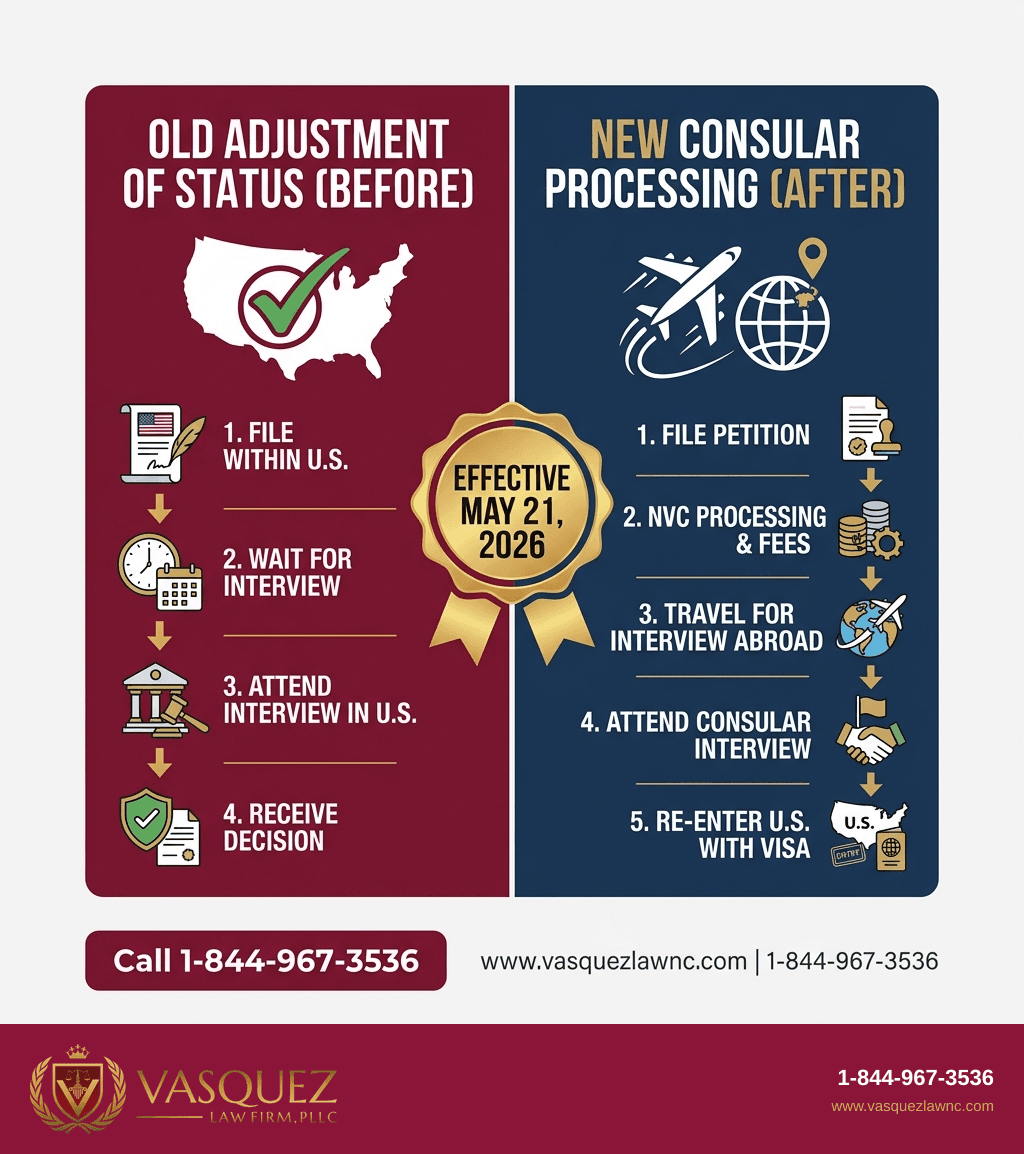
In 2026, Trump green card changes require many applicants to process their green cards outside the U.S., shifting from adjustment of status to consular processing for many categories. Green card holders should be aware of risks like revocation and increased ICE enforcement.
- Many must leave U.S. for consular interviews
- Green card renewal now faces longer processing
- Stricter rules on continuous residence apply
- Increased ICE detentions on rule violations
- Exceptions exist for select categories
Understanding Trump Green Card Changes
In early 2026, new policies from the former Trump administration continue to reshape the green card landscape, especially for Raleigh immigrants. A key shift requires green card applicants previously eligible to adjust status from within the U.S. under Form I-485 to complete consular processing outside the country. This means applicants must apply for immigrant visas at U.S. consulates abroad and wait outside the United States before returning as lawful permanent residents.
This change aims to reduce in-country processing times and enforce stringent vetting at consulates. However, it complicates the process for many who must temporarily relocate or risk their visa application’s denial. The Trump admin green card policy particularly impacts family-sponsored and employment-based applicants in certain visa categories.
Green card renewal also faces policy updates that require holders to demonstrate continuous residence and avoid any legal infractions that might lead to revocation. For example, certain criminal convictions or overstays can trigger ICE detention or removal proceedings. The Trump green card policy is stricter on these rules than earlier administrations.
It is important to understand that these changes occur within the federal immigration framework governed by 8 U.S.C. § 1255 and 8 C.F.R. § 245.1, which regulate adjustment of status eligibility and consular processing guidelines. The Executive Office for Immigration Review (EOIR) also plays a role when removal proceedings arise.
As the landscape changes, Raleigh and Orlando residents should stay informed with trusted legal counsel. Our immigration services at Vasquez Law Firm help clients navigate these complex rules.
Why the Change to Consular Processing?
The Trump administration cited concerns about fraud and overstays for shifting many green card applicants to consular processing. The theory is that consulates abroad offer more reliable identity verification and security vetting than domestic adjustment.
While this approach delays applicants from starting life as permanent residents inside the U.S., it may also reduce backlog in domestic USCIS offices. Practical impacts vary depending on your visa category, home country, and personal situation.
Who is Exempt From Leaving the U.S.?
Certain categories like refugees adjusting status, diversity visa lottery winners, and immediate relatives of U.S. citizens can still apply for adjustment of status within the U.S. Exceptions are detailed in USCIS policy manuals and are critical to review for eligibility.
Step-by-Step Guidance for Applicants
- Determine Eligibility: Verify if your green card category requires consular processing or adjustment of status. Consulting a knowledgeable attorney can clarify this distinction.
- File Petition: Submit the appropriate immigrant petition (Form I-130 for family, I-140 for employment) to USCIS.
- Wait for Priority Date: Track your priority date in the visa bulletin; only after it becomes current can you proceed.
- Consular Processing: If required, complete Form DS-260 online and attend a consular interview at a U.S. embassy or consulate abroad.
- Prepare Documentation: Collect supporting evidence such as birth certificates, passports, medical exams, and proof of legal status.
- Attend Interview & Biometrics: Participate in biometrics collection and interviews as scheduled.
- Receive Decision: USCIS or consulate issues decision. If approved, issuance of immigrant visa or adjustment of status occurs.
- Enter U.S. as Permanent Resident: For consular processing, re-entry with immigrant visa finalizes status; for adjustment, USCIS mail the green card.
During every step, legal representation improves chances of success and reduces risk of procedural errors.
Help From Vasquez Law Firm
Our Raleigh and Orlando immigration team guides clients through petition filing, evidence preparation, consular interview coaching, and dealing with USCIS inquiries. We ensure updated compliance with the latest Trump green card policy adjustments.
Documents and Evidence Checklist
- Valid passport and government-issued ID
- Birth and marriage certificates with certified translations
- Proof of legal status or entry (I-94, visas, stamps)
- Immigrant petition receipt and priority date documentation
- Completed forms I-485 or DS-260 as applicable
- Medical examination report (Form I-693) conducted by authorized physicians
- Employment verification letters or financial affidavits
- Criminal background checks or police certificates when required
- Evidence of continuous residence to prove eligibility for renewal
Failure to provide these documents accurately can cause delays or denials.
Timeline and What to Expect
- Petition approval: 6 to 12 months average (per USCIS processing times as of 2026)
- Visa priority wait: varies by country and category, sometimes years
- Consular processing interview scheduling: 3 to 6 months after petition approval
- Green card renewal processing: 8 to 14 months (based on USCIS published wait times)
- Delays may occur due to security review or administrative processing
Understanding these timelines helps plan travel, work, and family arrangements.
Costs and Fees Overview
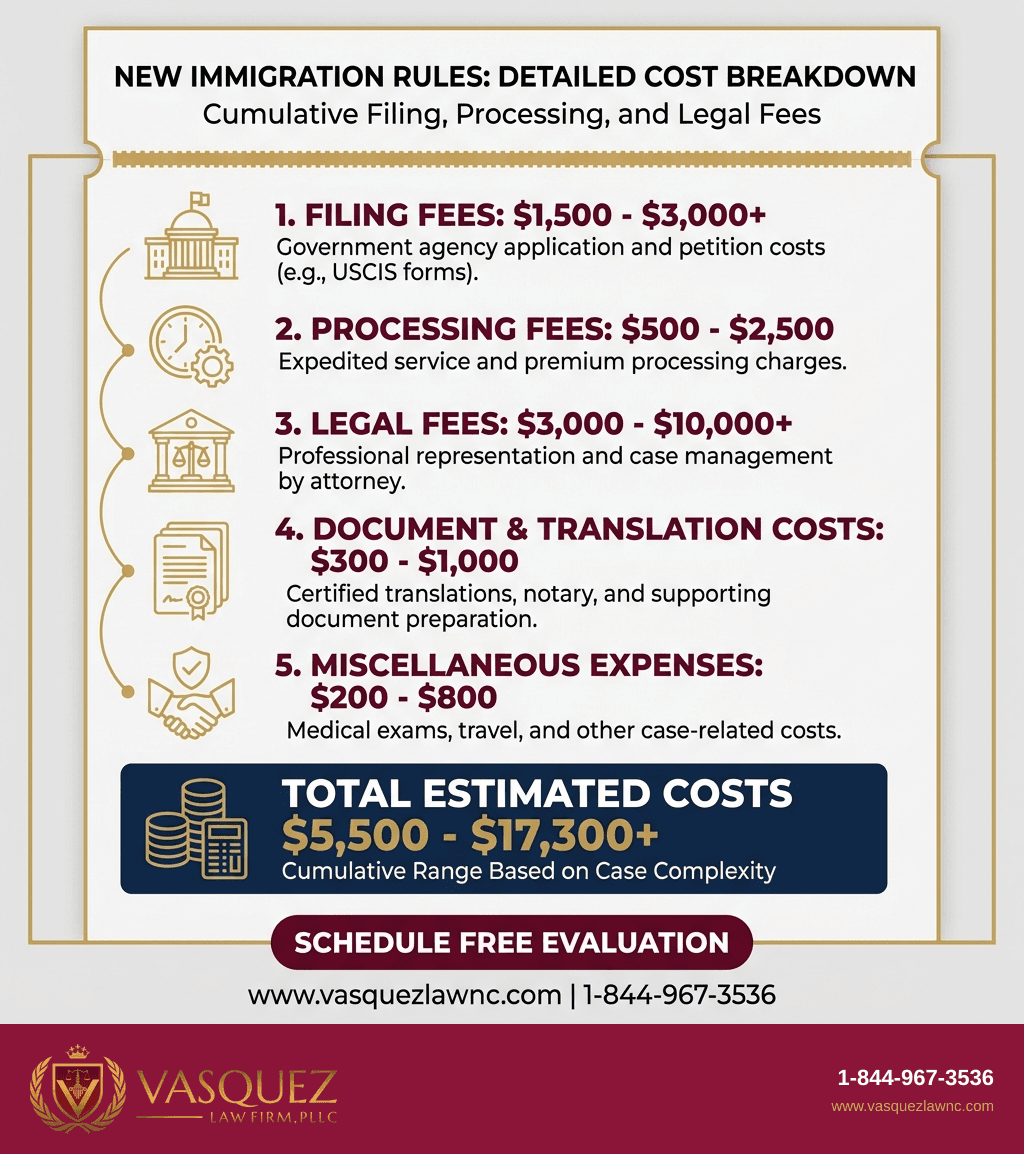
- Form I-130 filing fee: $535
- Form I-140 filing fee: $700
- Consular visa application fee: $325
- USCIS adjustment of status fee: $1,140 plus $85 biometrics
- Medical examination fees vary ($200–$500 typical)
- Attorney fees vary by complexity but expect several thousand dollars
- Additional costs for document translations and travel expenses may apply
Fee waivers or reductions may be available in limited circumstances, requiring early consultation.
Common Mistakes to Avoid
- Incomplete or incorrect forms: Always double-check form accuracy before filing.
- Missing deadlines: Track all deadlines for submission and responses carefully.
- Ignoring Trump policy updates: Rules may have changed since last application.
- Failing to attend consular interviews: No-shows result in denials.
- Not maintaining valid status while applying: Overstays risk revocation.
- Submitting insufficient evidence: Provide clear, consistent documentation.
- Failing to respond to USCIS or consulate requests: Timely responses are essential.
- Not consulting a qualified immigration attorney: Guidance reduces risk of denials or detentions.
If you only remember one thing: always follow updated Trump green card policies and seek legal help early.
North Carolina and Florida Notes
North Carolina Notes
Raleigh residents experience USCIS service centers handling immigrant petitions and adjustment requests consistent with federal standards. Local attorneys help coordinate paperwork and consular processing with embassies. State-level immigration courts under EOIR may get involved if removal proceedings arise for alleged violations related to green card status.
Florida Notes
For Orlando immigrants, the federal immigration process is the same. However, Florida clients may face specific consular interview challenges depending on consulate location. Vasquez Law Firm’s bilingual team in Orlando provides tailored advice, especially for Spanish-speaking clients proceeding with consular processing amid Trump green card changes.
Nationwide Concepts (General Only)
The Trump green card policy changes apply nationwide, affecting consular processing and stricter enforcement. USCIS processing times data at USCIS Processing Times is essential for current estimates. All applicants must adhere to federal law regardless of state.
When to Call a Lawyer
- If you receive a Notice of Intent to Deny (NOID) or Request for Evidence (RFE)
- If you face ICE detention or arrest risks
- If your case involves criminal charges or inadmissibility
- If USCIS delays exceed published averages without explanation
- If consular interview results are negative or delayed indefinitely
- If you are unsure whether consular processing applies to your case
- If you need assistance with green card renewal paperwork
- If you have complex family or employment immigration scenarios
About Vasquez Law Firm
At Vasquez Law Firm, we combine compassion with aggressive representation. Our motto "Yo Peleo®" (I Fight) reflects our commitment to standing up for your rights.
- Bilingual Support: Se Habla Español — Spanish-speaking attorneys and staff available
- Service Areas: North Carolina, Florida, and nationwide immigration services
- Experience: Over 30 years helping clients navigate complex legal matters
- Results: Thousands of successful cases across multiple practice areas
Attorney Trust and Experience
William J. Vásquez is admitted to the North Carolina State Bar (2011) and to the U.S. Courts of Appeals for the 4th, 5th, and 11th Circuits. Florida-jurisdiction matters at the firm are handled by Florida Bar attorney Harold Estrada-Rodriguez (FL Bar No. 1041171). The firm has provided dedicated legal representation since 2011, with personalized attention to each client's case.
Don't wait to get the help you deserve. Call us now for immediate assistance.
Se Habla Español
Frequently Asked Questions
What is the new green card rule introduced by the Trump administration?
The Trump green card changes in 2026 require many applicants to process their green cards outside the U.S., shifting from adjustment of status to consular processing for many categories. This policy aims to improve vetting but complicates applicants' ability to stay in the U.S. during processing.
Can a green card be revoked under the new Trump green card policy?
Yes, green card holders can face revocation if they violate rules like long absences or criminal offenses. Trump-era policies increased scrutiny and enforcement, making it important to maintain compliance and seek legal help if at risk.
Are green card holders being detained by ICE more frequently?
ICE enforcement has intensified in 2026, including detaining some green card holders suspected of violations. Each case varies. If detained, it's critical to have immediate legal representation to protect rights and navigate proceedings.
Can you still get a green card under Trump’s immigration policies?
Yes, green cards remain available through family, employment, and humanitarian routes. However, applicants face tougher procedural requirements and may need to complete consular processing abroad. Legal guidance is key to success.
What is the process timeline for green card renewal in 2026?
Renewal generally takes 8 to 14 months with USCIS in 2026, but delays are common due to heightened security reviews. Applying early and consulting an attorney helps avoid status lapses.
How do the new rules affect H1B workers seeking green cards?
H1B visa holders often must complete their green card process overseas rather than using adjustment of status. This can disrupt employment authorization timing and pose challenges staying in the U.S. during the transfer period.
What documents are essential for a successful green card application under new policies?
Applicants need valid passports, birth certificates, proof of legal entry, completed forms (I-485 or DS-260), medical exams, and evidence supporting family or employment claims. Precise documentation is crucial under stricter Trump rules.
Where can Raleigh and Orlando residents get assistance with green card issues?
Residents in Raleigh, NC, and Orlando, FL, can contact Vasquez Law Firm for expert immigration legal support. Our bilingual attorneys provide guidance on application, renewal, and consular processing tailored to your needs and federal law compliance.
Sources and References
- U.S. Citizenship and Immigration Services
- Executive Office for Immigration Review
- Legal Information Institute
Take the first step toward justice today. Our team is standing by to help.
Start Your Free Evaluation Now
Call us: 1-844-967-3536
Se Habla Español - Estamos aquí para ayudarle.
William Vasquez
Founder & CEO, Vasquez Law Firm, PLLC
William Vasquez is the founder and CEO of Vasquez Law Firm, PLLC, a results-driven firm specializing in immigration, criminal defense, personal injury, and workers' compensation. A U.S. Air Force veteran and recipient of the Joint Service Achievement Medal, William is dedicated to fiercely fighting for his clients' rights.
Related Legal Services
Need legal help? Learn more about learn about our immigration practice, or contact us for a free evaluation.
You can also visit immigration attorneys across North Carolina for more information.