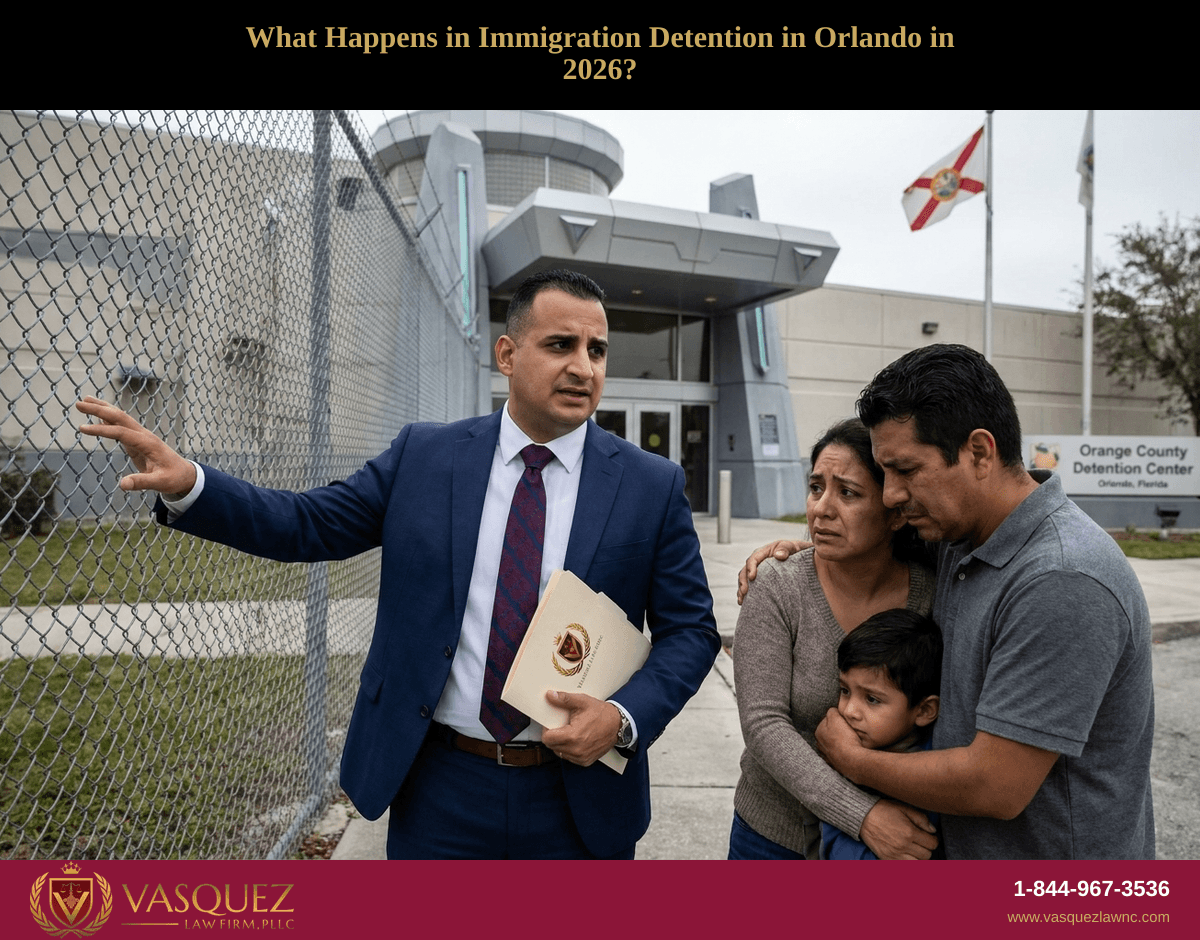
What Happens in Immigration Detention in Orlando in 2026?
Wondering how immigration detention works in 2026? Learn key facts, timelines, and rights for Orlando detainees. Call Vasquez Law for a free evaluation.
Published on May 16, 2026
Talk to an immigration attorney
Free call. A clear plan for your case.
Free & confidential · Se habla espanol · 24/7
Have questions? Talk to an attorney - free evaluation.
Call 1-844-967-3536Worried how the latest immigration news affects you?
Schedule a confidential case review with an immigration attorney - know exactly where you stand.
USCIS Case Status
Check your USCIS case status
Enter your receipt number and get the official status. Free, no registration.
What Happens in Immigration Detention in Orlando in 2026?
Immigration detention affects thousands of immigrants each year in Orlando and across the country. This guide explains how immigration detention centers operate in 2026, who can be detained, and what rights detainees have. If you or a loved one is in an immigration detention center, knowing these facts is crucial for protecting your rights and making informed decisions. Learn about the detention process, legal options, and how Vasquez Law Firm in Raleigh, NC and Orlando, FL can assist you.
Need help with your case? Our experienced attorneys are ready to fight for you. Se Habla Español.
Or call us now: 1-844-967-3536
Quick Answer
Immigration detention involves holding non-citizens temporarily to ensure court appearances or removal. Detention lengths vary but can last from weeks to months. Detainees have certain legal rights but must act quickly to secure counsel. In Orlando and nationwide, understanding your rights and legal options is essential.
- Detention is used for enforcement and court appearance assurance
- Both experienced and recent arrivals can be detained
- Detention periods vary widely and impact case preparation
- Detainees have rights to legal representation and medical care
- Orlando-area detention centers follow federal rules supervised by ICE
How Immigration Detention Works
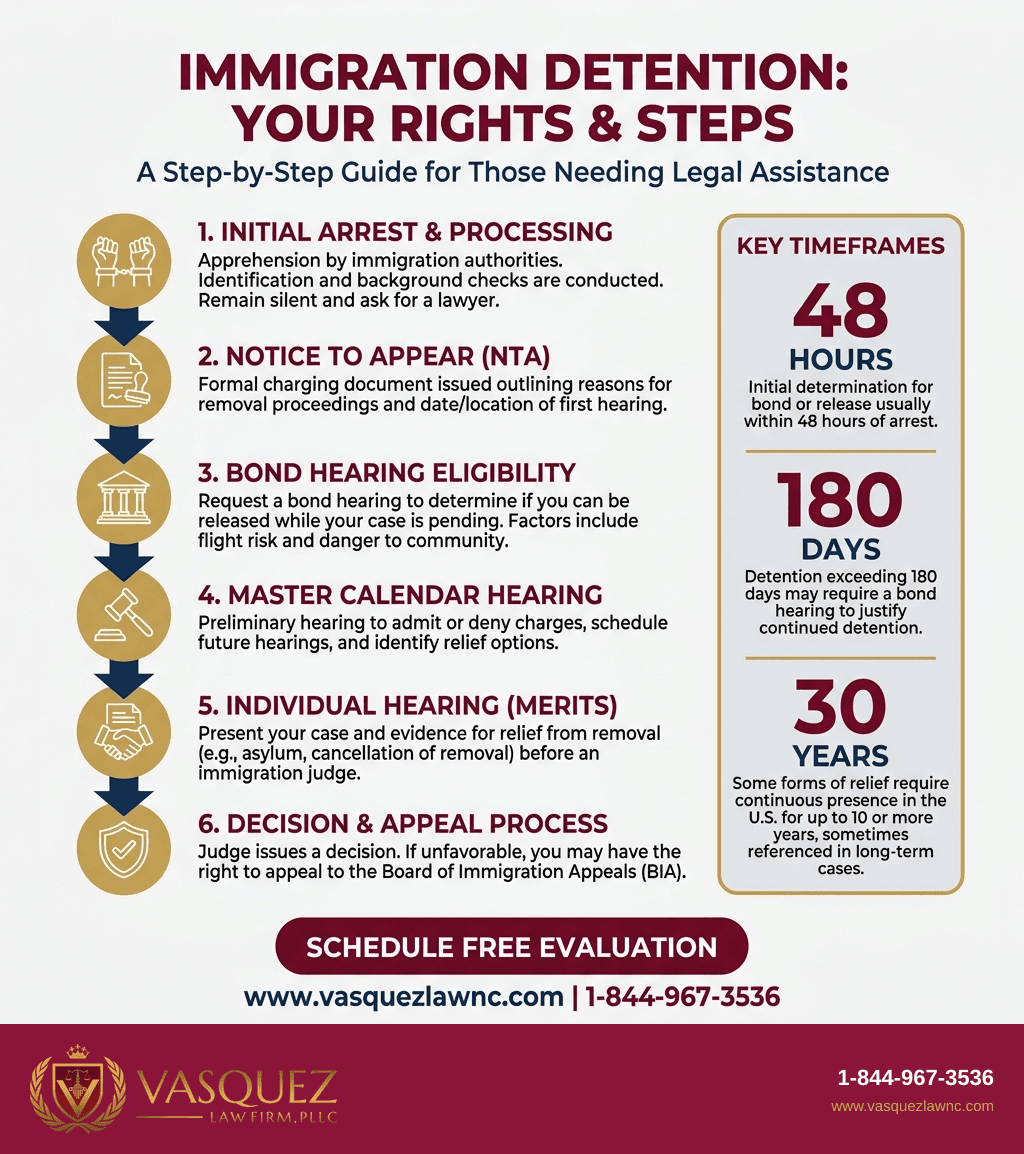
This infographic explains key steps in immigration detention, including who can be detained, lengths of detention, legal rights, and bond options—all relevant for people in Orlando and nationwide.
Understanding Immigration Detention
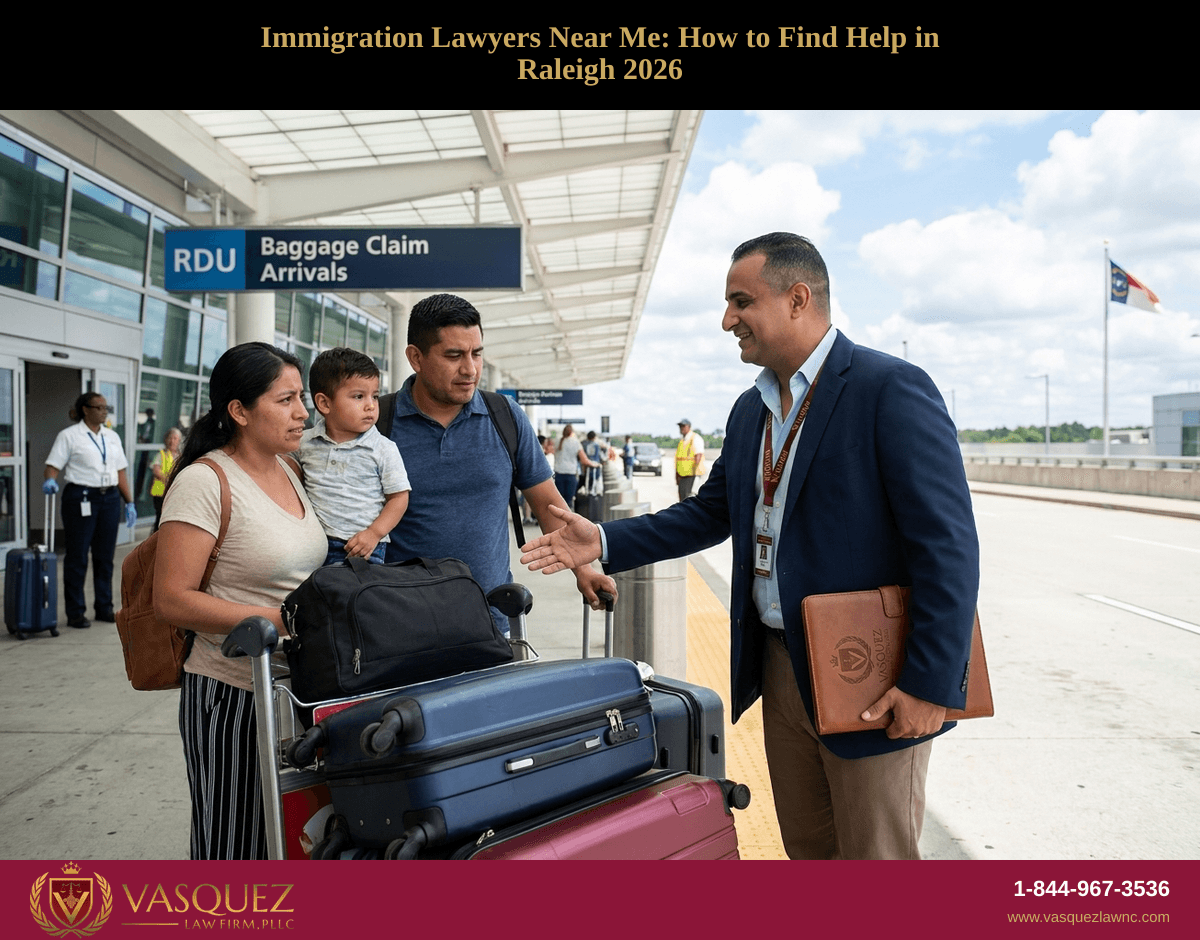
Imagine arriving at an airport, and ICE agents approach to question your immigration status. If considered a removal risk or flight risk, you might be taken into immigration detention. Immigration detention involves civil confinement of non-citizens while their immigration case processes. It is not a criminal sentence but a method used by ICE to ensure individuals appear for removal hearings or comply with immigration law.
In 2026, immigration detention centers across the United States – including those near Orlando, Florida – are run under federal oversight. These centers hold people ranging from asylum seekers to individuals with final orders of removal. Detention centers include facilities like the Krome Detention Center near Miami and others managed by ICE or private contractors.
While detained, most individuals are awaiting removal hearings before immigration courts operated by the Executive Office for Immigration Review (EOIR). Detention ensures they remain available to the court, which operates under 8 U.S.C. § 1226, governing apprehension and detention of noncitizens.
Many detainees come from diverse nationalities, predominantly from Mexico, Guatemala, Honduras, and El Salvador, based on recent ICE reports. Detention is not based on nationality but on enforcement priorities and individual cases. Importantly, lawful permanent residents and others with immigration status can also be detained under certain conditions.
Our immigration services help locals in Orlando understand how detention may affect their cases and family lives.
Who Can Be Detained?
Anyone who is not a U.S. citizen and is suspected of violating immigration law can face detention. This includes recent border crossers, visa overstays, individuals with prior removal orders, and those caught entering unlawfully. Even permanent residents might be detained if they violate criminal laws that make them removable under immigration statutes.
Rights of Detainees
Detainees have rights to be treated humanely, access legal counsel, medical care, and opportunity to seek bond or parole. Unlike criminal cases, detainees are not guaranteed government-appointed lawyers, but legal representation is critical in navigating immigration proceedings. Understanding these rights early can change outcomes.
Step-by-Step: What to Do if Detained
- Contact an Immigration Attorney Immediately: Legal advice can protect your rights and guide bond requests or removal defense. Vasquez Law Firm offers consultations in Raleigh, NC and Orlando, FL.
- Inform Family and Trusted Persons: Let someone know where you are detained for support and communication.
- Request Custody Review or Bond Hearing: Many detainees can apply for bond to be released while awaiting court.
- Prepare Your Documents: Gather identification, immigration papers, and evidence to support your case.
- Attend All Immigration Hearings: Failure to attend can cause removal orders in absentia.
- Explore Relief Options: Based on your status, consider asylum, cancellation of removal, or adjustments of status under 8 U.S.C. § 1255.
Documents and Evidence Checklist
- Government-issued ID or passport
- Copy of any visa or work authorization
- Any correspondence from ICE or EOIR
- Medical records if there are health concerns
- Proof of family ties or community involvement
- Previous immigration applications or filings
Checklist for Immigration Detention Cases
This checklist highlights key documents to gather for detainees preparing their immigration case or bond request, focusing on those detained near Orlando.
Timeline: What to Expect During Detention
- Initial Detention and Booking: Usually within 24-48 hours after detention, recorded at the detention center.
- Master Calendar Hearing: Within a few weeks, detainees face a preliminary hearing in immigration court.
- Bond Hearing: May occur shortly after initial hearings to determine eligibility for release.
- Individual Merits Hearing: The full hearing on removal and relief claims usually is scheduled within several months.
- Appeals Process: If removed, appeals can extend the process another several months to years.
- Release or Removal: Based on decisions, detainees are either released under supervision or removed from the U.S.
Each case varies; delays can happen due to court backlog or medical issues. The Executive Office for Immigration Review manages these timelines nationally.
Common Mistakes and How to Avoid Them
- Not contacting an attorney quickly — early legal help can prevent deportation.
- Failing to attend immigration court hearings — can lead to removal orders.
- Ignoring bond eligibility — many detainees wrongly assume they cannot request bond.
- Sharing false information with ICE — could harm your case or lead to criminal charges.
- Losing or misplacing key documents — keep all immigration paperwork safe.
- Not informing family — support networks are vital during detention.
- Delaying medical care requests — health issues should be addressed promptly with detention center staff.
If you only remember one thing: Get legal help immediately and stay engaged in your case.
Jurisdiction Notes for NC, FL, and Nationwide
North Carolina Notes
In North Carolina, immigration detention cases often involve referrals to nearby ICE detention centers or jails. Legal advocates in Raleigh and surrounding areas offer support. Immigration court proceedings for NC detainees are held in nearby courts within the EOIR system.
Florida Notes
Florida detention centers include facilities near Orlando and Miami, like the Krome Detention Center. Florida has a large immigrant population with active removal proceedings. Local attorneys at Vasquez Law Firm’s Orlando office have specific experience with detention cases in this region.
Nationwide Concepts
Detention policies are federally governed under 8 U.S.C. § 1226 and 8 C.F.R. § 236.1. Across the U.S., detainees share the right to bond if eligible and the right to challenge removal. However, the practicality of access to counsel or conditions varies widely.
When to Call a Lawyer Now
- If you or a family member has been detained by ICE unexpectedly.
- If ICE agents come to your home or workplace.
- If you receive a Notice to Appear (NTA) without clear instructions.
- If bond is denied and you need help appealing the decision.
- If you suspect wrongful detention or misidentification.
- If you have criminal convictions affecting immigration status.
- If you need help filing for asylum or other relief while detained.
About Vasquez Law Firm
At Vasquez Law Firm, we combine compassion with aggressive representation. Our motto "Yo Peleo®" (I Fight) reflects our commitment to standing up for your rights.
- Bilingual Support: Se Habla Español — Spanish-speaking attorneys and staff available
- Service Areas: North Carolina, Florida, and nationwide immigration services
- Experience: Over 30 years helping clients navigate complex legal matters
- Results: Thousands of successful cases across multiple practice areas
Attorney Trust and Experience
William J. Vásquez is admitted to the North Carolina State Bar (2011) and to the U.S. Courts of Appeals for the 4th, 5th, 6th, and 11th Circuits. Florida-jurisdiction matters at the firm are handled by Florida Bar attorney Alekssandra Lopez. The firm has provided dedicated legal representation since 2011, with personalized attention to each client's case.
Don't wait to get the help you deserve. Call us now for immediate assistance.
Se Habla Español
Frequently Asked Questions
Can a U.S. citizen be detained by ICE for immigration reasons?
Generally, ICE detains non-citizens suspected of violating immigration laws. It is unusual for a U.S. citizen to be detained for immigration reasons, but mistakes can happen. If you believe a U.S. citizen has been wrongly detained by ICE, consulting an immigration lawyer is important immediately to protect their rights.
How long do people typically stay in immigration detention?
The length of immigration detention varies widely. Some detainees are released in days or weeks; others remain detained for months or longer while their cases proceed. Factors influencing detention duration include case complexity, court schedules, and bond eligibility. The Executive Office for Immigration Review reports average detention can range from 30 to 180 days depending on the location and case.
What is the purpose of immigration detention centers?
Immigration detention centers are facilities used by U.S. Immigration and Customs Enforcement to detain non-citizens pending immigration proceedings or removal. The purpose is to ensure individuals appear in court and to prevent flight risk or danger. Detention is not intended as punishment but as a compliance measure under immigration law. Conditions and oversight vary by center.
Can ICE deport permanent residents?
Yes, lawful permanent residents (green card holders) can be deported if they commit certain serious crimes or violate immigration laws. Criminal convictions like aggravated felonies often trigger deportation eligibility. Still, permanent residents have some defenses, such as cancellation of removal under INA § 240A(b), if they meet strict criteria and have strong family or hardship ties in the U.S.
What nationality is ICE deporting the most in 2026?
Data from ICE and Department of Homeland Security indicates that in 2026, nationals from Mexico, Guatemala, Honduras, and El Salvador remain the highest percentage of deportations. These numbers reflect broader migration trends but can vary depending on changing policies, enforcement priorities, and bilateral agreements.
What rights do detainees have in immigration detention centers?
Detainees have rights including access to legal counsel, communication with family, medical care, and protection from abuse. However, unlike criminal defendants, there is no guaranteed right to a government-appointed lawyer in immigration detention. Knowing one’s rights and securing legal assistance is vital to ensuring fair treatment and due process.
How can families find someone in an immigration detention center?
Families can use ICE’s online detainee locator at any time to find someone by name or Alien Registration Number (A-Number). This tool shows the detention center location and contact information. If the detainee is in a facility near Orlando, contacting local immigration attorneys can also provide help with case status and communications.
Can I sue ICE for detaining a U.S. citizen by mistake?
Detaining a U.S. citizen wrongly is a serious violation, and lawsuits may be possible in such cases. However, these are complex federal claims requiring proof of wrongful detention or civil rights violations. Consulting an attorney experienced in immigration and civil rights in Orlando or Raleigh is the best way to assess potential legal remedies.
Sources and References
- U.S. Citizenship and Immigration Services
- Executive Office for Immigration Review
- Legal Information Institute
Take the first step toward justice today. Our team is standing by to help.
Start Your Free Evaluation Now
Call us: 1-844-967-3536
Se Habla Español - Estamos aquí para ayudarle.

William Vasquez
Founder & CEO, Vasquez Law Firm, PLLC
William Vasquez is the founder and CEO of Vasquez Law Firm, PLLC, a results-driven firm specializing in immigration, criminal defense, personal injury, and workers' compensation. A U.S. Air Force veteran and recipient of the Joint Service Achievement Medal, William is dedicated to fiercely fighting for his clients' rights.
Related Legal Services
Need legal help? Learn more about our immigration legal services, or contact us for a free evaluation.
You can also visit statewide immigration attorneys for more information.