What Are U.S. Immigration Barriers and How They Impact You in 2026
Discover the main U.S. immigration barriers in 2026 and how they affect your case. Get expert guidance from Vasquez Law. Contact us for a free consultation.
Published on April 8, 2026
Talk to an immigration attorney
Free call. A clear plan for your case.
Free & confidential · Se habla espanol · Mon-Fri 8am-7pm, Sat 9am-2pm (ET)
Have questions? Talk to an attorney - free evaluation.
Call 1-844-967-3536Worried how the latest immigration news affects you?
Schedule a confidential case review with an immigration attorney - know exactly where you stand.
USCIS Case Status
Check your USCIS case status
Enter your receipt number and get the official status. Free, no registration.
What Are U.S. Immigration Barriers and How They Impact You in 2026
U.S. immigration barriers affect thousands of immigrants every year in Raleigh and across North Carolina and Florida. In 2026, these legal obstacles continue to create challenges for Dreamers and other immigrants aiming to live and work in the U.S. Understanding these barriers—such as legal restrictions, eligibility rules, and enforcement policies—can help you prepare and protect your immigration journey. This article breaks down what U.S. immigration barriers mean in 2026, the common hurdles immigrants face, and how Vasquez Law Firm can assist you with expert legal support.
Need help with your case? Our experienced attorneys are ready to fight for you. Se Habla Español.
Or call us now: 1-844-967-3536
Quick Answer
U.S. immigration barriers in 2026 include strict visa eligibility rules, longer processing times, and enforcement actions affecting Dreamers and undocumented immigrants in Raleigh, NC, and Florida. Legal expertise is essential to navigate these challenges and protect your rights.
- Visa and status application hurdles
- USCIS processing delays
- Increased ICE enforcement
- Restrictions for undocumented immigrants
- Legal pathways complicated by federal policies
Understanding U.S. Immigration Barriers
Imagine applying for a U.S. visa and facing denial because your country is on a restricted list or because you missed a complex paperwork deadline. In 2026, U.S. immigration barriers stop many hopeful immigrants from gaining legal status, especially in Raleigh and throughout North Carolina and Florida.
These barriers come in various forms. They include strict eligibility criteria, such as financial or criminal history requirements. Increased government enforcement leads to more ICE raids and detentions. Backlogs in processing cause long waits that put applicants at risk of losing status or asylum chances.
Understanding these barriers starts with knowing the federal framework, including USCIS rules and the Executive Office for Immigration Review's role. North Carolina and Florida have unique local enforcement practices and resources affecting immigrants’ cases. Vasquez Law Firm’s immigration services offer tailored strategies for navigating these.
Common U.S. Immigration Barriers
- Visa Ineligibility: Many applicants face denials due to past immigration violations, criminal records, or security concerns.
- Processing Delays: USCIS case backlogs often cause waits of months or years, during which status may lapse.
- Increased Enforcement: ICE’s authority to question undocumented immigrants and conduct workplace raids has grown.
- Policy Changes: National shifts, including Trump-era rules lingering into 2026, complicate asylum and DACA applications.
Legal Framework and Agencies
The U.S. Citizenship and Immigration Services (USCIS) is the primary agency processing visas and status applications. Their guidelines define strict eligibility in detail. The Department of State’s visa issuance policies determine entry restrictions for different countries according to official documentation. The Executive Office for Immigration Review (EOIR) handles immigration court proceedings, where many barriers become evident through denials and removals as explained here.
Key Steps to Overcome Barriers Legally
Consider the case of a Dreamer in Raleigh facing DACA expiration amid policy uncertainty. The pathway to legal relief involves complex steps including gathering evidence, filing petitions on time, and possibly appealing decisions. Here is what you should expect when tackling U.S. immigration barriers in 2026.
- Consult an Experienced Immigration Lawyer: Early legal help is critical. Our attorneys understand NC and FL nuances.
- Assess Eligibility and Status: Review your immigration history, current status, and risks related to enforcement.
- Gather Required Documentation: Immigration proof, financial records, family ties, and any supporting evidence must be collected thoroughly.
- Prepare and File Applications: Accurate, timely filings with USCIS or EOIR reduce risk of denials from technical errors.
- Respond to Requests for Evidence (RFEs): Prompt replies to USCIS inquiries are essential to keep cases moving.
- Attend Interviews and Hearings: Attend all required appointments with legal representation to present your case.
- Appeal or Refile if Needed: If denied, options include appeals or motions to reopen, which require professional handling.
Our team at Vasquez Law Firm helps clients through each legal process step. Learn more about our immigration services designed to protect your rights.
Common Mistakes to Avoid During Your Case
- Missing Deadlines: Late applications or responses often lead to automatic denials.
- Incomplete Documentation: Submitting partial or inconsistent evidence weakens your case.
- Ignoring Enforcement Notices: Not responding to ICE or USCIS communications escalates risks.
- Unauthorized Legal Advice: Relying on unqualified sources can cause critical errors.
- Failing to Disclose Criminal Records: Hiding past convictions may result in permanent bans.
- Not Asking for Legal Help Early: Waiting too long can close legal options.
- Misunderstanding Eligibility: Assuming automatic approval without proper legal eligibility review.
- Social Media Mistakes: Posting information that may negatively impact your case.
- Overlooking Health Coverage Issues: Unaware immigrants sometimes neglect health insurance options or risks.
If you only remember one thing: Early and knowledgeable legal help dramatically improves your chances of overcoming immigration barriers in 2026.
Timeline and What to Expect
- Month 1-3: Contact an immigration lawyer, gather documents, begin eligibility assessment.
- Month 4-6: Prepare and submit applications or petitions, and await USCIS receipt notices.
- Month 6-12: Respond to Requests for Evidence; prepare for interviews or court hearings.
- Month 12-18: Attend appointments; receive decisions; if denied, file appeals or reapplications.
- Month 18-24: Possible deportation proceedings or final status granted, depending on case outcomes.
Delays are common; staying proactive and compliant is vital. Vasquez Law Firm guides clients through each stage with regular updates and support.
Costs and Fees: What Impacts the Price
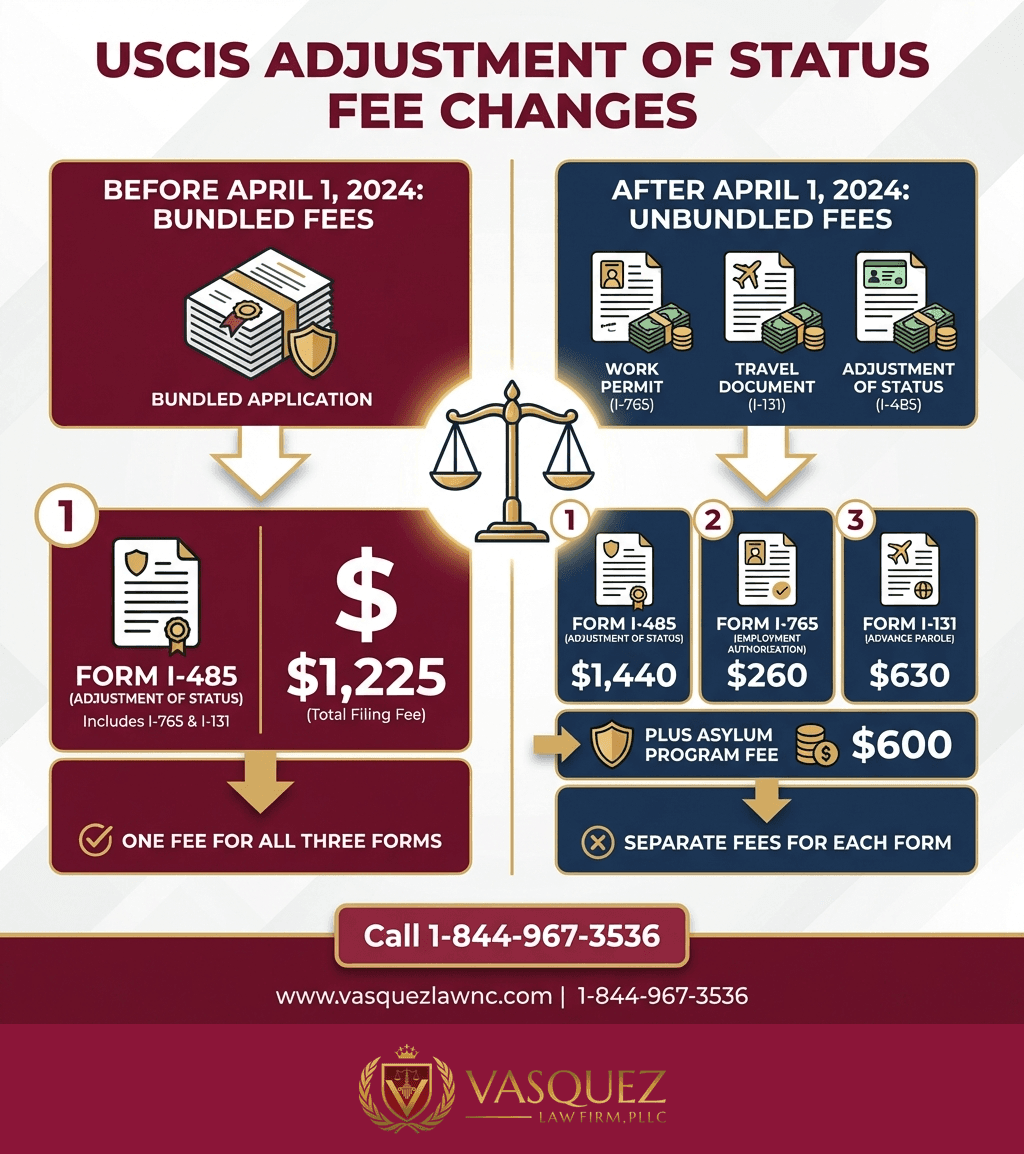
- Application Fees: USCIS fees vary by visa type, ranging from $100 to $1,760 or more.
- Legal Fees: Attorney fees depend on case complexity and can range from $1,500 to $5,000 or higher.
- Additional Costs: Document translations, medical exams, biometric appointments, and travel for hearings add expenses.
- Potential Additional Filings: Appeals or motions require extra fees and legal service costs.
Many clients seek our advice upfront to understand total expected costs and avoid surprises. We offer transparent pricing and payment plans.
NC, FL, and Nationwide Notes
North Carolina Notes
North Carolina has active ICE enforcement targeting undocumented workers and families. Local policies encourage compliance with federal law but provide some community resources. Raleigh has nonprofit groups assisting immigrants with legal clinics but always consult an attorney before acting.
Florida Notes
Florida experiences high immigration enforcement, including workplace raids and detention centers. However, the state’s diverse population means many organizations offer aid. Vasquez Law Firm’s Florida offices help clients navigate state-specific challenges tied to federal policies.
Nationwide Concepts (General Only, Rules Vary)
Immigration laws and enforcement priorities can shift based on federal administration decisions. While some barriers are nationwide, enforcement intensity and resources vary by region. Always seek local legal counsel with expertise in current state and federal practices.
When to Call a Lawyer Now
- If you receive a Notice to Appear in immigration court.
- When ICE requests or questions your immigration status.
- If your DACA, TPS, or other temporary status is about to expire.
- When you face a Request for Evidence from USCIS.
- If you are denied a visa or green card application.
- When you plan to travel internationally with a pending case.
- If you are subject to removal or deportation proceedings.
- When adding a family member like a spouse or child to your status.
About Vasquez Law Firm
At Vasquez Law Firm, we combine compassion with aggressive representation. Our motto "Yo Peleo" (I Fight) reflects our commitment to standing up for your rights.
- Bilingual Support: Se Habla Español - our team is fully bilingual
- Service Areas: North Carolina, Florida, and nationwide immigration services
- Experience: Over 30 years helping clients navigate complex legal matters
- Results: Thousands of successful cases across multiple practice areas
Attorney Trust and Experience
Attorney Vasquez holds a Juris Doctor degree and is admitted to practice in the North Carolina State Bar. With over 30 years of dedicated legal experience, he has built a reputation for providing personalized attention and achieving favorable outcomes for his clients.
Don't wait to get the help you deserve. Call us now for immediate assistance.
Se Habla Español
Frequently Asked Questions
What are the main barriers to U.S. immigration in 2026?
The main U.S. immigration barriers in 2026 include strict eligibility criteria for visas, long processing times, increased enforcement, and limited options for undocumented immigrants. Local policies in Raleigh, NC, and Florida can add unique challenges. Knowing these barriers helps immigrants prepare and seek the right legal help.
Can ICE legally ask for ID during an encounter?
Yes. ICE agents can ask for ID if they suspect someone is undocumented. Individuals have rights such as remaining silent and requesting an attorney. Knowing your rights and contacting an immigration lawyer immediately can protect you during these encounters.
Is Melania Trump an immigrant and does that affect current immigration policy?
Melania Trump legally immigrated and gained citizenship. While public figures highlight immigration, policies impact thousands of non-famous immigrants, including Dreamers and undocumented individuals. Policies evolve frequently and legal advice is critical for current immigrants.
Can I add my undocumented wife to my health insurance?
Generally, undocumented spouses cannot be added directly to employer or public health insurance programs in NC or FL. Some emergency Medicaid and limited community programs exist. Consulting an immigration attorney helps explore available options in your area.
Are more Americans leaving the U.S. in 2026?
Data shows a modest rise in Americans relocating abroad in 2026 due to various factors. This trend doesn’t directly affect immigration barriers but reflects broader migration patterns.
What legal options exist to overcome U.S. immigration barriers?
Options include filing for asylum, adjustment of status, family petitions, and employment visas. Each option has specific requirements and deadlines, making professional legal guidance essential to your success.
How do Trump-era policies continue to affect immigration in 2026?
Many policies from the Trump administration remain or influence current enforcement and asylum procedures. Knowing which rules apply to you helps plan your immigration strategy and avoid unexpected complications.
What should Dreamers in North Carolina know about 2026 immigration barriers?
Dreamers face continuing challenges due to uncertain federal support, application deadlines, and renewal criteria. Getting expert advice helps maintain protections like DACA and explore pathways to permanent residency.
Sources and References
- U.S. Citizenship and Immigration Services (USCIS)
- U.S. Department of State
- Executive Office for Immigration Review
- 8 U.S.C. § 1255 - Adjustment of Status
- 8 C.F.R. § 245.1 - Eligibility Regulations
Take the first step toward justice today. Our team is standing by to help.
Start Your Free Evaluation Now
Call us: 1-844-967-3536
Se Habla Español - Estamos aquí para ayudarle.

William Vasquez
Founder & CEO, Vasquez Law Firm, PLLC
William Vasquez is the founder and CEO of Vasquez Law Firm, PLLC, a results-driven firm specializing in immigration, criminal defense, personal injury, and workers' compensation. A U.S. Air Force veteran and recipient of the Joint Service Achievement Medal, William is dedicated to fiercely fighting for his clients' rights.
Related Legal Services
Need legal help? Learn more about our immigration legal services, or contact us for a free evaluation.
You can also visit North Carolina immigration lawyers for more information.