How the Trump Refugee Ban Affects Refugees in 2026
Wondering how the Trump refugee ban affects refugees in 2026? Learn your options and rights in Charlotte. Contact Vasquez Law for a free consultation today.
Published on March 31, 2026
Talk to an immigration attorney
Free call. A clear plan for your case.
Free & confidential · Se habla espanol · 24/7
Have questions? Talk to an attorney - free evaluation.
Call 1-844-967-3536Worried how the latest immigration news affects you?
Schedule a confidential case review with an immigration attorney - know exactly where you stand.
USCIS Case Status
Check your USCIS case status
Enter your receipt number and get the official status. Free, no registration.
How the Trump Refugee Ban Affects Refugees in 2026
The Trump refugee ban has continued affecting refugee admissions and policies in 2026, shaping who is allowed to enter the United States. This article explains the current state of the Trump refugee ban, the U.S. Refugee Admissions Program updates, and what refugees in Charlotte, NC, and Florida need to know about their rights and options. If you or your family face challenges due to refugee resettlement changes, our immigration attorneys at Vasquez Law Firm can help guide you through the process with bilingual support.
Need help with your case? Our experienced attorneys are ready to fight for you. Se Habla Español.
Schedule Your Free Case Evaluation
Or call us now: 1-844-967-3536
Quick Answer
The Trump refugee ban restricts refugee admissions in 2026, lowering caps and increasing screening. Refugees must meet federal criteria and may face delays or removal risks. Legal help is essential to navigate these challenges.
- Refugee numbers are limited under current Presidential Determination
- Screening processes have become more rigorous and lengthy
- Refugees with legal status face removal only for serious violations
- Programs vary in Charlotte, North Carolina, and Florida
- An experienced immigration attorney can protect your rights
Understanding the Trump Refugee Ban and Policy Changes
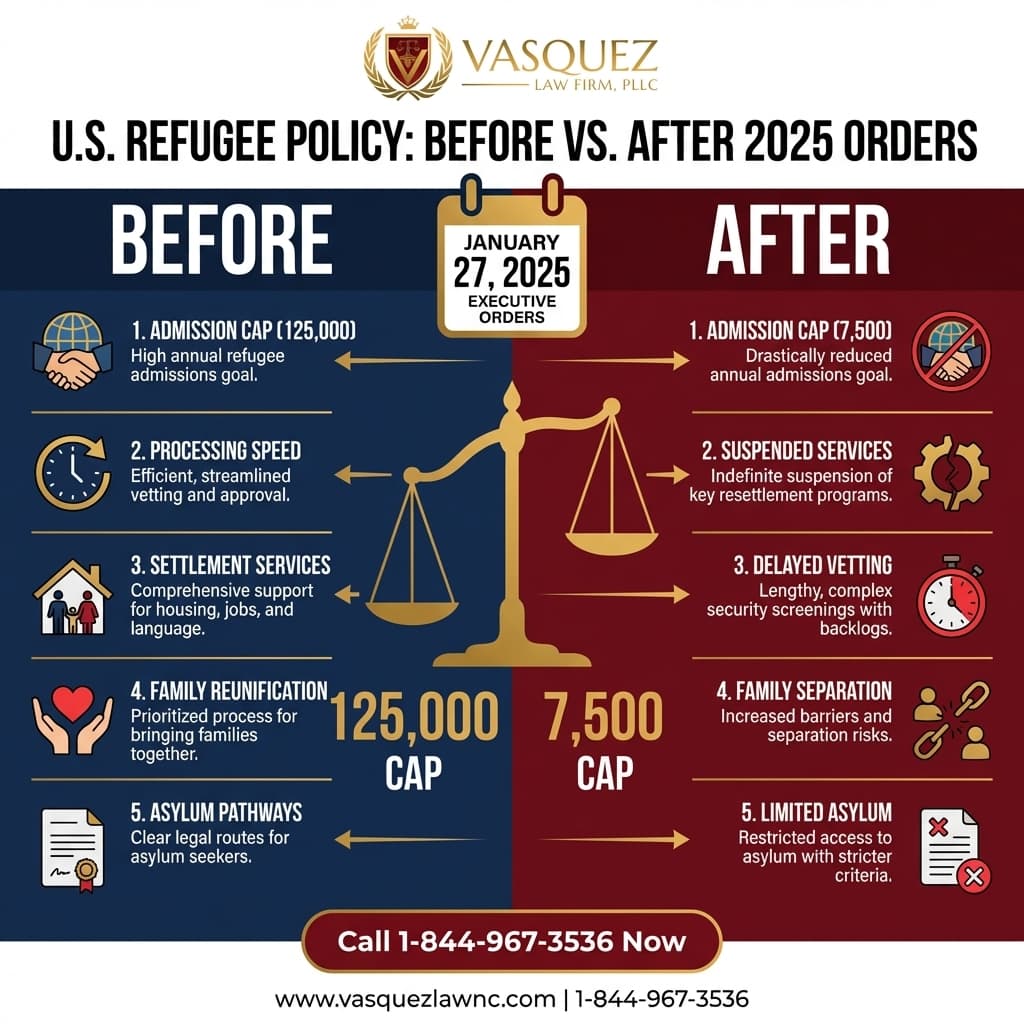
In 2017, the Trump administration imposed a refugee ban that significantly altered the U.S. refugee resettlement landscape. Even as of 2026, the aftereffects of this policy continue to restrict the number of refugees allowed admission each fiscal year. The administration's refugee ban included indefinite pauses on some resettlement and reductions in overall refugee caps through the Presidential Determination process.
The Presidential Determination sets a yearly ceiling on refugee admissions based on national security assessments and foreign policy priorities. For 2026, President Biden maintained a lower cap compared to pre-2017 years, reflecting ongoing cautious refugee policy amid geopolitical concerns.
The U.S. Refugee Admissions Program (USRAP) coordinates refugee applications, screenings, and approvals. Under the Trump refugee policy, USRAP suffered delays and stricter vetting, impacting refugees seeking resettlement, especially from certain countries. As such, refugees allowed entry face longer wait times and more stringent documentation requirements.
The refugee ban also introduced more selective standards, limiting eligible refugees in some regions. These changes affect states like North Carolina and Florida, both significant destinations due to their welcoming immigrant communities. Refugees in Charlotte and other major cities must understand how these policies affect their cases and the practical steps needed to remain compliant.
For individuals navigating these complexities, connecting with knowledgeable immigration attorneys in Charlotte is crucial to strengthen applications and address challenges arising from this policy.
Impact on Refugee Resettlement Services
Service providers like Church World Service (CWS) and other nonprofit agencies play a vital role in assisting refugees. The Trump refugee ban reduced funding and the number of refugees these organizations could assist. Refugee resettlement news today continues to report funding challenges and program adjustments impacting arrival and integration support.
Legal Framework and Enforcement
The federal government bases refugee admissions on statutes such as 8 U.S.C. § 1157, which authorize these programs within limits set by Presidential Determinations. The Executive Office for Immigration Review oversees removal proceedings, potentially affecting refugees who violate immigration terms. Understanding these laws helps refugees maintain status and avoid removal.
Step-by-Step: What Refugees Should Do Now
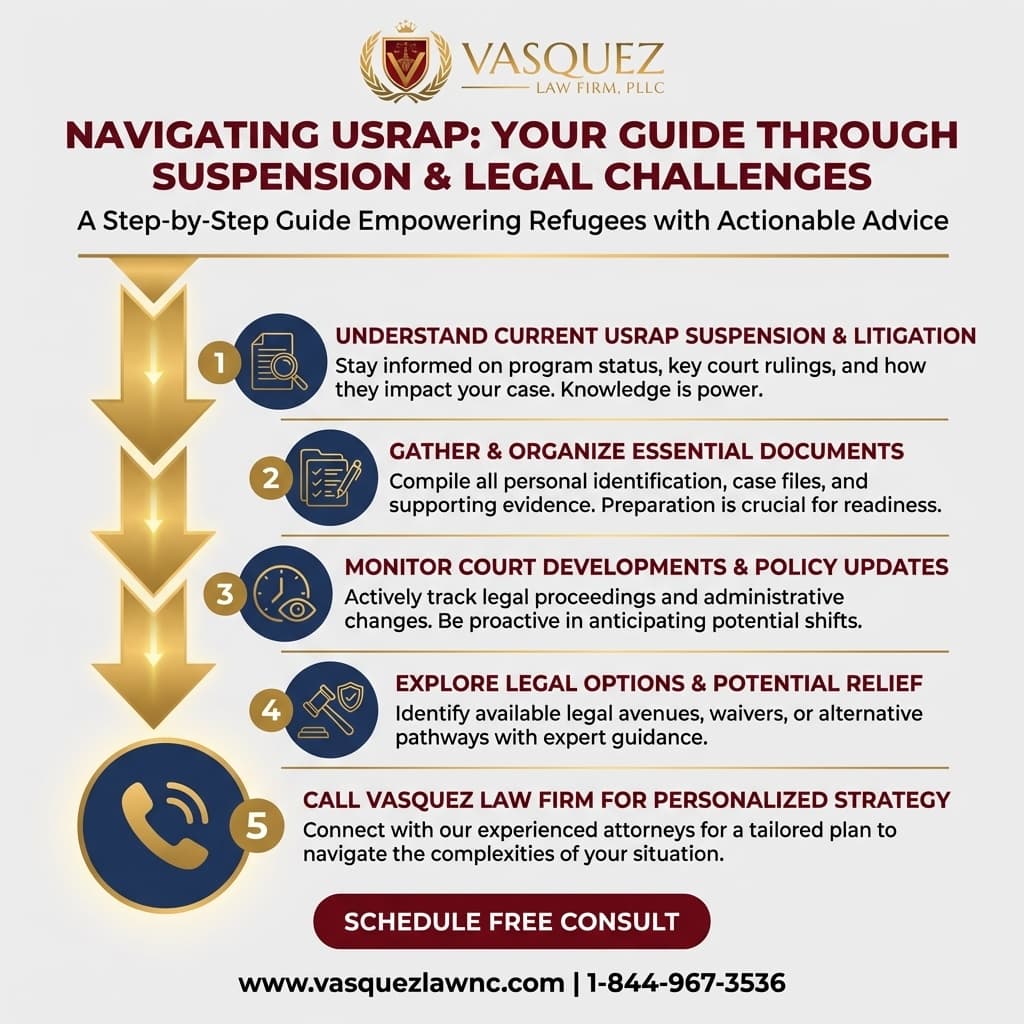
- Stay Informed: Keep up with refugee resettlement news today and official updates from USCIS and the State Department on policy changes.
- Prepare Documentation: Gather all identity, persecution evidence, and medical records required for application processing.
- Apply Through USRAP: Follow the step-by-step instructions for refugee application under the current US Refugee Admissions Program.
- Seek Legal Advice: Contact trusted attorneys specializing in immigration and refugee law to review your case.
- Monitor Your Case: Stay in touch with your resettlement agency and legal counsel to promptly address any requests or concerns.
- Understand Removal Risks: Know your rights and challenges if removal proceedings arise and get immediate help if needed.
How Vasquez Law Firm Can Assist
Our immigration attorneys in Charlotte provide bilingual support to help refugees understand complex requirements and effectively navigate the visa and resettlement process. We strategize case specifics and advocate for client rights during each procedural step.
Common Mistakes Refugees Make When Navigating the Ban
- Missing Deadlines: Refugee applications often have strict deadlines; failing to comply can lead to denial. Our team helps you track these critical dates.
- Incomplete Documentation: Submitting vague or missing evidence can delay processing or result in rejection.
- Ignoring Legal Updates: Refugee policies can change; staying uninformed causes missed opportunities and wrong assumptions.
- Not Seeking Legal Help Early: Attempting to go it alone under complex laws increases risk of errors and stress.
- Failing to Report Changes: Updated contact info or circumstances must be promptly reported to avoid case complications.
- Misunderstanding Removal Risks: Not knowing grounds for removal can place refugees in jeopardy if rules are violated.
If you only remember one thing: Work closely with experienced immigration attorneys to avoid pitfalls and protect your rights during this restrictive refugee climate.
Timeline: Refugee Application and Admission Process in 2026
- Application Submission: Initial forms and documents submitted to USRAP; processing may take several months.
- Background and Security Checks: Extensive vetting with government agencies like FBI and Department of Homeland Security.
- Interviews: USCIS conducts in-depth interviews to assess eligibility and refugee status validity.
- Presidential Determination Check: Cases approved only within the yearly refugee cap set by the President.
- Resettlement Coordination: Refugees receive placement and travel arrangements, usually taking additional months.
- Arrival and Integration: State and local agencies provide support upon arrival in Charlotte, NC, Florida, or other resettlement locations.
The full process may take 6 to 18 months or longer due to backlogs and increased scrutiny post Trump refugee ban.
Costs and Fees: What Impacts the Price
- Application Fees: Refugee processing fees sometimes waived but can vary depending on adjustments needed.
- Legal Representation: Hiring experienced attorneys involves costs that may depend on case complexity.
- Medical Exams: Required medical screenings add to out-of-pocket expenses.
- Travel and Resettlement: Transportation and relocation expenses exist but can be partially covered by aid programs.
- Delays and Appeals: Additional fees may incur if cases require appeals or additional government filings.
Vasquez Law Firm offers transparent pricing and flexible payment options to make legal help accessible.
NC, FL, and Nationwide Notes
North Carolina Notes
Charlotte and other NC cities have growing refugee populations. The state offers resources for refugees assistance but relies heavily on federal USRAP guidelines. Local immigration attorneys play a key role in helping families comply with federal changes while accessing state services.
Florida Notes
Florida remains a primary entry point for refugees in the Southeast. The Trump refugee ban's impact in FL includes slowed resettlement and stricter local screenings. Legal options remain robust, but refugees should seek legal guidance promptly.
Nationwide Concepts (General Only, Rules Vary)
Federal refugee policies determine caps and eligibility across all states. While local agencies administer resettlement, national security considerations and refugee quotas set limits that affect every location. Laws and procedures vary, so refugees everywhere should consult immigration lawyers knowledgeable about both federal and local developments.
When to Call a Lawyer Now
- If your refugee application is delayed over six months without updates.
- If you receive a notice to appear for removal proceedings.
- If you face denial due to inadequate documentation or procedural errors.
- If your refugee status or green card is challenged after admission.
- If you experience emergency situations threatening your safety or legal status.
- If USCIS requests additional evidence or interviews without clear guidance.
- If you need help navigating complex asylum and resettlement rules.
- If you want to appeal a refugee admission denial or removal order.
About Vasquez Law Firm
At Vasquez Law Firm, we combine compassion with aggressive representation. Our motto "Yo Peleo" (I Fight) reflects our commitment to standing up for your rights.
- Bilingual Support: Se Habla Español - our team is fully bilingual
- Service Areas: North Carolina, Florida, and nationwide immigration services
- Experience: Over 15 years helping clients navigate complex legal matters
- Results: Thousands of successful cases across multiple practice areas
Attorney Trust and Experience
Attorney Vasquez holds a Juris Doctor degree and is admitted to practice in the North Carolina State Bar. With over 15 years of dedicated legal experience, he has built a reputation for providing personalized attention and achieving favorable outcomes for his clients.
Don't wait to get the help you deserve. Call us now for immediate assistance.
Se Habla Español
Frequently Asked Questions
Are refugees currently allowed to enter the United States?
As of 2026, refugees are allowed to enter the United States under the U.S. Refugee Admissions Program (USRAP). However, the Trump refugee ban imposed restrictions which continue to affect the number of refugees admitted annually. Refugees must meet eligibility requirements and pass background checks to be admitted legally. Our immigration attorneys in Charlotte can help assess your case.
What is the new rule for refugees under the Trump refugee ban?
The Trump refugee ban implemented indefinite pauses and reductions in refugee admissions. In 2026, the Presidential Determination set the refugee cap lower than previous years. This impacts the number of refugees allowed from various regions. Refugees and asylum seekers should stay updated on any changes to USRAP and consult legal experts.
Can refugees be removed from the United States after admission?
Yes, refugees can be removed through formal removal proceedings if they violate immigration laws or pose security risks. The Executive Office for Immigration Review handles these cases. Refugees should maintain legal status and consult immigration attorneys to avoid removal.
Is ICE actively targeting refugees or green card holders in 2026?
ICE enforcement activities in 2026 focus on individuals with criminal records or threats to public safety. Refugees with legal status or green cards generally are not targeted solely for their immigration status. However, any violations can trigger action, so legal counsel is recommended if you face enforcement.
How does the Presidential Determination affect refugee admissions?
Each year, the U.S. President sets a cap for refugee admissions through the Presidential Determination, which impacts how many refugees can enter. The Trump refugee ban lowered this cap significantly in recent years. For 2026, the cap is set lower than pre-2017 levels, affecting resettlement programs nationwide.
What is the U.S. Refugee Admissions Program (USRAP)?
USRAP is the federal program responsible for screening, processing, and resettling refugees in the United States. It works with state agencies and nonprofit groups to coordinate arrivals. Changes to USRAP due to the Trump refugee policy affect timelines and eligibility. Local assistance in Charlotte can help refugees navigate this process.
What documents do refugees need for resettlement?
Refugees must provide identity documents, proof of persecution or threat, biometric data, and medical screenings. The Trump refugee ban increased scrutiny on these documents. Having accurate and complete documentation improves chances of approval. Consult attorneys in Charlotte to prepare properly.
How can Vasquez Law Firm help refugees affected by the ban?
Vasquez Law Firm offers experienced immigration legal services, including assistance with refugee applications, legal challenges, and appeals related to the Trump refugee ban. Our bilingual team in Charlotte and Florida provides personalized support to navigate complex policies and protect your rights.
Sources and References
- USCIS official refugee guidelines
- Executive Office for Immigration Review
- U.S. Department of State Refugee Admissions Program
- North Carolina Courts
Take the first step toward justice today. Our team is standing by to help.
Start Your Free Case Evaluation Now
Call us: 1-844-967-3536
Se Habla Español - Estamos aquí para ayudarle.
If you need legal assistance, learn more about how our immigration attorneys can help, or call us at 1-844-967-3536 for a free case evaluation.
William Vasquez
Founder & CEO, Vasquez Law Firm, PLLC
William Vasquez is the founder and CEO of Vasquez Law Firm, PLLC, a results-driven firm specializing in immigration, criminal defense, personal injury, and workers' compensation. A U.S. Air Force veteran and recipient of the Joint Service Achievement Medal, William is dedicated to fiercely fighting for his clients' rights.
Related Legal Services
Need legal help? Learn more about speak with an immigration lawyer, or contact us for a free evaluation.
You can also visit our North Carolina immigration practice for more information.