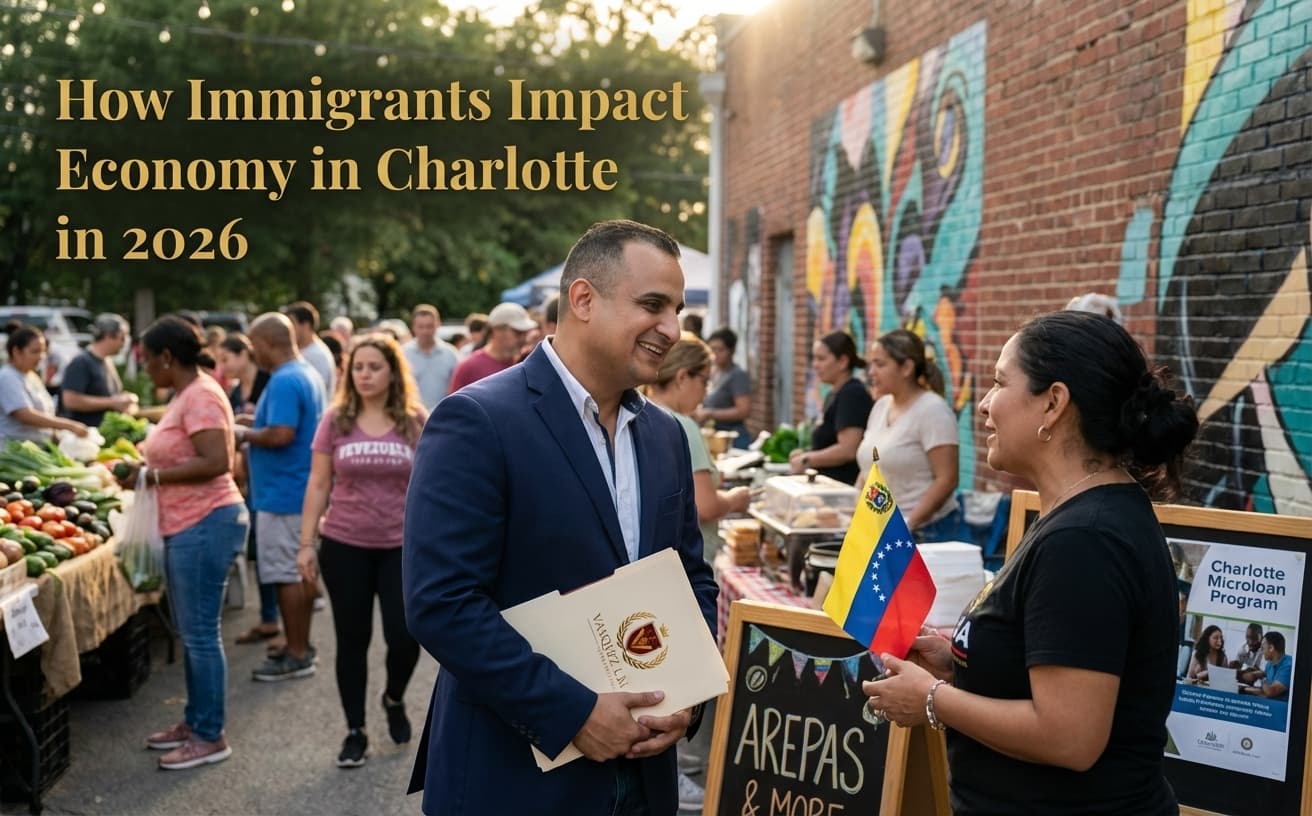
How Immigrants Impact Economy in Charlotte in 2026
Discover how immigrants impact economy in Charlotte positively and negatively. Learn benefits and challenges. Contact Vasquez Law for a free consultation.
Published on March 31, 2026
Talk to an immigration attorney
Free call. A clear plan for your case.
Free & confidential · Se habla espanol · 24/7
Have questions? Talk to an attorney - free evaluation.
Call 1-844-967-3536Worried how the latest immigration news affects you?
Schedule a confidential case review with an immigration attorney - know exactly where you stand.
USCIS Case Status
Check your USCIS case status
Enter your receipt number and get the official status. Free, no registration.
How Immigrants Impact Economy in Charlotte in 2026
Understanding how immigrants impact economy is vital for communities like Charlotte. In 2026, immigrants contribute significantly to economic growth but also face challenges. This article explores immigrants impact economy statistics, positive and negative effects, and how immigration contributes to local prosperity. Whether you are a Dreamer or a member of Charlotte’s immigrant community, knowing these facts helps you make informed decisions about your future.
Need help with your case? Our experienced attorneys are ready to fight for you. Se Habla Español.
Schedule Your Free Case Evaluation
Or call us now: 1-844-967-3536
Quick Answer
Immigrants impact economy in Charlotte by filling essential jobs, paying taxes, and creating businesses. Their contributions boost economic growth, support local services, and enrich cultural diversity.
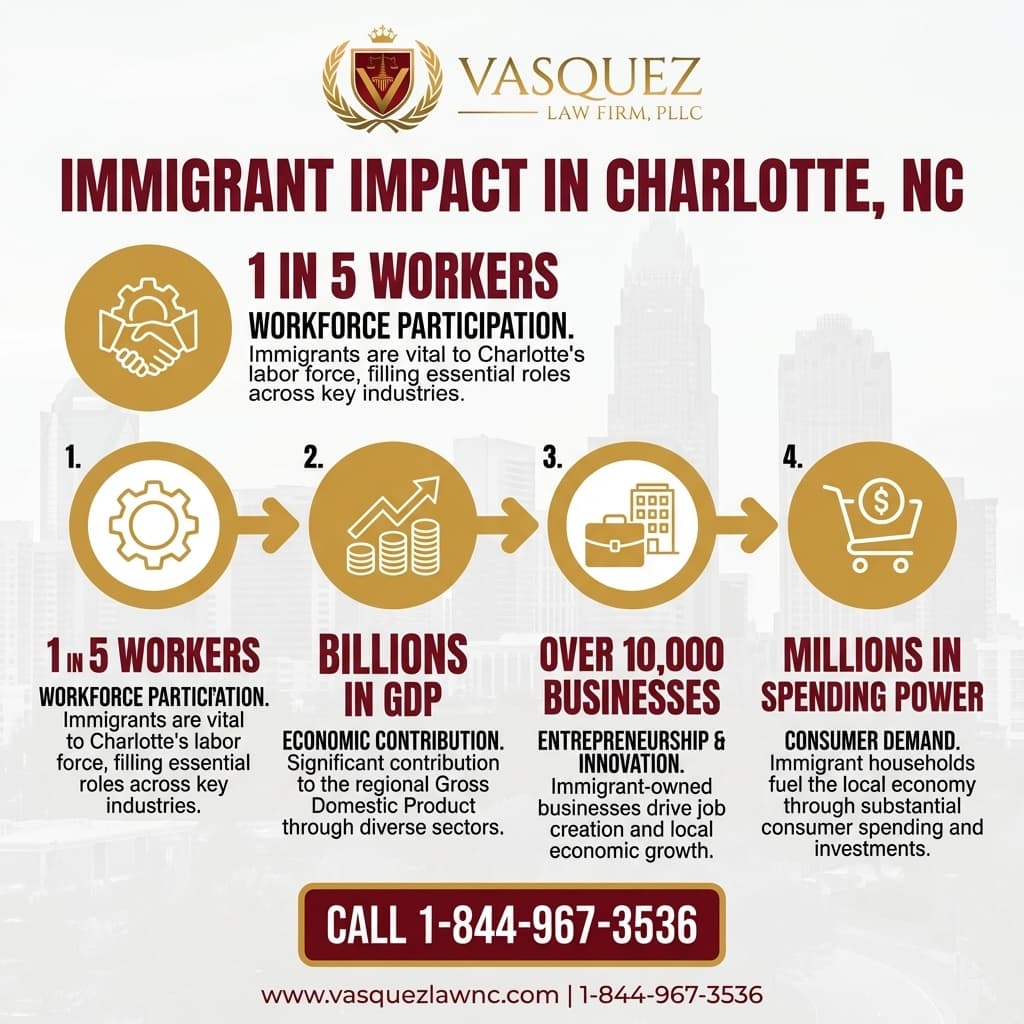
- Immigrants make up 14% of Charlotte’s workforce.
- They create new jobs through entrepreneurship.
- Pay billions annually in taxes contributing to public funds.
- Help fill labor shortages in key sectors.
- Drive innovation and consumption that expand the economy.
Understanding Immigrants' Impact on Economy
Charlotte’s diverse economy depends heavily on immigration. By 2026, immigrants represent about 14% of the city’s workforce. They work in varied fields including healthcare, construction, hospitality, and technology. Immigrants fill roles critical to local industries, supporting economic stability.
According to recent USCIS official guidelines, immigrants contribute both labor and innovation to the broader economy. Their involvement increases productivity and community spending, which helps local businesses thrive.
Beyond employment, immigrants also bring cultural richness that enhances Charlotte’s economic landscape. For example, immigrant entrepreneurs often introduce new culinary traditions, retail products, and services, attracting diverse customer bases and fostering cross-cultural exchange. This diversity can lead to increased tourism and the establishment of new economic niches that benefit the city’s overall prosperity.
Moreover, immigrants often participate actively in community organizations and local chambers of commerce, facilitating networking among businesses and promoting inclusive economic policies. Their engagement helps build stronger community ties and a more dynamic business environment, which contributes to long-term economic resilience.
Immigrants’ Economic Roles
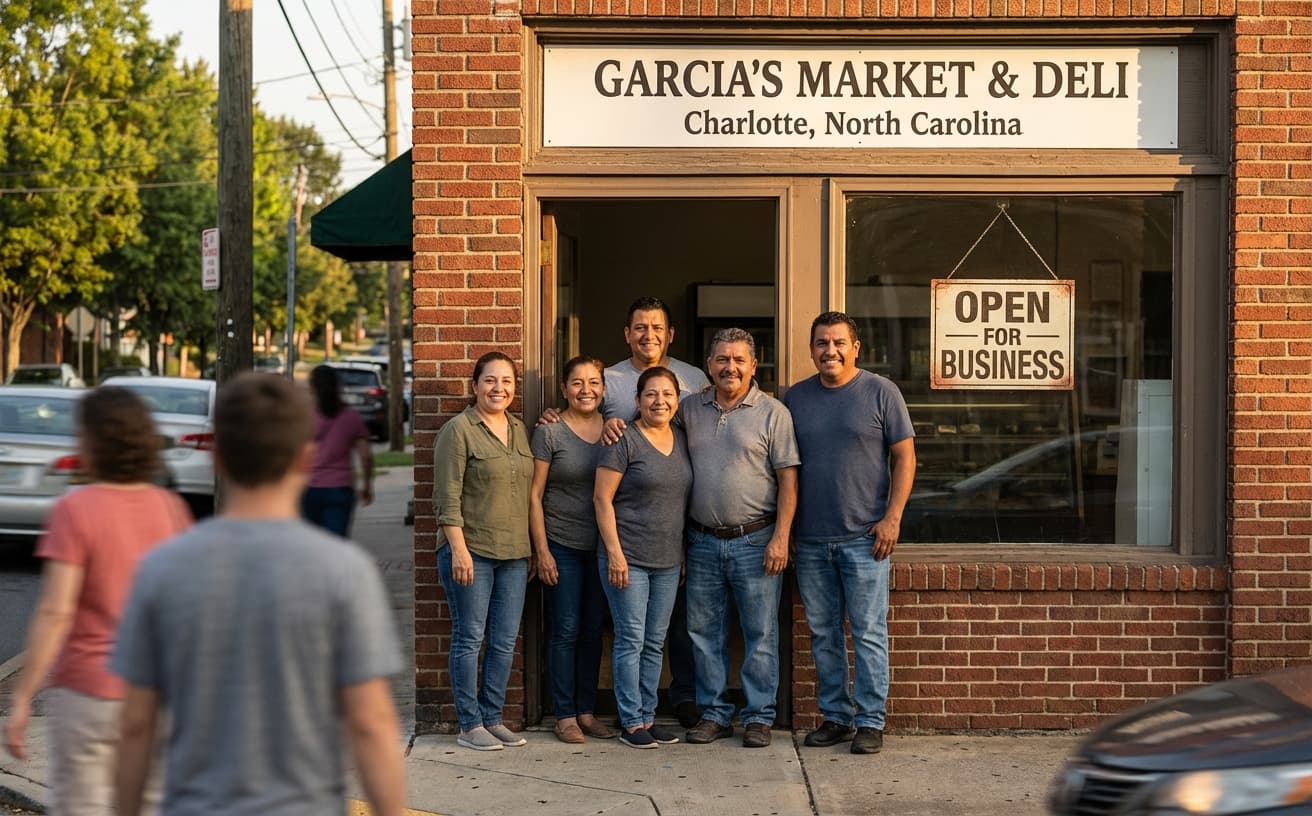
Many immigrants in Charlotte are entrepreneurs. Immigrant-owned businesses generate billions annually in revenue and employ thousands locally. This entrepreneurial spirit fosters economic resilience by diversifying available goods and services.
For instance, the rise of immigrant-owned small businesses such as specialty grocery stores, ethnic restaurants, and tech startups not only creates jobs but also revitalizes neighborhoods. In Charlotte’s Plaza Midwood and NoDa districts, for example, immigrant entrepreneurs have transformed once-underutilized spaces into vibrant commercial hubs.
Additionally, immigrant entrepreneurs often reinvest profits into their communities, supporting local suppliers and participating in philanthropic activities. This reinvestment cycle strengthens the local economy and promotes social cohesion.
Key Working Sectors
Healthcare providers benefit from immigrant workers, especially nurses and home health aides. Construction firms hire immigrants to meet demand for housing and infrastructure projects. Service industries like restaurants and hotels rely heavily on immigrant employees too.
In Charlotte, immigrant workers are critical in emerging sectors such as information technology and advanced manufacturing. For example, many tech companies in the area report that immigrant professionals fill specialized roles in software development and engineering, addressing talent shortages that would otherwise constrain growth.
Similarly, in agriculture and landscaping, immigrant laborers contribute essential skills and work ethic, ensuring that local farms and green spaces remain productive and well-maintained. Their presence supports the city’s food supply chains and environmental initiatives.
Immigrants Impact Economy Statistics
Statistics from local economic studies show immigrant workers support a broad tax base. They often pay more in state and local taxes than they receive in benefits. These findings dispel misconceptions that immigrants burden public resources. EOIR data confirm immigrant legal cases have economic implications that influence workforce trends.
For example, according to a 2025 Charlotte Chamber of Commerce report, immigrant-owned businesses contribute over $3 billion annually to the city’s GDP and employ approximately 25,000 residents. Furthermore, immigrant households contribute roughly $500 million annually in property taxes, which fund local schools and infrastructure.
Economic modeling also suggests that every 10 immigrant workers added to the labor force correlates with the creation of approximately 7 additional jobs for native-born workers, illustrating the multiplier effect immigrants have on employment and economic activity in Charlotte.
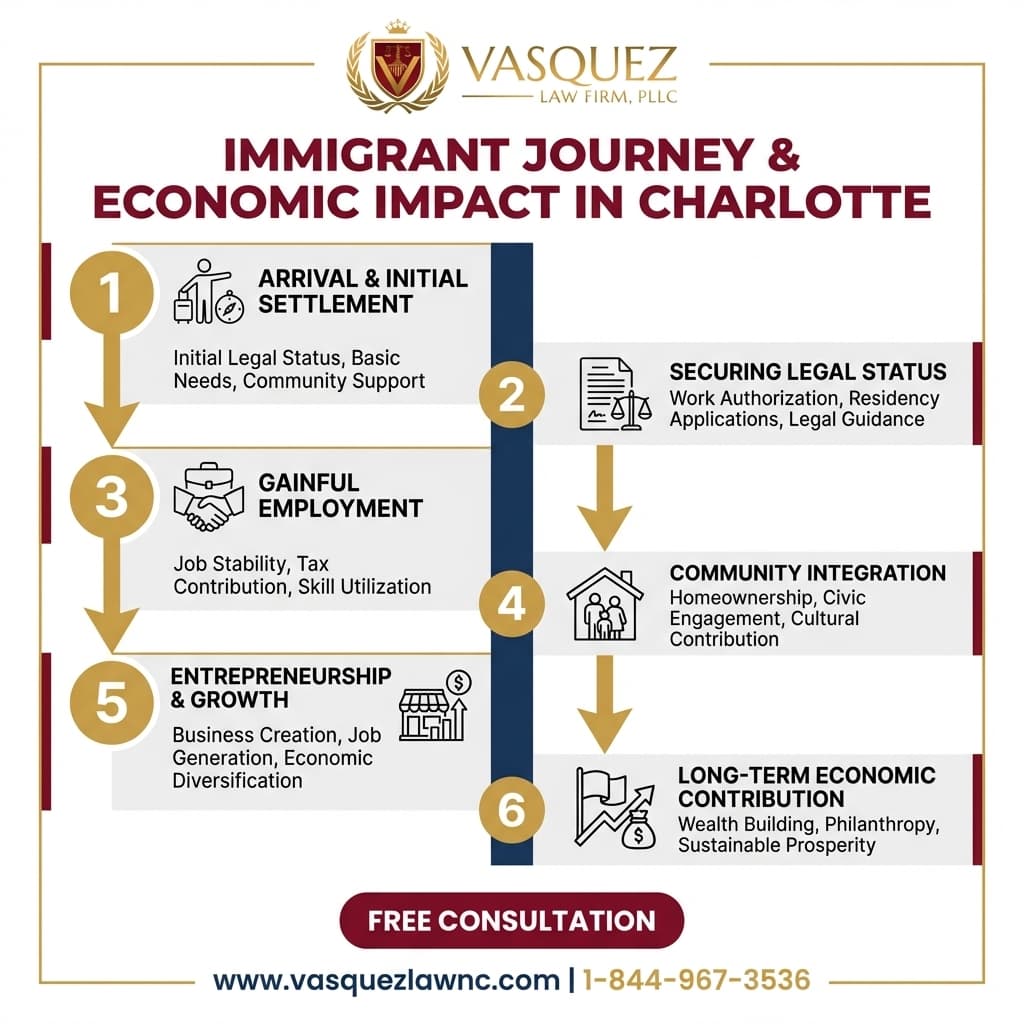
Step-by-Step: How Immigrants Contribute Economically
- Filling Labor Gaps: Immigrants often take jobs that are hard to fill locally, such as agricultural work, manufacturing, and caregiving. This reduces labor shortages and prevents wage inflation in other sectors.
- Entrepreneurship: Starting small businesses like restaurants, grocery stores, and tech startups, immigrants create jobs and boost local economies.
- Paying Taxes: Immigrants contribute billions yearly in income, sales, and property taxes, funding schools, roads, and public services.
- Innovating and Consuming: Immigrant communities promote innovation through cultural exchange and increase demand for goods, expanding economic activity.
- Supporting Families: Economic gains from immigrant workers support family livelihoods and education, increasing long-term community wealth.
Additionally, immigrants participate in workforce training and continuing education programs, enhancing their skills and productivity. This ongoing development benefits employers and reinforces economic competitiveness. For example, many immigrants attend local community colleges or vocational schools, gaining certifications in high-demand fields such as healthcare or information technology.
Immigrant families also contribute to the economy by fostering intergenerational mobility. Children of immigrants often achieve higher educational attainment rates, leading to higher incomes and increased consumer spending. This cycle strengthens local economies and builds human capital over time.
Immigration Contributes Positively to Economic Growth
Charlotte’s economic statistics reveal immigrants contribute positively to growth by broadening the talent pool and attracting foreign investment. Their skills complement native-born workers, enhancing overall productivity.
For example, immigrant professionals in STEM fields bring specialized expertise that supports innovation in Charlotte’s growing tech sector. Companies benefit from their diverse perspectives and problem-solving approaches, leading to new products and services that can compete globally.
Moreover, immigrant communities often maintain connections with their countries of origin, facilitating international trade and investment. Charlotte-based businesses with immigrant founders or employees are more likely to engage in export activities or attract foreign capital, further stimulating local economic development.
Common Economic Misconceptions About Immigrants
- Mistake: Immigrants take jobs from local workers. Fix: They often take jobs locals avoid and create new ones through businesses.
- Mistake: Immigrants overuse public welfare. Fix: Many immigrants pay more in taxes than they use in services.
- Mistake: Illegal immigrants harm the economy. Fix: Undocumented workers still pay taxes and fill essential jobs.
- Mistake: Immigration lowers wages broadly. Fix: Effects are limited to specific sectors and often short term.
- Mistake: Immigrants do not contribute to innovation. Fix: They add cultural diversity that spurs creativity and entrepreneurship.
If you only remember one thing: Immigrants are economic contributors whose impact exceeds commonly held negative stereotypes.
Another common misconception is that immigrants drain healthcare systems. In reality, many immigrants are younger and healthier on average, contributing less to healthcare costs initially. Furthermore, their tax contributions help fund hospitals and clinics that serve entire communities, including native-born residents.
Misunderstandings about immigrant impacts on education funding also persist. While immigrant children attend public schools, the taxes paid by immigrant families and workers often exceed the cost of educational services provided. This dynamic supports sustainable school financing and enriches classroom diversity, which benefits all students.
Timeline: Economic Effects of Immigration Over Time
- First 1-2 years: Immigrants settle and often face job challenges; may take lower wages initially.
- 3-5 years: Many find better jobs and start small businesses, contributing more taxes.
- 5-10 years: Increased community integration, entrepreneurship rises, educational attainment impacts economy.
- 10+ years: Immigrant families become key drivers of long-term economic growth and diversity.
During the initial settlement period, immigrants often rely on community networks to find housing and employment. Local organizations and faith-based groups play a critical role in providing support services that facilitate this transition. For example, Charlotte’s immigrant resource centers offer job placement assistance, legal aid, and language classes that improve economic outcomes.
As immigrants establish themselves, their increased earning power leads to greater consumer spending, which benefits retail, transportation, and entertainment sectors. This spending helps revitalize neighborhoods and encourages business development in areas with high immigrant populations.
Costs and Fees: What Impacts the Price of Immigration Services
- Application fees (USCIS fees vary widely; see USCIS fee schedule)
- Attorney legal fees depending on case complexity
- Costs for obtaining supporting documents like birth certificates
- Translation and certification expenses
- Possible additional fees for interviews and security checks
Understanding these costs upfront is essential for immigrants planning their legal processes. For example, adjustment of status applications can range from several hundred to over a thousand dollars, excluding attorney fees. Budgeting for translation services is also important for applicants whose documents are in foreign languages.
Some immigrants may qualify for fee waivers or reduced fees based on income, which can ease financial burdens. Nonprofit organizations and legal aid clinics in Charlotte often provide free case evaluations and assistance with fee waiver applications, helping ensure access to justice regardless of economic status.
NC, FL, and Nationwide Immigration Notes
North Carolina Notes
Charlotte is home to a growing immigrant population contributing to local economies. Legal services, including adjustment of status under 8 U.S.C. § 1255, are available with bilingual support. Knowledge of state-specific workforce rules can help immigrants maximize opportunities.
North Carolina has enacted policies that facilitate integration, such as in-state tuition for undocumented students and protections against workplace discrimination. Immigrants benefit from these measures by gaining access to education and fair employment, which in turn strengthens the state’s economy.
Florida Notes
Florida’s immigrant communities also impact regional economies, with similar legal frameworks. Firms like Vasquez Law offer services statewide, ensuring immigrants understand federal and state policies.
Florida's diverse immigrant populations contribute notably to sectors such as tourism, agriculture, and healthcare. The state’s ports and logistics hubs benefit from immigrant labor, supporting trade flows that are vital to the local and national economy.
Nationwide Concepts
Immigration is governed federally. Policies can change, affecting how immigrants participate economically across states. It is crucial to stay informed about updated regulations via sources like EOIR.
Federal programs such as H-1B visas for skilled workers and Deferred Action for Childhood Arrivals (DACA) influence the types of economic contributions immigrants can make. Staying current on these policies helps immigrants and employers plan for workforce needs effectively.
When to Call a Lawyer Now
- If your immigration status is at risk of denial or cancellation
- If you have been stopped by immigration authorities
- If you face allegations of employment violations
- If you want to apply for adjustment of status or citizenship
- If you need help understanding economic rights as an immigrant worker
- If your employer is not complying with labor laws
- If you are subject to deportation proceedings
- If you want to start a business but need legal guidance
Early legal intervention can prevent costly mistakes and protect your rights. For example, if facing deportation, a lawyer can explore relief options such as asylum or cancellation of removal. For entrepreneurs, legal advice ensures compliance with business licensing and employment regulations, which are critical to success and sustainability.
About Vasquez Law Firm
At Vasquez Law Firm, we combine compassion with aggressive representation. Our motto "Yo Peleo" (I Fight) reflects our commitment to standing up for your rights.
- Bilingual Support: Se Habla Español - our team is fully bilingual
- Service Areas: North Carolina, Florida, and nationwide immigration services
- Experience: Over 15 years helping clients navigate complex legal matters
- Results: Thousands of successful cases across multiple practice areas
Attorney Trust and Experience
Attorney Vasquez holds a Juris Doctor degree and is admitted to practice in the North Carolina State Bar. With over 15 years of dedicated legal experience, he has built a reputation for providing personalized attention and achieving favorable outcomes for his clients.
His expertise includes immigration litigation, family-based immigration, employment-based visas, and business immigration law. Clients appreciate his strategic approach and ability to navigate complex bureaucratic processes efficiently, ensuring timely and positive results.
Don't wait to get the help you deserve. Call us now for immediate assistance.
Or contact our office today. Se Habla Español.
Frequently Asked Questions
How do immigrants impact the economy positively?
Immigrants fill jobs, start businesses, and pay taxes that fund important services. Their work in Charlotte’s healthcare, construction, and tech industries supports economic growth and creates opportunities for all residents. Additionally, immigrant entrepreneurship revitalizes neighborhoods and generates employment, while their cultural contributions enhance innovation and consumer markets.
What are some negative effects of immigration on the economy?
Concerns include job competition and strain on public services. However, most studies indicate these effects are limited and temporary. Immigrants contribute more tax revenue than they consume in benefits in most communities. While some local sectors may face wage pressures, the overall economic impact tends to be positive as immigrant labor complements rather than replaces native workers.
How does illegal immigration affect the economy negatively?
Unauthorized workers may depress wages in some low-wage sectors and use certain public resources. Nonetheless, they also pay taxes and fulfill essential jobs, reducing labor shortages in many industries across Charlotte and NC. Their economic participation supports businesses and public funds, though challenges exist in ensuring fair labor standards and enforcement.
Are there statistics showing immigrants impact economy in Charlotte?
Yes. Immigrants make up about 14% of Charlotte’s workforce and their businesses generate billions in revenue. These facts prove they are major contributors to the local economy. Studies also show that immigrant households contribute significantly in taxes and help sustain public services like education and healthcare through their economic activities.
How does immigration contribute to economic growth?
Immigrants expand the labor force, increase consumer demand, and foster entrepreneurship. Their skills support industries needing workers, helping Charlotte businesses compete nationally and globally. By creating businesses and jobs, immigrants stimulate economic activity and encourage innovation, which drives long-term growth and community prosperity.
What role do Dreamers play in the economy?
Dreamers contribute by obtaining education, working in skilled fields, paying taxes, and often starting businesses. Their presence enhances Charlotte’s talent pool and economic potential. Many Dreamers fill critical roles in healthcare, education, and technology, while their entrepreneurial initiatives contribute to job creation and cultural enrichment.
How can immigrants protect their economic rights in North Carolina?
Knowing labor laws and seeking legal help when rights are violated protects immigrants from wage theft and discrimination. Local legal resources in Charlotte provide bilingual support to ensure justice. Organizations offer workshops and advocacy to educate immigrant workers about minimum wage, overtime, and workplace safety protections.
Does immigration affect local housing markets?
Immigration increases demand for housing, sometimes raising prices. However, immigrant investment in housing development often expands supply, balancing the market over time. Immigrant participation in construction trades helps build affordable housing, while their homeownership contributes to neighborhood stability and economic vitality.
Sources and References
- U.S. Citizenship and Immigration Services (USCIS)
- Executive Office for Immigration Review
- U.S. Department of State
Take the first step toward justice today. Our team is standing by to help.
Start Your Free Case Evaluation Now
Call us: 1-844-967-3536
Se Habla Español - Estamos aquí para ayudarle.
If you need legal assistance, learn more about NC immigration legal team, or call us at 1-844-967-3536 for a free case evaluation.

William Vasquez
Founder & CEO, Vasquez Law Firm, PLLC
William Vasquez is the founder and CEO of Vasquez Law Firm, PLLC, a results-driven firm specializing in immigration, criminal defense, personal injury, and workers' compensation. A U.S. Air Force veteran and recipient of the Joint Service Achievement Medal, William is dedicated to fiercely fighting for his clients' rights.
Related Legal Services
Need legal help? Learn more about NC immigration legal team, or contact us for a free evaluation.
You can also visit statewide immigration attorneys for more information.