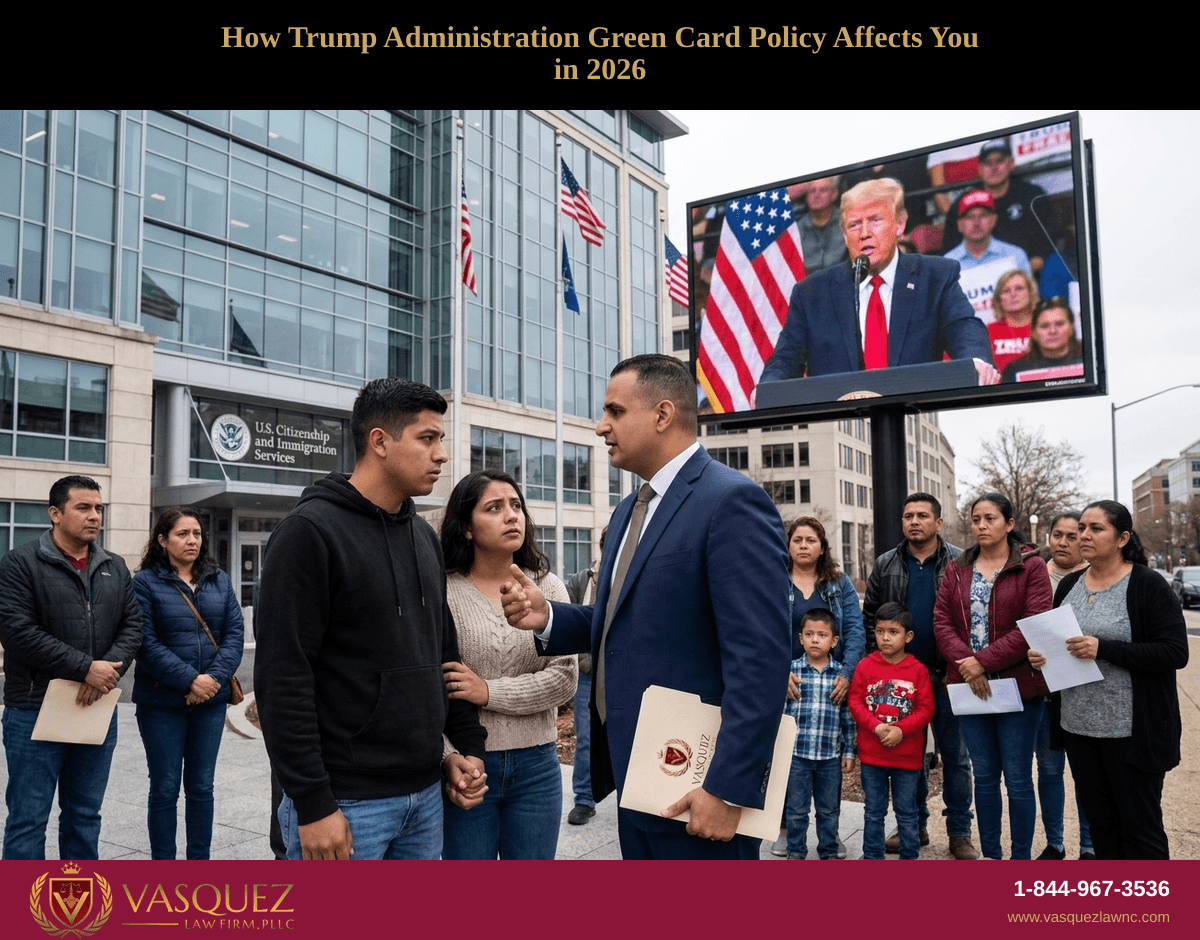
How Trump Administration Green Card Policy Affects You in 2026
Learn about the Trump administration green card policy changes in 2026. Understand your rights as a holder and get help. Contact Vasquez Law for a free evaluation.
Published on May 25, 2026
Talk to an immigration attorney
Free call. A clear plan for your case.
Free & confidential · Se habla espanol · 24/7
Have questions? Talk to an attorney - free evaluation.
Call 1-844-967-3536Free Tool
Check Your USCIS Case Status Now
Enter your receipt number - get the official USCIS status in English or Spanish. No registration.
How Trump Administration Green Card Policy Affects You in 2026
The Trump administration green card policy has brought significant changes to how many immigrants can apply or maintain lawful permanent resident status in 2026. These rules impact holders especially in North Carolina and Orlando, Florida. This article details the changes, what you need to know about applying, maintaining status, and how immigration policies may affect your case today. Understanding these updates ensures you avoid costly mistakes in your green card journey.
Need help with your case? Our experienced attorneys are ready to fight for you. Se Habla Español.
Or call us now: 1-844-967-3536
Quick Answer
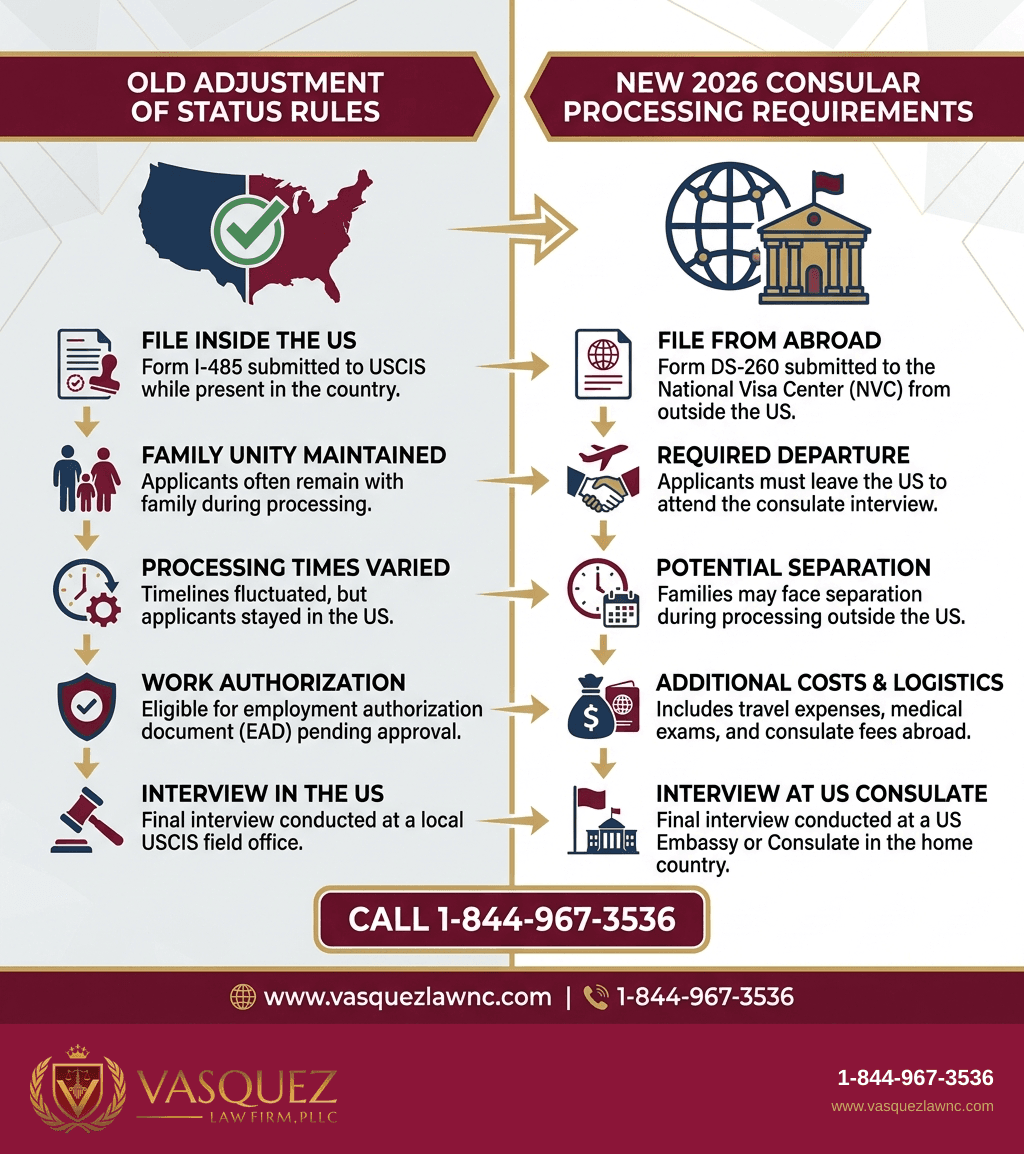
The Trump administration green card policy in 2026 requires many applicants to apply from outside the U.S., limiting adjustment of status inside the country. This affects visa holders in North Carolina and Orlando, Florida, creating longer wait times and additional documentation requirements.
- Most applicants must use consular processing.
- Exceptions exist for certain family members and refugees.
- In-country adjustments are restricted.
- Policy increases processing times and complexity.
- Maintaining lawful status during application is critical.
Overview of Trump Green Card Policy Changes
Since 2026, the Trump administration has enforced new green card rules that require most foreign nationals seeking lawful permanent residence (LPR status) to apply through consular processing outside the United States. Previously, certain applicants could adjust status within the U.S. on forms such as the I-485. Now, applicants residing in North Carolina or Orlando, FL, holding temporary visas must leave the country to complete this process. This shift aims to tighten immigration control and reduce in-country filings but has increased logistical challenges and wait times.
Who Is Affected by These Changes?
Individuals currently in the U.S. on temporary visas, including H-1B, H-2B, and certain family-based visa holders, face the new requirements. For example, a skilled worker on an H-1B visa in Orlando seeking to transition to a green card must often apply through their home country’s U.S. consulate. Immediate relatives such as spouses of U.S. citizens may benefit from retained privileges with exceptions allowing in-country adjustment. Refugees and asylum seekers have special considerations governed by other federal laws.
Reasons Behind the Policy Shift
The Trump administration's green card policy reflects an effort to control immigration volumes by requiring applicants to prove admissibility before entering the U.S. as permanent residents. It also aims to better track applicants by managing the process overseas. While proponents argue this enhances national security, it has resulted in increased challenges for residents in NC and Orlando due to travel and documentation hurdles.
For more details on immigration policies and services, visit our immigration services page.
Step-by-Step Guide for Green Card Applicants
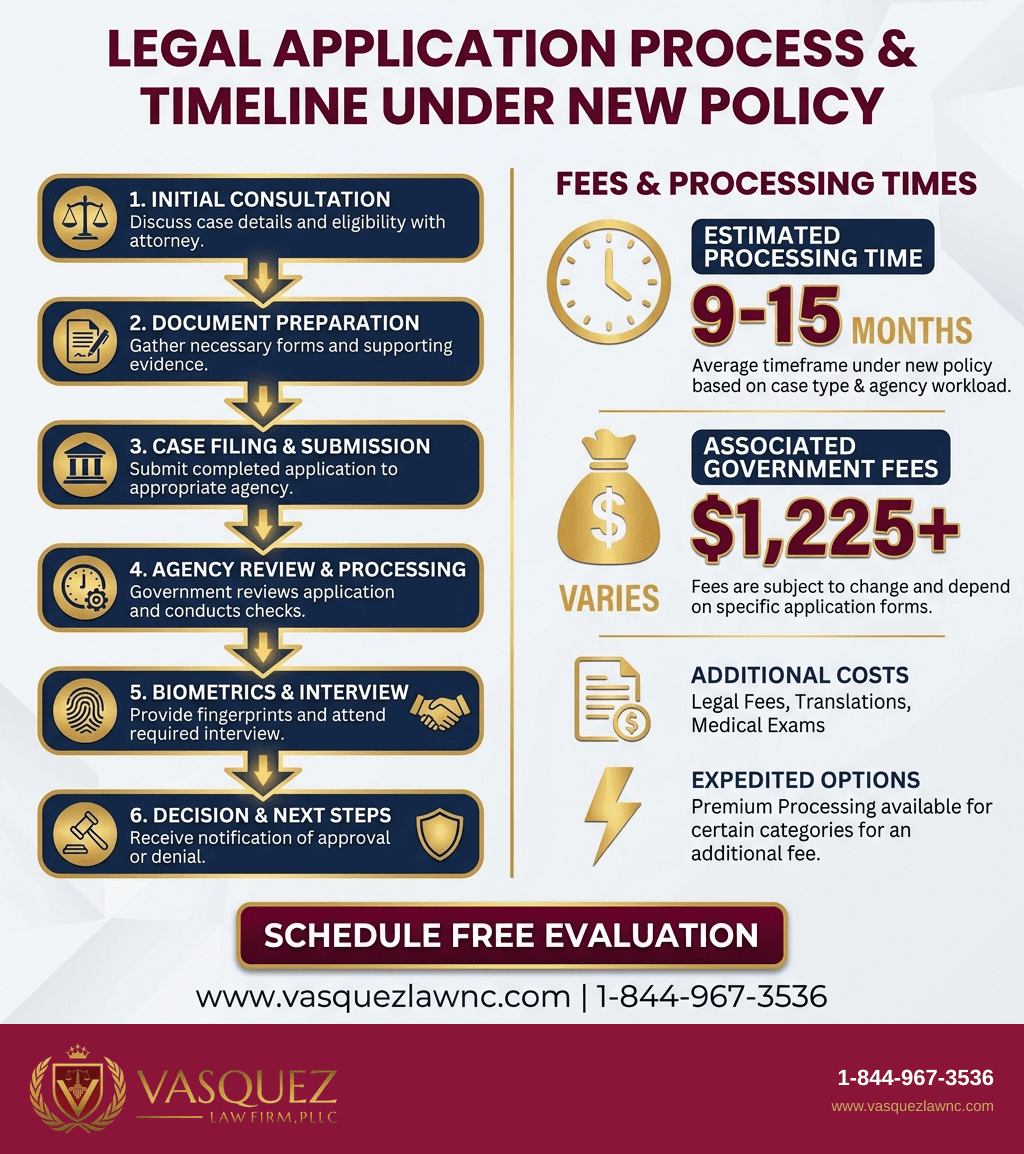
- Determine Eligibility: Confirm which green card category fits your case (family-based, employment-based, etc.) and if you qualify under exceptions for in-country adjustment.
- File Petition: Submit Form I-130 (family) or I-140 (employment) to USCIS. Processing times vary but are published at USCIS processing times.
- Consular Processing: Once approved, apply for an immigrant visa at the U.S. consulate in your home country. This step replaces in-country adjustment for most applicants.
- Attend Interview: Attend a visa interview abroad with required documents including passport, birth certificate, police clearances, and proof of relationship if applicable.
- Entry and Green Card Issuance: Enter the U.S. with your immigrant visa and receive your physical green card shortly thereafter.
Importance of Legal Assistance
This process is complex and mistakes may cause delays or denials. Our Attorney Vasquez provides expert guidance tailored for clients in NC and Orlando. Planning each step carefully limits risks of issues like inadmissibility or fraud allegations.
Common Mistakes to Avoid Under New Rules
- Applying for Adjustment of Status When Not Eligible: Attempting to adjust status while the policy requires consular processing can lead to denial.
- Insufficient Evidence of Bona Fide Marriage: Marriage-based green card applicants must provide strong evidence to prove legitimate relationships.
- Ignoring or Missing Deadlines: Consular interviews have strict timelines. Delays can cause application expiration.
- Not Maintaining Lawful Status: Failure to maintain valid visas while application is pending risks deportation.
- Incomplete or Incorrect Documentation: Missing police certificates, birth records, or financial documents can cause processing delays.
- Failing to Consult an Attorney Early: Legal advice can help navigate complex policies and exceptions.
If you only remember one thing: Consult a qualified immigration attorney before filing to ensure compliance with new Trump green card rules.
Timeline: Processing and What to Expect
- Petition Processing: Form I-130 or I-140 can take 7 to 15 months depending on category and workload.
- Consular Appointment Wait: Post-petition approval consular interviews may add 6 to 12 months.
- Visa Issuance to Arrival: Once visa is granted, entering the U.S. and receiving the green card takes 1 to 3 months.
- Total Time Frame: Many applicants now face 12 to 24 months or longer, reflecting policy changes and backlog.
- Check Official Times: Stay updated on processing at USCIS processing times.
Costs and Fees: What Impacts the Price
- USCIS petition fees (e.g., $535 for I-130 family petition, $700 for I-140 in certain categories).
- Consular processing fees (around $325), plus medical exam costs required by consulates.
- Attorney fees vary with case complexity, averaging $3,000 to $7,000 in many cases.
- Travel costs for consular appointments if applicants live in NC or Orlando.
- Additional expenses from requests for evidence or appeals.
Common Mistakes and How to Avoid Them
- Failing to apply from abroad when required — Check eligibility carefully before starting application.
- Submitting incomplete documentation — Use detailed checklists and legal counsel assistance.
- Overlooking deadlines for interviews and responses — Set reminders and stay organized with USCIS communications.
- Ignoring changes in travel or immigration status — Update your attorney if situations change.
- Assuming policy will revert — Plan based on current policy as federal immigration crises often delay adjustments.
- Not keeping copies of all filings and correspondence — Documentation protects your rights.
- Not considering family impacts—Spouses and children may require concurrent filings.
If you only remember one thing: Avoid mistakes by securing experienced legal help before and during your green card application.
NC, FL, and Nationwide Notes
North Carolina Notes
Applicants living in North Carolina must typically attend consular interviews at the U.S. consulate in their home country. The Raleigh USCIS office processes petitions but cannot complete consular processing. Local immigration support services can assist with document preparation and understanding federal rules.
Orlando, Florida Notes
The Orlando metro area has many H-1B and family-based applicants affected by the Trump administration’s green card rules. Applicants here often attend interviews at the U.S. consulate abroad. Due to Orlando’s diverse immigrant community, legal advice from bilingual attorneys at Vasquez Law Firm can ease communication and prepare cases effectively.
Nationwide Concepts
The Trump green card policy applies nationally with exceptions only outlined under federal law and USCIS policy. Laws such as INA § 1255 govern adjustment of status. The new emphasis on consular processing affects most visa holders applying for green cards even in states beyond North Carolina and Florida. Nationwide, applicants must monitor federal enforcement priorities as per Executive Office for Immigration Review guidelines.
When to Call a Lawyer Now
- You received a Notice to Appear or removal proceedings are initiated.
- You are unsure about eligibility for in-country adjustment versus consular processing.
- You have complex family or employment situations affecting your green card application.
- You have received a Request for Evidence (RFE) or Notice of Intent to Deny (NOID).
- You face criminal charges or past immigration violations that could impact your application.
- You need help preparing for consular interviews or gathering legal evidence.
- You need advice on travel restrictions or re-entry permits.
- You require guidance regarding H-1B visa holders and their green card process challenges.
About Vasquez Law Firm
At Vasquez Law Firm, we combine compassion with aggressive representation. Our motto "Yo Peleo®" (I Fight) reflects our commitment to standing up for your rights.
- Bilingual Support: Se Habla Español — Spanish-speaking attorneys and staff available
- Service Areas: North Carolina, Florida, and nationwide immigration services
- Experience: Over 30 years helping clients navigate complex legal matters
- Results: Thousands of successful cases across multiple practice areas
Attorney Trust and Experience
William J. Vásquez is admitted to the North Carolina State Bar (2011) and to the U.S. Courts of Appeals for the 4th, 5th, and 11th Circuits. Florida-jurisdiction matters at the firm are handled by Florida Bar attorney Harold Estrada-Rodriguez (FL Bar No. 1041171). The firm has provided dedicated legal representation since 2011, with personalized attention to each client's case.
Don't wait to get the help you deserve. Call us now for immediate assistance.
Se Habla Español
Frequently Asked Questions
What is the new rule for green card holders under the Trump administration policy?
The Trump administration's 2026 policy requires most green card applicants to apply from outside the U.S., limiting in-country adjustment of status. This change affects individuals currently on temporary visas seeking lawful permanent residence, forcing them to wait abroad during processing unless eligible for exceptions. It represents a major shift from prior policies allowing certain applicants to file within the U.S.
Are green card holders being deported under this policy?
Current policy does not broadly authorize deporting green card holders solely based on the new application rules. However, holders who violate terms such as criminal offenses, extended absences, or fraud may face removal proceedings. It is important to maintain compliance and consult an attorney for any enforcement concerns under federal immigration laws.
Can I still get a green card if I am in the U.S. under a Trump-era policy?
Yes, but the process is more restrictive. Many applicants must apply through consular processing overseas instead of adjusting status inside the U.S. Exceptions exist for certain immediate relatives, refugees, and asylum seekers. The policy means longer wait times and additional logistical challenges for applicants residing in North Carolina or Orlando, Florida.
Can the U.S. president revoke a green card?
Congress grants lawful permanent resident status and sets conditions under INA provisions. A president cannot arbitrarily revoke green cards but can influence immigration policy and enforcement priorities. Revocation occurs through legal processes such as removal proceedings if grounds under 8 U.S.C. § 1227 are met.
What documents are required for green card applications under the new rules?
Applicants typically need passports, birth certificates, proof of lawful presence (such as a valid visa), marriage certificates if applicable, and police clearance certificates. Additional forms specific to consular processing replace adjustment forms like the I-485. Legal advice is vital to ensure correct document completion and submission.
How long does the green card process take nowadays?
Processing times vary by category and location but can range from 12 to 24 months or longer due to the Trump-era policy effects. USCIS publicly posts processing times for forms such as I-130 and I-485 at https://egov.uscis.gov/processing-times/. Consular processing may add further delays based on embassy workloads.
What are the risks of marrying solely for a Trump green card marriage?
Marriage fraud is a serious offense under INA § 204(c) and can lead to denial of green cards, removal proceedings, and permanent bans. The Trump administration tightened scrutiny on marriage-based applications. Couples must prove bona fide relationships with evidence like shared finances, cohabitation, and affidavits.
How does the Trump green card policy affect H1B visa holders?
H-1B visa holders seeking green cards face new hurdles requiring consular processing outside the U.S. with possible prolonged separation from families. Backlogs and interviews abroad have increased. Applicants in North Carolina or Orlando should coordinate careful timing and legal counsel to mitigate risks and maintain lawful status.
Sources and References
- U.S. Citizenship and Immigration Services
- Executive Office for Immigration Review
- Legal Information Institute
Take the first step toward justice today. Our team is standing by to help.
Start Your Free Evaluation Now
Call us: 1-844-967-3536
Se Habla Español - Estamos aquí para ayudarle.

William Vasquez
Founder & CEO, Vasquez Law Firm, PLLC
William Vasquez is the founder and CEO of Vasquez Law Firm, PLLC, a results-driven firm specializing in immigration, criminal defense, personal injury, and workers' compensation. A U.S. Air Force veteran and recipient of the Joint Service Achievement Medal, William is dedicated to fiercely fighting for his clients' rights.
Related Legal Services
Need legal help? Learn more about get immigration legal help today, or contact us for a free evaluation.
You can also visit North Carolina immigration law firm for more information.