How TPS Works in Raleigh NC and Orlando FL in 2026
Learn how TPS works in 2026 and its benefits. Discover the application process and extensions. Contact Vasquez Law for a free evaluation.
Published on July 10, 2026
Talk to an immigration attorney
Free call. A clear plan for your case.
Free & confidential · Se habla espanol · 24/7
Have questions? Talk to an attorney - free evaluation.
Call 1-844-967-3536Worried how the latest immigration news affects you?
Schedule a confidential case review with an immigration attorney - know exactly where you stand.
How TPS Works in Raleigh NC and Orlando FL in 2026
Temporary Protected Status (TPS) gives important legal protection to immigrants from certain countries where it is unsafe to live. In Raleigh, NC and Orlando, FL, it is very important to understand TPS benefits and how to apply in 2026. This guide explains who can get TPS, updates like the TPS extension 2026, and how to apply using the latest USCIS rules. Whether you want to stay legally or renew your TPS, Vasquez Law Firm can help you understand the complex immigration rules. We make sure your rights and options are clear. Stay updated on TPS news and what recent Supreme Court decisions mean for you. Call our experienced immigration lawyers for help today.
Need help with your case? Our experienced lawyers are ready to fight for you. Se Habla Español.
Or call us now: 1-844-967-3536
Quick Answer
Temporary Protected Status (TPS) gives temporary protection from deportation and lets eligible people work legally. It is for nationals from certain countries with unsafe conditions. In 2026, USCIS keeps processing TPS applications and renewals for qualified people living in Raleigh, NC, and Orlando, FL.
- Protects from removal for a limited time
- Allows legal work during TPS
- Only for nationals of designated countries
- Requires filing Form I-821 and meeting rules
- Can be renewed and extended by DHS
Understanding TPS and Its Benefits
In 2026, Temporary Protected Status (TPS) is still an important protection for immigrants from countries with ongoing crises. TPS gives lawful temporary status. It lets these people avoid deportation and work legally while their home countries are unsafe.
The U.S. Secretary of Homeland Security decides which countries get TPS. This is based on events like war, natural disasters, or other serious problems. Right now, countries like El Salvador, Haiti, Syria, and Sudan have TPS. Extensions continue into 2026.
The main benefits of TPS are protection from removal and the ability to get an Employment Authorization Document (EAD), which lets you work legally. TPS holders in Raleigh, NC and Orlando, FL can work and use some public benefits during their TPS period.
But TPS is temporary. It does not lead directly to permanent residency (a green card). People with TPS must apply for extensions when available. They must keep their documents current and live continuously in the U.S. Learning about our immigration services can help you follow the rules and protect your rights under TPS.
How TPS Differs from Other Protections
TPS is different from asylum. Asylum requires people to show they fear persecution for personal reasons. TPS is given because the whole country has unsafe conditions. TPS does not give permanent legal status. It only protects you during the TPS period.
TPS Extension 2026 Updates
In 2026, the Department of Homeland Security (DHS) announced extensions for several TPS countries. TPS holders from these countries who meet renewal deadlines can apply again to keep their legal status and work permit. Check USCIS processing times often to file on time.
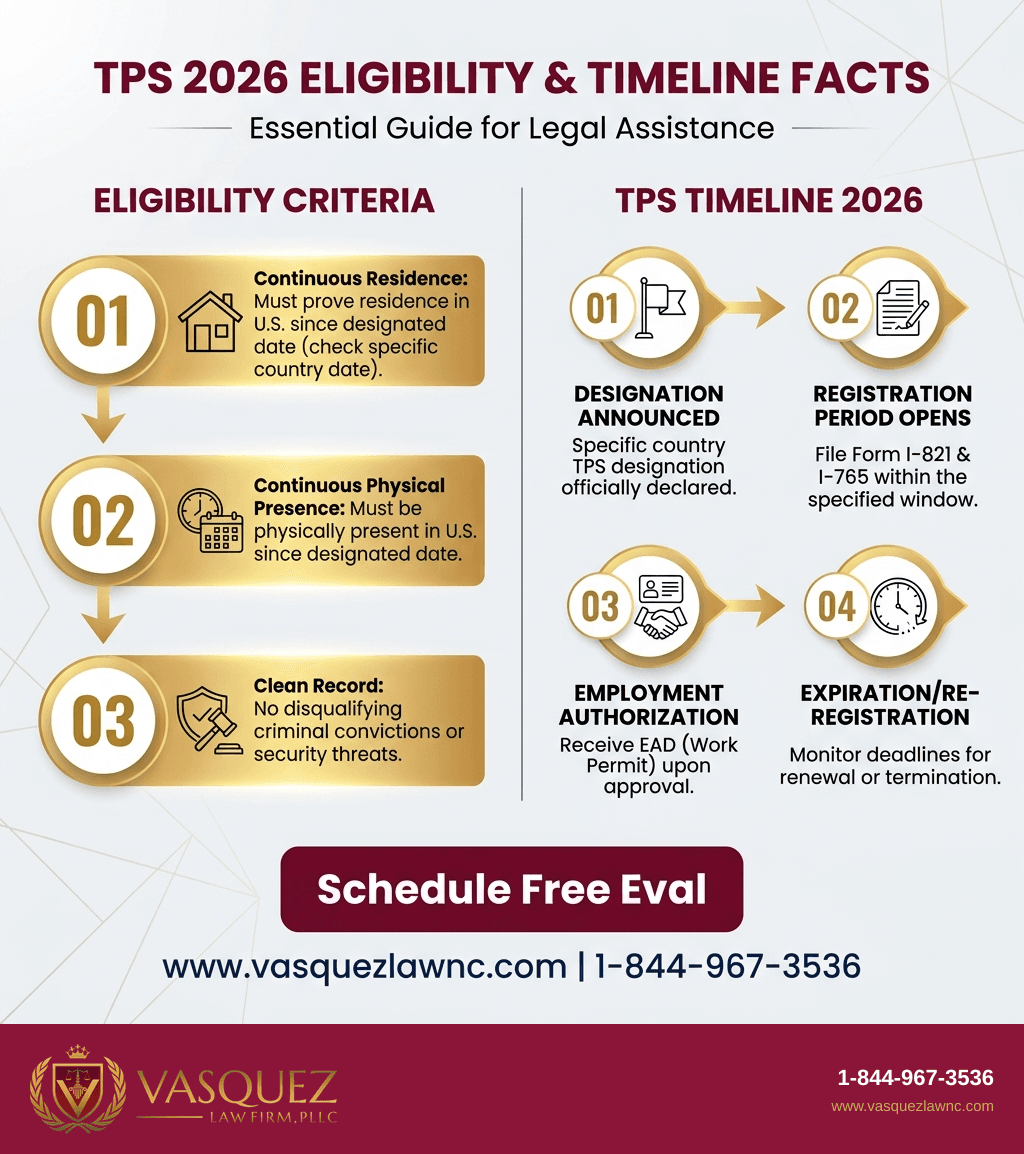
TPS Eligibility Requirements
- Nationality: You must be from a country designated for TPS
- Continuous Residence: You must have lived in the U.S. continuously since the date DHS set
- Physical Presence: You must be physically in the U.S. when you apply
- Criminal Record: You cannot have certain serious criminal convictions
- Registration: You must register during the time period set by DHS
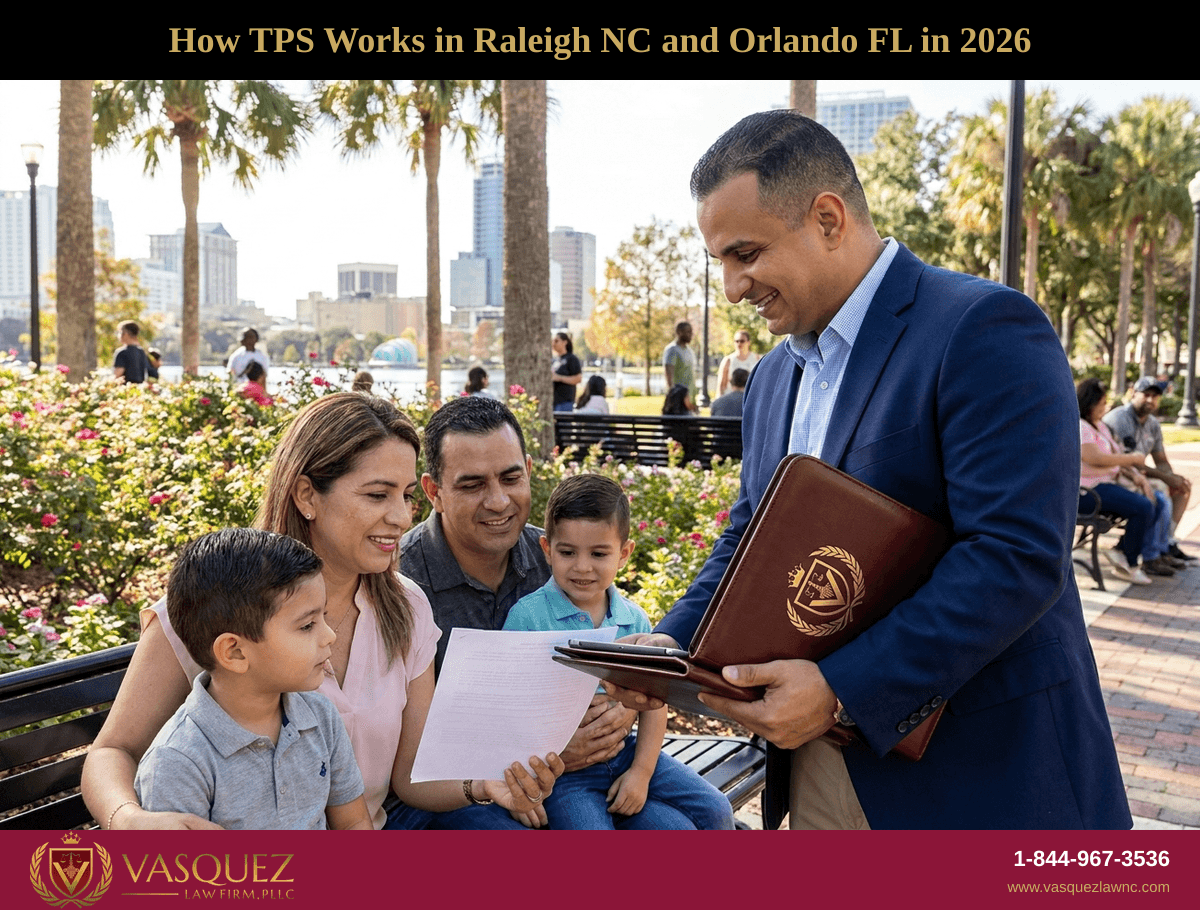
Step-by-Step TPS Application Process
Applying for TPS can be complicated. Here are the main steps if you apply from Raleigh, NC or Orlando, FL:
- Check Eligibility: Make sure your country has TPS and you meet residence and presence rules.
- Gather Documents: Get your passport, birth certificate, proof of where you live, and any immigration papers.
- Complete Form I-821: Fill out the Application for Temporary Protected Status carefully and send it to USCIS.
- Apply for Work Authorization: If you want to work, send Form I-765 to get an Employment Authorization Document (EAD).
- Pay Fees: Pay the right fees or ask for fee waivers if you qualify.
- Attend Biometrics Appointment: USCIS will tell you when and where to give fingerprints and photos.
- Wait for Decision: USCIS usually takes several months. Check USCIS processing times for updates.
- Receive Notice and Documents: If approved, you will get a letter saying you have TPS and maybe a new EAD card.
Remember to renew your TPS before it expires if DHS offers extensions for your country.
Biometrics for TPS Applicants
Biometrics means giving your fingerprints and photos. This step is required. USCIS uses this for background checks. If you miss this appointment, your application can be denied.
Supporting Evidence You Should Prepare
You need to prove you lived in the U.S. continuously, your identity, and your nationality. Documents like utility bills, letters from employers, or school records help. Getting help from Attorney Vasquez can avoid delays.
Getting Help With TPS Applications
The application process can be hard. Our immigration lawyers in Raleigh and Orlando can guide you step-by-step. We help you avoid mistakes and improve your chances. Contact us for a free evaluation.
Common Mistakes to Avoid in TPS Applications
- Missing Deadlines: Filing after USCIS deadlines can cause denial. Keep track of deadlines carefully.
- Incomplete Forms: Leaving blanks or making errors causes delays or rejection. Check forms carefully.
- Insufficient Evidence: Not having enough proof of residence or nationality weakens your case. Gather strong documents.
- Ignoring Biometrics Appointment: Not going to biometrics leads to automatic denial.
- Not Renewing TPS: If extensions are available, not renewing can cause loss of status.
- Failing to Report Changes: Tell USCIS quickly if your address or status changes.
- Using Incorrect Fees: Pay the correct fees or ask for fee waivers if you qualify.
- Relying on Outdated Information: Immigration rules and TPS countries can change. Check USCIS often.
If you only remember one thing: Filing on time, correctly, and with full evidence greatly helps your TPS application succeed.
TPS Timeline and What to Expect
- Application Preparation: 2-4 weeks to gather documents and fill forms
- USCIS Processing: Usually 6-12 months for Form I-821 (see current updates)
- Biometrics Appointment: Scheduled 4-8 weeks after applying
- Decision Notification: Usually 1-2 months after biometrics
- Work Authorization Receipt: EAD cards come within 90 days after approval
- TPS Expiration and Renewal: Renew every 6-18 months as DHS announces
Plan ahead for each step. Delays or Requests for Evidence (RFEs) can make the process take longer.
Costs and Fees: What Impacts the Price
- USCIS Fees: You must pay to file Form I-821 and Form I-765 if applying for work authorization.
- Biometrics Fee: There is an extra charge for fingerprinting services.
- Attorney Fees: Hiring a lawyer to help with your case varies by how complex it is.
- Fee Waivers: Some people can get fee waivers if they have low income or hardship.
- Additional Costs: Getting documents or translations may cost a little more.
Contact Vasquez Law Firm to learn your options and get clear fee estimates.
NC, FL, and Nationwide Notes
North Carolina Notes
In Raleigh, NC, TPS holders can use local legal aid services. The state accepts EADs for work. Local immigration courts handle removal cases for TPS holders under federal law. Vasquez Law Firm’s Raleigh office helps NC TPS applicants with all requirements.
Florida Notes
Orlando, FL has many TPS holders from designated countries. Florida recognizes TPS status and work permits. Local USCIS offices often handle biometrics and interviews for TPS. Vasquez Law Firm’s Orlando office offers bilingual help with TPS and immigration.
Nationwide Concepts
TPS designation and rules are federal under the Immigration and Nationality Act (INA § 244). USCIS manages applications nationwide following federal rules at 8 C.F.R. § 244. These rules apply no matter where you live in the U.S., though local offices may affect how processing happens.
When to Call a Lawyer Now
- Your TPS application deadline is near and you need help filing
- You got a Request for Evidence (RFE) from USCIS
- You worry your TPS status will expire soon without extension
- You have criminal convictions that might affect eligibility
- You were denied TPS or work authorization
- You face removal or immigration court cases
- You want to learn about other immigration options besides TPS
- You need help renewing your TPS status correctly
About Vasquez Law Firm
At Vasquez Law Firm, we mix care with strong representation. Our motto "Yo Peleo®" (I Fight) shows we stand up for your rights.
- Bilingual Support: Se Habla Español — Spanish-speaking lawyers and staff available
- Service Areas: North Carolina, Florida, and nationwide immigration help
- Experience: Over 30 years helping clients with complex legal issues
- Results: Thousands of successful cases in many practice areas
Attorney Trust and Experience
William J. Vásquez is licensed by the North Carolina State Bar (2011) and the U.S. Courts of Appeals for the 4th, 5th, and 11th Circuits. Florida cases are handled by Florida Bar lawyer Harold Estrada-Rodriguez (FL Bar No. 1041171). The firm has provided dedicated legal help since 2011, giving personal attention to each client.
Don't wait to get the help you deserve. Call us now for immediate assistance.
Se Habla Español
Frequently Asked Questions
What is Temporary Protected Status (TPS)?
Temporary Protected Status (TPS) is a temporary immigration status given to eligible nationals of certain countries with ongoing war, natural disasters, or other serious problems. It lets people live and work legally while it is unsafe to return home.
Who qualifies for TPS in 2026?
You qualify if you are from a country that DHS has designated for TPS, have lived in the U.S. continuously since the date DHS set, and meet other rules like having no serious criminal record.
How do I apply for Temporary Protected Status?
File Form I-821 with USCIS with your evidence, and Form I-765 if you want work authorization. Go to biometrics appointments and answer USCIS requests quickly.
How long does TPS last and can it be extended?
TPS usually lasts 6 to 18 months and can be extended by DHS if conditions stay unsafe. Extensions were announced for some countries in 2026. You must apply to renew to keep your status.
What are the main benefits of having TPS?
TPS protects you from deportation, lets you work legally, and lets you get a Social Security number and driver’s license in many states.
Can TPS holders apply for permanent residency in the U.S.?
TPS does not give a direct way to get a green card. TPS holders may qualify for other immigration benefits depending on their case. They should talk to a lawyer.
What happens if my TPS application is denied?
If denied, you may be at risk of deportation unless you have other protections. Getting legal advice is very important to explore options like appeals or other immigration status.
What is the difference between TPS and asylum?
TPS is temporary and based on unsafe country conditions. Asylum requires showing you face personal persecution and can lead to permanent residency. TPS is only for a limited time.
Sources and References
- U.S. Citizenship and Immigration Services
- Executive Office for Immigration Review
- Legal Information Institute
Take the first step toward justice today. Our team is ready to help.
Start Your Free Evaluation Now
Call us: 1-844-967-3536
Se Habla Español - We are here to help you.

William Vasquez
Founder & CEO, Vasquez Law Firm, PLLC
William Vasquez is the founder and CEO of Vasquez Law Firm, PLLC, a results-driven firm specializing in immigration, criminal defense, personal injury, and workers' compensation. A U.S. Air Force veteran and recipient of the Joint Service Achievement Medal, William is dedicated to fiercely fighting for his clients' rights.
Related Legal Services
Need legal help? Learn more about learn about our immigration practice, or contact us for a free evaluation.
You can also visit NC immigration legal help for more information.