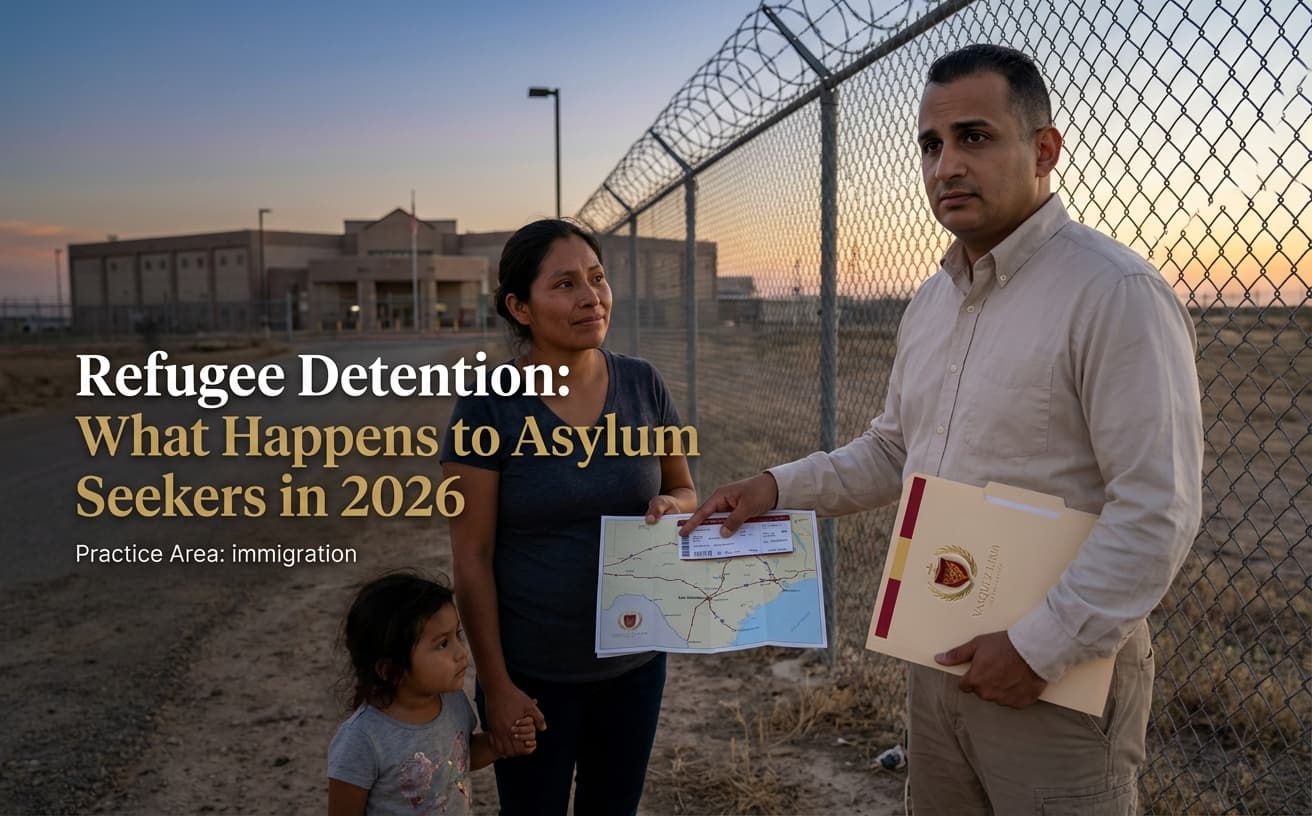
What Happens to Asylum Seekers in Refugee Detention in 2026
Understand refugee detention processes in NC and FL for 2026. Learn your rights and how to seek release. Contact Vasquez Law for a free consultation.
Published on February 27, 2026
Talk to an immigration attorney
Free call. A clear plan for your case.
Free & confidential · Se habla espanol · 24/7
Have questions? Talk to an attorney - free evaluation.
Call 1-844-967-3536Worried how the latest immigration news affects you?
Schedule a confidential case review with an immigration attorney - know exactly where you stand.
What Happens to Asylum Seekers in Refugee Detention in 2026
Refugee detention is a complex and often distressing reality for many asylum seekers arriving in the United States. As of 2026, understanding the processes, your rights, and the potential pathways to release is crucial for anyone facing or concerned about immigration detention. This guide provides an in-depth look at what refugee detention entails, focusing on the legal frameworks and practical considerations for individuals in North Carolina, Florida, and across the nation. Vasquez Law Firm is dedicated to helping individuals navigate these challenging situations with compassionate and aggressive representation.
Need help with your case? Our experienced attorneys are ready to fight for you. Se Habla Español.
Schedule Your Free Case Evaluation
Or call us now: 1-844-967-3536
Quick Answer
Refugee detention refers to the holding of individuals seeking asylum in the U.S. while their immigration cases are processed. It primarily involves individuals who arrive at a port of entry without proper documentation or those apprehended within the U.S. without legal status. Detention facilities are managed by U.S. Immigration and Customs Enforcement (ICE). Pathways to release often include:
- Grant of asylum
- Bond hearings
- Parole
- Order of supervision
Understanding Refugee Detention in the U.S.
Refugee detention, often referred to as immigration detention, involves holding individuals who have fled their home countries and are seeking protection in the United States. These individuals, typically asylum seekers, are detained by immigration authorities while their claims for asylum are being reviewed or while they await deportation proceedings. The practice has faced significant scrutiny, with advocates arguing for alternatives to detention, especially for vulnerable populations.
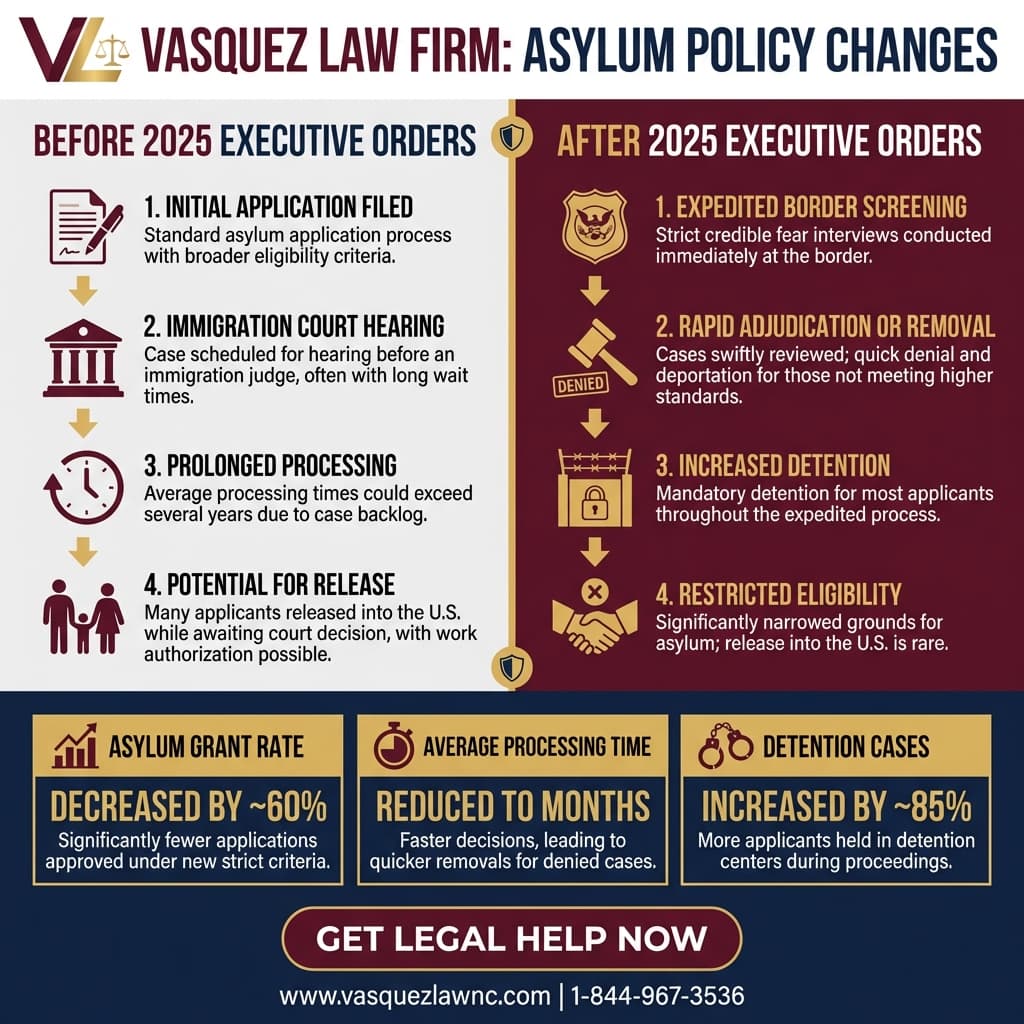
In 2026, the landscape of immigration enforcement continues to evolve, impacting how and why asylum seekers are detained. The Department of Homeland Security (DHS) and U.S. Immigration and Customs Enforcement (ICE) are the primary agencies responsible for managing these facilities. Detained asylum seekers often face immense challenges, including language barriers, limited access to legal counsel, and the psychological toll of confinement, all while trying to prove their legitimate fear of persecution.
The legal framework for refugee detention stems from federal immigration law, primarily the Immigration and Nationality Act (INA). This act grants broad authority to the government to detain non-citizens. However, it also includes provisions for individuals to seek release from detention under certain circumstances, such as through bond hearings or humanitarian parole. Understanding these complex legal pathways is critical for anyone impacted by refugee detention.
For individuals arriving at ports of entry, or those apprehended within the country, the initial decision to detain often rests on factors like identity, flight risk, and perceived danger to the community. These initial assessments can be subjective, making it essential for asylum seekers to have qualified legal representation from the outset. Vasquez Law Firm has extensive experience in these matters, advocating for the rights of detained individuals.
Who is Detained and Why: Factors in Immigration Detention
The decision to detain an asylum seeker is not arbitrary, but it is influenced by a range of factors that immigration authorities consider. Generally, individuals who arrive at a U.S. border or port of entry without proper documentation, or those who are apprehended within the U.S. without legal status, are subject to detention. However, specific categories of individuals are more likely to be detained.
Factors that increase the likelihood of detention include a criminal record, previous immigration violations, or if the individual is deemed a flight risk or a danger to national security or public safety. Even individuals with strong asylum claims may find themselves in refugee detention if they do not meet specific criteria for release. This often includes those who cannot establish their identity or those who have been subject to expedited removal proceedings.
Conversely, certain vulnerable populations, such as unaccompanied minors, pregnant women, and individuals with severe medical conditions, are often prioritized for release, though this is not always guaranteed. The availability of alternatives to detention, such as ankle monitors or reporting requirements, can also play a role in whether an individual is released. Navigating these factors requires a deep understanding of immigration law and policy, which an experienced legal team like Vasquez Law Firm can provide.
It is important to note that even U.S. citizens or green card holders can sometimes be mistakenly detained by ICE. While rare, such incidents highlight the critical importance of knowing your rights and immediately seeking legal counsel if you or a loved one is detained. The process of challenging unlawful detention can be complex, involving habeas corpus petitions and other legal remedies.
Pathways to Release from Refugee Detention
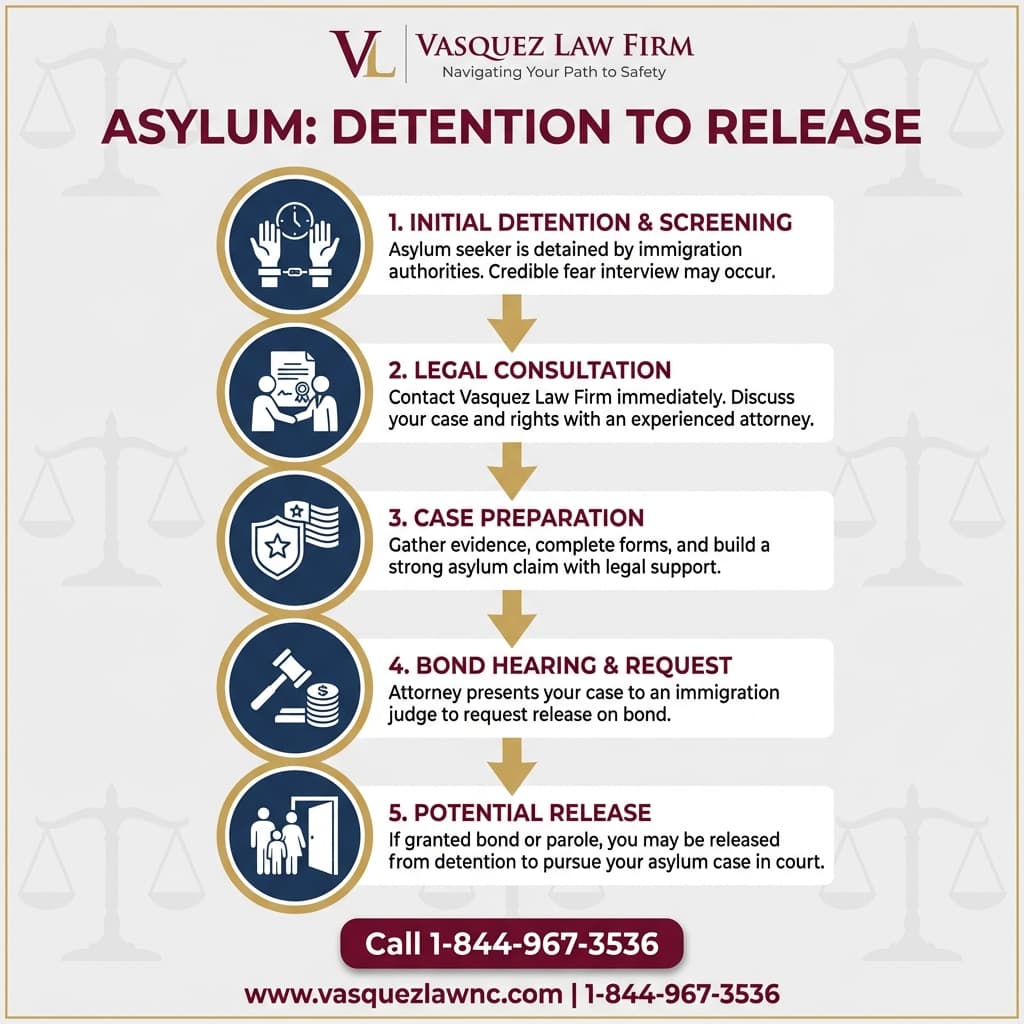
For individuals held in refugee detention, securing release is often the primary goal. Several legal avenues exist for asylum seekers to seek release, each with its own requirements and challenges. The most common pathways include bond hearings, humanitarian parole, and successful asylum claims.
Immigration Bond Hearings
An immigration bond hearing is a proceeding before an immigration judge where an individual may request release from detention in exchange for a monetary bond. The judge assesses factors such as flight risk, danger to the community, and ties to the community when deciding whether to grant bond and the amount. It's crucial to present a compelling case, often with the help of an attorney, to demonstrate that the individual is not a flight risk and poses no danger. For more information, you can read our guide on immigrant bonds.
Humanitarian Parole
Parole allows certain non-citizens to enter or remain in the U.S. temporarily for urgent humanitarian reasons or significant public benefit. For detained asylum seekers, humanitarian parole may be granted by ICE if there are compelling reasons, such as a severe medical condition, extreme age, or strong family ties in the U.S., and the individual is not considered a flight risk or danger. This is a discretionary decision by ICE.
Successful Asylum Claim
If an asylum seeker's claim is granted, they are no longer subject to detention based on their immigration status and will be released. This process can be lengthy, often involving interviews with asylum officers and hearings before an immigration judge. A strong asylum application supported by credible evidence and compelling testimony is vital for a favorable outcome. Vasquez Law Firm assists clients throughout the asylum process, from application to hearing.
Your Rights in Refugee Detention: What You Need to Know
Even while in refugee detention, individuals retain certain fundamental rights. Knowing and asserting these rights is crucial for protecting your interests and improving your chances of release. It's essential to remember that these rights apply regardless of your country of origin or immigration status.
You have the right to speak with an attorney. This is perhaps the most important right, as legal representation significantly increases the likelihood of a positive outcome in immigration proceedings. You also have the right to remain silent and not answer questions about your immigration status or country of origin, except to identify yourself. Do not sign any documents you do not understand, especially those related to voluntary departure or waiving your rights.
Detained individuals also have the right to contact their consulate, receive medical care, and be free from abuse or mistreatment. Facilities must provide basic necessities, including food, water, and shelter. If you believe your rights are being violated, it is important to document the issues and seek legal assistance immediately. Our team at Vasquez Law Firm can help advocate for your rights and ensure you are treated fairly under the law.
Furthermore, you have the right to a bond hearing before an immigration judge, unless you are subject to mandatory detention. During this hearing, you can present evidence and arguments for your release. Understanding the nuances of these rights and how to effectively exercise them can be challenging without legal guidance. This is why connecting with an experienced immigration lawyer is paramount.
Common Mistakes to Avoid in Refugee Detention
Navigating refugee detention is fraught with potential pitfalls that can jeopardize an individual's case. Avoiding common mistakes can significantly improve the chances of a favorable outcome and release. Here are some critical errors to steer clear of:
- Not asserting your right to silence: Speaking freely with immigration officers without legal counsel can lead to self-incrimination or providing information that harms your case.
- Signing documents without understanding them: Never sign any paper, especially those related to voluntary departure or waiving your rights, unless it has been fully explained to you by an attorney.
- Failing to disclose all relevant information to your attorney: Honesty and transparency with your legal counsel are vital. Withholding information, even if embarrassing, can prevent your lawyer from building the strongest possible defense.
- Missing deadlines: Immigration cases involve strict deadlines for filing applications, appeals, or evidence. Missing these can result in automatic denials or removal orders.
- Failing to gather necessary evidence: A strong asylum claim or bond request requires substantial evidence. Not collecting police reports, medical records, witness statements, or country condition reports can weaken your case.
- Providing inconsistent statements: Any inconsistencies in your testimony or written statements can be used against you, undermining your credibility before an asylum officer or immigration judge.
- Not seeking legal representation early: Delaying legal counsel can lead to missed opportunities, procedural errors, and a weaker defense. Early intervention by an attorney is often critical.
If you only remember one thing: Always assert your right to speak with an attorney before answering any questions or signing any documents, and immediately contact a legal professional like those at Vasquez Law Firm.
Don't face your legal challenges alone. Our team is here to help you every step of the way.
Call today: 1-844-967-3536 | Se Habla Español
NC, FL, and Nationwide Notes on Refugee Detention
While immigration law is primarily federal, the practical experience of refugee detention can vary significantly depending on the state and specific detention facility. For individuals in North Carolina and Florida, understanding these local nuances is essential, alongside the overarching nationwide framework.
Nationwide Framework for Immigration Detention
Across the United States, the detention of asylum seekers and other non-citizens falls under the jurisdiction of federal agencies, primarily ICE, a component of DHS. The legal authority for detention is derived from the Immigration and Nationality Act. ICE operates a network of detention facilities, including those directly managed by the agency, contract facilities, and intergovernmental service agreements with local jails. Conditions and access to legal services can vary widely across these different types of facilities, impacting the experience of those in refugee detention.
North Carolina Detention Centers
In North Carolina, asylum seekers and other immigrants may be detained in facilities such as the Stewart Detention Center in Georgia, which serves the Southeast region, or local jails with ICE contracts. Access to legal aid organizations can be limited, making private counsel even more vital. Raleigh and other North Carolina cities have communities deeply affected by these detention policies. Vasquez Law Firm serves clients in North Carolina, providing critical legal support for those in or facing detention.
Florida Detention Centers
Florida is home to several large ICE detention centers, including Krome Service Processing Center in Miami and Glades County Detention Center. These facilities house a significant number of asylum seekers. Advocates in Florida often raise concerns about conditions and access to due process. Given Florida's large immigrant population, there is a consistent need for experienced legal representation for those in refugee detention. Our firm also assists clients throughout Florida, helping them navigate the complexities of their detention cases.
When to Call a Lawyer Now About Refugee Detention
The moment you or a loved one is taken into refugee detention, or even if you anticipate such an event, is the time to contact an experienced immigration attorney. Early legal intervention can make a significant difference in the outcome of a detention case. Here are critical triggers that signal an immediate need for legal assistance:
- You or a family member has been detained by ICE.
- You are an asylum seeker and have been placed in detention.
- You have received a Notice to Appear (NTA) in immigration court.
- You believe you are being held unlawfully or your rights are being violated.
- You are facing a credible fear interview or reasonable fear interview.
- You are eligible for a bond hearing but don't know how to prepare.
- You have a prior deportation order or criminal record.
- You are a U.S. citizen or green card holder who has been mistakenly detained.
- You are considering applying for asylum but fear detention.
Don't hesitate to seek professional legal guidance. Vasquez Law Firm offers free case evaluations to discuss your specific situation and determine the best course of action. We are here to fight for your freedom and rights.
About Vasquez Law Firm
At Vasquez Law Firm, we combine compassion with aggressive representation. Our motto "Yo Peleo" (I Fight) reflects our commitment to standing up for your rights. We understand the fear and uncertainty that come with immigration challenges, especially those involving refugee detention.
- Bilingual Support: Se Habla Español - our team is fully bilingual and ready to communicate effectively with you.
- Service Areas: We provide dedicated legal services across North Carolina, Florida, and nationwide for immigration matters.
- Experience: With over 15 years of focused legal experience, Attorney Vasquez brings a wealth of knowledge and a proven track record to your case.
- Results: Our firm is committed to achieving the best possible outcomes, fighting tirelessly for our clients' freedom and future.
Attorney Trust and Experience
Attorney Vasquez holds a Juris Doctor degree and is admitted to practice in both the North Carolina State Bar and Florida Bar. With over 15 years of dedicated legal experience, he has built a reputation for providing personalized attention and achieving favorable outcomes for his clients. His deep understanding of immigration law, combined with a commitment to justice, makes Vasquez Law Firm a trusted advocate for those facing refugee detention and other complex immigration issues.
Frequently Asked Questions
Can a U.S. citizen be detained by ICE in 2026?
While rare, U.S. citizens can sometimes be mistakenly detained by ICE. If this happens, it is a serious violation of rights. You should immediately state that you are a U.S. citizen and demand to speak with a lawyer. Do not sign anything. An attorney can help prove your citizenship and secure your prompt release, potentially pursuing legal action for unlawful detention. This underscores the importance of carrying proof of citizenship.
What happens if ICE detains a U.S. citizen?
If ICE detains a U.S. citizen, the individual should immediately inform officers of their citizenship and request legal counsel. An attorney will work to verify citizenship through documents like birth certificates or passports. Once citizenship is confirmed, the individual must be released. Such incidents can lead to significant legal challenges against ICE for wrongful detention, highlighting the need for immediate legal representation.
Are people with green cards being detained in 2026?
Green card holders (lawful permanent residents) generally have strong protections against detention, but they can be detained if they have certain criminal convictions or have violated immigration laws. For example, aggravated felonies or certain drug offenses can lead to detention and deportation proceedings. It is critical for green card holders facing detention to consult with an immigration attorney immediately to protect their status.
Can you get deported if you are a refugee?
Yes, even after being granted refugee status or asylum, an individual can be deported if they commit certain serious crimes, are found to have misrepresented facts in their asylum application, or become a danger to U.S. national security. These are complex situations that require immediate legal intervention. An attorney can help defend against deportation proceedings and protect your status.
What is the purpose of immigration detention centers?
Immigration detention centers serve multiple purposes: to ensure individuals appear for immigration court hearings, to facilitate deportation for those ordered removed, and to detain individuals deemed a flight risk or a danger to national security or public safety. They are not correctional facilities, but administrative holding centers. However, their use for asylum seekers has been a subject of ongoing debate and reform efforts.
How long can someone be held in refugee detention?
The length of refugee detention varies widely and can range from a few days to several months or even years, depending on the complexity of the case, court backlogs, and appeals processes. There is no strict legal limit for how long an adult can be held in immigration detention, particularly if they are deemed a flight risk or a danger. Prompt legal action is key to minimizing detention time.
Can I visit a family member in an ICE detention center in NC or FL?
Yes, most ICE detention centers allow family visits, but policies vary by facility regarding visiting hours, required identification, and items allowed. It is crucial to check the specific facility's website or call ahead for their current visitor guidelines. An attorney can also help facilitate communication and ensure your loved one has access to legal support during visits.
What is humanitarian parole and how does it relate to detention?
Humanitarian parole is a discretionary power used by immigration authorities to allow individuals to enter or remain in the U.S. temporarily due to urgent humanitarian reasons or significant public benefit. For those in refugee detention, it can be a pathway to release if they have compelling circumstances, such as a severe medical condition or a vulnerable status, and pose no flight risk or danger. It is a complex application process.
Can I get a bond if I am an asylum seeker?
Many asylum seekers are eligible for bond hearings before an immigration judge, where they can request release from detention. The judge will consider factors like flight risk, ties to the community, and whether the individual poses a danger. Presenting a strong case with evidence of community ties and good character is vital. An experienced attorney can significantly improve your chances of obtaining a reasonable bond.
What is the credible fear interview process for asylum seekers?
The credible fear interview is an initial screening conducted by an asylum officer for individuals who express a fear of returning to their home country after being apprehended at the border or port of entry. If a credible fear is found, the individual's asylum claim can proceed to immigration court. If not, they may face expedited removal. Legal representation is crucial during this critical first step to ensure your fears are adequately presented.
Sources and References
- U.S. Citizenship and Immigration Services (USCIS)
- U.S. Department of State
- Executive Office for Immigration Review
- 8 U.S. Code § 1225 - Inspection by immigration officers; expedited removal of inadmissible arriving aliens
- 8 C.F.R. § 235 - Inspection of persons applying for admission
Need immigration help? Our immigration attorneys can review your case.
Ready to take the next step? Contact Vasquez Law Firm today for a free, confidential consultation. We're committed to fighting for your rights and achieving the best possible outcome for your case.
Start Your Free Case Evaluation Now
Call us: 1-844-967-3536
Se Habla Español - Estamos aquí para ayudarle.

William Vasquez
Founder & CEO, Vasquez Law Firm, PLLC
William Vasquez is the founder and CEO of Vasquez Law Firm, PLLC, a results-driven firm specializing in immigration, criminal defense, personal injury, and workers' compensation. A U.S. Air Force veteran and recipient of the Joint Service Achievement Medal, William is dedicated to fiercely fighting for his clients' rights.
Related Legal Services
Need legal help? Learn more about learn about our immigration practice, or contact us for a free evaluation.
You can also visit immigration attorneys across North Carolina for more information.