North Carolina Drug Task Force: How It Works in 2026
Learn how the North Carolina drug task force operates in 2026. Understand investigations, officer roles, and how to protect your rights. Contact Vasquez Law today.
Published on August 1, 2026· Updated September 9, 2026
Protect your record and your freedom
Free, confidential review. 24/7.
Free & confidential · Se habla espanol · 24/7
Have questions? Talk to an attorney - free evaluation.
Call 1-844-967-3536Protect Your Record and Your Freedom
A confidential case review - available 24/7 for emergencies.
North Carolina Drug Task Force: How It Works in 2026
The North Carolina drug task force plays an important role in fighting drug trafficking and enforcing drug laws across the state, including in places like Smithfield. In 2026, knowing how this task force works can help people protect their rights if they are part of investigations or arrests. This guide explains the task force’s setup, training, investigations, and how to report suspicious activity. If you face drug charges, our criminal defense lawyers in Raleigh, NC offer caring and experienced help.
Need help with your case? Our experienced lawyers are ready to fight for you. Se Habla Español.
Or call us now: 1-844-967-3536
Quick Answer
The North Carolina drug task force is a group of local, state, and federal law enforcement officers who work together to investigate and reduce illegal drug activity. They do surveillance, undercover work, and drug stopping with special training. If you are involved in such cases in Smithfield or nearby areas, get legal help right away.
- Working together across agencies lowers drug trafficking
- Officers get special training in stopping drugs
- Investigations can lead to federal or state court cases
- The Organized Crime Drug Enforcement Task Force (OCDETF) is still active
- Community tips help task forces find drug dealers
Understanding the North Carolina Drug Task Force
Drug trafficking means moving illegal drugs for sale. It causes serious problems in communities across North Carolina, including Smithfield. To fight this, the state supports drug task forces that cover many areas. These task forces combine local police, state, and federal officers. The goal is to share resources, information, and skills to find and break up drug trafficking groups.
The North Carolina drug task force works under programs like NC Counterdrug. This program gives money, training, and technical help. It improves teamwork between agencies like the North Carolina State Bureau of Investigation (SBI), county sheriffs, and federal groups like the DEA. Along with state laws like N.C. Gen. Stat. § 90-95, these forces help enforce drug laws the same way across different areas.
In Smithfield, local police often work with task force officers during drug cases. These partnerships allow better watching and access to federal court resources. Task force members are specially trained officers who know how to stop drugs. They can spot drug shipments, suspicious actions, and drug dealer networks.
Task Force Structure
The task force usually includes officers from many agencies: local police, county sheriffs, state investigators, and federal agents. Having many agencies involved gives wider legal powers and more funding. It also helps share information quickly and work better.
NC Counterdrug Program Role
NC Counterdrug gives money and training to task forces across the state. The program helps officers stay updated on law enforcement trends, drug stopping methods, and legal rules. Officers attend training sessions often to keep their skills sharp. This includes learning how to identify drugs and how to work undercover.
OCDETF and Federal Involvement
The Organized Crime Drug Enforcement Task Force (OCDETF) is a federal group that fights large drug trafficking. OCDETF task forces combine federal, state, and local units, including North Carolina task forces. This teamwork targets big criminal groups that cross state borders. The OCDETF is still active in 2026 and works closely with state task forces.
How Investigations and Enforcement Work
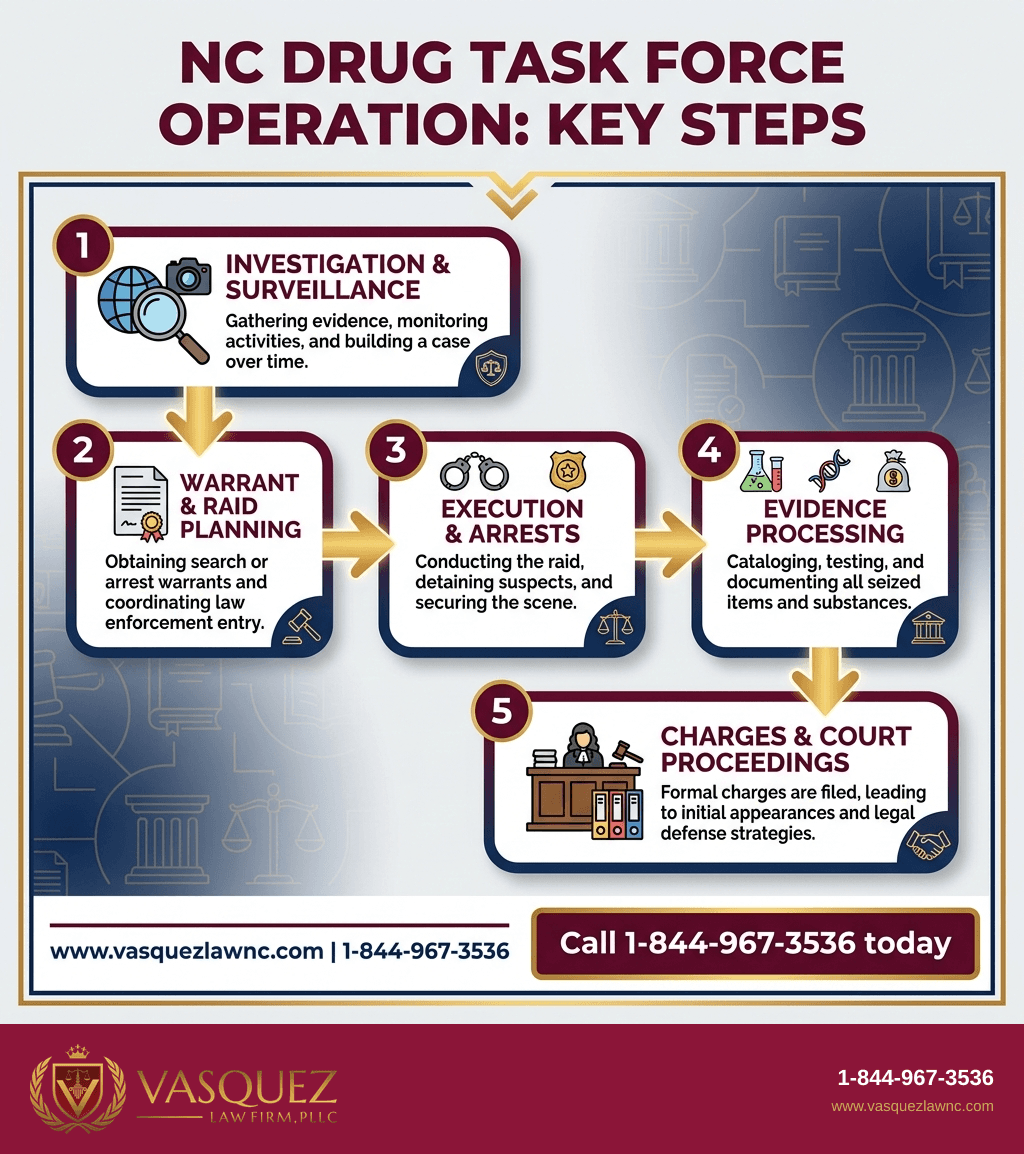
A usual task force investigation starts by gathering information from informants, community tips, or watching suspects. Officers may watch suspected drug dealers or shipments in person or electronically. Sometimes, undercover agents join drug groups to collect proof.
When officers have probable cause (a good reason to believe a crime happened), the task force gets search warrants or makes arrests. Investigations can lead to charges in state or federal courts. For example, trafficking large amounts of drugs can lead to federal charges under 21 U.S.C. § 841. Smaller possession cases may stay in state court under N.C. Gen. Stat. § 90-95.
Surveillance and Intelligence
Information is usually collected quietly to avoid warning suspects. Watching may include video, phone tracking with permission, or stakeouts. Task force officers work closely to watch drug movements across county lines.
Arrests and Warrant Execution
After gathering enough proof, officers get warrants. Arrests are planned carefully to keep officers safe and protect evidence. The task force uses special arrest teams trained for risky drug operations.
State vs Federal Prosecution
Depending on the drugs, amount, or criminal record, cases may be sent for federal prosecution. Federal drug charges usually have tougher sentences and mandatory minimum punishments. Local prosecutors handle smaller cases in state courts. Your lawyer’s job is to review charges and find the best defense plan.
Training and Coordination with NC Counterdrug
Training is very important for the North Carolina drug task force to work well. Officers must keep up with drug trends and legal rules. NC Counterdrug offers regular training on drug stopping tactics. This includes learning about new synthetic drugs, handling evidence, and undercover work.
Some training sessions are free for law enforcement to improve skills across the state. The program encourages sharing information between agencies and professional growth. These trainings help officers stay ready for tough drug stopping missions.
Drug Interdiction Training
The training covers how to identify common drugs, safety rules, legal standards for searches, and how to interview people. Officers also learn community policing to build public trust. Training on new tools, like drug detection devices, gives officers what they need for enforcement in 2026.
Multi-Agency Coordination
NC Counterdrug supports teamwork between state and federal task forces, including the Northeast drug task force that covers parts of North Carolina. This ensures joint responses to drug routes crossing state lines. The program promotes joint training and sharing information platforms.
Community Engagement
Task force members also take part in outreach to teach the public about drug dangers and how to report suspicious activity. Getting the community involved makes enforcement stronger and protects vulnerable people.
Common Challenges and Mistakes in Drug Cases
Facing charges from drug task force investigations can be scary. It is important to know common mistakes people make in these cases so you can avoid making things worse.
Talking to Officers Without Counsel
One big mistake is talking to officers or confessing without a lawyer. Anything you say can be used against you in court. Always ask for a lawyer before answering questions.
Ignoring Court Dates
Missing hearings or court deadlines can cause a warrant for your arrest or loss of defenses. Stay organized and go to all court dates on time.
Posting on Social Media
Posting about your case or related events on social media can give prosecutors evidence against you. Avoid public talks or posts about your case.
Failing to Collect Evidence
Sometimes people do not collect or keep evidence that could help their defense. Even if arrested, your lawyer can advise you on how to get helpful information to challenge the charges.
Resisting Arrest or Evidence Destruction
These actions often cause more criminal charges and hurt your defense. Cooperate calmly and let your lawyer handle the legal parts.
If you remember only one thing: Always use your right to stay silent and talk to a qualified lawyer right after contact with the drug task force.
When to Contact a Criminal Defense Lawyer
If you are under investigation, arrested, or charged in any drug case in Smithfield or anywhere in North Carolina, contact a criminal defense lawyer right away. Early legal advice can stop mistakes and protect your rights.
- If police want to question you about drugs
- After being held or arrested by any task force officers
- If you get a search warrant at your home or property
- After receiving a summons or criminal charge for drug offenses
- If you want advice on plea options or trial defense
- After any illegal search or seizure happens
Attorney Vasquez and the team at Vasquez Law Firm serve Smithfield and Raleigh, NC with caring and strong criminal defense. Contact our office to schedule your free case evaluation.
Frequently Asked Questions
What is the role of the North Carolina drug task force?
The North Carolina drug task force handles investigations into illegal drugs across many law enforcement agencies and areas. Their goal is to lower trafficking through secret investigations and enforcement actions.
How do North Carolina drug task force officers receive training?
Officers get special training through programs like NC Counterdrug and Northeast drug task force training. This includes drug stopping tactics, undercover work, and following legal rules.
What types of cases does the drug task force investigate?
The task force investigates drug making, trafficking, possession, and selling cases – from street dealers to big drug groups.
How can I report a drug dealer or suspicious activity in North Carolina?
You can report suspicious activity to local police, sheriff's offices, or directly to the drug task force. Many places accept anonymous tips by phone or online.
Is the Organized Crime Drug Enforcement Task Force still operating in North Carolina?
Yes. OCDETF is still active in 2026 and works with state and local agencies to fight large drug trafficking in North Carolina.
What should I do if I am arrested by the drug task force in Smithfield?
Stay silent and ask for a lawyer right away. Do not answer questions or agree to searches without a lawyer.
What mistakes should I avoid if under investigation by the drug task force?
Do not talk without a lawyer, post on social media, resist arrest, or miss court dates. Talk to a lawyer quickly.
How long do North Carolina drug investigations typically take?
Investigations can last weeks to months depending on case difficulty, watching needs, and evidence gathering before charges start.
Sources and References
Take the first step toward justice today. Our team is ready to help. Se Habla Español.
Start Your Free Evaluation Now
Call us: 1-844-967-3536
Se Habla Español - We're here to help.
If you need legal assistance, learn more about our criminal defense legal services, or call us at 1-844-967-3536 for a free evaluation.


William Vasquez
Founder & CEO, Vasquez Law Firm, PLLC
William Vasquez is the founder and CEO of Vasquez Law Firm, PLLC, a results-driven firm specializing in immigration, criminal defense, personal injury, and workers' compensation. A U.S. Air Force veteran and recipient of the Joint Service Achievement Medal, William is dedicated to fiercely fighting for his clients' rights.
Related Legal Services
Need legal help? Learn more about our criminal defense legal services, or contact us for a free evaluation.
You can also visit North Carolina criminal defense lawyers for more information.