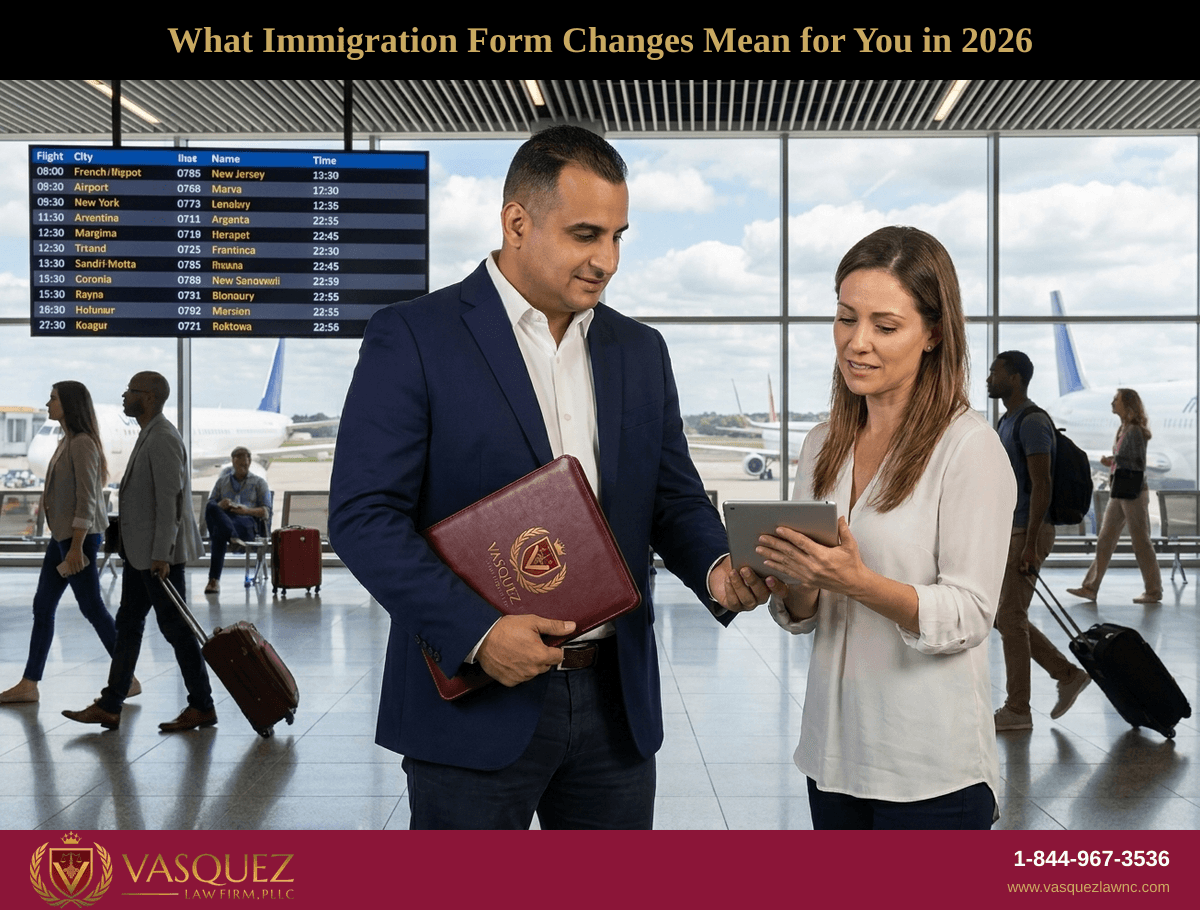
What Happens to Noncitizen Veterans in 2026 Immigration Policy
Wondering about noncitizen veterans’ rights in 2026? Learn key immigration facts, risks of deportation, and legal options. Call Vasquez Law for help.
Published on July 6, 2026
Talk to an immigration attorney
Free call. A clear plan for your case.
Free & confidential · Se habla espanol · 24/7
Have questions? Talk to an attorney - free evaluation.
Call 1-844-967-3536Worried how the latest immigration news affects you?
Get a free, confidential case review with an immigration attorney - know exactly where you stand.
What Happens to Noncitizen Veterans in 2026 Immigration Policy
Many noncitizen veterans face uncertainty under the changing 2026 immigration policies. Veterans who served in the U.S. military but are not citizens may face risks of deportation because of immigration enforcement rules in Orlando, Florida, and Raleigh, North Carolina. It is very important to know your rights, options to get citizenship, and how federal law protects veterans. This guide explains key facts and steps for noncitizen veterans dealing with immigration challenges today.
Need help with your case? Our experienced lawyers are ready to fight for you. Se Habla Español.
Or call us now: 1-844-967-3536
Quick Answer
Noncitizen veterans may face immigration enforcement and deportation under current rules. But federal laws give protections and faster ways to get citizenship for military service. Working with skilled immigration lawyers in Orlando and Raleigh can protect your rights and help you get permanent legal status.
- Veterans may qualify for faster citizenship under INA §§ 328 and 329 (these are parts of the Immigration and Nationality Act that allow military members to become citizens quicker)
- Cancellation of removal means protection from deportation under INA § 240A(b) (this law can stop deportation if you meet certain conditions)
- The MAVNI program (a program that allowed some noncitizens to join the military) is currently stopped as of 2026
- Policies from the Trump administration increased immigration enforcement targeting veterans
- Getting legal help is very important to avoid deportation
Understanding Noncitizen Veterans and Immigration
About 5% of U.S. military members are not citizens. This group includes legal permanent residents (people with green cards) and others with different immigration statuses. Many noncitizen veterans served honorably in Orlando, Florida, or Raleigh, North Carolina, but still face problems with their immigration status. Because of deportations and complicated citizenship rules, it is very important to understand federal immigration laws.
Military Service and Immigration Status
Noncitizen veterans often join the military as lawful permanent residents (people with green cards). U.S. Code Title 8 (a part of federal law about immigration) allows some faster citizenship options for active duty and honorably discharged veterans under INA § 328 and § 329. Because of their service, veterans can get citizenship without the usual five-year residency rule if they meet the requirements. However, programs like MAVNI are stopped now, which limits some ways for people without green cards.
Impact of Trump Administration Policies
During the Trump administration, immigration enforcement became stronger. This caused deportations of some veterans and active service members. The policies aimed to crack down on noncitizens even if they served in the military. This caused fear and uncertainty for many immigrant military communities in North Carolina and Florida. While these policies still exist somewhat in 2026, enforcement is now a bit more careful but the legal risk is still there.
Military Immigration for Parents and Families
Noncitizen veterans also try to get immigration benefits for their parents and family members using military-related immigration rules. Parental parole (a way to allow parents to stay temporarily) and faster visa processing can sometimes make immigration easier for close family of service members. These benefits are different depending on the place, so veterans in Orlando and Raleigh should get advice from immigration lawyers who know their area.
Learn more about our immigration services and how we help veterans.
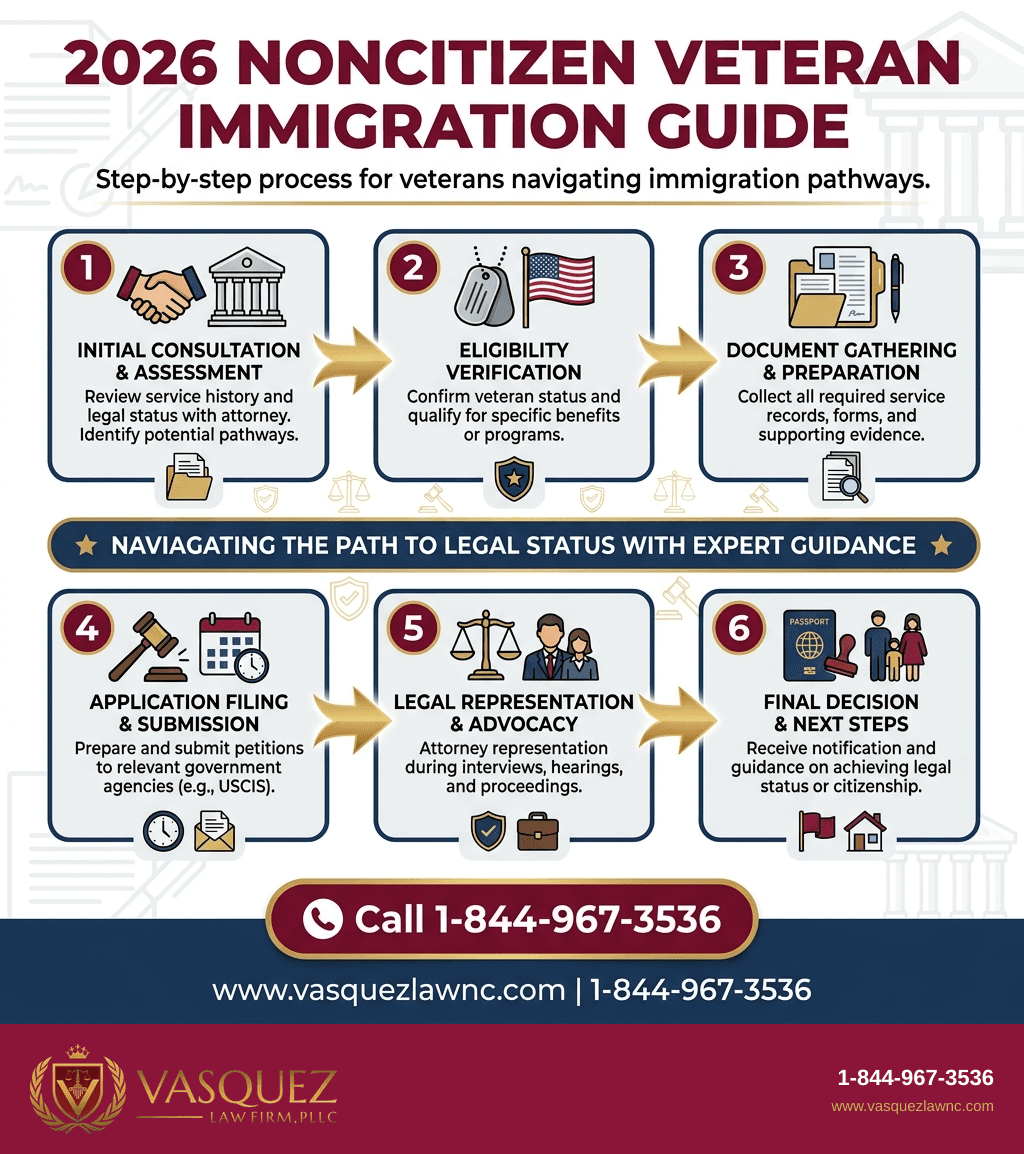
Key Steps for Noncitizen Veterans in Immigration Cases
Trying to get immigration benefits or defend against deportation for noncitizen veterans needs clear and careful steps. Here is a simple outline to follow.
1. Evaluate Military Service Records and Immigration Status
Collect all military papers, including honorable discharge papers (called DD-214) and any citizenship or green card documents. Having a complete file helps with citizenship applications or defending against deportation.
2. Determine Eligibility for Military Naturalization
Active duty members may qualify for faster citizenship under INA § 328. Veterans may apply under INA § 329 if they served honorably during certain times. USCIS (U.S. Citizenship and Immigration Services) processing times for Form N-400 (the citizenship application) usually take 10 to 14 months, according to USCIS processing times.
3. File Immigration Applications or Removal Defense
Talk to lawyers to file applications or respond if you face removal (deportation) proceedings. Cancellation of removal under INA § 240A(b) needs you to have lived continuously in the U.S. and have no serious criminal records.
4. Prepare for Hearings and Interviews
Having a lawyer during immigration interviews or deportation hearings helps get better results. Our immigration lawyers in Orlando and Raleigh focus on helping clients.
5. Follow Up and Monitor Case Progress
Immigration cases can take months or years. Stay in close contact with your legal team and USCIS or the immigration court (EOIR) for updates.
Contact Attorney Vasquez and our legal team for personal help with your case.
Common Mistakes by Noncitizen Veterans and How to Avoid Them
- Not getting a lawyer early: Start with a lawyer to avoid missing deadlines.
- Thinking military service automatically gives citizenship or protection: You must apply.
- Not keeping immigration documents up to date.
- Not telling about criminal history that can affect eligibility.
- Wrong information about MAVNI or other stopped programs.
- Ignoring letters or notices from immigration authorities.
- Using old laws or policies from past administrations.
If you remember only one thing: Always talk to experienced immigration lawyers in Raleigh or Orlando as soon as possible.
Don't wait to get the help you need. Call us now for quick assistance. Se Habla Español.
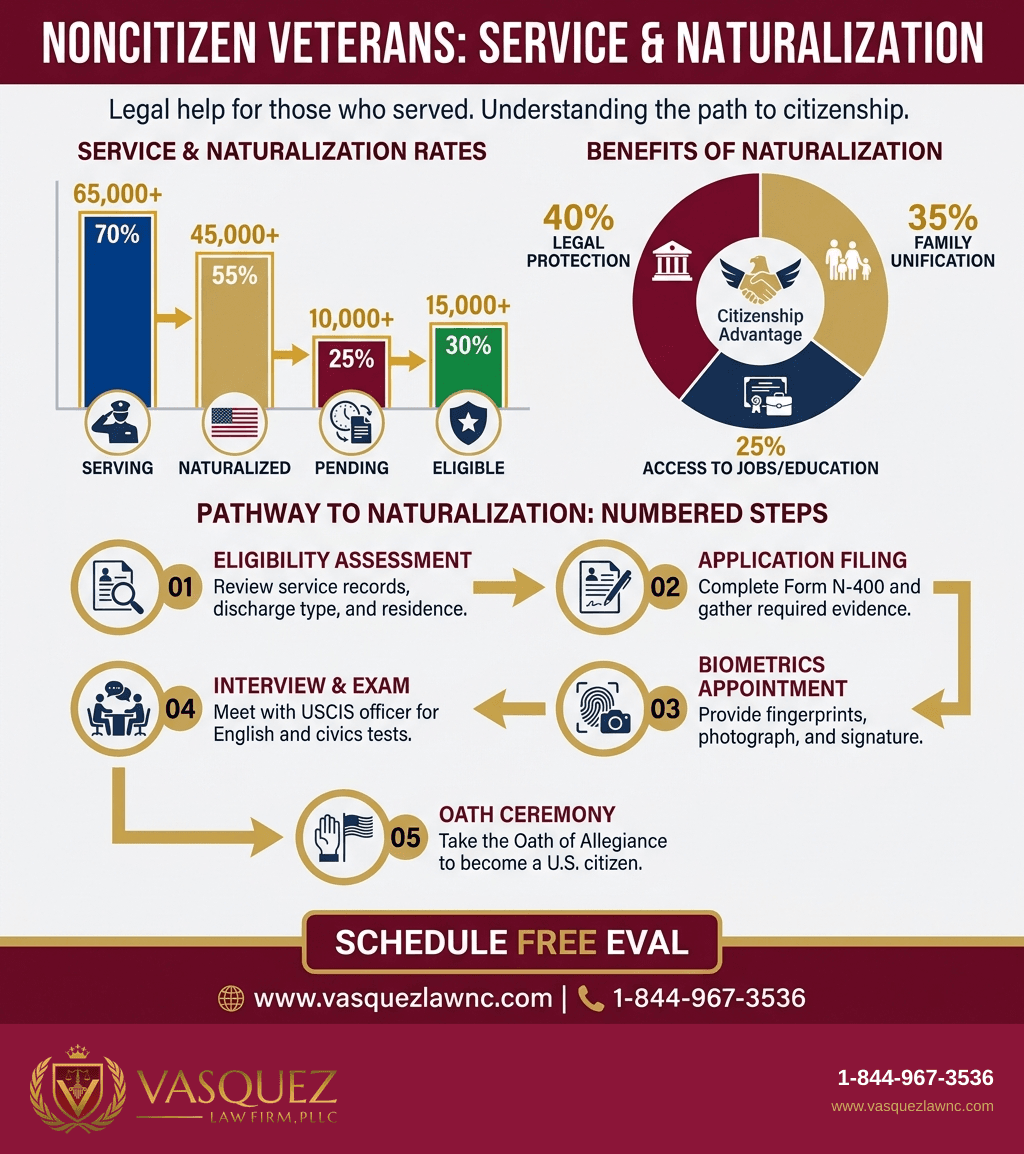
Timeline and What to Expect When Applying
USCIS shows that Form N-400 military naturalization takes about 10 to 14 months nationwide in 2026. Deportation defense cases may take longer because of court delays.
- Month 1: Submit application with military papers
- Months 2-5: Background and security checks
- Months 6-9: Interview and biometrics (fingerprints and photos) appointment
- Months 10-14: Oath ceremony and citizenship granted
- Ongoing: Deportation cases may take much longer
This timeline changes by location and USCIS workload. Working with a lawyer can help reduce delays.
Frequently Asked Questions
Can noncitizen veterans be deported in 2026?
Noncitizen veterans may be deported if convicted of certain crimes or lose immigration status. But protections like cancellation of removal under INA § 240A(b) exist if you meet continuous presence rules. Expert advice in Orlando and Raleigh is important to handle these issues safely.
Can a person join the military without being a U.S. citizen?
Yes, lawful permanent residents (green card holders) can serve in the military and get faster citizenship under INA §§ 328 and 329. The MAVNI program that allowed others to join was stopped as of 2026. Noncitizen veterans should check current options with immigration lawyers.
What was the MAVNI program and is it open in 2026?
MAVNI let some noncitizens without green cards join the military if they had important skills. It was stopped for security reviews. As of 2026, it is still closed. Veterans with questions should look for other immigration options with legal help.
Has ICE deported any veterans recently?
ICE has deported noncitizen veterans under some administrations, especially during the Trump era. Current policies in 2026 allow more discretion, but risk remains. Legal defense is very important to protect against deportation.
Can immigrants join the military to get citizenship?
Lawful permanent residents can join and apply for faster citizenship based on military service. This lowers the usual residency time needed. Eligibility depends on meeting service and character rules.
What immigration benefits exist for military parents?
Military parents may get parole (temporary permission to stay) or faster visa processing. Family members’ immigration eligibility depends on their situation. Lawyers in Raleigh or Orlando can give good advice.
Did Trump deport veterans as part of immigration crackdowns?
Yes, veterans were among those deported during Trump’s immigration actions. Policies have changed since then, but veterans still need to watch their immigration status carefully.
Can a noncitizen veteran apply for a green card in Raleigh or Orlando?
Yes, veterans with honorable service can file Form I-485 to change their status in Raleigh or Orlando. Legal help makes sure the forms are correct and follow USCIS rules.
About Vasquez Law Firm
At Vasquez Law Firm, we mix care with strong representation. Our motto "Yo Peleo®" (I Fight) shows our promise to stand up for your rights.
- Bilingual Support: Se Habla Español — Spanish-speaking lawyers and staff are ready to help
- Service Areas: North Carolina, Florida, and immigration help across the country
- Experience: Over 30 years helping clients with complex legal issues
- Results: Thousands of successful cases in many practice areas
Attorney Trust and Experience
William J. Vásquez is licensed to practice law in North Carolina since 2011 and in the U.S. Courts of Appeals for the 4th, 5th, and 11th Circuits. Florida cases at the firm are handled by Florida Bar lawyer Harold Estrada-Rodriguez (FL Bar No. 1041171). The firm has provided focused legal help since 2011, giving personal attention to each client.
Take the first step toward justice today. Our team is ready to help. Se Habla Español.
Start Your Free Evaluation Now
Call us: 1-844-967-3536
Se Habla Español - We are here to help you.
Sources and References

William Vasquez
Founder & CEO, Vasquez Law Firm, PLLC
William Vasquez is the founder and CEO of Vasquez Law Firm, PLLC, a results-driven firm specializing in immigration, criminal defense, personal injury, and workers' compensation. A U.S. Air Force veteran and recipient of the Joint Service Achievement Medal, William is dedicated to fiercely fighting for his clients' rights.
Related Legal Services
Need legal help? Learn more about how our immigration attorneys can help, or contact us for a free evaluation.
You can also visit North Carolina immigration lawyers for more information.