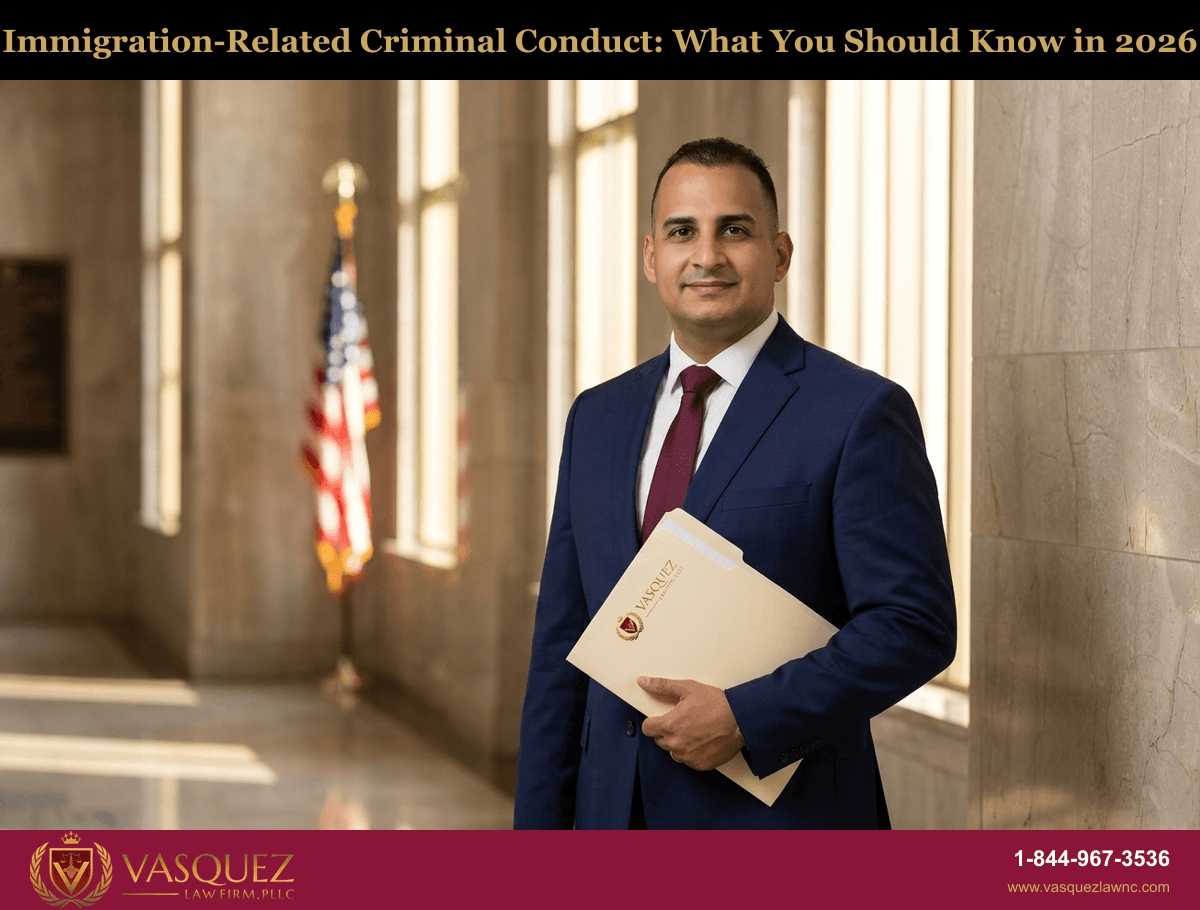
Immigration-Related Criminal Conduct: What You Should Know in 2026
Facing immigration-related criminal conduct charges? Learn how offenses affect your status and rights in 2026. Contact Vasquez Law for a free evaluation.
Published on May 27, 2026
Talk to an immigration attorney
Free call. A clear plan for your case.
Free & confidential · Se habla espanol · 24/7
Have questions? Talk to an attorney - free evaluation.
Call 1-844-967-3536Worried how the latest immigration news affects you?
Schedule a confidential case review with an immigration attorney - know exactly where you stand.
Immigration-Related Criminal Conduct: What You Should Know in 2026
Immigration-related criminal conduct involves offenses under federal law that can impact your ability to stay in the U.S. or apply for immigration benefits. This guide explains key crimes like illegal entry and reentry after deportation, their penalties, and what you need to know in Orlando and Raleigh in 2026. If you face such charges, understanding your rights and proper steps can protect your future. Vasquez Law Firm offers expert immigration legal services to guide you through these complex issues.
Need help with your case? Our experienced attorneys are ready to fight for you. Se Habla Español.
Or call us now: 1-844-967-3536
Quick Answer
Immigration-related criminal conduct includes offenses like illegal entry (8 U.S.C. § 1325) and unlawful reentry (8 U.S.C. § 1326). These offenses may lead to criminal penalties, deportation, or impact your immigration benefits. If charged, act quickly to protect your rights, especially if you live in Orlando, FL or Raleigh, NC.
- Includes offenses such as illegal entry and reentry after removal
- Charges carry criminal and immigration consequences
- Penalties can include fines, imprisonment, or deportation
- Rights to legal counsel and fair hearings apply
- Early legal help can improve outcomes
Understanding Immigration-Related Criminal Offenses
In 2026, immigration-related criminal conduct refers to violations of federal laws that relate directly to an individual's immigration status or actions tied to immigration. Two of the most common statutes involved are 8 U.S.C. § 1325 and 8 U.S.C. § 1326.
Illegal Entry (8 U.S.C. § 1325)
Section 1325 criminalizes entering or attempting to enter the United States at any time or place other than as designated by immigration officers. This offense is a misdemeanor punishable by a fine and/or imprisonment of up to six months for a first conviction. Repeat offenses can lead to more severe penalties. This statute is often charged when individuals cross the border without inspection or enter between ports of entry.
Unlawful Reentry (8 U.S.C. § 1326)
Section 1326 deals with individuals who were previously removed or deported and reenter the United States without authorization. This offense is more serious and considered a felony. Penalties can include prison sentences of up to two years or more, especially if the individual has prior criminal records. The law aims to discourage repeated illegal border crossings.
Other Immigration-Related Offenses
Aside from 1325 and 1326, there are other immigration offenses involving fraud, document falsification, or smuggling. Each offense carries specific penalties and has distinct implications for immigration status, including potential deportation and inadmissibility to immigration benefits.
How Criminal Conduct Affects Immigration Status
Criminal convictions related to immigration can trigger removal proceedings, deny adjustment of status, or cancel pending applications for visas, green cards, or citizenship. For lawful permanent residents (green card holders), certain crimes can lead to deportation. As of 2026, new rules impose additional scrutiny and restrictions on green card holders convicted of specific offenses.
Our immigration legal services in Orlando and Raleigh can help you understand the impact of criminal conduct on your immigration status and defend your rights throughout the process.
Key Steps to Take If Charged
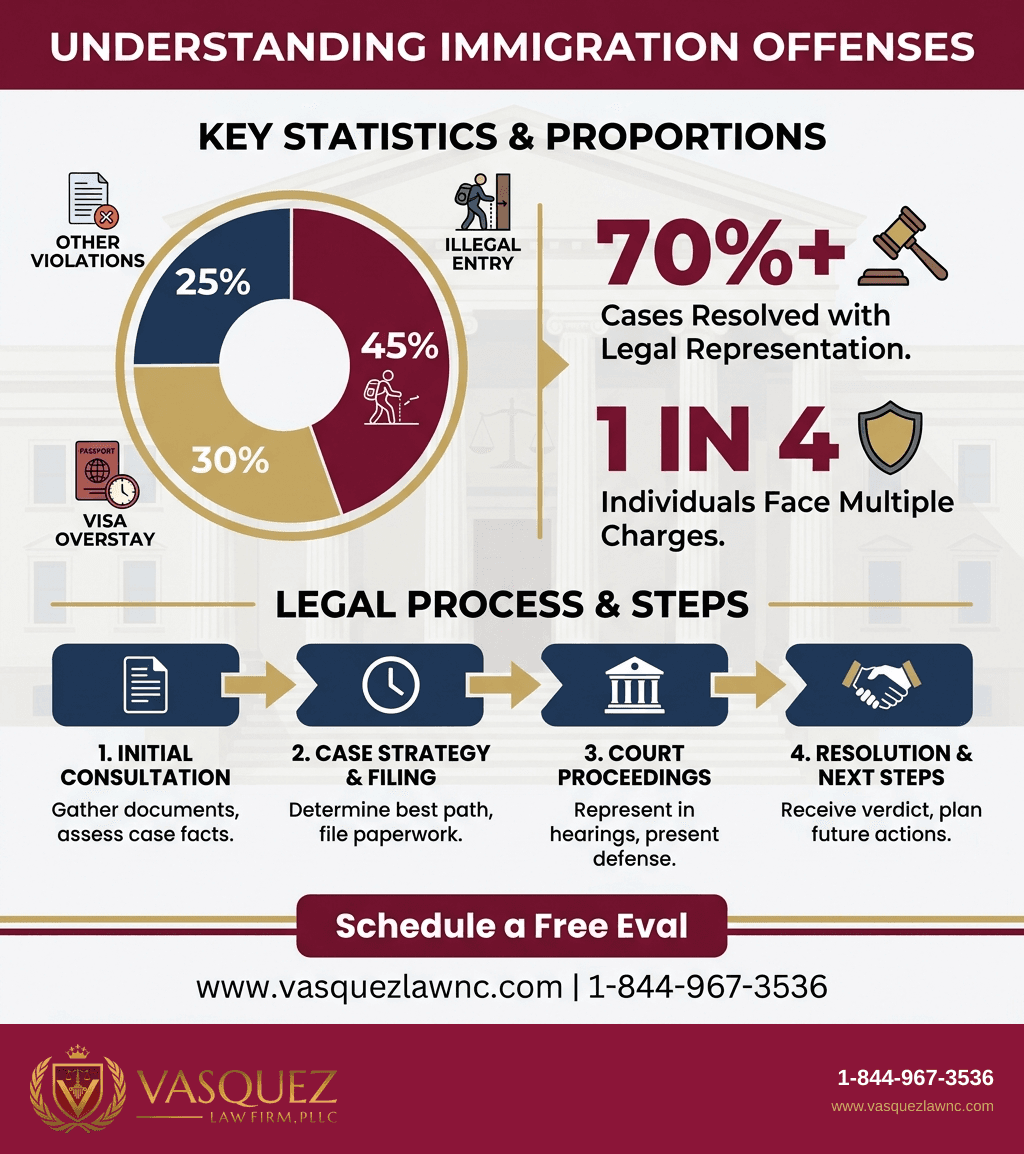
Facing charges related to immigration criminal offenses requires immediate action to avoid serious consequences. Every case is unique, but several common steps apply broadly.
1. Know Your Rights
If approached or arrested, you have the right to remain silent and the right to legal counsel. Do not consent to searches without a warrant, and avoid volunteering information that may harm your case.
2. Contact an Experienced Attorney
Contacting a knowledgeable immigration attorney in Orlando or Raleigh as soon as possible is critical. Early representation can influence hearings, bond hearings, and negotiations with ICE or prosecutors. Attorney Vasquez and our team provide bilingual assistance and clear guidance.
3. Gather Documents and Evidence
Collect immigration records, court notices, identification documents, and employment information. This evidence will help your attorney prepare a strong defense and advise you on options like cancellation of removal or motions to reopen.
4. Understand Court Proceedings
Immigration-related criminal cases may involve both criminal courts and immigration courts. Criminal charges under 8 U.S.C. §§ 1325 or 1326 are prosecuted in federal court, while removal proceedings happen in immigration court under EOIR. Your attorney will guide you through all required hearings.
Remember to contact our office immediately for a thorough case evaluation with Attorney Jessica Vasquez.
Common Mistakes to Avoid During Proceedings
- Ignoring Charges: Not responding to charges or missing hearings can lead to arrest and removal orders. Always stay informed about your case dates.
- Talking Without Counsel: Statements to ICE or law enforcement without legal advice can hurt your defense.
- Failing to Gather Evidence: Lack of documentation may weaken your case and reduce immigration relief options.
- Assuming All Immigration Cases Are Civil: Immigration-related criminal offenses carry criminal penalties and affect legal residency.
- Delaying Legal Help: Early counsel is essential to explore defenses or relief like cancellation of removal or deferred action.
- Not Understanding Impact on Green Card Holders: Certain criminal convictions may lead to deportation even for lawful permanent residents.
- Ignoring State-Specific Variations: While immigration law is federal, practical procedures and resources differ in Orlando, FL and Raleigh, NC.
If you only remember one thing: Consult an immigration attorney immediately to protect your rights and explore all available options.
Timeline and What to Expect
- Initial Arrest or Charge: Notification of charges under 8 U.S.C. § 1325 or 1326 usually leads to federal criminal proceedings within weeks.
- Court Hearings: Criminal hearings including arraignment, plea, or trial typically occur over 2-6 months depending on case complexity.
- Immigration Detention and Bond Hearing: If detained by ICE, expect a bond hearing to determine release eligibility. This usually happens shortly after arrest but can vary.
- Removal Proceedings: Parallel or subsequent immigration court hearings can happen within months to years, depending on backlog and case type.
- Resolution: Cases may resolve by plea, dismissal, deportation order, or relief grant. Appellate options exist for unfavorable decisions.
USCIS processing times for related immigration benefits can be viewed at USCIS Processing Times.
Costs and Fees: What Impacts the Price
- Legal Fees: Representation complexity, court appearances, and evidence gathering affect attorney fees. Immigration criminal cases generally require experienced counsel, increasing costs.
- Filing Fees: Government forms and motions have mandatory fees, subject to change in 2026.
- Detention Costs: Extended detention may create additional living costs or require bail payment.
- Consequences of Non-Payment: Avoid self-representation or unlicensed advice to reduce cost risks, which can be more costly in the long term.
- Free Case Evaluations: Vasquez Law Firm offers free initial evaluations to discuss costs and payment options.
NC, FL, and Nationwide Notes
North Carolina Notes
North Carolina residents facing immigration-related criminal conduct in the Raleigh area should know federal immigration laws apply. Local ICE field offices cooperate with federal investigations and enforcement. Access to bilingual legal services and resources is critical here. State criminal courts may also interact with immigration issues if crimes intersect with state statutes.
Florida (Orlando) Notes
Orlando, FL, hosts a large immigrant population and frequent ICE enforcement activity. The U.S. Attorney's Office handles federal immigration criminal charges, and local courts may intersect on related matters. Vasquez Law Firm's Orlando-based immigration attorneys offer bilingual support and specialize in federal immigration law applications for this region.
Nationwide Concepts
Federal immigration statutes such as 8 U.S.C. §§ 1325 and 1326 govern immigration criminal offenses across all states. Removal proceedings are conducted nationwide through the Executive Office for Immigration Review. Because procedures can vary by location, it is vital to consult with attorneys familiar with your jurisdiction. Immigration law remains under federal jurisdiction, while criminal courts apply federal criminal law.
When to Call a Lawyer Now
- You have been stopped, questioned, or arrested by ICE or law enforcement for suspected immigration offenses.
- You received a federal criminal summons or indictment under 8 U.S.C. § 1325 or 1326.
- You have a prior removal or deportation order and fear unlawful reentry charges.
- You face detention or bond hearings related to immigration charges.
- You want to understand how criminal convictions may impact your green card or visa status.
- You have court dates or immigration hearings scheduled soon.
- You seek to apply for relief from removal or defend against criminal charges with immigration consequences.
About Vasquez Law Firm
At Vasquez Law Firm, we combine compassion with aggressive representation. Our motto "Yo Peleo®" (I Fight) reflects our commitment to standing up for your rights.
- Bilingual Support: Se Habla Español — Spanish-speaking attorneys and staff available
- Service Areas: North Carolina, Florida, and nationwide immigration services
- Experience: Over 30 years helping clients navigate complex legal matters
- Results: Thousands of successful cases across multiple practice areas
Attorney Trust and Experience
William J. Vásquez is admitted to the North Carolina State Bar (2011) and to the U.S. Courts of Appeals for the 4th, 5th, and 11th Circuits. Florida-jurisdiction matters at the firm are handled by Florida Bar attorney Harold Estrada-Rodriguez (FL Bar No. 1041171). The firm has provided dedicated legal representation since 2011, with personalized attention to each client's case.
Don't wait to get the help you deserve. Call us now for immediate assistance.
Se Habla Español
Frequently Asked Questions
What immigration offenses are considered criminal?
Criminal immigration offenses include illegal entry under 8 U.S.C. § 1325, unlawful reentry after removal under 8 U.S.C. § 1326, immigration fraud, and document falsification. These offenses carry criminal penalties, such as fines and imprisonment, and may also lead to immigration consequences like deportation or inadmissibility to benefits.
Is illegal immigration a civil or criminal offense?
Illegal entry without inspection (8 U.S.C. § 1325) can be charged criminally, typically as a misdemeanor. Unlawful reentry after deportation under 8 U.S.C. § 1326 is a felony. However, many immigration violations are civil matters handled by ICE and immigration courts. Whether an offense is criminal or civil affects penalties and rights.
What is the penalty for entering the U.S. illegally?
Under 8 U.S.C. § 1325, first-time unlawful entry is punishable by a fine and up to six months in prison. Repeat offenses or entry after removal can lead to longer prison terms. Criminal charges can also affect eligibility for immigration benefits and lead to removal proceedings.
Can ICE legally ask for my identification?
ICE agents may legally ask for identification if they have reasonable suspicion that a person is unlawfully present. However, you have the right to remain silent and should ask if you are free to leave. Presenting identification depends on your circumstances and legal advice. Always consult an attorney if questioned by ICE.
What crimes can lead to deportation?
Certain criminal convictions, including aggravated felonies and crimes of moral turpitude, can lead to deportation or removal, regardless of legal status. Immigration-related criminal conduct such as illegal reentry or smuggling also triggers removal. Convictions can affect green card holders and other immigrants.
What is the new rule for green card holders with criminal convictions?
As of 2026, updated federal rules impose stricter criteria for green card holders convicted of specific offenses, increasing deportation risk. The law narrows the eligibility for cancellation of removal and imposes additional screening in background checks. Legal counsel is essential to understanding these changes.
How long does it take to resolve immigration-related criminal cases?
Resolution timelines vary but criminal proceedings under 8 U.S.C. §§ 1325 and 1326 typically last 2-6 months. Immigration removal proceedings can extend from months to years depending on case complexity. Early legal action can help manage timelines effectively.
Can Vasquez Law Firm help with immigration criminal cases in Orlando and Raleigh?
Yes. Vasquez Law Firm offers bilingual, experienced immigration legal services in Orlando, FL, and Raleigh, NC. We assist clients facing immigration-related criminal conduct charges and help protect their rights and immigration status throughout criminal and immigration court proceedings.
Sources and References
- U.S. Citizenship and Immigration Services
- Executive Office for Immigration Review
- Legal Information Institute
Take the first step toward justice today. Our team is standing by to help. Se Habla Español.
Start Your Free Evaluation Now
Call us: 1-844-967-3536
Se Habla Español - Estamos aquí para ayudarle.


William Vasquez
Founder & CEO, Vasquez Law Firm, PLLC
William Vasquez is the founder and CEO of Vasquez Law Firm, PLLC, a results-driven firm specializing in immigration, criminal defense, personal injury, and workers' compensation. A U.S. Air Force veteran and recipient of the Joint Service Achievement Medal, William is dedicated to fiercely fighting for his clients' rights.
Related Legal Services
Need legal help? Learn more about NC immigration legal team, or contact us for a free evaluation.
You can also visit NC immigration legal help for more information.