Green Card Rules in 2026: What You Must Know Now
Learn key Green Card rules in 2026 including travel, restrictions, and rights. Contact Vasquez Law Firm for a free evaluation in Raleigh or Orlando.
Published on May 22, 2026
Talk to an immigration attorney
Free call. A clear plan for your case.
Free & confidential · Se habla espanol · 24/7

Have questions? Talk to an attorney - free evaluation.
Call 1-844-967-3536Free Tool
Check Your USCIS Case Status Now
Enter your receipt number - get the official USCIS status in English or Spanish. No registration.
Green Card Rules in 2026: What You Must Know Now
Navigating green card rules is crucial for lawful permanent residents living in the United States, especially for those residing in North Carolina and Orlando, FL. In 2026, understanding the latest green card rules, including travel requirements, restrictions on time spent outside the U.S., and important rights, can prevent accidental loss of status. This article covers the updated green card rules, including timelines, restrictions, documentation, and what to do if you face challenges. Whether you’re a new holder or applying through the green card lottery, knowing these rules will help protect your legal residency and future citizenship opportunities under U.S. immigration law.
Need help with your case? Our experienced attorneys are ready to fight for you. Se Habla Español.
Or call us now: 1-844-967-3536
Quick Answer
Green card rules in 2026 require lawful permanent residents to maintain continuous U.S. residence, avoid lengthy absences, and follow travel restrictions. Failure to comply risks losing your green card. Stay informed, maintain documentation, and consult an immigration attorney in Raleigh or Orlando to protect your status.
- Six-month rule limits extended absences from the U.S.
- Renew green card every 10 years using Form I-90
- Address changes must be reported within 10 days
- Green card holders cannot vote in U.S. elections
- New rules increase scrutiny of temporary visa holders adjusting status
- Travel restrictions apply but re-entry permits can help
Understanding Green Card Rules
Imagine Maria, a green card holder living in Orlando, FL, who wants to visit family abroad but worries about the six-month rule. Green card rules govern how long lawful permanent residents can stay outside the U.S. without risking abandonment of their status. Exceeding these limits can lead to removal proceedings.
In 2026, green card rules remain strict but offer some ways to protect your status. The six-month residence rule means absences from the U.S. of less than six months usually do not disrupt your continuous residence. Trips longer than six months require strong evidence you intended to maintain U.S. residence.
Under INA § 101(a)(13)(C), a green card holder may lose status if USCIS determines they have abandoned residence. It's essential you understand these risks before traveling. The green card itself must be renewed every 10 years using USCIS Form I-90 to maintain legal residency privileges.
Restrictions also include voting prohibition in U.S. elections and maintaining valid documentation like employment authorization and travel permits. Keep in mind, rules may be changing with the 2026 tightening of temporary visa holder policies that affect adjustment applicants transitioning to green cards.
To stay compliant, keep all documents proving your ties and continuous residence, such as tax returns, pay stubs, leases, and utility bills. Understanding these foundational rules helps protect your green card and pathway to U.S. citizenship.
For personalized guidance, our immigration attorneys in Raleigh and Orlando can help clarify the green card process and legal requirements.
Key Green Card Restrictions and Rights
- Must not vote in U.S. elections
- Required to file U.S. tax returns as a resident
- Report changes of address within 10 days (8 U.S.C. § 1305)
- Maintain physical presence in the U.S. for naturalization eligibility
- Renew green card every 10 years via Form I-90
- Travel restrictions apply without re-entry permit for long absences
Impact of New Rules for Temporary Visa Holders
The Trump administration's 2026 updates focus on enforcing stricter timelines and scrutiny on temporary visa holders seeking green cards. Delays in application processing can affect holdover nonimmigrants. These adjustments are critical for those in North Carolina and Orlando, FL, as new compliance challenges emerge.
Learn more about immigration law changes in Raleigh and how they may impact your status.
Step-by-step: What to Do as a Green Card Holder
Let’s outline practical steps for green card holders in Orlando and Raleigh to maintain compliance with rules in 2026.
- Maintain a primary residence in the U.S. and avoid absences longer than six months unless necessary.
- File Form AR-11 online or by mail within ten days of every address change.
- Renew your green card on time every 10 years using Form I-90 to avoid lapses in legal status.
- Keep all evidence of physical presence, such as bank records and pay stubs, to support continuous residence claims for citizenship.
- If planning travel over six months, apply for a re-entry permit (Form I-131) to prevent abandonment risks.
- Consult an immigration lawyer if you encounter difficulties or anticipate lengthy travel outside the U.S.
- If interested in applying for citizenship, ensure you meet continuous residence and physical presence requirements before filing Form N-400.
How to Use Re-entry Permits
Applying for a re-entry permit allows green card holders to stay outside the U.S. for up to two years without losing status. Submit Form I-131, Application for Travel Document, well in advance of travel. This protects against presumption of abandonment if you must stay abroad for extended periods.
Reporting Changes and Staying Compliant
USCIS requires address updates within 10 days. Failure to do so may delay notices or applications and could impact your legal standing. Filing online is simple and efficient. This is especially important for green card holders in fast-growing areas like Raleigh and Orlando.
Common Mistakes in Green Card Compliance
Many lawful permanent residents unintentionally jeopardize their green card status by making avoidable errors. Here are common mistakes and how to avoid them.
- Exceeding the Six-Month Rule: Staying outside the U.S. more than six months without a re-entry permit may trigger abandonment proceedings. Fix: Apply for a re-entry permit before long travel.
- Failing to Renew On Time: Letting your green card expire while residing in the U.S. can cause work authorization problems. Fix: Submit Form I-90 for renewal about six months before expiration.
- Not Updating USCIS of Address: Ignoring the 10-day address update can lead to missed important mail or notices. Fix: File Form AR-11 promptly after moving.
- Voting Illegally: Green card holders cannot vote in U.S. elections; doing so can have serious immigration consequences. Fix: Wait until naturalization before voting.
- Not Maintaining Proof of Residence: Failing to keep documentation can hinder naturalization applications. Fix: Collect and store tax filings, leases, and employment records.
- Traveling Without Knowing New Rules: Changes in 2026 require awareness of updated restrictions for temporary visa holders adjusting status. Fix: Consult with an immigration attorney before extended travel.
- Ignoring Legal Advice: Some green card holders try to self-advocate without understanding the law, risking losses. Fix: Retain experienced immigration counsel like Vasquez Law Firm.
If you only remember one thing: Avoid long unsanctioned absences from the U.S. and keep your green card valid to protect your permanent residence rights.
Timeline: What to Expect in Green Card Processes
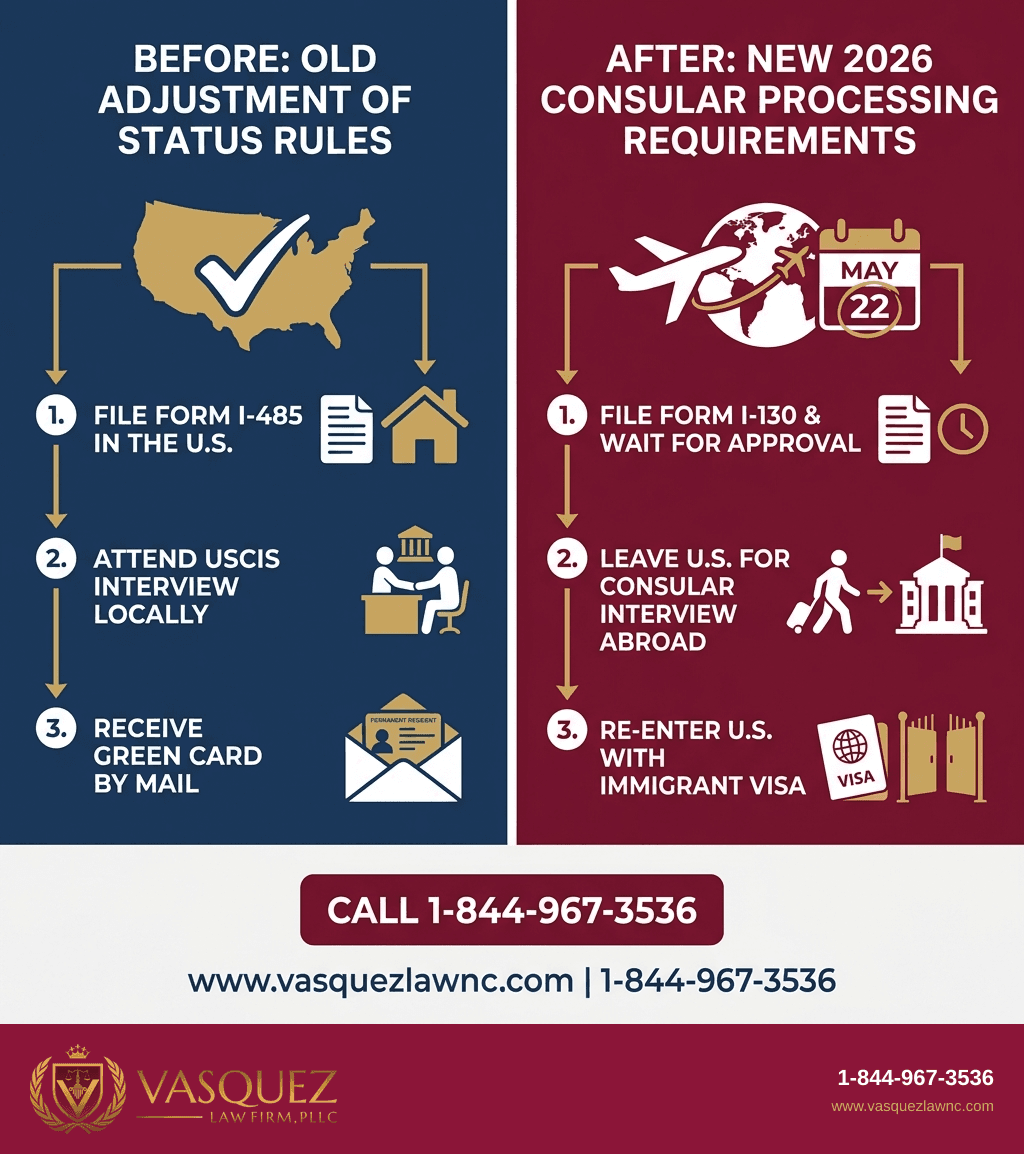
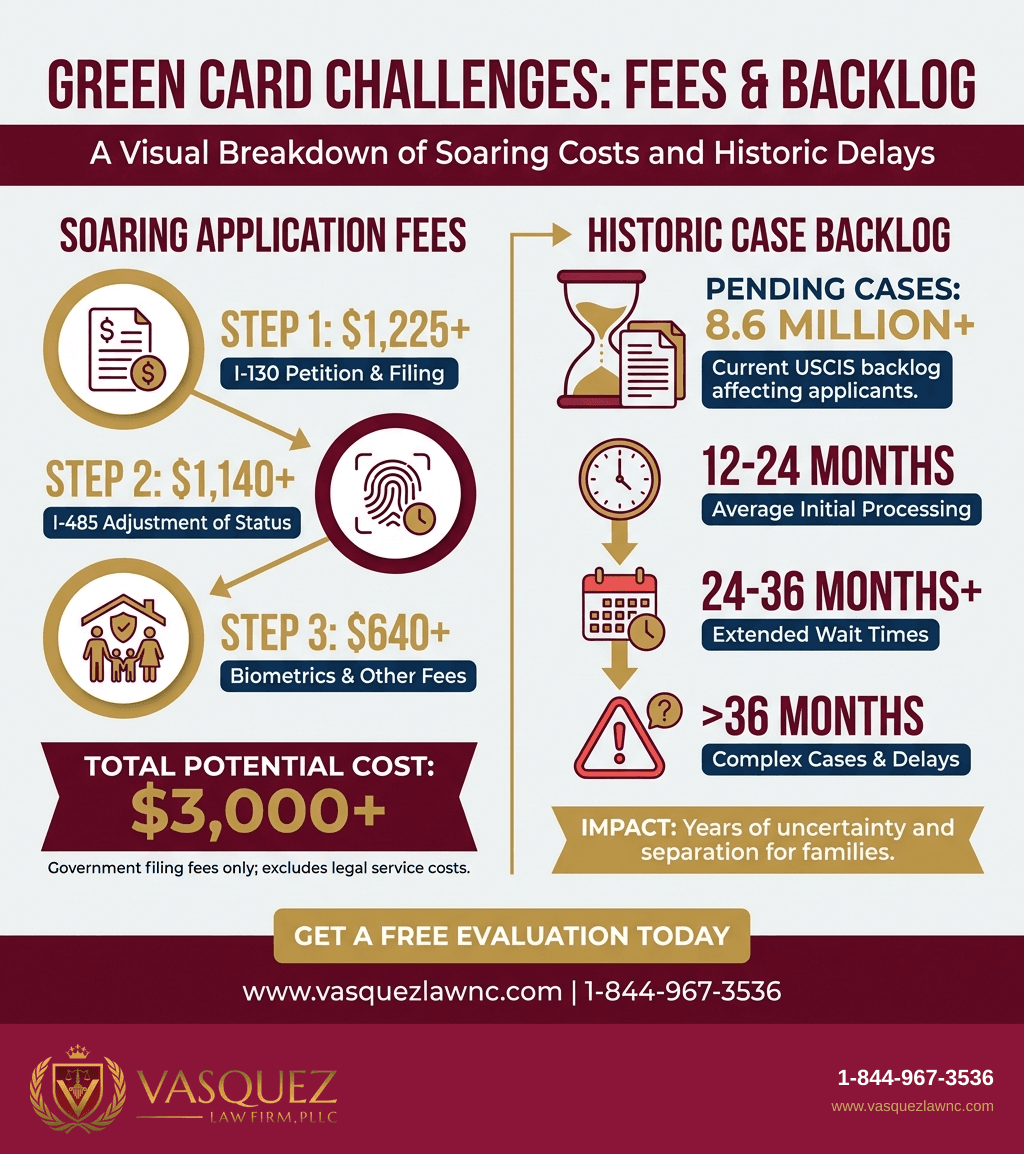
- Initial Green Card Application: USCIS processing times average between 8-14 months for Form I-485 (Adjustment of Status), depending on workload — see USCIS processing times.
- Green Card Renewal: Submit Form I-90 approximately 6 months before expiration. Processing may take 7-15 months.
- Re-entry Permit: File Form I-131 at least 60 days before leaving. Processing takes about 6-9 months.
- Naturalization Application: After five years as a green card holder (three if married to a U.S. citizen), file Form N-400. Processing averages 8-12 months.
Understanding timeline expectations helps plan travel and renewal to avoid gaps or status issues.
Costs and Fees: What Impacts the Price
- Form I-485 (Adjustment of Status): $1,225 (including biometrics) for applicants aged 14-78.
- Green Card Renewal (Form I-90): $540 processing fee.
- Re-entry Permit (Form I-131): $660 application fee.
- Naturalization (Form N-400): $640 plus $85 biometric fee.
- Attorney Fees: Vary based on case complexity, starting from $1,500 and up.
Costs may fluctuate due to policy changes. Work with experienced attorneys to avoid costly delays and rejections.
NC, FL, and Nationwide Notes
North Carolina Notes
USCIS offices in Raleigh handle local applications and biometrics. Green card holders residing in North Carolina must observe state tax obligations and report address changes locally and federally. Local legal advice can address state interactions with federal immigration rules.
Orlando, Florida Notes
Orlando USCIS service centers process many green card and adjustment applications. Florida residents should keep updated on local requirements and work with local immigration law experts like Vasquez Law Firm's Orlando office. Florida’s transient population means frequent moving, requiring timely address updates.
Nationwide Concepts (General Only)
Green card rules fall under federal law regardless of residence state. USCIS applies uniform criteria nationwide but service center processing times may vary. Lawsuits and policy shifts such as those in 2026 affect all holders equally. Consultation with licensed attorneys knowledgeable in federal immigration law is essential.
When to Call a Lawyer Now
- If planning to remain outside the U.S. longer than six months.
- If your green card is expired or lost.
- If you were denied re-entry at a U.S. port of entry.
- If you received an official notice about abandonment or removal.
- If facing criminal charges that might impact immigration status.
- If applying for naturalization and worried about continuous residence rules.
- After receipt of any USCIS request for evidence or denial concerning your green card.
- If you want help with green card renewal or adjustment of status applications.
About Vasquez Law Firm
At Vasquez Law Firm, we combine compassion with aggressive representation. Our motto "Yo Peleo®" reflects our commitment to standing up for your rights.
- Bilingual Support: Se Habla Español — Spanish-speaking attorneys and staff available.
- Service Areas: North Carolina, Florida, and nationwide immigration services.
- Experience: Over 30 years helping clients navigate complex legal matters.
- Results: Thousands of successful cases across multiple practice areas.
Attorney Trust and Experience
William J. Vásquez is admitted to the North Carolina State Bar (2011) and to the U.S. Courts of Appeals for the 4th, 5th, and 11th Circuits. Florida-jurisdiction matters at the firm are handled by Florida Bar attorney Harold Estrada-Rodriguez (FL Bar No. 1041171). The firm has provided dedicated legal representation since 2011, with personalized attention to each client.
Don't wait to get the help you deserve. Call us now for immediate assistance.
Se Habla Español
Frequently Asked Questions
What are the basic green card rules I must follow as a lawful permanent resident?
As a lawful permanent resident, you must maintain continuous U.S. residence, renew your green card every 10 years with Form I-90, and report address changes within 10 days as required by law. Staying informed helps prevent loss of status and protects your path to citizenship.
How long can green card holders stay outside the U.S. without losing status?
Generally, absences under six months do not disrupt status. Trips longer than six months risk abandonment unless you have a re-entry permit. Over one year absence usually causes loss of green card without special exceptions.
Are there restrictions on green card holders voting in U.S. elections?
Green card holders cannot vote in federal, state, or local elections. Violating this can cause serious immigration consequences. Only naturalized citizens may vote legally.
What are the new green card rules for holders in 2026?
The 2026 rules increase scrutiny of temporary visa holders adjusting to green cards, emphasizing timely renewals and strict residency. Holders in NC and Orlando must be vigilant and comply fully with USCIS regulations.
What documents should I keep as proof of continuous residence for green card renewals?
Keep pay stubs, tax returns, leases, utility bills, and travel records to prove continuous residence, which supports renewals and applications for citizenship.
Can green card holders apply for U.S. citizenship while living outside the U.S.?
Continuous physical presence in the U.S. is required for naturalization. Long absences outside may disqualify you until you establish residency again.
What is the green card lottery and how does it affect eligibility?
The Diversity Visa Program allows applicants from low immigration countries to apply for permanent residence. Winners must complete required forms and interviews but success is not guaranteed.
What are the rights and restrictions of green card holders in 2026?
Green card holders can live and work permanently in the U.S., travel with limits, and apply for citizenship. They cannot vote, must maintain residence, and obey federal laws to keep status.
Sources and References
- U.S. Citizenship and Immigration Services (USCIS)
- Executive Office for Immigration Review
- Legal Information Institute
Take the first step toward justice today. Our team is standing by to help.
Start Your Free Evaluation Now
Call us: 1-844-967-3536
Se Habla Español - Estamos aquí para ayudarle.


William Vasquez
Founder & CEO, Vasquez Law Firm, PLLC
William Vasquez is the founder and CEO of Vasquez Law Firm, PLLC, a results-driven firm specializing in immigration, criminal defense, personal injury, and workers' compensation. A U.S. Air Force veteran and recipient of the Joint Service Achievement Medal, William is dedicated to fiercely fighting for his clients' rights.
Related Legal Services
Need legal help? Learn more about how our immigration attorneys can help, or contact us for a free evaluation.
You can also visit North Carolina immigration law firm for more information.