What Do Immigration Charges Mean for You in 2026?
What do immigration charges mean? Learn the key facts about immigration charges, penalties, and your rights in 2026. Contact Vasquez Law for a free consultation.
Published on May 27, 2026
Talk to an immigration attorney
Free call. A clear plan for your case.
Free & confidential · Se habla espanol · 24/7

Have questions? Talk to an attorney - free evaluation.
Call 1-844-967-3536Worried how the latest immigration news affects you?
Schedule a confidential case review with an immigration attorney - know exactly where you stand.
What Do Immigration Charges Mean for You in 2026?
Immigration charges can have serious consequences for individuals living in the U.S., especially in places like Orlando, FL and Raleigh, NC. Understanding what immigration charges mean, how they affect your legal status, and how to respond is essential. This article explains the concept of immigration charges, the differences between criminal and civil immigration offenses, common charges, and what to expect if you face such allegations in 2026. Stay informed about current rules, timelines, fees, and your rights to better protect your future.
Need help with your case? Our experienced attorneys are ready to fight for you. Se Habla Español.
Or call us now: 1-844-967-3536
Quick Answer
Immigration charges refer to allegations that someone has violated U.S. immigration laws. These may result in removal proceedings, criminal penalties, or both. Common charges include unlawful entry or visa violations. If charged, you should seek legal advice quickly to understand your rights and steps to protect yourself.
- Charges can be civil or criminal
- Penalties vary widely based on charge type
- Legal representation is crucial
- Federal agencies handle cases nationwide
- Fees and court processes follow USCIS and EOIR rules
Understanding Immigration Charges in 2026
Imagine you receive a notice from immigration authorities alleging you have violated immigration laws. What exactly does "immigration charges" mean? In 2026, immigration charges encompass a range of allegations that a person has broken federal immigration laws, triggering legal action. These charges can be civil violations or criminal offenses.
Civil immigration charges often lead to removal (deportation) proceedings without criminal penalties. An example is overstaying a visa. Criminal immigration charges, however, may carry jail time and fines. For example, illegal reentry after being deported is considered a felony under 8 U.S.C. § 1326.
Understanding whether your charge is civil or criminal is vital. Civil charges are handled in immigration court overseen by the Executive Office for Immigration Review (EOIR). Criminal immigration charges are handled in federal court and carry criminal penalties.
Immigration charges also differ from immigration fees or payments. For example, the USCIS immigrant fee of $220 for a Green Card after visa approval is an administrative fee and not a charge or prosecution. For more about immigration fees online payment options, visit the U.S. Citizenship and Immigration Services website.
In North Carolina and Florida, including Orlando and Raleigh, immigration charges can arise from local arrests or federal ICE investigations. Local law enforcement may work with federal immigration agencies, so understanding your rights locally is important.
Federal regulations define the grounds and procedures for immigration charges. For example, 8 U.S.C. § 1227 outlines deportable offenses, including some criminal conduct. Every individual’s situation is unique, so legal counsel is recommended early.
Types of Immigration Charges
- Unlawful Entry: Crossing into the U.S. without proper inspection is a misdemeanor charge.
- Visa Overstay: Remaining in the U.S. past authorized dates is a civil violation but can lead to charges if fraudulent intent is found.
- Reentry after Deportation: Returning illegally after deportation is a felony under federal law.
- False Claims or Fraud: Using fraudulent documents or lying during immigration applications is a punishable offense.
- Criminal Offenses Affecting Status: Certain criminal convictions can trigger immigration charges or removal.
Legal Terms Simplified
Removal proceedings are court hearings to determine if you can stay or must be deported. Detention means being held by ICE. Adjustment of status refers to changing immigration status, such as applying for a Green Card.
Key Steps to Take if You Face Immigration Charges
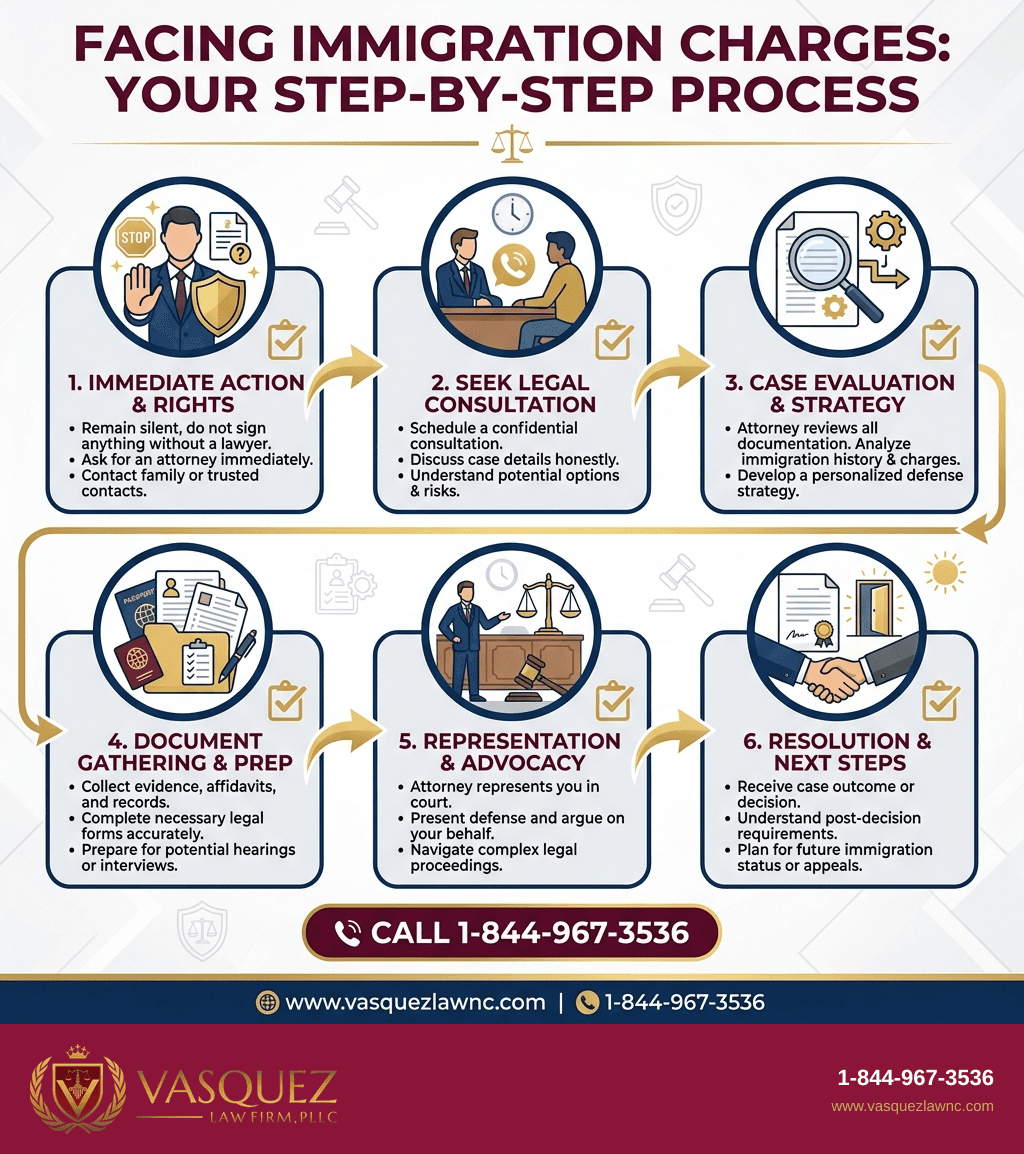
Facing immigration charges can be overwhelming. Here is a practical step-by-step guide for what to do if charged in Orlando, FL or Raleigh, NC:
- Stay Calm and Do Not Panic: Understand that you have legal rights.
- Do Not Admit Guilt: Avoid making statements that might be used against you in court.
- Get Legal Representation Immediately: Contact experienced immigration attorneys like the Vasquez Law Firm immigration legal services.
- Gather Documents: Collect any immigration paperwork, IDs, and evidence related to your presence and employment.
- Attend All Hearings: Missing court dates can lead to deportation orders.
- Understand Your Charges: Ask your attorney to explain if charges are civil or criminal and what penalties apply.
- Prepare Your Defense: Your lawyer may seek cancellation of removal, asylum, adjustment of status, or other relief based on your case.
- Keep Contact Information Current: Notify your attorney and the court of any address or phone number changes.
Immigration Fees and Payments
Some charges require filing fees with USCIS, like adjustment of status filings or naturalization. Immigration fees online payment methods often include credit cards or money orders as explained on the USCIS site. Failure to pay fees can delay processing or cause denials.
Common Mistakes to Avoid When Charged
- Ignoring the Charge: Not responding to notices or missing hearings can result in removal orders.
- Speaking to Authorities Without Lawyer: Statements can be used as evidence against you.
- Failing to Gather Documents: Lack of proof harms your ability to defend your status or eligibility.
- Not Understanding Fees: Missing payments or deadlines can delay your case.
- Pleading Guilty Without Advice: Criminal charges impact immigration status; never plead without consulting an attorney.
- Believing All Charges Are Felonies: Many immigration charges are civil and can have different consequences.
- Assuming Local Laws Apply: Immigration law is federal, but local enforcement cooperation may vary between Orlando and Raleigh.
If you remember one thing: Always consult a qualified immigration attorney as soon as you face any charges. Legal advice can significantly affect your case outcome.
Timeline: What to Expect in Your Case
After an immigration charge is filed, the process usually follows several steps that can last from months to over a year:
- Initial Notice or Detention: You may receive a Notice to Appear (NTA) initiating removal proceedings.
- Master Calendar Hearings: Preliminary court appearance to set schedules and plead.
- Individual Hearing: Detailed case review and presentation of evidence and defenses.
- Decision: Immigration judge makes a ruling—granting relief or ordering removal.
- Appeal (if applicable): You may appeal an unfavorable ruling to the Board of Immigration Appeals.
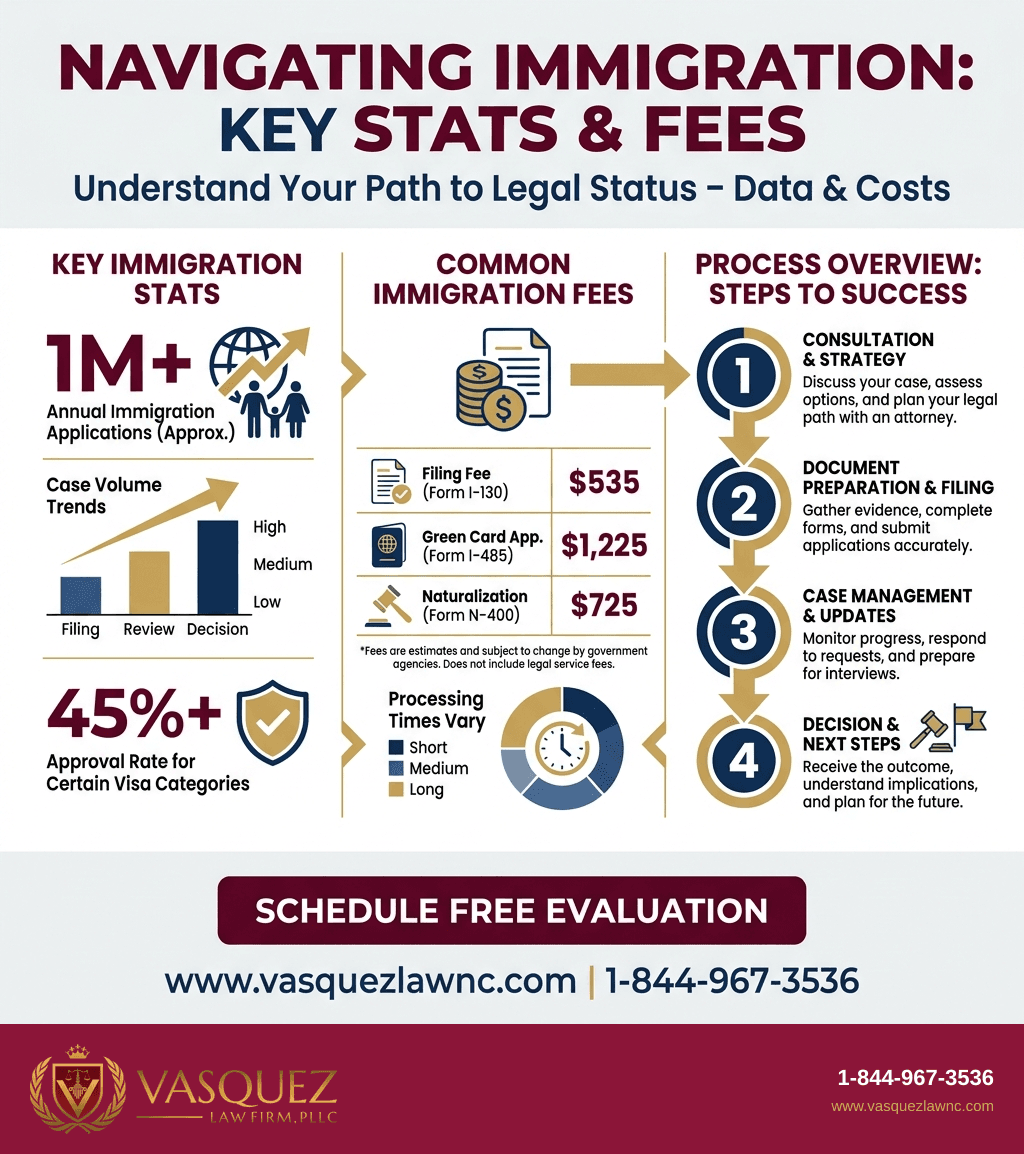
Processing times vary widely. According to the USCIS processing times page, cases can take from 6 months to over 2 years depending on factors like case complexity, backlogs, and hearings availability. EOIR also publishes court statistics that may inform expectations.
Costs and Fees: What Impacts the Price
- Type of Charge: Criminal charges generally cost more to defend than civil removal cases.
- Attorney Fees: Experienced immigration lawyers charge varying rates. Complex cases require more hours.
- Filing Fees: USCIS fees for forms like I-485 (Adjustment of Status) are $1,225 as of 2026.
- Additional Costs: Expert witnesses, translations, and travel to court hearings add to expenses.
- Fee Waivers: In some cases, fee waivers may be granted based on financial hardship.
NC, FL, and Nationwide Notes
North Carolina Notes
In Raleigh and throughout North Carolina, immigration enforcement is federal but local law enforcement may cooperate with ICE. Charges follow federal processes. Legal assistance is available locally at firms like Vasquez Law Firm, with expertise in managing removal and adjustment cases.
Florida Notes
Orlando is a key region where immigration charges arise due to its large immigrant population. Florida’s local agencies sometimes coordinate with ICE raids or investigations. Understanding the local context helps in planning defense or relief.
Nationwide Concepts
Immigration law is federal, governed by statutes such as 8 U.S.C. § 1227 and 8 U.S.C. § 1326. Regardless of location, procedures involve USCIS for applications, EOIR for court matters, and ICE for enforcement. Laws and policies can change, so legal help ensures compliance across states.
When to Call a Lawyer Now
- If you receive a Notice to Appear or other official charge
- If you are detained by ICE or local police on immigration issues
- If you have been arrested for crimes affecting immigration
- If you face possible removal or deportation
- If you need to pay immigration fees but are unsure how
- If you want to apply for relief like DACA, asylum, or adjustment of status
- If you are unsure whether you have a legal defense or options
- If you were asked by ICE for identification or questioned
- If you want to understand the impact of charges on family members
About Vasquez Law Firm
At Vasquez Law Firm, we combine compassion with aggressive representation. Our motto "Yo Peleo®" (I Fight) reflects our commitment to standing up for your rights. Whether you are in Orlando, FL, or Raleigh, NC, our immigration team helps you navigate complex federal laws and local enforcement challenges.
- Bilingual Support: Se Habla Español — Spanish-speaking attorneys and staff available
- Service Areas: North Carolina, Florida, and nationwide immigration services
- Experience: Over 30 years helping clients navigate complex legal matters
- Results: Thousands of successful cases across multiple practice areas
Attorney Trust and Experience
William J. Vásquez is admitted to the North Carolina State Bar (2011) and to the U.S. Courts of Appeals for the 4th, 5th, and 11th Circuits. Florida-jurisdiction matters at the firm are handled by Florida Bar attorney Harold Estrada-Rodriguez (FL Bar No. 1041171). The firm has provided dedicated legal representation since 2011, with personalized attention to each client's case.
Don't wait to get the help you deserve. Call us now for immediate assistance. Se Habla Español.
Frequently Asked Questions
What does an immigration charge mean?
An immigration charge means the government alleges you have violated immigration laws. This could result in removal proceedings, criminal charges, or administrative penalties, depending on the specific case facts.
Is illegal immigration a felony or misdemeanor?
Illegal entry is typically a misdemeanor, but repeated illegal reentry after deportation is a felony with harsher consequences.
Can ICE legally ask for ID?
ICE has the authority to request identification during investigations. You have rights about when and how to respond. Consulting with an attorney before answering is wise.
What are common immigration charges in Orlando and Raleigh?
Common charges include unlawful entry, visa overstays, and reentry after deportation. Related criminal charges may also occur.
How much do USCIS immigration fees cost in 2026?
Fees vary. The Green Card application fee is $1,225 with biometrics. Online payment is accepted. Check USCIS for updated fees.
What should I do if charged with an immigration offense?
Seek qualified legal advice immediately. Avoid self-incriminating statements and participate fully in hearings with representation.
Are immigration charges criminal?
Some are criminal, like illegal reentry after deportation, but many immigration charges are civil violations handled in immigration court.
How long do immigration cases take?
Cases range from several months to years. Court backlogs affect timelines. Expect hearings, evidence presentations, and possible appeals.
Sources and References
- U.S. Citizenship and Immigration Services
- Executive Office for Immigration Review
- Legal Information Institute
Take the first step toward justice today. Our team is standing by to help. Se Habla Español.
Start Your Free Evaluation Now
Call us: 1-844-967-3536
Se Habla Español - Estamos aquí para ayudarle.


William Vasquez
Founder & CEO, Vasquez Law Firm, PLLC
William Vasquez is the founder and CEO of Vasquez Law Firm, PLLC, a results-driven firm specializing in immigration, criminal defense, personal injury, and workers' compensation. A U.S. Air Force veteran and recipient of the Joint Service Achievement Medal, William is dedicated to fiercely fighting for his clients' rights.
Related Legal Services
Need legal help? Learn more about our immigration legal services, or contact us for a free evaluation.
You can also visit immigration lawyers serving all of North Carolina for more information.