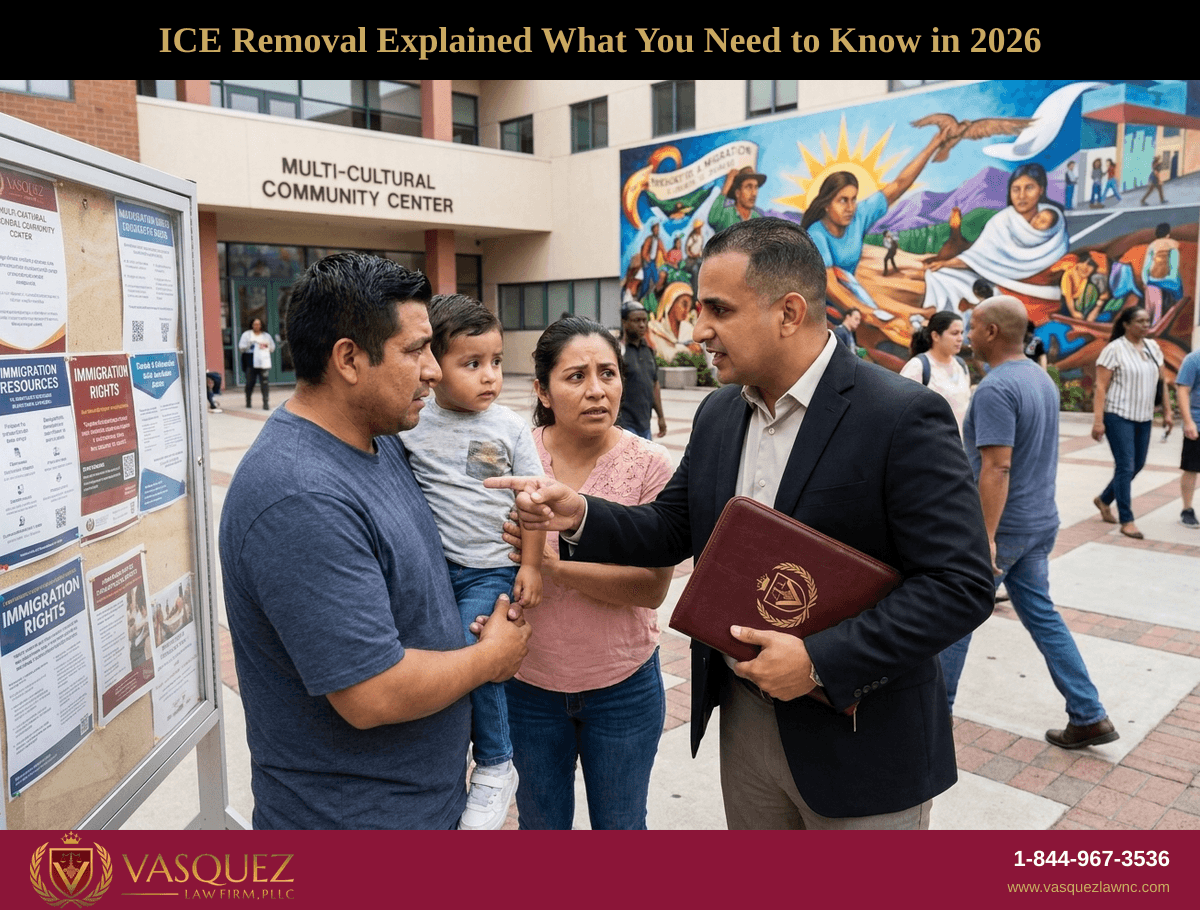
ICE Removal Explained What You Need to Know in 2026
Struggling with ICE removal? Learn how the removal process works in 2026 and how to protect your rights. Contact Vasquez Law Firm for a free evaluation.
Published on July 14, 2026
Talk to an immigration attorney
Free call. A clear plan for your case.
Free & confidential · Se habla espanol · 24/7
Have questions? Talk to an attorney - free evaluation.
Call 1-844-967-3536Worried how the latest immigration news affects you?
Schedule a confidential case review with an immigration attorney - know exactly where you stand.
ICE Removal Explained What You Need to Know in 2026
If you or a loved one faces ICE removal in Orlando or Raleigh in 2026, understanding the process can protect your rights. ICE removal refers to the government’s action to deport someone unlawfully in the U.S. This article explains how ICE removal works, what steps you can take, key timelines, and common mistakes to avoid. Our immigration attorneys at Vasquez Law Firm provide bilingual support to help you navigate removal proceedings effectively. Contact us for a free evaluation and know your rights under current federal immigration law.
Need help with your case? Our experienced attorneys are ready to fight for you. Se Habla Español.
Or call us now: 1-844-967-3536
Quick Answer
ICE removal is the government’s process of deporting someone who does not have legal status in the U.S. After ICE issues a Notice to Appear, removal proceedings begin in immigration court. Defendants can seek relief or appeal decisions. Legal support is critical to protect your rights during this process.
- Removal is enforced by U.S. Immigration and Customs Enforcement (ICE).
- Removal proceedings take place in immigration courts overseen by the Executive Office for Immigration Review.
- A Notice to Appear starts the removal process.
- Legal defenses include asylum, cancellation of removal, and other relief.
- Detained individuals have specific rights to a hearing and legal representation.
Understanding ICE Removal
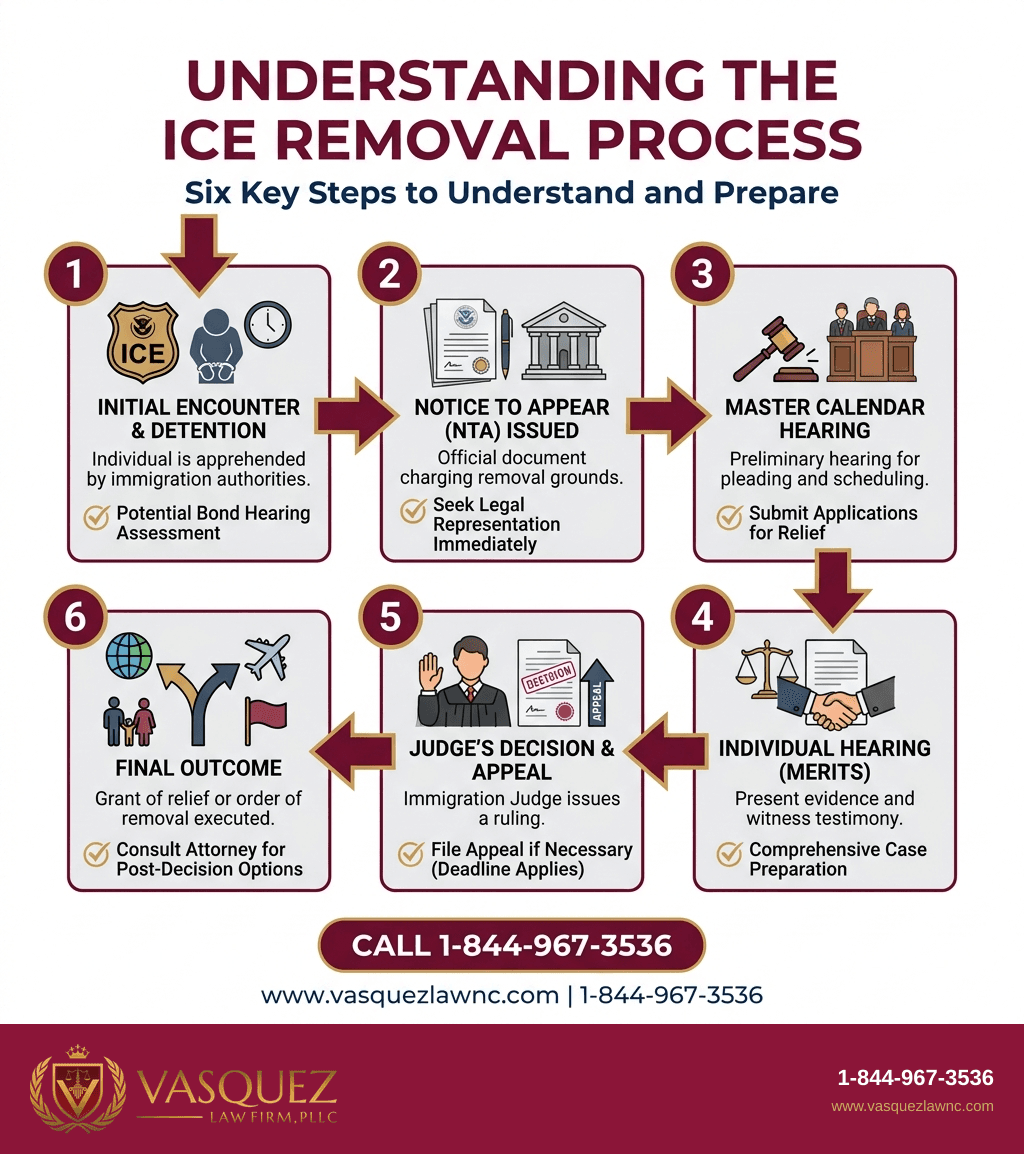
In 2026, ICE removal remains a key enforcement tool by the federal government to remove noncitizens who are unlawfully present or removable due to criminal convictions or immigration violations. ICE (U.S. Immigration and Customs Enforcement) issues a Notice to Appear (NTA) initiating removal proceedings under INA § 240. Once the NTA is issued, the case moves to an immigration court where an immigration judge reviews the government’s case against the individual.
The removal process can apply to many groups including those without lawful status, aggravated felons, or individuals violating visa terms. Removal orders can be either voluntary or involuntary. The involuntary removal includes detention and forced deportation after a final order.
Understanding removal in states like Florida (Orlando) and North Carolina (Raleigh) means knowing local ICE practices as well as federal regulations. Removal orders issued here follow federal law but factors like detention locations, legal resources, and court calendars differ.
Our immigration legal services at Vasquez Law Firm help clients understand this complicated process and develop defense strategies.
Step-by-Step What to Do
- Receive a Notice to Appear (NTA): ICE will issue an NTA listing allegations and schedule your hearing dates.
- Contact an Attorney Immediately: Hiring an experienced attorney in Orlando or Raleigh helps protect your rights from the start.
- Prepare Your Defense: Collect evidence of legal status, family ties, or eligibility for asylum or cancellation of removal.
- Attend Master Calendar Hearing: This preliminary hearing sets the stage for your case and addresses procedural matters.
- Individual Hearing: Present your defense or apply for relief before the immigration judge.
- Appeal if Necessary: If the immigration judge orders removal, you may appeal to the Board of Immigration Appeals.
- Comply with Orders: If removal is ordered and appeals are exhausted, comply or explore other legal relief immediately.
Don't wait to get the help you deserve. Call us now for immediate assistance. Se Habla Español.
Documents and Evidence Checklist
- Passport and identity documents
- Birth certificates and family relationship proofs
- Records of legal status or visas
- Criminal records or court dispositions
- Evidence supporting asylum or cancellation claims (e.g., affidavits, country conditions)
- Work or residency records such as leases or tax returns
- Medical or school records to demonstrate hardship or ties
Timeline What to Expect
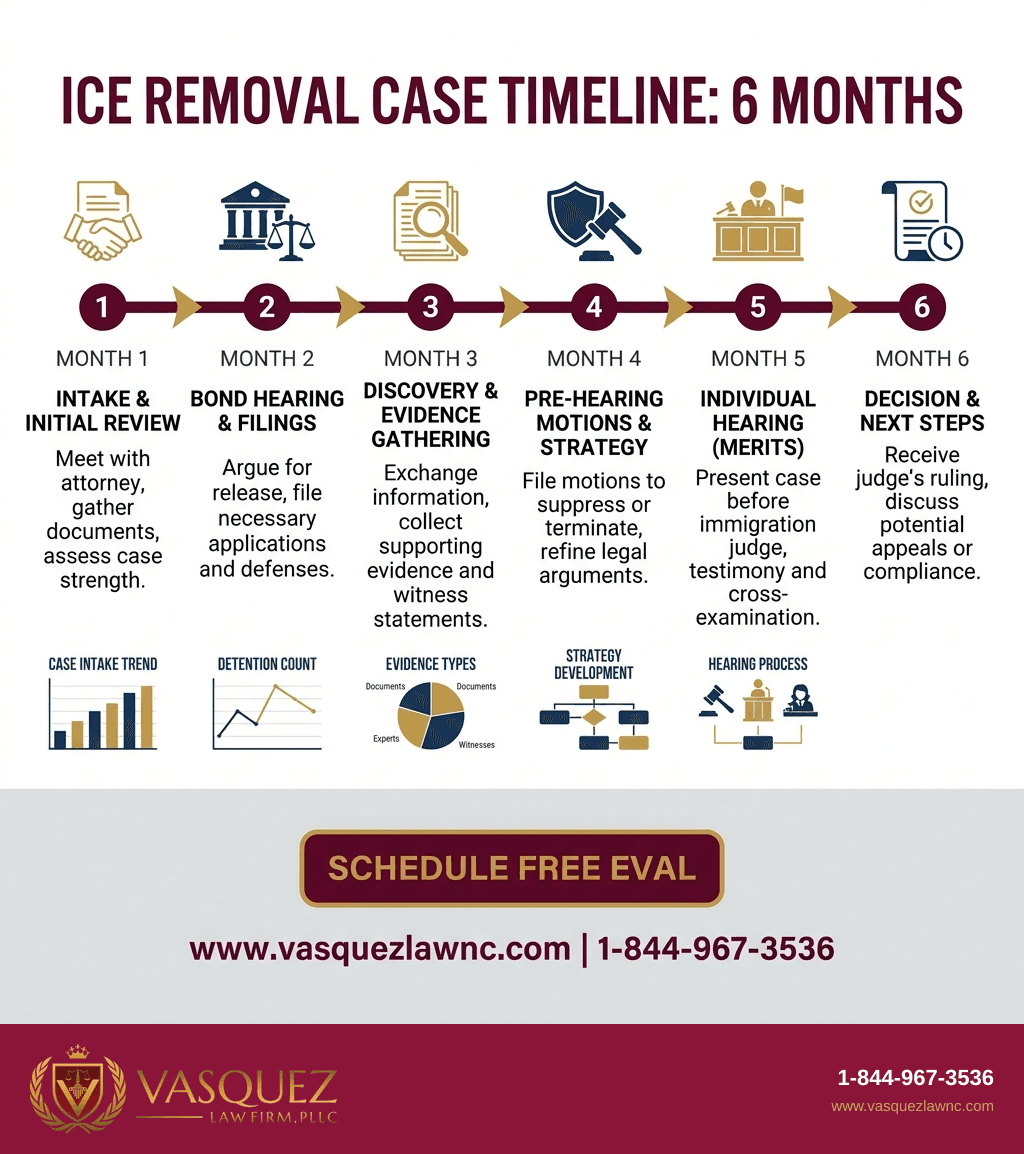
- Notice to Appear: Date you receive paperwork from ICE starting your case.
- Initial master hearing: Usually 1-3 months after NTA issuance, where case details are discussed.
- Individual hearings: Scheduled months to over a year later depending on court backlog.
- Appeal deadlines: Typically within 30 days after judge’s decision.
- Enforcement: After all appeals, removal may be enforced within weeks or months.
Costs and Fees Factors
- Attorney fees depend on case complexity and length of proceedings.
- Filing fees for applications like asylum or cancellation of removal may apply.
- Costs may increase if appeals or motions to reopen are necessary.
- Some legal services available pro bono, but competent counsel is critical in removal defense.
- Consultations with Vasquez Law Firm are free and designed to outline your options without pressure.
Common Mistakes to Avoid
- Missing court dates: Never skip hearings, as that can lead to removal orders by default. Fix: Always attend and notify your lawyer.
- Not hiring an attorney: Defending removal without legal help greatly reduces chances of success. Fix: Seek qualified immigration counsel early.
- Signing documents blindly: Avoid signing waivers or consents without understanding consequences. Fix: Consult your lawyer first.
- Ignoring deadlines: Failing to file relief applications timely can bar relief options. Fix: Track all deadlines carefully.
- Lack of evidence submission: Insufficient proof weakens your defense. Fix: Gather thorough documentation.
- Talking to ICE without counsel: Statements to ICE agents can be used against you. Fix: Only speak with ICE when your attorney is present.
If you only remember one thing: Hiring knowledgeable immigration lawyers in Orlando or Raleigh can significantly improve your chances in an ICE removal case.
Jurisdiction Notes for NC and FL
Orlando Florida Notes
In Orlando, ICE actively conducts arrests and detention in conjunction with federal immigration courts. Immigration courts are part of the Executive Office for Immigration Review (EOIR), which processes removal cases. Legal resources and detention centers in the Orlando area affect procedural timelines and defense options.
Raleigh North Carolina Notes
Raleigh is served by an EOIR immigration court covering a large region in North Carolina. ICE removal procedures and detentions also occur here with differences in availability of local legal aid. The Vasquez Law Firm Raleigh office provides bilingual support and tailored removal defense counsel for this jurisdiction.
Federal Immigration Laws and Regulations
All removal orders are governed federally under the Immigration and Nationality Act, specifically INA § 240, and regulations in 8 C.F.R. § 1003. The laws outline removal grounds, procedural rights, and relief eligibility across all states including Florida and North Carolina. Knowing these federal standards helps families understand options regardless of location.
When You Should Call a Lawyer
- If you receive a Notice to Appear from ICE or immigration court.
- If you or a loved one are detained by ICE or unknown agents.
- If you have prior deportation orders with ongoing enforcement.
- If you face criminal charges that impact immigration status.
- If you need help filing applications for asylum or cancellation of removal.
- If ICE visits your home or workplace to make an arrest.
- If you are asked to sign any immigration documents or waivers by ICE.
- If you want to explore alternatives to removal or deferred action programs.
- If you experience language barriers complicating court appearances.
About Vasquez Law Firm
At Vasquez Law Firm, we combine compassion with aggressive representation. Our motto "Yo Peleo®" (I Fight) reflects our commitment to standing up for your rights.
- Bilingual Support: Se Habla Español — Spanish-speaking attorneys and staff available
- Service Areas: North Carolina, plus Florida and nationwide for immigration
- Experience: Over 30 years helping clients navigate complex legal matters
- Results: Thousands of successful cases across multiple practice areas
Attorney Trust and Experience
William J. Vásquez is admitted to the North Carolina State Bar (2011) and to the U.S. Courts of Appeals for the 4th, 5th, and 11th Circuits. The firm has provided dedicated legal representation since 2011, with personalized attention to each client's case.
Take the first step toward justice today. Our team is standing by to help. Se Habla Español.
Start Your Free Evaluation Now
Call us: 1-844-967-3536
Se Habla Español - Estamos aquí para ayudarle.
Frequently Asked Questions
What is ICE removal?
ICE removal is the process by which U.S. Immigration and Customs Enforcement enforces deportation orders against noncitizens who are found removable under federal immigration law. Removal means legally forcing someone to leave the United States, often after a hearing in immigration court.
How do removal proceedings work?
Removal proceedings are conducted in immigration court overseen by the Executive Office for Immigration Review. A noncitizen who is accused of being removable appears before an immigration judge who determines whether to order removal or grant relief like asylum or cancellation of removal.
Can I fight ICE removal in Orlando or Raleigh?
Yes. Many noncitizens in Orlando, FL, and Raleigh, NC, have options to contest removal through legal defenses based on family ties, asylum claims, or eligibility for relief programs. Working with an experienced immigration attorney is essential to explore your options.
What documents do I need for removal defense?
You will need identification documents, proof of residency, family relationships, any prior immigration or criminal records, and evidence supporting your claim for relief. Keep originals and copies to present to your attorney and the immigration court.
How long do ICE removal cases take?
Removal cases in immigration court often take several months to years depending on case complexity, court backlogs, and if appeals are involved. The average wait time varies, but cases can last from 6 months up to multiple years.
What are my rights if detained by ICE?
If detained, you have the right to remain silent, the right to an attorney, and the right to a hearing before an immigration judge. You should avoid signing any documents without legal advice and contact an immigration lawyer immediately.
Can I apply for relief after a removal order?
Sometimes yes. Depending on circumstances, you may be able to reopen or appeal a removal order or apply for forms of relief such as cancellation of removal or asylum. Consulting a qualified lawyer quickly is critical for deadlines.
How can Vasquez Law Firm help with ICE removal cases?
Our immigration attorneys in Orlando and Raleigh provide bilingual support and aggressive defense in removal cases. We guide you through paperwork, courtroom appearances, and help identify the best relief options given current 2026 laws and policies.
Sources and References


William Vasquez
Founder & CEO, Vasquez Law Firm, PLLC
William Vasquez is the founder and CEO of Vasquez Law Firm, PLLC, a results-driven firm specializing in immigration, criminal defense, personal injury, and workers' compensation. A U.S. Air Force veteran and recipient of the Joint Service Achievement Medal, William is dedicated to fiercely fighting for his clients' rights.
Related Legal Services
Need legal help? Learn more about how our immigration attorneys can help, or contact us for a free evaluation.
You can also visit immigration lawyers serving all of North Carolina for more information.