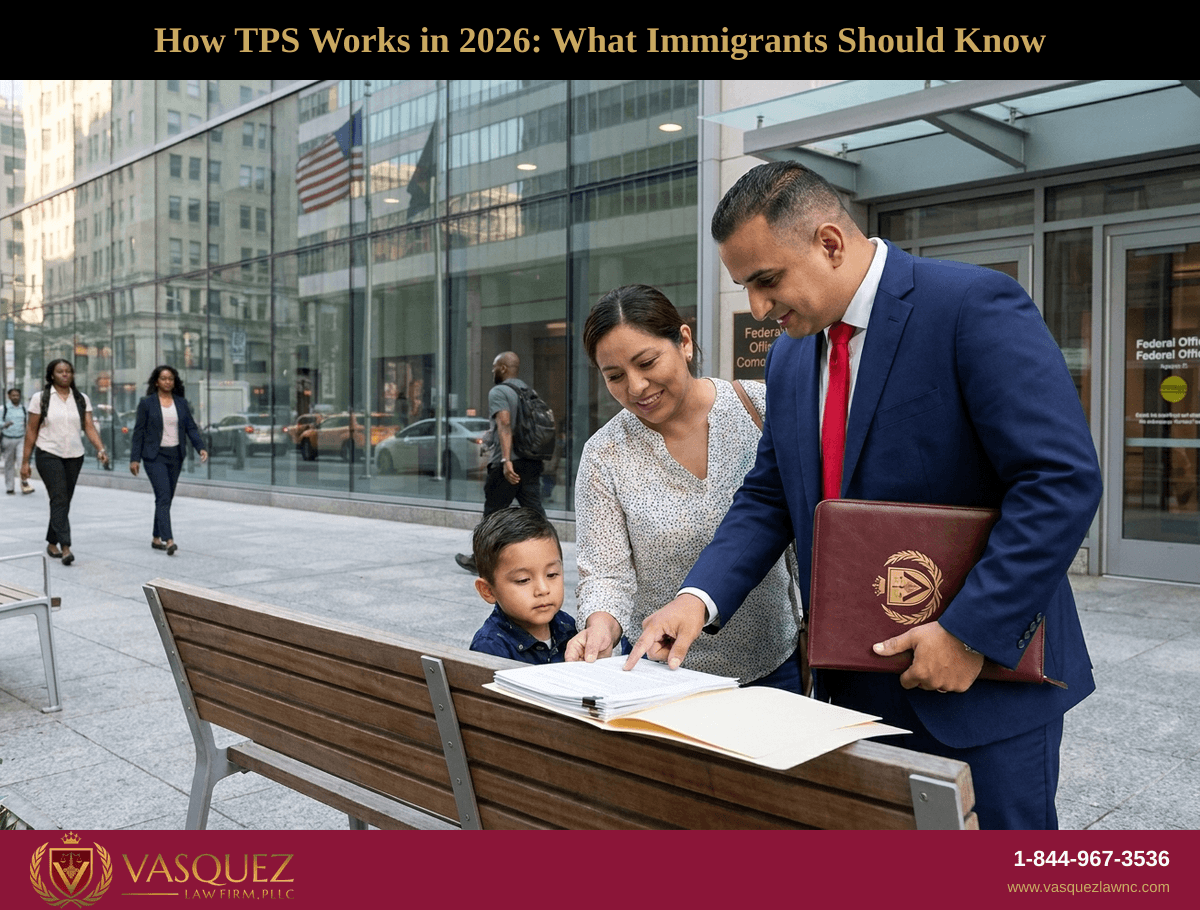
How TPS Works in 2026: What Immigrants Should Know
Wondering how TPS works in 2026? Learn about TPS extension, benefits, and updates for immigrants. Contact Vasquez Law Firm for a free evaluation.
Published on August 17, 2026

Have questions? Talk to an attorney - free evaluation.
Call 1-844-967-3536Worried how the latest immigration news affects you?
Get a free, confidential case review with an immigration attorney - know exactly where you stand.
How TPS Works in 2026: What Immigrants Should Know
Temporary Protected Status (TPS) offers important relief for immigrants from designated countries facing unsafe conditions. Understanding TPS, its extensions, and updates in 2026 is vital for maintaining legal protection in the USA. This article explains TPS basics, how to apply, and what recent immigration TPS news means for residents in Orlando, FL and Raleigh, NC. If you or a loved one is protected under TPS, knowing your rights and steps to take now can safeguard your status.
Need help with your case? Our experienced attorneys are ready to fight for you. Se Habla Español.
Or call us now: 1-844-967-3536
Quick Answer
Temporary Protected Status (TPS) is a special immigration program that allows nationals of certain countries to stay temporarily in the U.S. when their home countries are unsafe. TPS protects immigrants from deportation and allows them to work legally. TPS status requires periodic renewal, and recent TPS updates in 2026 affect holders in Orlando, FL and Raleigh, NC.
- TPS protects from deportation due to country conditions
- It allows work authorization valid during TPS period
- Designated countries for TPS change based on events
- TPS must be renewed timely to maintain protection
- TPS does not provide automatic permanent residency
Understanding Temporary Protected Status (TPS)
In 2026, Temporary Protected Status remains a crucial federal immigration relief program for nationals of countries experiencing armed conflict, environmental disasters, or extraordinary conditions making return unsafe. TPS was created under 8 U.S.C. § 1254a, allowing the Secretary of Homeland Security to designate TPS countries and provide protection for affected immigrants.
Currently, TPS protects nationals from countries including El Salvador, Haiti, Honduras, Nepal, Nicaragua, Somalia, Sudan, Syria, Venezuela, and Yemen. The list may change if conditions improve or deteriorate, so applicants need to stay informed about the latest TPS news and extensions.
TPS status not only protects recipients from deportation but also grants the ability to obtain an Employment Authorization Document (EAD). The program's temporary nature means beneficiaries must renew their status during each extension period to remain protected legally in the U.S.
Learn more about our immigration services and how we assist TPS holders with complex cases.
How TPS Designation Works
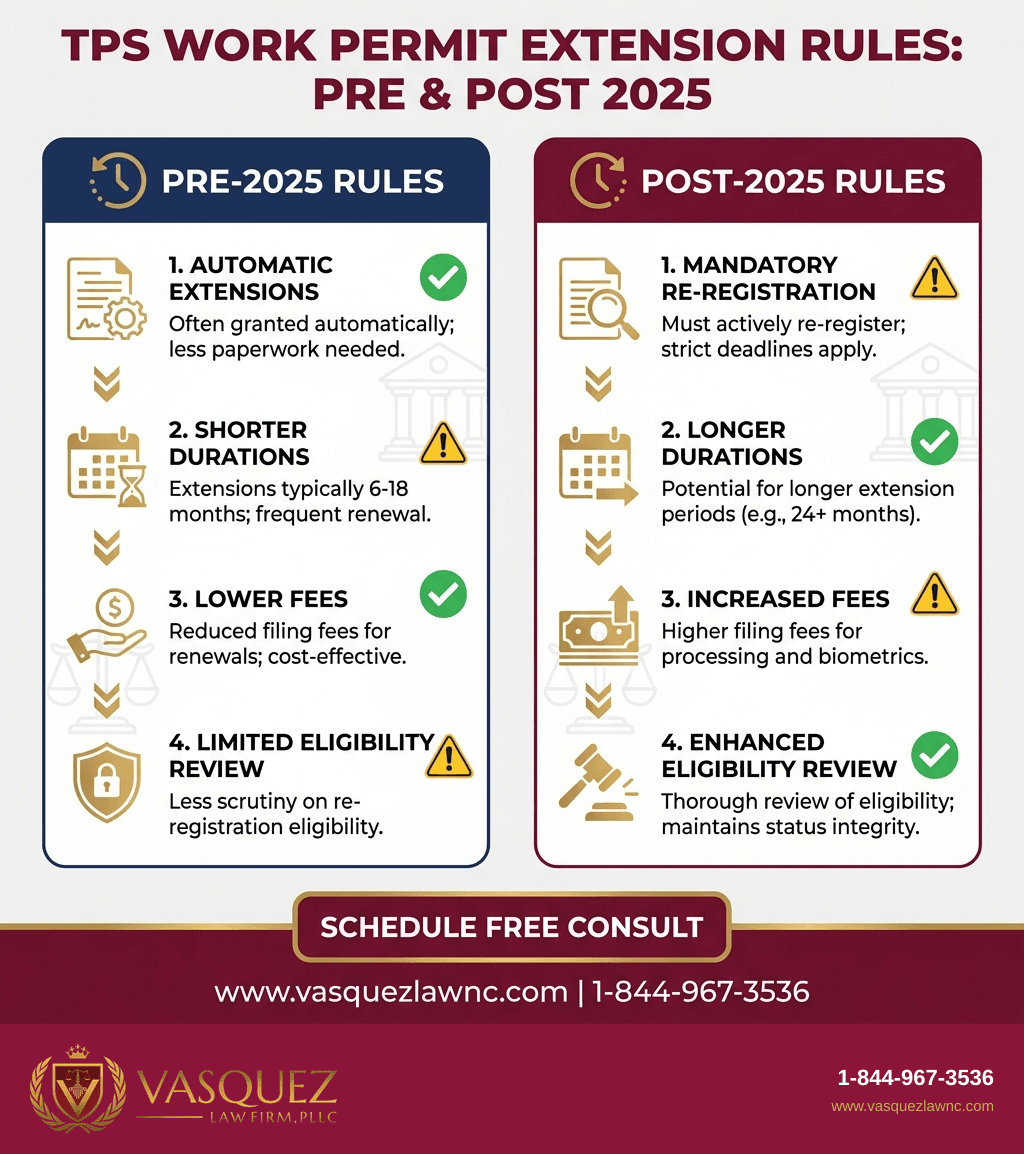
The Department of Homeland Security evaluates conditions in a country and designates TPS for 6 to 18 months. Extensions depend on ongoing unsafe conditions. TPS holders must be from designated countries and must meet continuous residence and physical presence requirements to maintain status.
These criteria are codified in 8 C.F.R. § 244, which outlines eligibility, application procedures, and grounds for termination. Understanding these regulatory standards ensures TPS recipients avoid pitfalls.
Impact of TPS Under the Trump Administration
The Trump administration announced plans for some TPS designations or extensions to end, notably for countries like El Salvador and Haiti. These enforcement changes triggered legal challenges and policy shifts. However, as of 2026, TPS protections continue for many designated countries, with recent extensions announced by USCIS.
Step-by-Step: How to Apply or Renew TPS
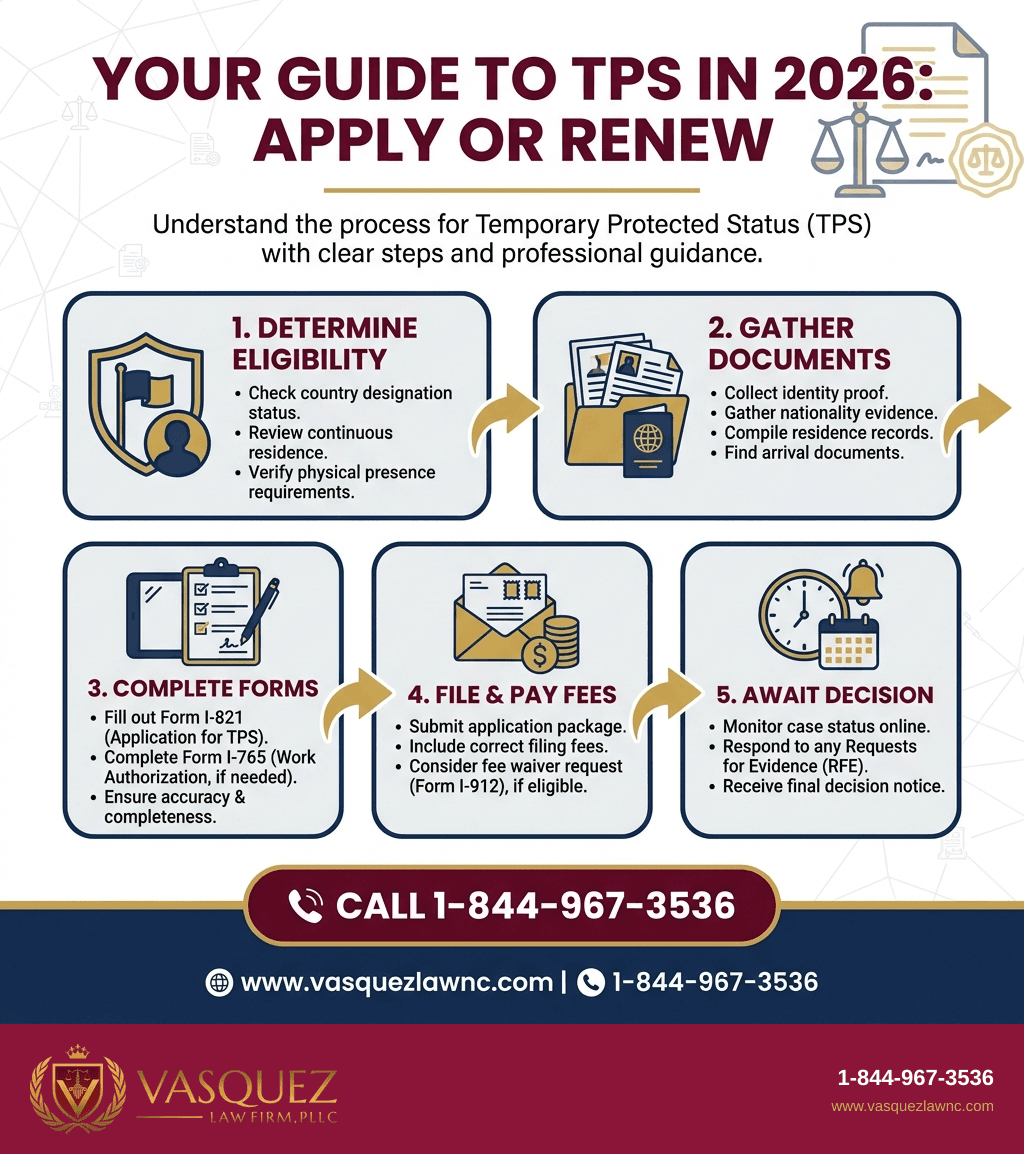
Applying or renewing TPS involves careful adherence to USCIS procedures and deadlines. Below are the basic steps applicants in Orlando, FL and Raleigh, NC should follow.
- Check Eligibility: Ensure your country is currently designated for TPS. Stay updated via USCIS or reliable TPS Immigration News sources.
- Gather Documents: Collect proof of nationality, continuous residence, and presence in the U.S. since the required dates. This often includes birth certificates, identity documents, and proof of residence.
- Complete Forms: File Form I-821, Application for Temporary Protected Status. If requesting employment authorization, file Form I-765 concurrently. Both are processed by USCIS.
- Pay Fees: Submit required filing fees or request fee waivers if applicable.
- Attend Biometrics Appointment: USCIS schedules a fingerprinting appointment to verify identity and conduct background checks.
- Wait for Decision: USCIS typically takes 6 to 12 months to process TPS applications. Check current processing times on the USCIS Processing Times page.
- Maintain Status: File timely renewals when USCIS announces TPS extensions to avoid losing protection.
Experienced guidance from attorneys can help ensure applications follow all rules to minimize delays or denials. Contact our office for personalized assistance.
Important Forms for TPS Applicants
- Form I-821: Request TPS designation
- Form I-765: Request work permit (EAD)
- Supporting evidence: documents proving eligibility
Filings in Raleigh and Orlando
Applicants in Raleigh, NC and Orlando, FL have local USCIS field offices and can submit biometrics at designated centers. Local counsel can provide specific filing support tailored to your community.
Common Mistakes to Avoid When Applying for TPS
- Missing Deadlines: Late renewal filings risk losing TPS protection. Mark calendars carefully for USCIS extension announcements.
- Incomplete Documentation: Failure to prove continuous residence and nationality leads to denials.
- Ignoring Entry Requirements: Certain criminal convictions or immigration violations may disqualify applicants.
- Not Updating USCIS with Address Changes: USCIS sends notices that can be missed if addresses are not current.
- Assuming TPS Leads to Green Card: TPS does not grant permanent residency. Seek legal advice for other immigration pathways.
- Self-Filing Without Legal Advice: TPS laws are complex; mistakes can jeopardize your status.
- Failing to Respond to USCIS Requests: Missing Requests for Evidence or notices can cause denials.
If you only remember one thing: Always file renewals on time and verify all information is complete with supporting documents to maintain your TPS protections.
TPS Timeline and What to Expect in 2026
- Filing: Submit forms during open registration or renewal periods announced by DHS.
- Biometrics Appointment: Usually within 1-2 months after filing.
- USCIS Background Check: Ongoing while processing the application.
- Case Decision: Often 6 to 12 months for initial approval or renewal.
- EAD Issuance: Work permits usually arrive shortly after TPS approval.
- Extensions: Renewals must be filed within the announced window for continued protection.
Processing times vary by USCIS workload. Check current data at the official USCIS Processing Times page regularly.
Costs and Fees: What Impacts the Price
- Filing Fee for Form I-821: $50 (may vary)
- Biometric Fee: $85 per applicant
- Form I-765 Fee (Work Permit): Currently $410
- Attorney Fees: Vary based on case complexity
- Fee Waivers: Available for low-income applicants upon USCIS approval
Applying with an attorney may reduce application errors, decreasing costly delays or denials. Learn more about financing options and fee assistance by contacting our office.
Common mistakes and how to avoid them
- Filing late renewals – mark deadlines and file early
- Submitting incomplete evidence – gather documents verified by experts
- Not disclosing relevant criminal history – honesty is crucial
- Assuming TPS prevents all deportation risks – stay informed on status changes
- Ignoring legal consultation – professional help can prevent costly errors
- Failing to report address changes to USCIS – update promptly
- Missing USCIS communications – read all correspondence carefully
If you only remember one thing: Timely, complete filings supported by evidence and expert guidance protect your TPS status.
Jurisdiction notes
North Carolina notes
TPS applications for residents in Raleigh and the wider North Carolina area follow federal USCIS procedures. Local USCIS offices offer biometrics and interviews. It's vital to maintain local address updates and consult attorneys familiar with both federal immigration law and local systems.
Florida notes
In Orlando, FL, USCIS field offices serve TPS holders for biometrics and interviews. Florida has a significant immigrant population benefiting from TPS. Timely renewals especially matter here given local immigrant community needs and ongoing TPS extensions.
Nationwide notes
TPS is a federal immigration status governed by U.S. Citizenship and Immigration Services. Eligibility and processing are consistent nationwide, but local USCIS offices handle services. Staying informed through official channels and legal counsel is critical to navigating TPS protections.
When to call a lawyer now
- If you missed a TPS renewal deadline
- If your TPS application or renewal was denied
- If you have a criminal conviction affecting eligibility
- If you need help applying for employment authorization
- If your country’s TPS status is under review or pending change
- If you want to explore transitioning from TPS to permanent residency
- If you're unsure about the documents needed for TPS
- If you have questions about traveling while on TPS
About Vasquez Law Firm
At Vasquez Law Firm, we combine compassion with aggressive representation. Our motto "Yo Peleo®" (I Fight) reflects our commitment to standing up for your rights.
- Bilingual Support: Se Habla Español — Spanish-speaking attorneys and staff available
- Service Areas: North Carolina, plus Florida and nationwide for immigration
- Experience: Over 30 years helping clients navigate complex legal matters
- Results: Thousands of successful cases across multiple practice areas
Attorney Trust and Experience
William J. Vásquez is admitted to the North Carolina State Bar (2011) and to the U.S. Courts of Appeals for the 4th, 5th, and 11th Circuits. The firm has provided dedicated legal representation since 2011, with personalized attention to each client's case.
Don't wait to get the help you deserve. Call us now for immediate assistance.
Se Habla Español
Frequently Asked Questions
What does TPS stand for?
Temporary Protected Status (TPS) allows nationals from designated countries to stay temporarily in the United States when unsafe conditions exist in their home nation. This status protects against deportation and gives work authorization for the TPS term.
Which countries qualify for TPS in 2026?
Currently, designated TPS countries in 2026 include El Salvador, Haiti, Honduras, Nepal, Nicaragua, Somalia, Sudan, Syria, Venezuela, and Yemen. This list updates based on conditions assessed by DHS and USCIS.
How long does TPS protection last?
TPS status is granted for periods between 6 and 18 months, often with extensions. Recipients must apply for renewals timely during extension periods announced by USCIS to keep their protection.
Does TPS lead to permanent residency?
TPS itself does not grant permanent legal status or a green card. Beneficiaries may pursue other immigration forms, such as family petitions, but an attorney’s guidance is essential to navigate options.
Has TPS been extended recently for any countries?
Yes, in 2026 TPS extensions have been announced for El Salvador and Honduras due to ongoing unsafe conditions. Check official USCIS updates regularly for the latest news on TPS extensions.
What benefits does TPS provide?
TPS recipients gain protection from deportation, legal permission to work through employment authorization, and the ability to travel abroad with advance parole when granted.
Can TPS holders apply for work authorization?
Yes, TPS holders may request an Employment Authorization Document by filing Form I-765. The work permit allows legal employment as long as TPS is valid and EAD is renewed appropriately.
What should I do if my TPS application is denied?
If your TPS application or renewal is denied, you may have options for motions to reopen or appeal depending on the reason. Contact an immigration attorney immediately to explore legal remedies.
Sources and References
- U.S. Citizenship and Immigration Services
- Executive Office for Immigration Review
- Legal Information Institute
Take the first step toward justice today. Our team is standing by to help.
Start Your Free Evaluation Now
Call us: 1-844-967-3536
Se Habla Español - Estamos aquí para ayudarle.


William Vasquez
Founder & CEO, Vasquez Law Firm, PLLC
William Vasquez is the founder and CEO of Vasquez Law Firm, PLLC, a results-driven firm specializing in immigration, criminal defense, personal injury, and workers' compensation. A U.S. Air Force veteran and recipient of the Joint Service Achievement Medal, William is dedicated to fiercely fighting for his clients' rights.
Related Legal Services
Need legal help? Learn more about speak with an immigration lawyer, or contact us for a free evaluation.
You can also visit North Carolina immigration law firm for more information.