What Is an Undocumented Worker Exactly in 2026?
Wondering what an undocumented worker is? Learn exactly who qualifies, risks, and work rights in 2026. Contact Vasquez Law for a free consultation.
Published on May 28, 2026
Talk to an immigration attorney
Free call. A clear plan for your case.
Free & confidential · Se habla espanol · 24/7
Have questions? Talk to an attorney - free evaluation.
Call 1-844-967-3536Worried how the latest immigration news affects you?
Schedule a confidential case review with an immigration attorney - know exactly where you stand.
What Is an Undocumented Worker Exactly in 2026?
An undocumented worker is someone working in the U.S. without official immigration authorization. In Raleigh, NC and Orlando, FL, this status affects millions who face legal and work-related challenges. Understanding the difference between undocumented and illegal immigrants, the legal risks, and worker protections is crucial for those seeking advice or support in 2026.
Need help with your case? Our experienced attorneys are ready to fight for you. Se Habla Español.
Or call us now: 1-844-967-3536
Quick Answer
An undocumented worker works in the U.S. without legal immigration status or permission. They face legal risks but can sometimes receive protection or work authorization through programs like DACA. Employers hiring undocumented workers risk penalties under federal law.
- Undocumented means lacking legal work permission
- Undocumented workers often fill vital jobs
- Legal distinctions exist between undocumented and illegal
- Employers face fines for hiring without authorization
- Programs like DACA offer relief for some undocumented people
- State laws vary for protections and penalties
- Consult an attorney for advice tailored to your case
Understanding Undocumented Worker Status
In 2026, nearly 10.5 million undocumented workers live across the U.S., including thousands in Raleigh, NC, and Orlando, FL. An undocumented worker is a person employed in this country without legal authorization to work under federal immigration law. This status can result from unauthorized entry or overstaying a visa.
The term "undocumented" is used to describe individuals lacking official immigration documents, while "illegal immigrant" can imply criminal activity. The preferred term is often "undocumented" because it focuses on immigration status rather than character judgment.
Many undocumented workers hold jobs in industries crucial to the economy. These include agriculture, hospitality, construction, landscaping, and food service. Employers benefit from labor availability but face legal risks if hiring undocumented individuals without proper verification.
Federal laws, especially the Immigration Reform and Control Act of 1986 (IRCA), set rules making it illegal for employers to knowingly hire unauthorized workers and requiring verification of employment eligibility through Form I-9. However, employment of undocumented workers persists due to economic demand and enforcement challenges.
Workers without documentation lack many legal protections and are vulnerable to workplace exploitation and abuse. However, some immigration programs may provide eligibility for work authorization or legal status adjustment under certain circumstances. Programs like Deferred Action for Childhood Arrivals (DACA) offer temporary relief for qualifying undocumented immigrants.
In Raleigh, NC and Orlando, FL, local legal resources are available, but federal immigration laws govern work authorization and legal status. Understanding your specific situation is critical for protecting your rights and exploring legal options.
Learn more about our immigration services and how we support undocumented workers navigating U.S. laws.
Undocumented Immigrants vs Illegal Immigrants
Understanding the terms helps clarify legal rights and media discussions. "Undocumented immigrant" refers to someone present in the U.S. without valid immigration paperwork, making them subject to removal but not necessarily to criminal penalties. "Illegal immigrant" suggests unlawful activity and carries stronger negative perceptions, though unauthorized presence itself is typically a civil violation under 8 U.S.C. § 1227.
Can undocumented immigrants work legally?
In most cases, undocumented workers cannot legally accept employment without government-issued authorization, such as an Employment Authorization Document (EAD). Some individuals apply for temporary relief, such as DACA (see USCIS DACA information), which grants limited work permission. Employers must complete Form I-9 for all workers, and knowingly hiring undocumented workers violates 8 U.S.C. § 1324a.
Undocumented Citizens
The term "undocumented citizens" can be confusing. By definition, U.S. citizens do not lack documentation to live and work. However, some people who believed they had citizenship discover documentation issues or lost papers. Others with green cards may face challenges renewing status, but they are not undocumented workers in the traditional immigration sense.
Key Steps to Take If You Are Undocumented
If you are an undocumented worker in Raleigh or Orlando, taking steps proactively can protect you from legal risks and help explore avenues for relief. Start by consulting a qualified immigration attorney experienced with local and federal laws.
- Review your immigration history. Gather any documents proving presence and work history in the U.S. including pay stubs, contracts, or lease agreements.
- Check eligibility for relief programs. Programs like DACA or Temporary Protected Status (TPS) may apply if you meet specific conditions.
- Avoid unauthorized work. Working without authorization can jeopardize relief possibilities and increase deportation risk.
- Stay informed about immigration enforcement policies. Local policies in NC and FL may differ in practice from federal directives.
- Seek legal counsel before signing documents or attending immigration hearings. A lawyer can help protect your rights.
- Know your rights during encounters with law enforcement or ICE agents. You do not have to answer questions without legal representation.
Attorney Vasquez and our team offer free evaluations to discuss your unique circumstances. Contact our office today for guidance and support.
Checklist: Documents to Gather
- Passport or expired visa, if available
- Birth certificate or national ID from your home country (request these from your consulate: find yours in our free directory)
- School, medical, or employment records in the U.S.
- Pay stubs showing employment history
- Lease or utility bills listing your name and address
- Affidavits or letters from community members or employers
Common Mistakes Undocumented Workers Make
- Failing to seek legal advice early. Delay can limit available options and increase deportation risks.
- Agreeing to unauthorized work. Can cause removal and bar relief eligibility.
- Ignoring government notices or court summons. Missing immigration hearings may result in automatic removal orders.
- Providing false information or forged documents. This can lead to criminal penalties and permanent bars from relief.
- Assuming all local authorities enforce immigration laws equally. Policies vary between Raleigh, Orlando, and other jurisdictions.
- Not understanding your rights during immigration or police encounters. You may inadvertently waive protections.
- Lack of organized personal records. Documented history strengthens your case for relief or work eligibility.
If you only remember one thing: Consult a qualified immigration attorney promptly to understand your rights and options given your personal situation.
Timeline and What to Expect in Immigration Process
Immigration cases vary widely depending on the relief sought, individual facts, and processing times published by USCIS and EOIR.
- DACA applications (Form I-821D): Processing takes approximately 14-22 months as of 2026 (USCIS processing times).
- Work permits (Form I-765): Processing generally takes 4-6 months.
- Adjustment of status (Form I-485): Takes 8-14 months for those who qualify.
- Immigration court removal proceedings: Can last from months to years depending on backlog and case complexity (EOIR information).
Timely filings, complete documentation, and legal representation are crucial to avoiding delays and negative decisions. Vasquez Law Firm assists clients in navigating this process smoothly.
Costs and Fees: What Impacts the Price
Costs to apply for immigration relief vary based on application type and legal fees. USCIS fees for common forms as of 2026:
- I-821D (DACA): $495 application fee
- I-765 (work permit): $410 filing fee
- I-485 (adjustment of status): $1,225 including biometrics
Legal fees depend on case complexity and attorney experience. Vasquez Law Firm offers free case evaluations to provide a transparent fee estimate per case. Avoid scams by ensuring any legal help is from a licensed attorney.
NC, FL, and Nationwide Notes
North Carolina Notes
In Raleigh and throughout NC, immigration enforcement follows federal guidelines but local resources for immigrant rights and legal aid are growing. Employers must comply with federal I-9 rules. Local law enforcement generally does not enforce immigration laws but cooperation with ICE exists in some cases. Vasquez Law Firm provides immigrant rights counseling tailored to NC laws and community realities.
Florida Notes
Orlando, FL has a larger immigrant population and varied enforcement practices. Some counties participate in federal immigration programs more actively. Access to relief programs like DACA, TPS, or forms adjustments is federally controlled but affected by local court resources. Understanding local court operations and community networks is essential for undocumented workers in Orlando to protect their status and rights.
Nationwide Concepts
Federal law governs immigration status, eligibility for work, refusal, and removal. Acts like the IRCA, INA sections 1227 (deportation grounds), and 1324a (employment sanctions) apply nationally. USCIS and EOIR are primary agencies handling immigration benefits and court matters. Individual states vary only in additional protections or outreach programs.
When to Call a Lawyer Now
- If you received a notice to appear in immigration court
- If ICE or law enforcement contacts or detains you
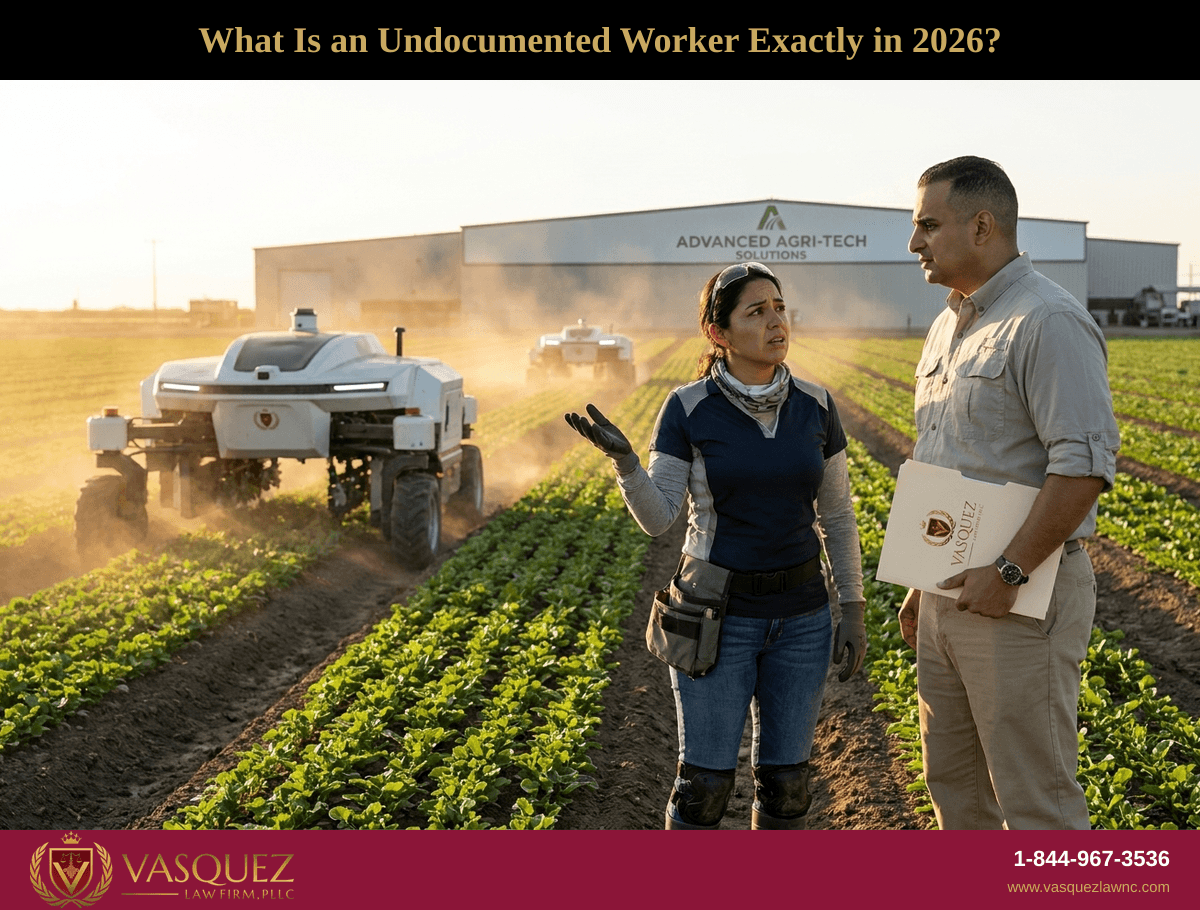
- If you are considering applying for work authorization or adjustment
- If you fear deportation due to criminal charges
- If an employer threatens to report your status
- If you have criminal history affecting immigration status
- If you want to understand options under new immigration laws
- If you have questions about asylum or TPS eligibility
- If you are detained and need bond advice
- If you want to protect family members facing removal
About Vasquez Law Firm
At Vasquez Law Firm, we combine compassion with aggressive representation. Our motto "Yo Peleo®" (I Fight) reflects our commitment to standing up for your rights.
- Bilingual Support: Se Habla Español — Spanish-speaking attorneys and staff available
- Service Areas: North Carolina, Florida, and nationwide immigration services
- Experience: Over 30 years helping clients navigate complex legal matters
- Results: Thousands of successful cases across multiple practice areas
Attorney Trust and Experience
William J. Vásquez is admitted to the North Carolina State Bar (2011) and to the U.S. Courts of Appeals for the 4th, 5th, and 11th Circuits. Florida-jurisdiction matters at the firm are handled by Florida Bar attorney Harold Estrada-Rodriguez (FL Bar No. 1041171). The firm has provided dedicated legal representation since 2011, with personalized attention to each client's case.
Don't wait to get the help you deserve. Call us now for immediate assistance.
Se Habla Español
Frequently Asked Questions
What exactly is an undocumented worker?
An undocumented worker is a person who lives and works in the U.S. without legal authorization or valid immigration status. This may include unauthorized entry or overstaying a visa. Being undocumented is a civil violation, but not a criminal offense by itself. Many undocumented workers face legal risks but continue working to support their families.
What is the difference between undocumented and illegal immigrants?
The terms undocumented and illegal immigrant are often used interchangeably but have different connotations. Undocumented focuses on immigration status without legal papers. Illegal implies criminal wrongdoing. Many advocates prefer undocumented as it avoids criminal labeling. Legally, unauthorized presence may carry penalties, but it is not necessarily a criminal offense.
Can undocumented immigrants work legally in the U.S.?
Undocumented immigrants generally cannot legally work in the U.S. without proper work authorization. However, some may apply for work permits through programs like DACA or temporary visas. Employers who knowingly hire undocumented workers face penalties, but many undocumented immigrants continue to work in industries such as agriculture, construction, and hospitality.
What are the penalties for hiring undocumented workers?
Employers who hire undocumented workers knowingly may face civil fines, sanctions, and even criminal charges depending on circumstances. The Immigration Reform and Control Act (IRCA) established penalties and requires employers to verify work eligibility using Form I-9. Penalties increase with repeat violations. Workers' rights laws still protect undocumented workers from workplace abuses.
Are asylum seekers considered undocumented immigrants?
Asylum seekers are individuals who apply for protection after arriving in the U.S. They may be undocumented before their claim is approved. Once an asylum application is filed, they can request work authorization. Until then, they may lack legal status but have specific legal rights during their case processing.
What industries employ the most undocumented workers?
In the U.S., common industries employing many undocumented workers include agriculture, construction, hospitality, landscaping, and food service. These sectors often rely on labor that is seasonal or difficult to fill. Employers benefit from lower wages, but undocumented workers face risks of exploitation and lack work protections.
Is it illegal to be an undocumented immigrant?
Undocumented presence in the U.S. is a civil violation, not a criminal offense. However, some immigration-related actions, like re-entry after deportation, are criminal. Being undocumented can result in deportation or removal proceedings. Understanding the law can help individuals explore possible remedies or relief.
What new rules affect green card holders in 2026?
In 2026, new federal rules impact green card holders regarding continuous residency and travel restrictions. USCIS updates eligibility for naturalization considering extended absences. Green card holders should track travel to avoid delays or denial when applying for citizenship or re-entry after trips abroad.
Sources and References
- U.S. Citizenship and Immigration Services
- Executive Office for Immigration Review
- Legal Information Institute
Take the first step toward justice today. Our team is standing by to help.
Start Your Free Evaluation Now
Call us: 1-844-967-3536
Se Habla Español - Estamos aquí para ayudarle.


William Vasquez
Founder & CEO, Vasquez Law Firm, PLLC
William Vasquez is the founder and CEO of Vasquez Law Firm, PLLC, a results-driven firm specializing in immigration, criminal defense, personal injury, and workers' compensation. A U.S. Air Force veteran and recipient of the Joint Service Achievement Medal, William is dedicated to fiercely fighting for his clients' rights.
Related Legal Services
Need legal help? Learn more about get immigration legal help today, or contact us for a free evaluation.
You can also visit our North Carolina immigration practice for more information.
![USCIS Questions on Consular Processing: Complete Guide [2026]](/_next/image?url=https%3A%2F%2Fvuuyorlsmhunqektprqy.supabase.co%2Fstorage%2Fv1%2Fobject%2Fpublic%2Fblogs%2Fimmigration-header-1782501291161.png&w=1920&q=75)