Financial Aid for Illegal Immigrants: What You Need in 2026
Wondering about financial aid for illegal immigrants in 2026? Learn your options, eligibility, and how to get help. Contact Vasquez Law for a free consultation.
Published on June 18, 2026
Talk to an immigration attorney
Free call. A clear plan for your case.
Free & confidential · Se habla espanol · 24/7

Have questions? Talk to an attorney - free evaluation.
Call 1-844-967-3536Worried how the latest immigration news affects you?
Schedule a confidential case review with an immigration attorney - know exactly where you stand.
USCIS Case Status
Check your USCIS case status
Enter your receipt number and get the official status. Free, no registration.
Financial Aid for Illegal Immigrants: What You Need in 2026
Financial aid for illegal immigrants remains a complex but vital topic for many aspiring college students in 2026. While federal aid is often restricted, there are scholarships, state programs, and private assistance available that can help undocumented individuals achieve higher education goals. Understanding eligibility requirements and available resources in Raleigh, NC, and Orlando, FL, can open doors. This guide breaks down what financial help undocumented immigrants can access right now.
Need help with your case? Our experienced attorneys are ready to fight for you. Se Habla Español.
Or call us now: 1-844-967-3536
Quick Answer
Undocumented immigrants generally cannot receive federal financial aid through FAFSA in 2026. However, many scholarships, state programs, and private assistance options exist that may support college costs. Exploring DACA eligibility, institutional scholarships, and legal counsel in Raleigh, NC, or Orlando, FL, can provide paths to funding.
- Federal grants and loans require citizenship or eligible non-citizen status
- Scholarships for undocumented students are available from private sources
- Some states have tuition assistance for undocumented immigrants
- DACA recipients may qualify for certain financial aid benefits
- Legal advice maximizes chances for obtaining aid
Understanding Financial Aid Options for Undocumented Immigrants
More than 650,000 undocumented students nationwide express desire to attend college, but financial aid access often remains blocked by federal rules. The Free Application for Federal Student Aid (FAFSA) is a primary gateway for federal grants, loans, and work-study; however, only U.S. citizens and eligible non-citizens listed by federal regulation, such as lawful permanent residents (green card holders), refugees, and certain visa holders, qualify to file FAFSA (34 CFR § 668.32). This leaves most undocumented individuals ineligible for federal aid.
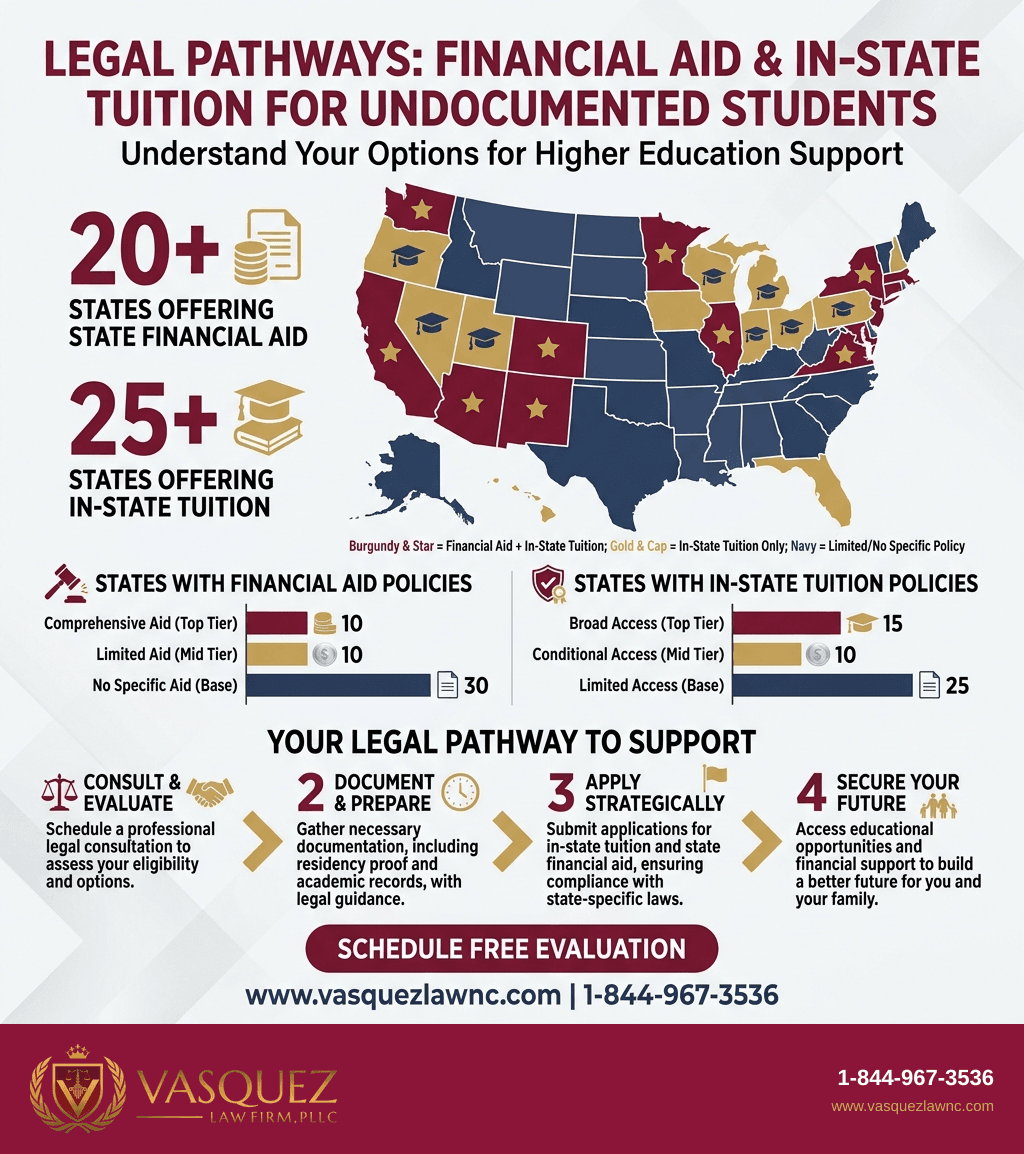
Despite these restrictions, undocumented students have alternative financial aid routes. Many colleges, nonprofit groups, and private foundations offer scholarships specifically targeting undocumented or DACA-status students. States like California, Texas, and New York provide state financial aid programs for undocumented immigrants, but North Carolina and Florida have more limited options. This means in Raleigh and Orlando, undocumented students must rely heavily on institutional aid and private scholarships.
Understanding your immigration status can open doors. For example, Deferred Action for Childhood Arrivals (DACA) recipients gain temporary legal status and work authorization, which may increase eligibility for certain scholarships or in-state tuition under some states’ laws. However, it is essential to check with your school and local laws as rules are inconsistent nationally.
Talking to knowledgeable immigration attorneys can clarify eligibility for financial aid, explain complex state laws, and help identify potential funding sources. Our immigration attorneys in Raleigh, NC, and Orlando, FL, have in-depth experience assisting undocumented students seeking educational support. Learn more about our immigration legal services and how they can help.
Federal Restrictions on Financial Aid
Under federal law (8 U.S.C. § 1621), undocumented immigrants are not eligible for federal public benefits, including financial aid. The FAFSA requires a valid Social Security number or qualifying immigration status as defined under 34 CFR § 668.32. This means undocumented immigrants cannot access Pell Grants, Federal Supplemental Educational Opportunity Grants, or federal student loans.
Scholarships and Private Aid
Many organizations offer scholarships regardless of immigration status. Groups like TheDream.US and local nonprofits target undocumented students, often prioritizing academic achievement or financial need. These scholarships can sometimes cover tuition, fees, books, and living expenses. Approaching your school’s financial aid office is vital to apply for internal scholarship programs.
State Aid and Tuition Policies
Few states have programs that allow undocumented students to pay in-state tuition or apply for state-funded aid. North Carolina and Florida do not currently provide extensive state financial aid for undocumented students. Still, some institutions may have exceptions or offer their own aid. In these states, exploring private scholarships is crucial.
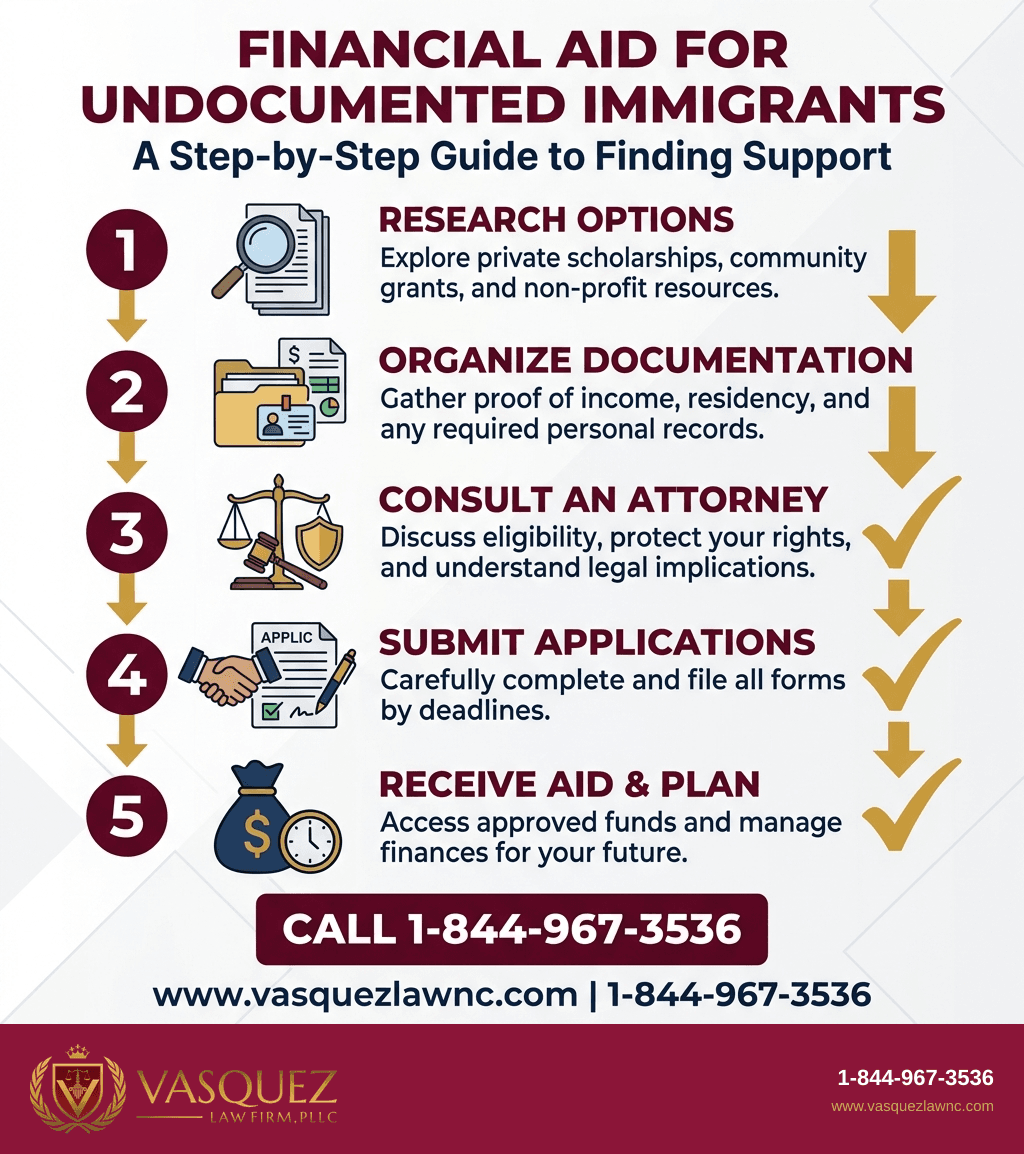
Step-by-Step Guide to Seeking Financial Aid
- Assess Immigration Status: Determine if you qualify as an eligible non-citizen for FAFSA or if DACA applies. Consult an immigration attorney to understand your specific status.
- Research Scholarships: Look for scholarships aimed at undocumented students through local organizations, colleges, and nonprofits. Use online databases and community contacts.
- Contact School Financial Aid Offices: Explain your situation to financial aid counselors in Raleigh or Orlando. Ask about institutional scholarships or payment plans for undocumented students.
- Prepare Documentation: Collect transcripts, proof of residency, income information for family members, and any immigration documents including DACA approval if applicable.
- Apply Early: Meet all deadlines for scholarships and financial aid applications. Undocumented students often face limited opportunities; early submission is key.
- Consult Legal Help: Our attorneys in Raleigh, NC, and Orlando, FL, provide free case evaluations to guide you through eligibility issues, applications, and status adjustments.
- Explore Other Resources: Consider community assistance programs, work-study jobs that do not require citizenship, and local grants.
Local Legal and Educational Support
Several community organizations in Raleigh and Orlando offer support and can refer you to scholarship opportunities. Connecting with these resources complements legal support from attorneys experienced with immigration and educational aid.
Common Mistakes Undocumented Students Make When Applying
- Assuming FAFSA Is an Option: Filing FAFSA without qualifying status often leads to rejection and delays. Confirm eligibility first.
- Missing Scholarship Deadlines: Many private scholarships have strict annual deadlines. Keep a calendar and apply promptly.
- Not Consulting an Attorney: Without proper legal guidance, you may overlook programs or status options like DACA that can improve aid eligibility.
- Ignoring State or Institutional Aid: Even if federal aid is unavailable, some colleges offer scholarships or payment plans for undocumented students.
- Not Keeping Documentation Ready: Financial aid applications require detailed paperwork; missing documents cause denials.
- Failing to Verify Scholarship Requirements: Some require community service or academic achievement. Know eligibility criteria before applying.
- Disclosing Immigration Status Without Legal Advice: Sharing information improperly may put status at risk. Always consult with an attorney.
If you only remember one thing: Seek qualified legal advice early to understand which financial aid options apply to your immigration status.
Timeline: What to Expect When Applying for Aid
- Months 1-2: Assess status and gather documents such as tax returns, transcripts, and identification.
- Months 2-3: Research scholarships, reach out to school financial aid offices in Raleigh and Orlando, and request recommendation letters.
- Months 3-4: Complete and submit scholarship applications. Apply for institutional aid where possible.
- Months 4-5: Await responses and make decisions on offers. Follow up as needed.
- Month 6: Finalize enrollment and financial arrangements with your college.
This timeline varies by institution and state; checking specific deadlines at your target schools ensures timely applications.
Costs and Fees: What Impacts the Price of College for Undocumented Students
- Out-of-State Tuition: NC and FL generally charge higher tuition for out-of-state or undocumented students without in-state eligibility.
- Limited Access to Federal Loans: The inability to tap federal student loans means undocumented students often pay out-of-pocket or rely heavily on scholarships.
- Additional Fees: Many colleges charge fees for enrollment, student services, and course materials.
- Legal Costs: Securing immigration or financial aid status via attorneys can require fees but improves aid chances.
- Living Expenses: Housing, transportation, and daily costs add to total education expenses.
NC, FL, and Nationwide Notes on Financial Aid for Undocumented Immigrants
North Carolina Notes
North Carolina does not provide state financial aid or tuition waivers for undocumented immigrants. Colleges in Raleigh may offer limited scholarships, but options are fewer compared to states with robust immigrant aid programs. Undocumented students should explore private scholarships and legal pathways like DACA, which can affect in-state tuition eligibility in other states but not currently in NC.
Florida Notes
Florida also lacks comprehensive state-funded financial aid for undocumented immigrants. In Orlando and other areas, undocumented students face challenges obtaining affordable education. Institutions may have minimal institutional aid opportunities. Legal consultation with Florida-based immigration attorneys can help identify limited programs for undocumented students.
Nationwide Concepts (General Only, Rules Vary)
Some states, including California, Texas, and New York, have implemented tuition equity laws or financial aid programs for undocumented students. On a national level, federal law restricts direct financial aid, but scholarships and private aid remain critical. Nationwide, undocumented students often rely on a patchwork of resources and legal guidance to fund education.
When to Call a Lawyer Now
- Unsure about your immigration status related to college eligibility
- Need help applying for DACA or renewing it to qualify for aid
- Facing deadlines for scholarships or legal documentation
- Encountering issues with college financial aid offices
- Needing advice on state residency and tuition policies
- Concerns about disclosure of undocumented status
- Searching for scholarships requiring legal proof of status
- Facing potential deportation or legal challenges affecting education
About Vasquez Law Firm
At Vasquez Law Firm, we combine compassion with aggressive representation. Our motto "Yo Peleo®" (I Fight) reflects our commitment to standing up for your rights.
- Bilingual Support: Se Habla Español — Spanish-speaking attorneys and staff available
- Service Areas: North Carolina, Florida, and nationwide immigration services
- Experience: Over 30 years helping clients navigate complex legal matters
- Results: Thousands of successful cases across multiple practice areas
Attorney Trust and Experience
William J. Vásquez is admitted to the North Carolina State Bar (2011) and to the U.S. Courts of Appeals for the 4th, 5th, 6th, and 11th Circuits. Florida-jurisdiction matters at the firm are handled by Florida Bar attorney Alekssandra Lopez. The firm has provided dedicated legal representation since 2011, with personalized attention to each client's case.
Don't wait to get the help you deserve. Call us now for immediate assistance.
Se Habla Español
Frequently Asked Questions
Can illegal immigrants receive federal financial aid for college?
Generally, undocumented immigrants cannot apply for federal financial aid programs like FAFSA unless they hold eligible immigration status such as DACA or permanent residency. Many private scholarships and some state funds may be available.
What types of scholarships are available for undocumented students?
Scholarships targeting undocumented students include those from nonprofits, community organizations, and some colleges. They often consider factors such as financial need and academic achievement without requiring citizenship.
Are there financial aid programs specifically for undocumented immigrants in NC or FL?
NC and FL have limited state financial aid for undocumented students. Most support is through institutional scholarships or private organizations in Raleigh and Orlando. Legal advice can reveal more options.
Can undocumented immigrants qualify for student loans?
Federal student loans require lawful status. Undocumented immigrants generally do not qualify, and private loans are limited and often costly. Scholarships are typically a better funding source.
What is an eligible non-citizen for FAFSA purposes?
Eligible non-citizens include permanent residents, refugees, and certain visa holders as defined by 34 CFR 668.32. This status allows them to file FAFSA and access federal aid.
Can undocumented immigrants attend college for free in the USA?
No federal provision guarantees free college for undocumented students. Some states provide tuition waivers or scholarships, but NC and FL have limited programs. DACA status may help in some states.
How much assistance do undocumented immigrants receive from the government?
Government assistance is very limited for undocumented immigrants due to federal restrictions. Some emergency or child-related services may be available at state/local levels.
What should I do first if I want financial aid as an undocumented immigrant?
Consult an immigration attorney to understand your status and eligibility. Then research scholarships and talk to your school’s financial aid office. Prepare documents early and meet deadlines carefully.
Sources and References
- U.S. Citizenship and Immigration Services (USCIS)
- Executive Office for Immigration Review
- Legal Information Institute
Take the first step toward justice today. Our team is standing by to help.
Start Your Free Evaluation Now
Call us: 1-844-967-3536
Se Habla Español - Estamos aquí para ayudarle.


William Vasquez
Founder & CEO, Vasquez Law Firm, PLLC
William Vasquez is the founder and CEO of Vasquez Law Firm, PLLC, a results-driven firm specializing in immigration, criminal defense, personal injury, and workers' compensation. A U.S. Air Force veteran and recipient of the Joint Service Achievement Medal, William is dedicated to fiercely fighting for his clients' rights.
Related Legal Services
Need legal help? Learn more about learn about our immigration practice, or contact us for a free evaluation.
You can also visit NC immigration legal help for more information.