How Car Accident Technology Works and Helps in 2026
Wondering how car accident technology works to protect drivers in 2026? Learn key features and how it impacts your case. Contact Vasquez Law for help.
Published on March 27, 2026
Injured? Get what your case is worth
Free review.
Free & confidential · Se habla espanol · 24/7

Have questions? Talk to an attorney - free evaluation.
Call 1-844-967-3536Get What Your Injury Is Worth
Schedule your consultation.
How Car Accident Technology Works and Helps in 2026
Car accident technology plays an increasingly vital role in preventing injuries and protecting drivers on North Carolina and Florida roads in 2026. These systems, from advanced driver assistance to collision warnings, help reduce accidents and improve safety. Understanding how car accident technology works and what it means for survivors can guide your recovery and legal options.
Need help with your case? Our experienced attorneys are ready to fight for you. Se Habla Español.
Schedule Your Free Case Evaluation
Or call us now: 1-844-967-3536
Quick Answer
Car accident technology includes advanced driver assistance features designed to prevent or lessen collision severity. These systems work by warning drivers or automatically controlling the vehicle to reduce accidents in Charlotte and beyond.
- Adaptive cruise control manages vehicle speed
- Forward collision warnings alert drivers early
- Automatic emergency braking can stop a crash
- Lane departure warnings reduce drift-related accidents
- Parking assist helps prevent low-speed impacts
- Technology data aids injury claims after accidents
Understanding Car Accident Technology
Imagine a driver cruising on a busy Charlotte highway. Thanks to car accident technology, their vehicle detects a slower car ahead and alerts them to slow down. If the driver does not respond, some vehicles can apply brakes automatically. These technologies aim to prevent crashes or lessen the impact, saving lives and reducing injuries. Key systems include adaptive cruise control, forward collision warning, automatic emergency braking, lane departure warning, blind spot detection, and parking assistance.
Advanced Driver Assistance Systems (ADAS)
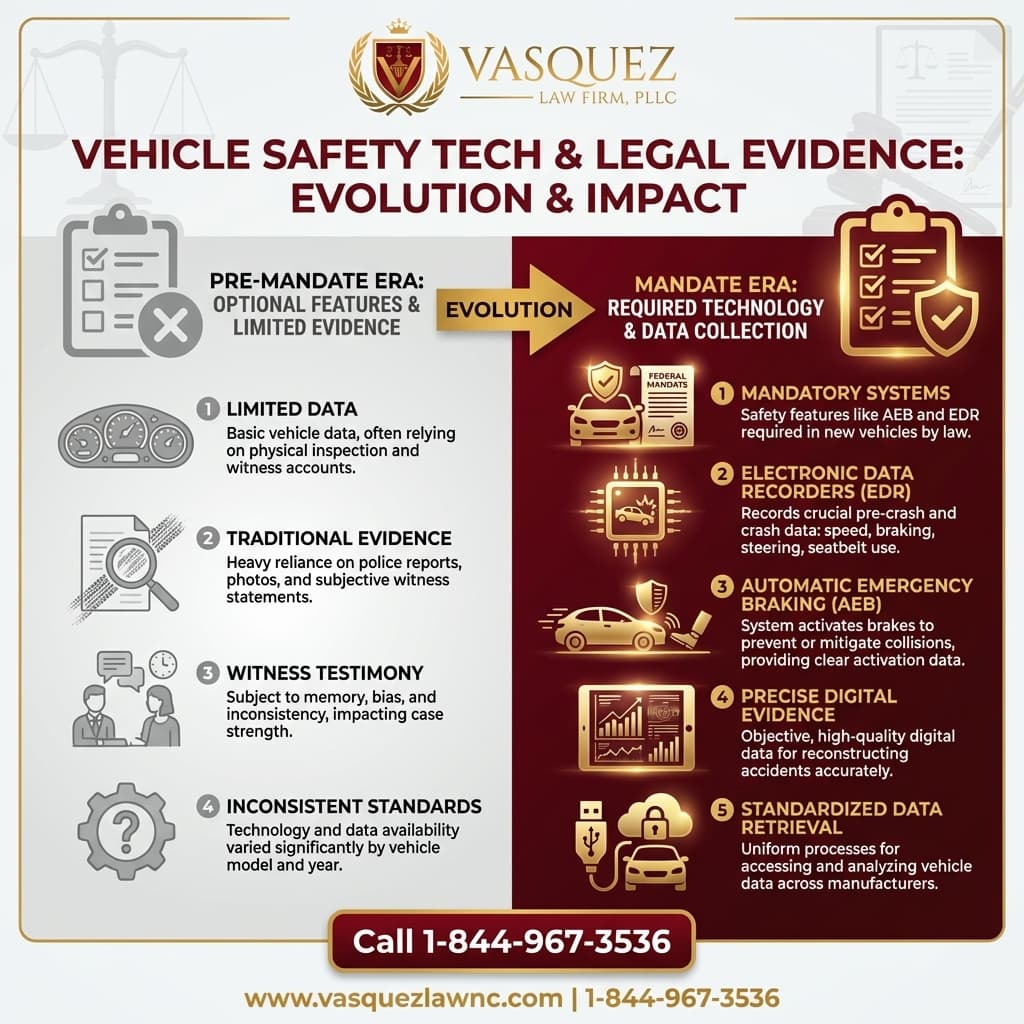
ADAS refers to technology packages in vehicles that assist drivers with speed regulation, lane keeping, and collision prevention. In 2026, most new cars in North Carolina and Florida come with some form of ADAS. These systems alert drivers with warnings or take corrective actions if necessary. They represent some of the most important innovations made to road safety in recent years.
How Driver Assist System Warnings Work
Driver assist system warnings use cameras, radar, or sensors to monitor surroundings. For example, a forward collision warning uses sensors to detect imminent crashes, alerting drivers with audible or visual signals. Some systems continue further by activating automatic emergency braking if the driver fails to react in time. Even parking assist uses sensors to help avoid minor impacts during low-speed maneuvers.
Common Car Accident Technology Examples
- Adaptive cruise control adjusts speed to maintain safe spacing
- Blind spot detection alerts when a vehicle is in hard-to-see zones
- Lane departure warning signals when drifting out of lanes
- Automatic high beams optimize nighttime visibility
- Parking assist guides steering during parking
While these systems help avoid accidents, responsibility remains with the driver. Understanding the quality and limitations of these technologies is essential for safety and legal matters.
Key Steps to Take After an Accident
- Check for injuries and call emergency services immediately.
- Move to a safe location if possible and alert other drivers with hazard lights.
- Exchange information with the other driver, including insurance, contact, and vehicle details.
- Document the scene: take photos or videos of damages, road conditions, and any technology alerts shown.
- Look for witness information and collect their contact details.
- Report the accident to law enforcement and obtain a police report.
- Notify your insurance company promptly with accurate details.
- Consult a personal injury attorney experienced in cases involving car accident technology to protect your rights.
Documents and Evidence Checklist
- Police report including officer conclusions
- Photographic evidence of both vehicles and accident scene
- Details from vehicle onboard computer or ADAS logs if retrievable
- Medical reports and records relating to injuries
- Witness statements or contact information
- Insurance policy and claim details
- Repair estimates or receipts for vehicle damage
Timeline: What to Expect in Your Case
- Immediate (Days 1-7): Medical care, police report collection, initial insurance claims.
- Short Term (Weeks 1-4): Gathering evidence, medical treatment, contacting attorneys.
- Medium Term (Months 1-6): Investigation of accident facts including technology data review, insurance negotiations.
- Long Term (6+ Months): Settlement discussions or litigation if necessary.
Costs and Fees Explained
- Attorney fees typically work on contingency for personal injury cases.
- Costs may include expert witness fees for technology data analysis.
- Medical expenses and vehicle repair costs impact settlement value.
- Insurance deductibles and policy limits affect compensation.
- Early case evaluation can clarify potential costs and outcomes.
Common Mistakes and How to Avoid Them
- Failing to collect technology data: Request preservation of ADAS system logs promptly.
- Ignoring minor symptom injuries: Document all injuries and seek medical care early.
- Admitting fault at the scene: Avoid statements that could be used against you later.
- Delaying insurance notification: Report claims quickly to avoid complications.
- Not consulting a lawyer: Early legal advice can protect your rights and evidence.
- Replacing vehicle parts before inspection: Preserve vehicle condition for accident reconstruction.
- Missing medical appointments: Keep all scheduled treatments and document progress.
If you only remember one thing: Preserve all evidence immediately and contact a knowledgeable attorney to analyze technology data involved in the accident.
North Carolina and Nationwide Notes
North Carolina Notes
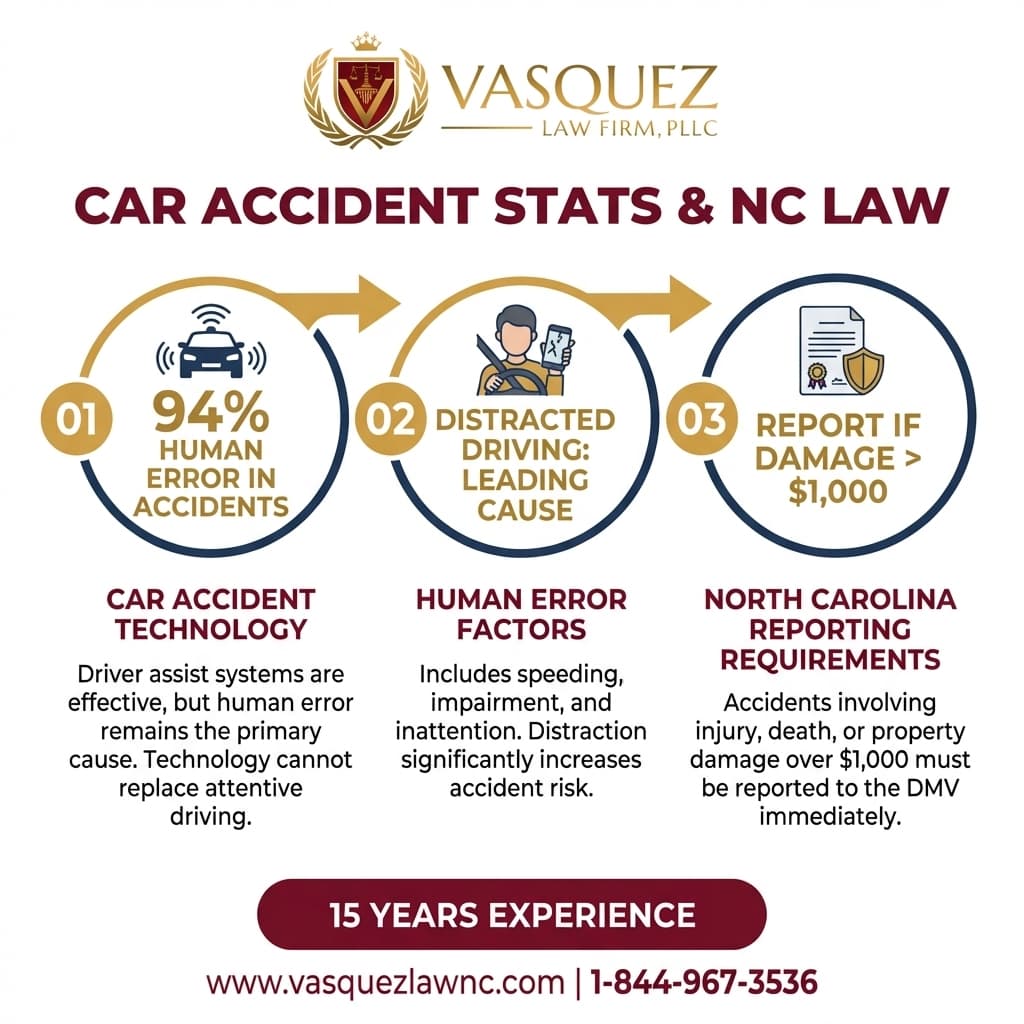
North Carolina requires drivers to report accidents causing injury or property damage exceeding $1,000 within 60 days (N.C. Gen. Stat. § 20-166). The state follows contributory negligence rules, meaning any fault can bar recovery. Understanding how car accident technology data affects liability is critical in Charlotte cases. Our personal injury lawyers in North Carolina can assist with gathering evidence and understanding state regulations.
Nationwide Concepts (General Only, Rules Vary)
Across the U.S., technology has reshaped how car accidents are analyzed and litigated. Legal responsibility ultimately rests with drivers to operate vehicles safely even with assistive technology. Laws on data usage and privacy in accident cases differ by state. Survivors should seek localized legal advice to navigate variations.
When to Call a Lawyer Now
- Injuries require medical treatment beyond first aid
- Disagreement on fault with the other driver
- Insurance company delays or denies your claim
- Vehicle damage is extensive or total loss occurs
- Forward Collision Warning or other systems were disabled or malfunctioned
- Disputes over preserving or accessing vehicle technology data
- Liability involves multiple parties or commercial vehicles
- Insurance limits are insufficient to cover damages
About Vasquez Law Firm
At Vasquez Law Firm, we combine compassion with aggressive representation. Our motto "Yo Peleo" (I Fight) reflects our commitment to standing up for your rights.
- Bilingual Support: Se Habla Español - our team is fully bilingual
- Service Areas: Personal injury in North Carolina; immigration nationwide, including Florida
- Experience: Over 15 years helping clients navigate complex legal matters
- Results: Thousands of successful cases across multiple practice areas
Attorney Trust and Experience
Attorney Vasquez holds a Juris Doctor degree and is admitted to practice in the North Carolina State Bar. With over 15 years of dedicated legal experience, he has built a reputation for providing personalized attention and achieving favorable outcomes for his clients.
Don't wait to get the help you deserve. Call us now for immediate assistance.
Se Habla Español
Frequently Asked Questions
Is ADAS technology worth the cost for drivers in 2026?
Advanced Driver Assistance Systems (ADAS) can significantly reduce accident risks and insurance costs. While the initial investment varies, many drivers find that the safety benefits and potential savings on insurance make ADAS technology worth the cost.
What are 90% of car accidents caused by?
Studies show that approximately 90% of car accidents result from human error, including distracted driving, speeding, and failure to obey traffic signals. Technologies like driver assistance and collision warnings aim to reduce such errors.
What is the three second rule in driving safety?
The three second rule suggests maintaining at least a three-second gap between your car and the vehicle ahead. This distance allows time to react and brake, helping reduce rear-end collisions.
Does Forward Collision Warning (FCW) reduce insurance costs?
Many insurance companies offer discounts for vehicles equipped with Forward Collision Warning (FCW) systems because they reduce accident risks. While the discounts vary, FCW technology is generally seen as beneficial for both safety and cost.
Who is responsible for operating a vehicle with ADAS technology?
Even with ADAS technology, the driver is responsible for safe operation of the vehicle. Driver assistance systems supplement but do not replace the need for attentive driving and following traffic laws.
What happens if Forward Collision Warning is turned off?
Turning off Forward Collision Warning disables an important safety feature and increases accident risk. Some insurance benefits may be lost, and legal liability could increase if an accident occurs without this technology active.
What are common car accident technology examples?
Common examples include adaptive cruise control, automatic emergency braking, lane departure warnings, blind spot detection, and parking assist systems. These technologies work together to reduce crashes and improve driver awareness.
How can technology affect the outcome of a personal injury case?
Car accident technology data can provide evidence in personal injury claims, showing how an accident occurred or whether safety features were used. This information can impact liability and compensation evaluations.
Sources and References
- NCDOT driver assistance technology overview
- North Carolina Courts car accident resources
- NHTSA automated vehicle safety technology
- N.C. Gen. Stat. § 20-138 on driver duties after collision
- 49 C.F.R. § 571.111 motor vehicle safety standards
Take the first step toward justice today. Our team is standing by to help.
Start Your Free Case Evaluation Now
Call us: 1-844-967-3536
Se Habla Español - Estamos aquí para ayudarle.


William Vasquez
Founder & CEO, Vasquez Law Firm, PLLC
William Vasquez is the founder and CEO of Vasquez Law Firm, PLLC, a results-driven firm specializing in immigration, criminal defense, personal injury, and workers' compensation. A U.S. Air Force veteran and recipient of the Joint Service Achievement Medal, William is dedicated to fiercely fighting for his clients' rights.
Related Legal Services
Need legal help? Learn more about NC personal injury legal team, or contact us for a free evaluation.
You can also visit statewide personal injury legal services for more information.