What Happens If You Use the Asylum Loophole in 2026?
Wondering about the asylum loophole in 2026? Learn what it means for asylum seekers in Raleigh NC and Orlando FL. Contact Vasquez Law today.
Published on September 2, 2026
Talk to an immigration attorney
Free call. A clear plan for your case.
Free & confidential · Se habla espanol · 24/7
Have questions? Talk to an attorney - free evaluation.
Call 1-844-967-3536Worried how the latest immigration news affects you?
Schedule a confidential case review with an immigration attorney - know exactly where you stand.
What Happens If You Use the Asylum Loophole in 2026?
The asylum loophole refers to situations where individuals seek to enter or remain in the U.S. by exploiting gaps in immigration rules. In 2026, changes affect how asylum seekers with pending cases are treated, especially in places like Raleigh, NC and Orlando, FL. Understanding these updates is crucial to protect your rights and avoid deportation risks. This guide explains what the asylum loophole is, recent policy changes, and practical steps you can take now.
Need help with your case? Our experienced attorneys are ready to fight for you. Se Habla Español.
Or call us now: 1-844-967-3536
Quick Answer
The asylum loophole refers to gaps some individuals use to apply for asylum while staying in the U.S. without immediate deportation. Recent 2026 policy changes aim to close this loophole by enforcing stricter filing deadlines and expedited removal for certain cases.
- Asylum seekers must file Form I-589 within one year of arrival
- Pending cases no longer guarantee extended legal stay
- ICE may detain or deport some asylum seekers with pending claims
- Legal help is critical to navigate these changes
- Policies vary slightly between Raleigh, NC and Orlando, FL
Understanding the Asylum Loophole
Imagine entering the U.S. and applying for asylum, expecting to stay legally until your case is decided. For years, some people have taken advantage of gaps in immigration enforcement and court delays to remain in the country for years without final decisions. This situation is commonly called the "asylum loophole." It refers to the ways asylum seekers with pending claims might avoid quick removal despite violations like entering unlawfully.
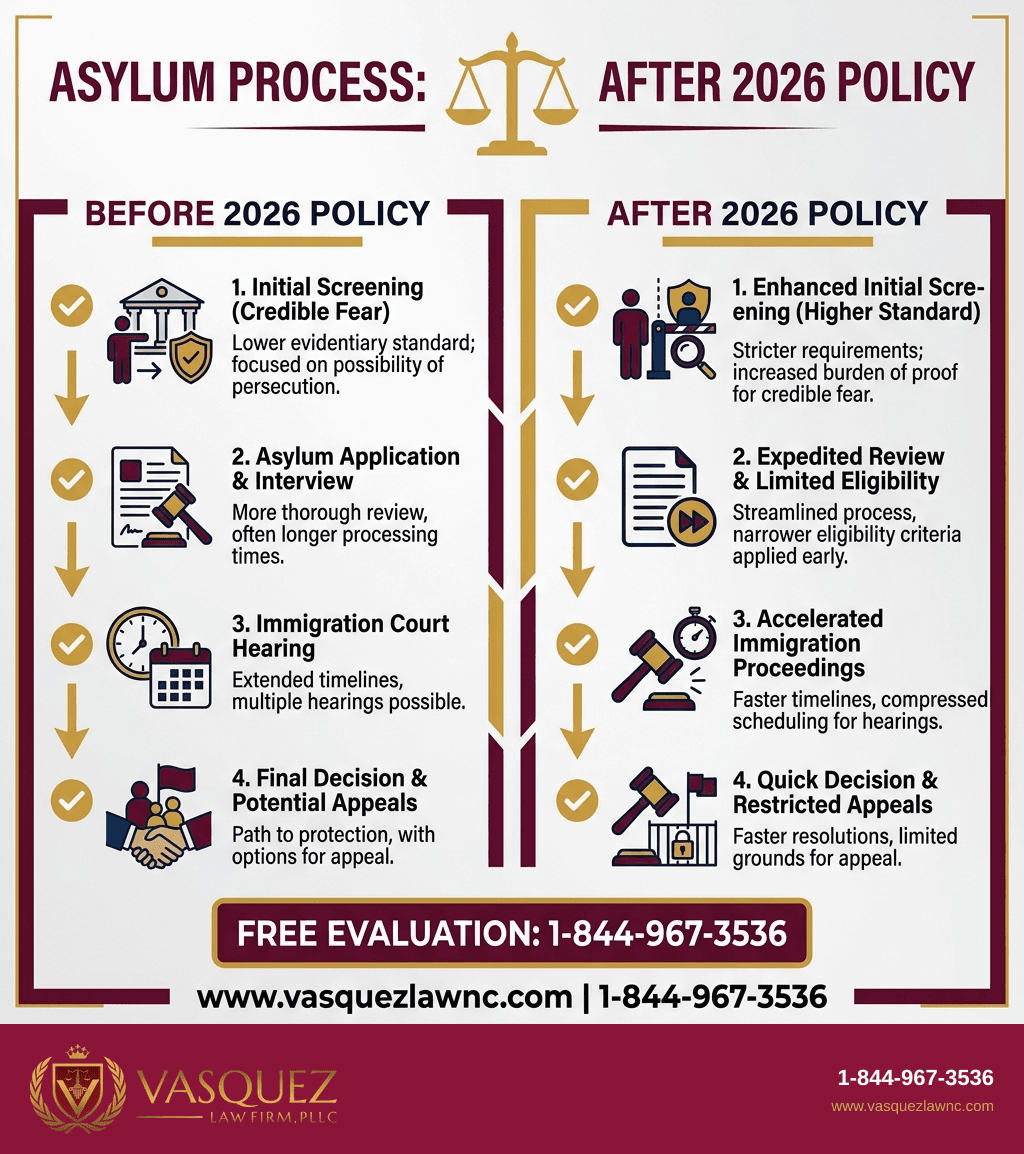
The Biden and Trump administrations alike have tried to address these issues. In 2026, new policies have further limited the time someone can stay with a pending asylum case, tightened eligibility screening, and allowed faster deportations when certain conditions are met.
For example, people arriving at the border now face earlier credible fear interviews to assess asylum eligibility. If found not credible, they may be removed more quickly. Also, those with serious criminal records may not benefit from deferred removal during their asylum case.
Understanding these rules is vital for asylum seekers in Raleigh, NC, Orlando, FL, and nationwide. The United States Citizenship and Immigration Services (USCIS) and the Executive Office for Immigration Review (EOIR) implement these policies under the Immigration and Nationality Act (INA). See INA § 208 for asylum procedures.
Our immigration services include helping clients understand these changes and apply correctly.
What is Asylum?
Asylum is a form of protection for people persecuted or fearing persecution in their home countries based on race, religion, nationality, political opinion, or membership in a particular social group such as LGBTQ individuals or victims of domestic abuse.
How the Loophole Developed
Backlogs in immigration courts and lenient enforcement allowed some individuals to avoid deportation during long pending cases. Advocates argued this gave time to fairly consider asylum claims. Critics said it encouraged unauthorized entry and abuse.
Recent Changes in 2026
The Department of Homeland Security (DHS) and DOJ have accelerated asylum adjudications and limited eligibility for extended stay protections. This includes increased focus on detaining some asylum seekers with pending cases to enforce removals when justified.
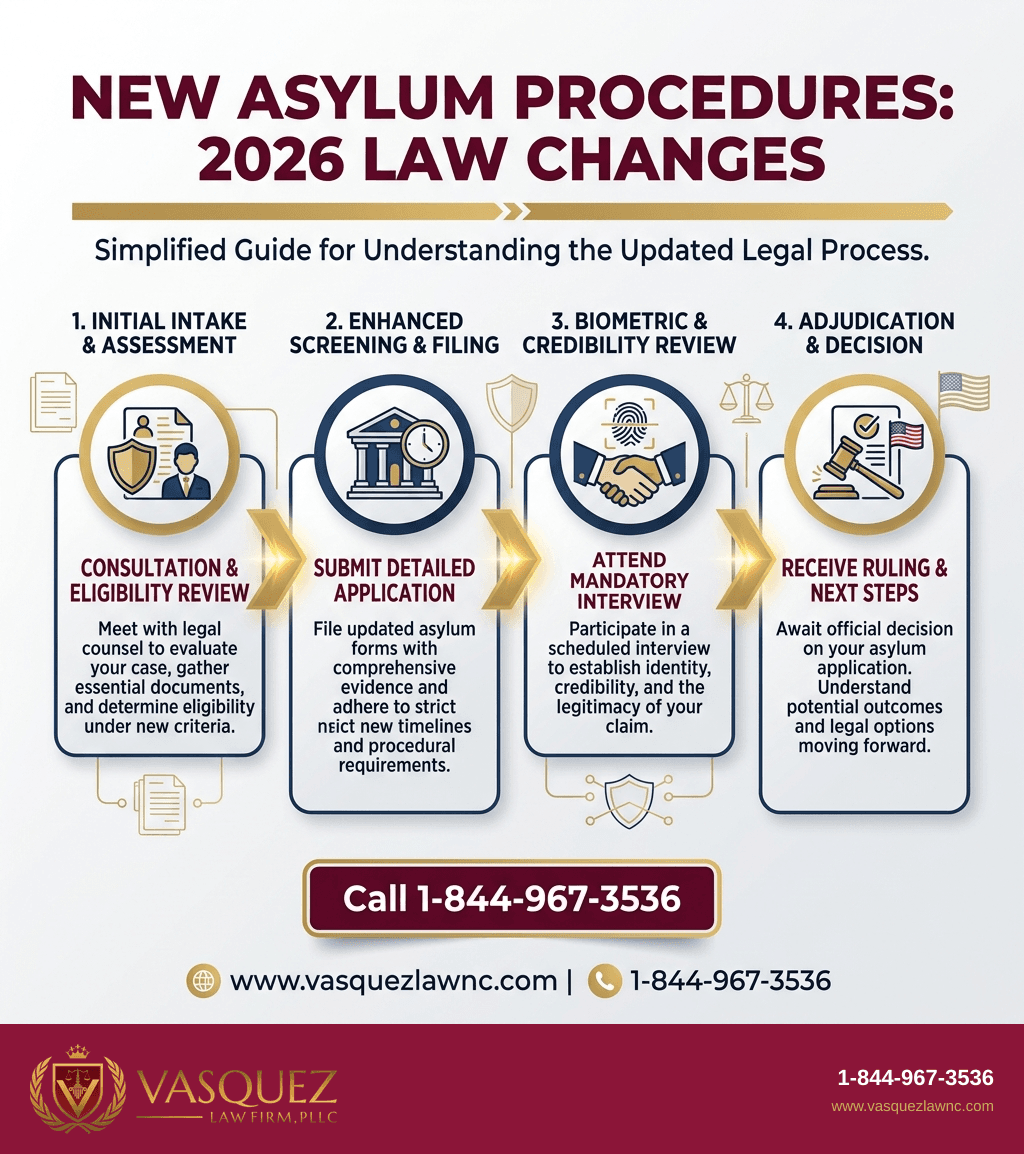
Key Steps to Take if You Are an Asylum Seeker
- File Your Application Timely - Submit Form I-589 within one year of arrival as required by INA § 208(a)(2)(B).
- Prepare Strong Evidence - Gather documents and affidavits proving persecution or credible fear.
- Attend All Interviews and Hearings - Missing appointments may result in denial or removal orders.
- Understand Your Rights - Stay informed about reporting requirements and changes in policy.
- Consult an Experienced Attorney - Our Attorney Jessica Vasquez provides bilingual support in Raleigh and Orlando.
Step 1: Filing Form I-589
The asylum application must be filed within one year of entering the United States. The form is free of charge and available on the USCIS website.
Step 2: Evidence Documentation
Provide any evidence of threats, harm, or persecution tied to protected grounds. This could include police reports, medical records, or news articles.
Step 3: Attend the Credible Fear Interview
This interview at the border or immigration office assesses if you meet the threshold to pursue asylum.
Step 4: Immigration Court Hearings
Your case may be referred to immigration court for a full hearing before a judge if asylum is not granted administratively.
Common Mistakes to Avoid in Asylum Cases
- Missing the one-year application deadline — File ASAP after arrival
- Failing to submit credible evidence — Prepare detailed documentation
- Ignoring or missing interviews or court dates — Attend all appointments
- Providing inconsistent or falsified statements — Honesty is critical
- Not consulting a qualified immigration attorney — Professional advice matters
- Assuming pending status prevents deportation — Policy changes affect this
- Relying on unverified information from unofficial sources
- Failing to report address changes to USCIS as required
If you only remember one thing: Meet deadlines and keep communication open with immigration authorities and your attorney.
Timeline and What to Expect in 2026
- Day 0-30: Arrival and filing Form I-589 within one year mandatory.
- Day 30-90: Biometrics appointment for fingerprinting and background check.
- Day 90-180: Credible fear interview or asylum officer interview.
- 6-12 months: Immigration court hearing scheduled if asylum is not granted administratively.
- 12-24 months: Final decision by immigration judge or USCIS asylum officer.
Times depend on USCIS processing times; current averages for I-589 are available at USCIS Processing Times.
Jurisdiction Notes
North Carolina Notes
Asylum seekers in Raleigh, NC, must comply with federal immigration procedures. They may attend hearings at the local immigration courts and seek assistance from local legal aid and law firms such as Vasquez Law Firm, providing bilingual help and representation.
Florida Notes
Orlando, FL, residents follow similar federal rules. Local immigration courts there hear cases, and representation from firms offering Spanish-speaking attorneys can improve case communication and outcome preparation.
Nationwide Notes
Federal agencies USCIS and EOIR apply the INA § 208 regulations uniformly. Policy changes rule over state differences, but some enforcement practices differ between districts based on local resources and priorities.
When to Call a Lawyer Now
- You receive a Notice to Appear (NTA) for removal proceedings.
- ICE schedules a detention or arrest related to your pending asylum claim.
- You miss a scheduled asylum interview or hearing date.
- You do not have an attorney and fear your case has complex issues.
- You experience changes in your address, family, or contact info that must be reported.
- You receive a request for additional evidence or documentation from USCIS.
About Vasquez Law Firm
At Vasquez Law Firm, we combine compassion with aggressive representation. Our motto "Yo Peleo®" (I Fight) reflects our commitment to standing up for your rights.
- Bilingual Support: Se Habla Español — Spanish-speaking attorneys and staff available
- Service Areas: North Carolina, plus Florida and nationwide for immigration
- Experience: Over 30 years helping clients navigate complex legal matters
- Results: Thousands of successful cases across multiple practice areas
Attorney Trust and Experience
William J. Vásquez is admitted to the North Carolina State Bar (2011) and to the U.S. Courts of Appeals for the 4th, 5th, and 11th Circuits. The firm has provided dedicated legal representation since 2011, with personalized attention to each client's case.
Don't wait to get the help you deserve. Call us now for immediate assistance.
Se Habla Español
Frequently Asked Questions
What is the asylum loophole and why does it matter?
The asylum loophole allows some individuals to remain in the U.S. while asylum cases are pending due to enforcement gaps. Recent 2026 rules have narrowed this loophole by enforcing strict filing requirements and expedited removals, which can impact your ability to stay legally awaiting your case decision.
Is ICE deporting people with pending asylum cases in 2026?
Yes, ICE has increased actions against some individuals with pending asylum claims, particularly if they have criminal records or violate reporting rules. However, many asylum seekers remain protected, making legal assistance crucial to understand your situation and rights.
Do asylum seekers have to pay $100 per year in fees?
No, asylum applications (Form I-589) are generally fee-exempt, and there is no official $100 annual fee for asylum seekers. Some related benefits like work permits may have fees, but the federal government does not charge yearly fees for asylum in 2026.
Can someone seeking asylum be considered here illegally?
Entering without inspection is a legal violation, but asylum seekers who file within one year and meet other requirements are not considered unlawfully present during their pending cases, according to INA § 208 protections.
What recent changes have affected the asylum loophole in 2026?
In 2026, policies require stricter eligibility proof and limit the time asylum cases can be pending. This aims to close loopholes that let some bypass timely removal, impacting how long asylum seekers can remain pending adjudication.
How does the asylum loophole affect LGBTQ asylum seekers?
LGBTQ individuals must provide strong evidence of persecution. The closure of loopholes means they face tougher scrutiny and must prepare well-documented cases to avoid denied claims or expedited removals.
What are common mistakes asylum seekers make related to the loophole?
Common errors include missing filing deadlines, not attending hearings, failing to prove persecution, and not having legal counsel. These can cause case denial or deportation, emphasizing the need for experienced attorney guidance.
Where can asylum seekers in NC and FL find legal help in 2026?
Vasquez Law Firm offers bilingual, compassionate immigration assistance in Raleigh, NC and Orlando, FL. Our experienced attorneys provide free consultations to protect your rights through the asylum process.
Sources and References
- U.S. Citizenship and Immigration Services
- Executive Office for Immigration Review
- Legal Information Institute
Take the first step toward justice today. Our team is standing by to help. Se Habla Español.
Start Your Free Evaluation Now
Call us: 1-844-967-3536

William Vasquez
Founder & CEO, Vasquez Law Firm, PLLC
William Vasquez is the founder and CEO of Vasquez Law Firm, PLLC, a results-driven firm specializing in immigration, criminal defense, personal injury, and workers' compensation. A U.S. Air Force veteran and recipient of the Joint Service Achievement Medal, William is dedicated to fiercely fighting for his clients' rights.
Related Legal Services
Need legal help? Learn more about get immigration legal help today, or contact us for a free evaluation.
You can also visit North Carolina immigration lawyers for more information.