How Women in Justice System Are Treated in 2026
Learn how women in justice system are treated in 2026, including key stats and rights. Contact Vasquez Law for a free criminal defense consultation.
Published on June 23, 2026
Protect your record and your freedom
Free, confidential review. 24/7.
Free & confidential · Se habla espanol · 24/7
Have questions? Talk to an attorney - free evaluation.
Call 1-844-967-3536Protect Your Record and Your Freedom
A confidential case review - available 24/7 for emergencies.
How Women in Justice System Are Treated in 2026
Women in the justice system face unique challenges nationwide and in Smithfield, North Carolina. As of 2026, over 200,000 women are incarcerated in the U.S., reflecting rising involvement in criminal cases. This detailed guide explains how women are treated differently, common issues they face, and how a skilled criminal defense attorney in Smithfield can help protect their rights and navigate complex processes. Whether you are a justice involved woman or advocate, understanding these dynamics is key to securing fair treatment in North Carolina courts. Contact Vasquez Law Firm for bilingual support and aggressive defense.
Need help with your case? Our experienced attorneys are ready to fight for you. Se Habla Español.
Or call us now: 1-844-967-3536
Quick Answer
Women in the justice system experience particular challenges including gender bias, a high rate of incarceration for nonviolent crimes, and limited access to female-specific support programs. Legal defense tailored to these unique issues can protect rights and improve outcomes for justice involved women in Smithfield and across North Carolina.
- Women make up about 10% of the U.S. incarcerated population as of 2026
- Most women are incarcerated for nonviolent offenses
- Gender bias impacts sentencing and treatment
- Access to gender-responsive programs remains limited
- Qualified legal defense improves case results
Understanding Women in the Justice System
Over 200,000 women nationwide are incarcerated as of 2026. In North Carolina, women represent roughly 10% of the prison population, with a steady increase over the last decade. Many justice involved women are mothers, leading to ripple effects on families and communities. The types of offenses women are charged with differ from men. The majority involve nonviolent crimes such as drug possession, theft, or fraud. Recognizing these trends is critical for effective advocacy in Smithfield courts.
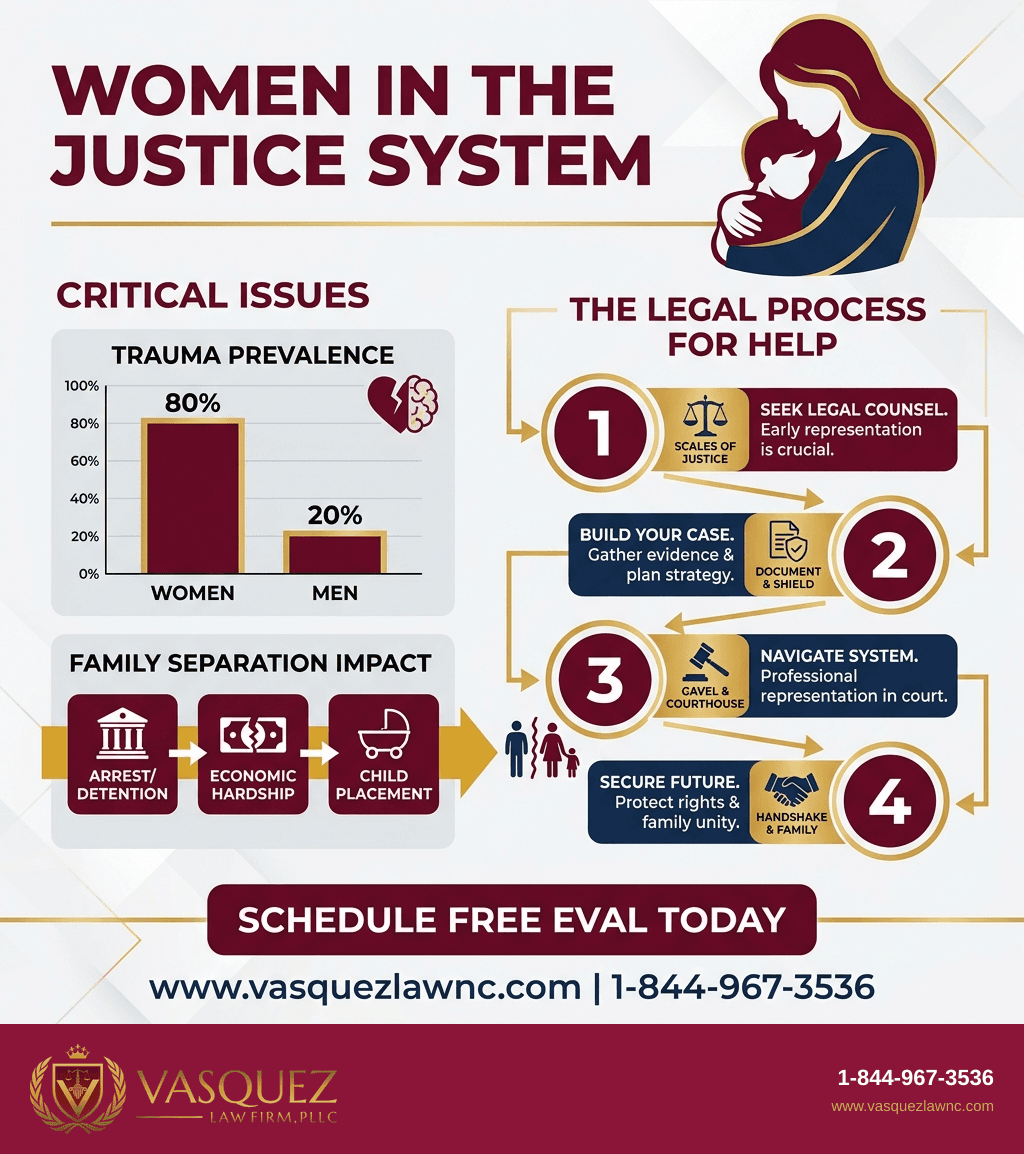
Women in the criminal justice system often face unique personal challenges such as histories of trauma, domestic violence, and mental health issues. Facilities and programs may not be designed to address these needs adequately, leading to disparities in treatment. Understanding how women are treated in Smithfield and North Carolina’s criminal justice system helps tailor defense and support strategies.
Challenges Women Face in Criminal Justice
Gender bias affects many stages of the criminal justice process for women. Judges and law enforcement may carry stereotypes about women’s roles and behavior, which influence bail decisions, sentencing, and corrections placement. Women are more likely to be jailed pretrial because they are perceived as flight risks or lacking community ties, despite evidence that men are more likely to abscond.
Incarceration conditions are another challenge. Many facilities are designed primarily with men in mind, resulting in limited access to healthcare, pregnancy accommodations, or parenting resources for women inmates. Issues such as sexual abuse or harassment also disproportionately affect women behind bars. These conditions make legal representation crucial to protect women’s statutory and constitutional rights.
Additionally, women frequently face collateral consequences such as loss of child custody or housing instability after criminal proceedings. Legal defense can advocate for alternatives to incarceration including diversion or community-based treatment programs especially in Smithfield’s Johnston County, improving outcomes.
Step-by-Step: What Justice Involved Women Should Do
- Remain Silent and Request an Attorney: Do not answer police questions or provide statements without your lawyer present. This protects against self-incrimination.
- Know Your Rights at Arrest: You have the right to know charges, to medical care, and to contact family and an attorney. Insist on gender-appropriate treatment during detention.
- Attend All Court Dates: Missing hearings can lead to warrants and harsher outcomes. Mark your calendar and arrange transportation.
- Gather Evidence: Collect any documentation supporting your defense such as medical records, witness contacts, and character references.
- Engage a Skilled Criminal Defense Attorney: Find a lawyer experienced with justice involved women in NC. Personalized legal guidance is key.
- Explore Alternatives to Incarceration: Ask your attorney about diversion programs, probation, or treatment options tailored to women.
- Access Support Services: Seek counseling, parenting support, or addiction treatment early to strengthen your case and future stability.
Common Mistakes by Women in Criminal Cases
- Talking to Police Without a Lawyer: This can lead to inadvertent self-incrimination. Always request your attorney first.
- Missing Court Appearances: Absences result in bench warrants and tougher bail conditions.
- Ignoring Bail Options: Failure to pursue reasonable bail can lead to unnecessary pretrial detention.
- Underestimating the Importance of Evidence: Overlooking witnesses or documents weakens defenses.
- Not Reporting Mistreatment in Detention: Women should report abuse or rights violations for attorney intervention.
- Accepting Plea Deals Without Advice: Such deals may carry long-term consequences. Consult your lawyer first.
- Failing to Ask for Gender-Responsive Programs: Advocating for specialized programs can improve outcomes.
If you only remember one thing: Early legal help is essential to avoid these pitfalls and protect your rights as a woman in the justice system.
Timeline and What to Expect in NC Courts
- Arrest and Booking (Day 1): Women are processed, fingerprinted, and informed of charges, often in jail facilities located near Smithfield or Johnston County.
- Initial Appearance (Within 48 Hours): The defendant appears before a judge to hear charges and discuss bail conditions; gender-specific considerations may apply.
- Bail Hearing (Within a Week): Bail is set or denied based on risk assessments and personal circumstances, including family responsibilities.
- Pretrial Period (Weeks to Months): Discovery and motions occur. Defense attorneys negotiate for diversion or case dismissal when possible.
- Plea Negotiations or Trial: Many cases resolve in plea bargains, but a judge or jury trial can occur if negotiations fail.
- Sentencing: Judges consider personal history and gender-related factors, but bias remains a concern.
- Post-Conviction: Opportunities for appeal, reentry, or alternative sentencing programs are critical steps to monitor closely.
How Vasquez Law Firm Can Help You
At Vasquez Law Firm, we combine compassion with aggressive representation. Our motto "Yo Peleo®" reflects our commitment to standing up for your rights. Our criminal defense attorneys understand the unique challenges faced by justice involved women in Smithfield and Johnston County. We provide bilingual support in English and Spanish to help you navigate the criminal justice system confidently.
- Bilingual Support: Se Habla Español — Spanish-speaking attorneys and staff available
- Service Areas: North Carolina, including Smithfield and surrounding Johnston County communities
- Experience: Over 15 years defending clients in criminal cases, with specialized knowledge in issues affecting women
- Results: Thousands of cases handled with a focus on protecting clients’ rights and exploring alternatives to incarceration
Attorney Trust and Experience
Attorney Vasquez, JD, admitted to the North Carolina State Bar, has extensive courtroom experience defending women facing criminal charges. Our team’s tactical approach and personalized service help clients overcome the hurdles of the justice system in Smithfield. We stay current on changes in state and federal criminal law to provide cutting-edge defense strategies.
Don't wait to get the help you deserve. Call us now for immediate assistance. Se Habla Español.
Frequently Asked Questions
How are women treated differently in the criminal justice system?
Women face gender biases impacting sentencing, incarceration conditions, and access to programs. They often receive incarceration for nonviolent offenses and may struggle with inadequate support for trauma or family needs. Specialized legal defense can counterbalance these challenges.
What are the most common offenses that lead to women’s incarceration?
Drug-related offenses, theft, and property crimes dominate female incarceration in North Carolina. Violent crimes among women are less common, which influences defense and sentencing approaches.
What rights do women have when arrested in Smithfield, NC?
Women retain rights to silence, legal counsel, dignity, healthcare, and contact with family. Courts and law enforcement must honor these rights during processing and detention.
How does gender bias impact sentencing in criminal cases involving women?
Sentencing may be harsher or lighter depending on stereotypes. Bias can affect opportunities for alternatives or probation, underscoring the value of informed legal representation.
What support programs exist for women incarcerated in North Carolina?
Programs focus on substance abuse, mental health, education, and parenting. Still, resources are limited, making legal advocacy for community alternatives important.
How can a criminal defense attorney help women in the justice system?
Attorneys protect rights, explore alternatives, negotiate bail, and ensure gender-specific needs are addressed. This support improves outcomes and reduces collateral harm.
What are common mistakes women make after arrest in Smithfield?
Talking to police without counsel, missing hearings, and ignoring bail options are frequent errors. Avoiding these with proper guidance preserves legal options.
How is the criminal justice system evolving for women in 2026?
Reforms aim to reduce female incarceration, expand gender-responsive programs, and address trauma. Courts view women's cases with increasing awareness, but challenges remain.
Sources and References
Take the first step toward justice today. Our team is standing by to help. Se Habla Español.
Start Your Free Evaluation Now
Call us: 1-844-967-3536
Se Habla Español - Estamos aquí para ayudarle.
If you need legal assistance, learn more about our criminal defense law practice, or call us at 1-844-967-3536 for a free evaluation.


William Vasquez
Founder & CEO, Vasquez Law Firm, PLLC
William Vasquez is the founder and CEO of Vasquez Law Firm, PLLC, a results-driven firm specializing in immigration, criminal defense, personal injury, and workers' compensation. A U.S. Air Force veteran and recipient of the Joint Service Achievement Medal, William is dedicated to fiercely fighting for his clients' rights.
Related Legal Services
Need legal help? Learn more about our criminal defense law practice, or contact us for a free evaluation.
You can also visit North Carolina criminal defense firm for more information.