What Does ICE Do to Immigrants? Answers for Raleigh in 2026
Wondering what ICE does to immigrants in Raleigh? Learn about ICE immigration status, rights, and how to get help. Free evaluation at Vasquez Law.
Published on April 20, 2026
Talk to an immigration attorney
Free call. A clear plan for your case.
Free & confidential · Se habla espanol · 24/7

Have questions? Talk to an attorney - free evaluation.
Call 1-844-967-3536Worried how the latest immigration news affects you?
Schedule a confidential case review with an immigration attorney - know exactly where you stand.
What Does ICE Do to Immigrants? Answers for Raleigh in 2026
Understanding ICE, or Immigration and Customs Enforcement, is crucial for immigrants in Raleigh and beyond as of 2026. ICE enforces immigration laws affecting status, detention, and deportation. This article explains what ICE does to immigrants, your rights, and how Vasquez Law Firm supports you through immigration challenges. Whether you are a Dreamer or seeking relief, knowing how ICE operates helps you protect your future in North Carolina and Florida.
Need help with your case? Our experienced attorneys are ready to fight for you. Se Habla Español.
Or call us now: 1-844-967-3536
Quick Answer
ICE enforces federal immigration laws by detaining and deporting unauthorized immigrants. In Raleigh, as of 2026, ICE actions can affect your immigration status and result in detention or removal proceedings. Know your rights and seek experienced legal help to protect your case.
- ICE handles immigration enforcement and removal
- They issue ICE numbers for tracking individuals in custody
- Potential risks include detention and deportation
- Legal rights protect you during ICE encounters
- Experienced attorneys can defend your status
Understanding ICE and Its Role
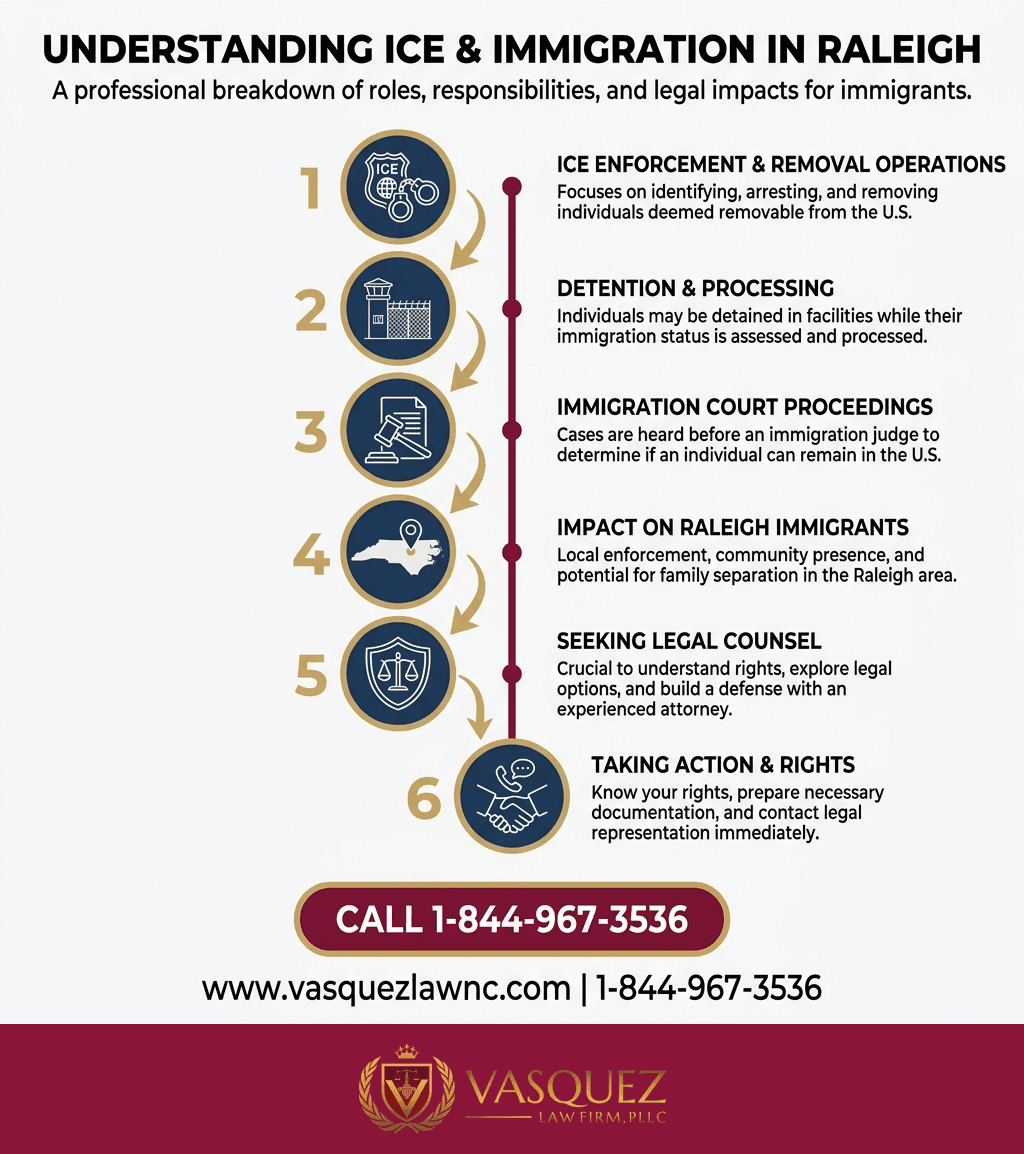
Imagine living in Raleigh and hearing a knock at your door. It’s an ICE officer. ICE stands for Immigration and Customs Enforcement. It is a federal agency created in 2003 under the Department of Homeland Security. Its primary job is to enforce immigration laws inside the U.S. and investigate crimes related to immigration and customs.
ICE is responsible for detaining individuals suspected of being in the country without proper authorization and initiating removal (deportation) proceedings. It also investigates labor violations, human trafficking, and immigration fraud. Knowing its powerful role is key to understanding how ICE affects immigrants' lives.
Because ICE operates nationwide, including Raleigh and throughout North Carolina and Florida, its policies and priorities can vary with each administration. Understanding ICE’s authority can help you prepare and respond effectively.
Learn more about our immigration legal services to help protect your rights against ICE enforcement.
ICE's role also extends to collaborating with other federal agencies to ensure border security and combat transnational crime. This means ICE may be involved in joint operations addressing smuggling networks or drug trafficking that affect immigrant communities. For immigrants in Raleigh, this broad mandate can sometimes result in increased ICE activity, including workplace raids or community-based enforcement actions.
In addition to enforcement, ICE runs programs aimed at improving immigration compliance and public safety, such as alternatives to detention and community outreach initiatives. These programs sometimes provide immigrants with options to remain in their communities while their cases are adjudicated, reducing the hardship of detention. Understanding these programs can help immigrants navigate ICE interactions more effectively.
Lastly, ICE's authority includes the ability to issue civil penalties and fines for immigration-related violations. This can impact employers who hire undocumented workers, as well as individuals who may be subject to certain penalties for immigration infractions. Knowing these facets of ICE’s responsibilities helps immigrants and their families anticipate potential challenges and seek legal guidance proactively.
Key Responsibilities of ICE
- Investigating immigration violations
- Detaining unauthorized immigrants
- Coordinating removal proceedings in immigration courts
- Working with local law enforcement under certain programs
Beyond these core duties, ICE is also involved in safeguarding national security by identifying and removing individuals who pose threats, including those with criminal records or suspected ties to terrorism. This focus means that ICE's enforcement priorities may sometimes target specific populations based on risk assessments.
ICE also manages the enforcement of immigration laws at workplaces through its Homeland Security Investigations (HSI) division. This includes investigating employers suspected of hiring unauthorized workers, conducting audits, and combating human trafficking within labor sectors. Such enforcement actions can have ripple effects on immigrant families in Raleigh and beyond.
Moreover, ICE plays a role in immigrant detention facility management, overseeing contracts with private detention centers and ensuring compliance with federal standards. The conditions and policies related to detention facilities are frequently scrutinized, impacting the experience of detained immigrants and their legal representation.
ICE Police and Enforcement Agents
ICE agents have the authority to arrest individuals with immigration violations. They conduct workplace raids, home visits, and checkpoint operations. ICE police operate to enforce immigration laws proactively but must adhere to legal guidelines regarding detention, warrants, and notice.
To learn about who can help you when ICE contacts you, meet Attorney Vasquez. With 30 years of experience, he defends immigrant rights effectively.
ICE enforcement agents often work in plain clothes and may conduct operations without prior notice to maximize effectiveness. For example, workplace raids targeting unauthorized employment can occur early in the morning to prevent suspects from escaping. These sudden operations highlight the importance of knowing your rights before an encounter.
ICE agents are also trained to identify fraudulent documents and immigration violations during routine traffic stops or detention checks. If stopped, an individual may be questioned about their immigration status. It is critical to understand that you are not obligated to answer questions without an attorney present, and you should exercise your right to remain silent.
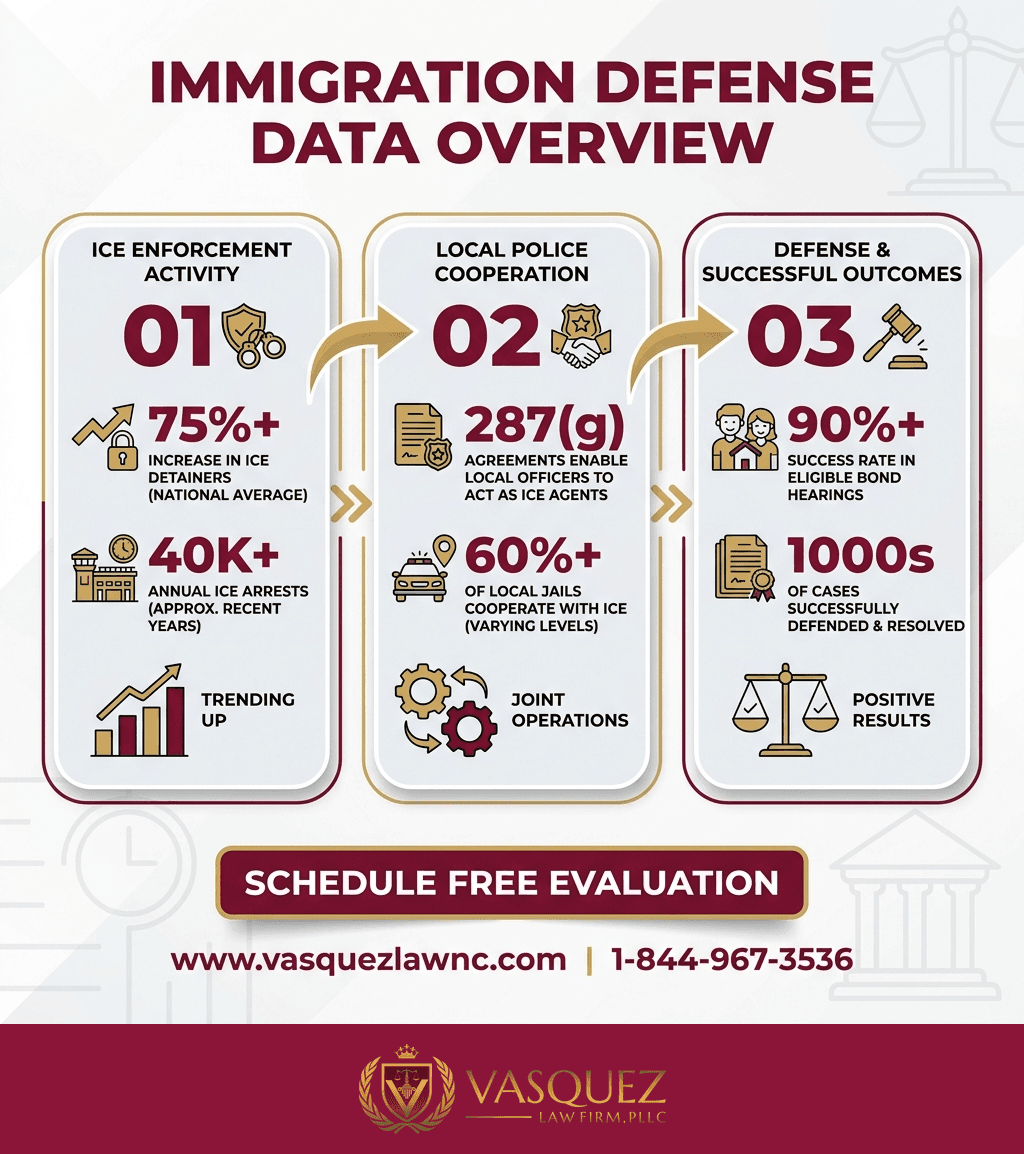
Additionally, ICE agents may collaborate with local law enforcement under programs such as 287(g), which deputizes selected local officers to enforce immigration laws. This cooperation can increase the likelihood of immigration enforcement encounters in communities. Legal guidance helps immigrants understand how these partnerships might affect them.
How ICE Affects Your Immigration Status
In 2026, ICE's role heavily impacts your immigration status in Raleigh or Florida. If ICE identifies you as unauthorized or with deportable grounds, they may detain you and begin removal proceedings through immigration courts. Your immigration status—including lawful presence—can be affected by ICE arrests or investigations.
Immigrants with pending applications for relief, such as DACA, asylum, or family petitions, face uncertainty if ICE intervenes. That's why timely legal representation is critical. Your case must be presented clearly before the Executive Office for Immigration Review, which manages immigration court hearings.
Understanding your ICE immigration status means recognizing your current standing in the eyes of immigration authorities. ICE may issue a Notice to Appear (NTA) to initiate proceedings. You must respond promptly to avoid removal by default.
We recommend contacting Vasquez Law Firm immediately if you are involved with ICE to clarify your status and pursue protections.
ICE's impact on immigration status extends beyond detention and removal. For example, ICE holds the authority to issue administrative orders affecting an immigrant’s ability to work legally or access certain public benefits. Immigrants who are detained may also face challenges in renewing visas or adjustment of status applications due to ongoing enforcement actions.
Furthermore, ICE detention can disrupt family unity and employment, especially for those with long-term community ties. For many, detention leads to prolonged separation from family members, loss of income, and emotional strain. Legal advocacy can help mitigate these effects by seeking bond hearings or alternative release programs.
Additionally, ICE may place some immigrants into expedited removal proceedings, which limit their ability to present defenses and challenge deportation. Understanding whether you qualify for relief or protections such as withholding of removal or cancellation of removal is essential to navigating ICE's impact on your status.
ICE Number and What It Means
When detained, ICE assigns a unique ICE number to track your case. This number appears on detention documents and notices. It is essential to provide this number to your attorney for record searches and updates.
The ICE number serves as a crucial identifier in all communications with immigration authorities. It allows lawyers and family members to locate your detention facility, monitor court dates, and obtain case updates. Without this number, tracking your case becomes much more difficult.
For example, if an immigrant is transferred between detention centers, the ICE number remains constant, ensuring continuity in legal proceedings. Attorneys can use the number to file motions, request hearings, and submit evidence on your behalf.
ICE Jobs and Recent Changes
ICE jobs include enforcement officer positions. Recent news covers staffing changes, policy updates, and shifting priorities. Knowing ICE’s changes in hiring or enforcement can inform your legal strategy.
In 2026, ICE has seen fluctuations in hiring due to federal budget allocations and shifting enforcement priorities. For instance, some administrations emphasize border security while others prioritize interior enforcement of serious criminal cases. Staying informed about these trends helps immigrants anticipate potential risks in their communities.
Additionally, ICE has expanded its use of technology for immigration enforcement, including advanced databases and biometric tracking. This modernization means ICE can identify and locate unauthorized immigrants more efficiently, increasing the importance of legal preparedness.
ICE also updates its policies regarding detainee treatment and alternatives to detention programs. For example, recent initiatives may allow eligible detainees to participate in community supervision instead of remaining in detention. Understanding these developments helps immigrants and families explore all available options.
Step-by-Step: What to Do if Contacted by ICE
- Remain calm and do not panic. ICE encounters are stressful, but staying composed is crucial.
- Ask for identification and ICE number. Verify the officer’s identity and ask for deportation papers.
- Know your rights. You have the right to remain silent and the right to an attorney.
- Do not sign documents without advice. Signing may waive important rights.
- Contact an immigration lawyer immediately. Expert legal help can improve your chances of relief.
- Document the encounter. Write down names, badge numbers, and details for your attorney.
- If detained, request a hearing. You have the right to appear before an immigration judge.
This step-by-step approach helps safeguard your rights and prepare your defense if ICE contacts you in Raleigh or Florida. Our free case evaluation can guide you through these steps.
In practical scenarios, if ICE visits your home without a warrant, you are not legally required to open the door. Politely ask them to slide any documents under the door or step outside to present a warrant. This protects your right against unlawful entry.
If ICE stops you on the street or at work, calmly ask if you are free to leave. If not, remember you do not have to answer questions or show documents without legal counsel present. Keeping your composure and following these steps can prevent self-incrimination or unintended admissions.
Finally, if detained, always ask for a bond hearing if eligible. Bond hearings provide an opportunity to be released while your case proceeds, reducing the hardship of detention. Your attorney can prepare evidence of your community ties and character to support your case.
ICE Detaining a U.S. Citizen?
If you believe a U.S. citizen was mistakenly detained, an attorney can help challenge the detention immediately to protect citizen rights.
Such mistaken detentions may occur due to clerical errors, misidentification, or failure to verify citizenship documents. If you or a loved one is wrongly detained, prompt legal intervention is critical to securing release and preventing wrongful deportation.
For example, providing birth certificates, passports, or other proof of citizenship to an experienced immigration lawyer can help clarify status quickly. Legal counsel can file writs of habeas corpus or other motions to challenge unlawful detention and expedite release.
Common Mistakes to Avoid with ICE
- Ignoring ICE notices. Always respond to demands to avoid deportation by default.
- Talking without a lawyer. Statements can be used against you.
- Signing waivers or voluntary departure forms hastily. Consult a lawyer first.
- Not keeping contact information updated with immigration courts. Missing hearings can lead to removal orders.
- Failing to seek legal help promptly. Early representation can prevent detention or deportation.
- Trying to hide or refuse interaction with ICE entirely. This may escalate enforcement actions.
If you only remember one thing: Contact an attorney immediately if ICE is involved to protect your rights and immigration status.
For example, some immigrants ignore Notices to Appear (NTAs) due to fear or misunderstanding, but this can lead to removal orders issued in absentia. Responding timely and seeking legal help ensures your case can be heard and defenses presented.
Another common mistake is voluntarily agreeing to deportation or voluntary departure without understanding the consequences. Doing so can bar future re-entry or relief. Legal advice can help weigh options carefully.
Moreover, failing to update your address with immigration courts or ICE can result in missed court dates and automatic removal orders. Keeping your contact information current is a simple yet essential step to avoid adverse outcomes.
Frequently Asked Questions
What does ICE stand for?
ICE means Immigration and Customs Enforcement. It is the U.S. government agency enforcing immigration laws and investigating immigration-related crimes nationwide. ICE operates under the Department of Homeland Security and focuses on interior enforcement through detention and removal of unauthorized immigrants, as well as combating criminal activities such as human trafficking and immigration fraud.
How does ICE know if someone is undocumented?
ICE uses information from local law enforcement, border patrol, employer reports, and databases to identify unauthorized immigrants. They conduct investigations and site visits to confirm status. Additionally, ICE may use biometric data, social media monitoring, and tips from the public. This multi-source information helps ICE identify individuals who may be subject to enforcement.
Can a U.S. citizen be detained by ICE?
Mistaken detentions of U.S. citizens by ICE have occurred but are rare. Citizens detained can challenge their detention through legal processes with an attorney. Proof of citizenship, such as a birth certificate or passport, is crucial to resolving these issues quickly. If you or someone you know is wrongly detained, seek legal help immediately to protect your rights and ensure prompt release.
What is an ICE number?
An ICE number is a unique identifier assigned when someone is detained by ICE. It is essential for managing your detention case and must be provided to your lawyer. This number helps track your location, court dates, and case status. Without it, legal representation and communication with ICE can be complicated, so always keep it handy.
What rights do I have if ICE detains me?
You have the right to remain silent, the right to an attorney, and the right to a hearing before an immigration judge. Don't sign documents without lawyer advice. You can also request bond hearings and challenge your detention. Knowing these rights and exercising them can protect your case and prevent self-incrimination during ICE encounters.
What is DACA and how does ICE treat Dreamers?
DACA protects eligible Dreamers from deportation and allows work permits. ICE enforcement generally excludes DACA recipients, but status must be maintained with legal help. Renewals are necessary every two years, and any criminal or immigration violations can affect eligibility. Dreamers should consult attorneys regularly to navigate changing policies and safeguard their protections.
Can I sue ICE for wrongful detention?
Suing ICE for wrongful detention is complex but possible with strong evidence and legal counsel specializing in immigration and civil rights. Successful claims often require proving ICE acted unlawfully or violated constitutional rights. If you believe your detention was unjust, consult an attorney promptly to evaluate your case and explore available legal remedies.
What should I do if ICE shows up at my home?
Do not open the door unless ICE presents a valid warrant. Ask to see documents, remain silent, and contact your attorney immediately. If ICE lacks a warrant, you have the right to refuse entry. Always remain calm, do not consent to searches, and document the encounter. Legal advice is critical to protect your rights during home visits.
Sources and References
- U.S. Citizenship and Immigration Services (USCIS)
- Executive Office for Immigration Review
- Legal Information Institute
About Vasquez Law Firm
At Vasquez Law Firm, we combine compassion with aggressive representation. Our motto "Yo Peleo" (I Fight) reflects our commitment to standing up for your rights.
- Bilingual Support: Se Habla Español - our team is fully bilingual
- Service Areas: North Carolina, Florida, and nationwide immigration services
- Experience: Over 30 years helping clients navigate complex legal matters
- Results: Thousands of successful cases across multiple practice areas
Attorney Trust and Experience
Attorney Vasquez holds a Juris Doctor degree and is admitted to practice in both the North Carolina State Bar and Florida Bar. With over 30 years of dedicated legal experience, he has built a reputation for providing personalized attention and achieving favorable outcomes for his clients.
His extensive experience includes defending immigrants facing removal, securing asylum, obtaining DACA status, and navigating complex criminal-immigration matters. Attorney Vasquez understands the emotional and legal challenges immigrants face and works tirelessly to protect their rights.
Clients benefit from his thorough case analysis, strategic planning, and compassionate communication. Whether dealing with ICE enforcement or other immigration concerns, Attorney Vasquez’s proven track record makes him a trusted advocate in Raleigh, Florida, and beyond.
Don't wait to get the help you deserve. Call us now for immediate assistance.
Se Habla Español
When to Call a Lawyer Now
- ICE contacts you at home or work
- You receive an ICE Notice to Appear
- Detained by ICE under any circumstance
- Facing possible removal proceedings
- Concerned about your immigration status stability
- You are a Dreamer with a DACA renewal approaching
- If arrested or questioned about immigration
- Facing criminal charges with immigration consequences
Acting quickly can make a significant difference in your immigration case. For example, responding promptly to a Notice to Appear or arrest can prevent removal orders issued in your absence. Early legal intervention often results in favorable outcomes, including bond, relief from removal, or lawful status adjustment.
Even if ICE has not contacted you yet, consulting a lawyer before applying for benefits or traveling can prevent future complications. An experienced attorney guides you in maintaining lawful status and preparing for potential ICE encounters.
Take the first step toward justice today. Our team is standing by to help.
Start Your Free Evaluation Now
Call us: 1-844-967-3536
Se Habla Español - Estamos aquí para ayudarle.


William Vasquez
Founder & CEO, Vasquez Law Firm, PLLC
William Vasquez is the founder and CEO of Vasquez Law Firm, PLLC, a results-driven firm specializing in immigration, criminal defense, personal injury, and workers' compensation. A U.S. Air Force veteran and recipient of the Joint Service Achievement Medal, William is dedicated to fiercely fighting for his clients' rights.
Related Legal Services
Need legal help? Learn more about our immigration law practice, or contact us for a free evaluation.
You can also visit North Carolina immigration lawyers for more information.