How USCIS Electronic Filing Rule Works in 2026
The USCIS electronic filing rule requires immigration forms to be submitted online starting August 11, 2026. This change improves national security and speeds processing for applicants in North Carolina. Learn how the rule works, who it affects, and what steps to take to comply.
Published on August 10, 2026· Updated September 9, 2026
Talk to an immigration attorney
Free call. A clear plan for your case.
Free & confidential · Se habla espanol · 24/7
Have questions? Talk to an attorney - free evaluation.
Call 1-844-967-3536Free Tool
Check Your USCIS Case Status Now
Enter your receipt number - get the official USCIS status in English or Spanish. No registration.
This article gives general legal information. It is not personalized legal advice. Reading it does not create a lawyer-client relationship. For advice about your own case, contact Vasquez Law Firm.
What changed with USCIS electronic filing requirements in 2026?
Need legal help?
Immigration in NC and FL. Personal injury and workers compensation across NC. Criminal defense in Johnston, Harnett, Pitt and Cumberland counties, and traffic tickets in 11 NC counties. Tell us your county and we will tell you exactly what we can do.
Starting August 11, 2026, USCIS requires electronic filing (e-filing) for immigration forms that have been available for e-filing for at least 180 days. This rule means many immigration benefit requests must be submitted online. The goal is to improve national security, reduce mistakes, and speed up processing.
On August 10, 2026, the Department of Homeland Security (DHS) issued an interim final rule (IFR). An interim final rule is a temporary rule that becomes effective immediately but can be changed later. This rule lets USCIS require e-filing for immigration forms. It says that once a form has been available for e-filing for 180 days, USCIS may require online filing. The agency will give at least 60 days' notice on its website before requiring e-filing for any form.
This change ends the use of physical lockbox services run by the U.S. Department of the Treasury. It also moves fee payments online. This shift aims to save money and make government work better.
Electronic filing also helps detect fraud, manage identity, and improve national security checks. It does this by allowing faster access to data and better analysis. The decision-making process becomes more secure, clear, and efficient. There are fewer incomplete or wrong submissions.
Importantly, applicants who cannot file electronically may ask for a waiver for undue hardship. A waiver is official permission to not follow a rule because of a serious problem. USCIS will decide if the waiver is allowed. This rule is not a new process but expands e-filing to more forms.
"USCIS may require future filings of any immigration form that has been available for e-filing for at least 180 days to be submitted online. USCIS will notify the public on its website at least 60 days before requiring e-filing of a form." (Source: DHS, https://www.uscis.gov/newsroom/alerts/uscis-to-require-electronic-filing-of-forms-strengthening-national-security)
Who is affected by the USCIS electronic filing mandate in North Carolina?
The electronic filing mandate affects all applicants and petitioners submitting immigration forms to USCIS who live in North Carolina. This includes people applying for adjustment of status, work authorization, or visas. Adjustment of status means changing from a visitor or other status to permanent resident. This includes people filing forms covered by the interim final rule who can use USCIS’s online filing system.
In North Carolina, thousands of immigrants and visa applicants interact with USCIS every year. For example, people applying for adjustment of status under 8 U.S.C. § 1255 and employment authorization under 8 CFR § 274a.12 will now usually have to file electronically once their forms have been e-filing eligible for 180 days.
This mandate affects family-based immigrants, employment-based visa holders, asylum seekers, and other groups who file USCIS forms. Applicants who do not have internet access or have disabilities may ask for waivers for undue hardship. These waivers are granted at USCIS’s choice.
Our Raleigh, NC office helps many clients who now must submit forms online. This change means applicants must create and manage USCIS online accounts, upload supporting documents digitally, and pay fees electronically.
The move to mandatory e-filing aims to reduce delays common with paper submissions and improve data accuracy. This helps applicants in North Carolina by shortening wait times and reducing mistakes.
What does the law say about USCIS electronic filing requirements?
The authority for USCIS to require electronic filing comes from the Department of Homeland Security’s interim final rule issued August 10, 2026. This rule changes USCIS regulations to allow mandatory e-filing for forms that have been available electronically for at least 180 days.
While the Immigration and Nationality Act (INA) and related laws such as 8 U.S.C. § 1255 set rules for who can get immigration benefits and how, the DHS rule focuses on how forms must be submitted. It does not change who is eligible.
The IFR says:
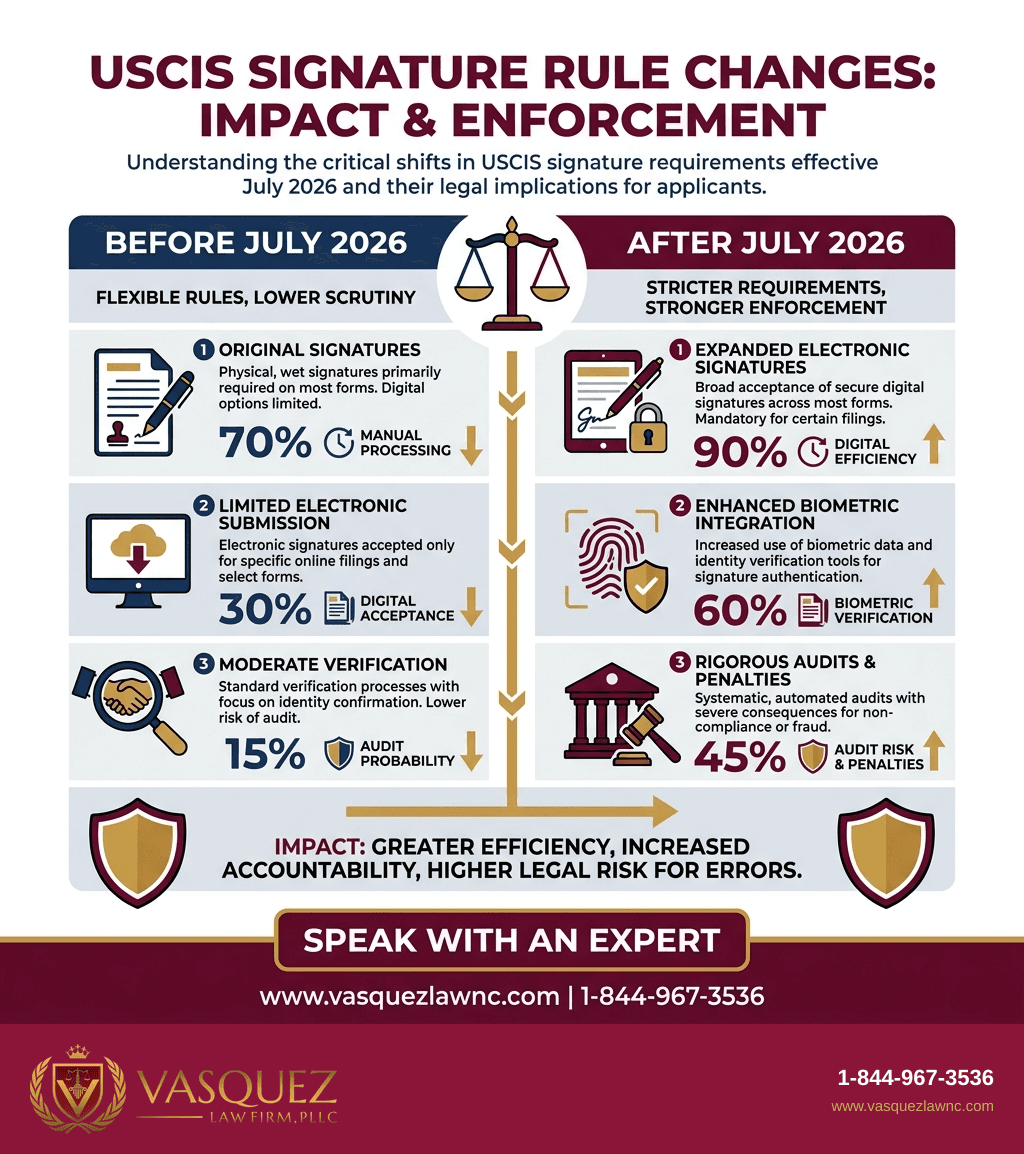
"Filers must use an online account to submit an immigration form to USCIS, either by completing the form online or by uploading a PDF of the completed form and related evidence." (Source: DHS, https://www.uscis.gov/newsroom/alerts/uscis-to-require-electronic-filing-of-forms-strengthening-national-security)
This rule does not change the rules for getting benefits. It updates the filing process to improve security and efficiency. It also confirms that USCIS can give waivers for undue hardship, allowing some flexibility.
Before this rule, USCIS allowed but did not require electronic filing for many forms. The IFR makes e-filing mandatory to simplify operations and improve national security checks.
Applicants should know that if they do not follow e-filing rules once they start, USCIS may reject their applications or petitions unless they get a waiver.
What should I do to comply with USCIS electronic filing requirements?
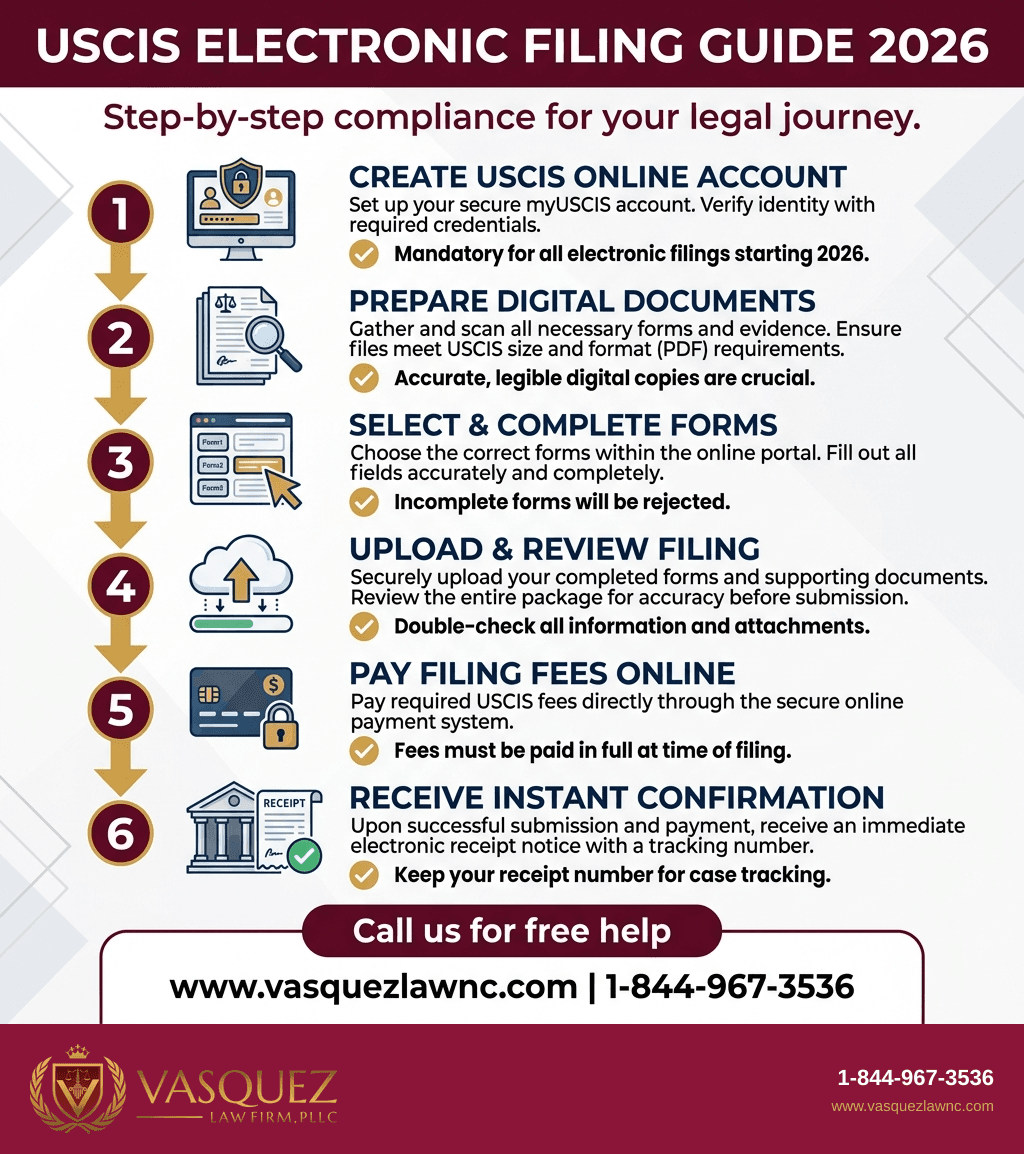
To follow the USCIS electronic filing rule, applicants in North Carolina should create a USCIS online account if they do not have one. This account lets you fill out forms, upload documents, and pay fees online.
Applicants must watch the USCIS website for news about which forms will require e-filing. USCIS will give at least 60 days’ notice before enforcing the rule.
Key steps to take include:
- Create and verify a USCIS online account.
- Make digital copies of all needed supporting documents in PDF format.
- Fill out forms online or upload completed PDFs as instructed.
- Pay all filing fees online through the USCIS payment system.
- If you cannot file electronically because of hardship, send a waiver request with proof of undue hardship.
At our Raleigh, NC office, we often see clients who are new to the USCIS online system struggle at first with document formatting and account setup. We suggest preparing early to avoid last-minute problems.
Below is a table showing key deadlines and requirements for compliance:
| Requirement | Detail |
|---|---|
| Effective Date | August 11, 2026 |
| Mandatory E-Filing Eligibility | Forms available for e-filing for at least 180 days |
| Notice Period | At least 60 days' advance notice on USCIS website |
| Filing Method | Online form completion or PDF upload via USCIS account |
| Waiver | Available for undue hardship, granted at USCIS discretion |
Applicants should also read the USCIS Policy Manual and official instructions for specific form e-filing steps. Talking with an immigration lawyer can help avoid mistakes that cause delays or denials.
For people living in Raleigh, NC and Orlando, FL (where our Florida office is), we suggest starting e-filing early to make sure submissions go smoothly and get processed faster.
What happens next with USCIS electronic filing policy?
The interim final rule is effective immediately as of August 11, 2026. But DHS will accept public comments until October 13, 2026. USCIS may change how it implements the rule based on feedback.
USCIS will keep adding more forms that must be filed electronically. It will tell the public on its website at least 60 days before adding each new form.
This step-by-step approach lets applicants and lawyers adjust slowly while USCIS improves its electronic systems and security.
USCIS expects that e-filing will cut processing times, improve data accuracy, and strengthen fraud detection. This supports national security goals.
What's Your Immigration Situation?
Answer 3 questions - we'll tell you your options
Question 1 / 3
What best describes your situation?
Keep Reading
"The adjudication process becomes more secure, more transparent, and more efficient. Electronic filing is already common for many USCIS forms. This is not a new process for aliens to file electronic benefit requests." (Source: DHS, https://www.uscis.gov/newsroom/alerts/uscis-to-require-electronic-filing-of-forms-strengthening-national-security)
Applicants should stay updated by checking the USCIS website often. They should also talk with immigration lawyers to understand ongoing changes and rules.
People who cannot file electronically should apply for waivers quickly to avoid rejection of their forms.
Frequently Asked Questions about USCIS Electronic Filing?
What forms are required to be filed electronically by USCIS?
USCIS requires electronic filing for any form that has been available for e-filing for at least 180 days. The agency will announce on its website which forms must be filed electronically at least 60 days before the rule starts.
Can I request an exemption from electronic filing?
Yes, applicants who face undue hardship in filing electronically may ask for a waiver. USCIS grants waivers based on proof of hardship and at its choice.
How do I create a USCIS online account?
You can create a USCIS online account at the official USCIS website. The account lets you fill out forms, upload documents, and pay fees online.
What if I submit a paper form after the electronic filing requirement starts?
Paper forms sent after mandatory e-filing starts may be rejected unless you have a waiver for undue hardship. It is important to follow the e-filing rule.
Does electronic filing affect the eligibility criteria for immigration benefits?
No, electronic filing only changes how you submit forms. Eligibility rules stay the same under current immigration laws and regulations.
This article gives general legal information. It is not personalized legal advice. Reading it does not create a lawyer-client relationship. For advice about your own case, contact Vasquez Law Firm.
Reviewed by William Vasquez, Founder & CEO, Vasquez Law Firm, PLLC.
If you need legal help, learn more about speak with an immigration lawyer, or call us at 1-844-967-3536 for a free evaluation.
Related Topics

William Vasquez
Founder & CEO, Vasquez Law Firm, PLLC
William Vasquez is the founder and CEO of Vasquez Law Firm, PLLC, a results-driven firm specializing in immigration, criminal defense, personal injury, and workers' compensation. A U.S. Air Force veteran and recipient of the Joint Service Achievement Medal, William is dedicated to fiercely fighting for his clients' rights.
Related Legal Services
Need legal help? Learn more about speak with an immigration lawyer, or contact us for a free evaluation.
You can also visit our NC immigration team for more information.