What You Should Know About U.S. Citizenship Claims in 2026
Learn how U.S. citizenship claims affect your status in 2026. Understand key steps, risks, and protections. Contact Vasquez Law for a free consultation.
Published on May 25, 2026
Talk to an immigration attorney
Free call. A clear plan for your case.
Free & confidential · Se habla espanol · 24/7
Have questions? Talk to an attorney - free evaluation.
Call 1-844-967-3536Free Tool
Check Your USCIS Case Status Now
Enter your receipt number - get the official USCIS status in English or Spanish. No registration.
What You Should Know About U.S. Citizenship Claims in 2026
U.S. citizenship claims can impact your immigration status significantly, especially if there is a question of false claims. In 2026, it is critical to understand the legal framework governing citizenship claims, the potential consequences of false declarations, and the protections available. Whether you are in Orlando, NC, or elsewhere in the United States, knowing what steps to take and what to avoid can safeguard your future.
Need help with your case? Our experienced attorneys are ready to fight for you. Se Habla Español.
Or call us now: 1-844-967-3536
Quick Answer
U.S. citizenship claims involve declaring or proving you are a U.S. citizen. False claims can lead to deportation or denial of benefits. Knowing legal standards and steps can protect you.
- False claims may be criminal
- Waivers are limited and complex
- Citizenship claims affect immigration status
- Legal help is critical in citizenship disputes
- Federal laws govern claims nationwide
Understanding U.S. Citizenship Claims
Imagine a lawful permanent resident applying for a job and mistakenly or deliberately stating they are a U.S. citizen. This can lead to serious legal consequences. In 2026, U.S. citizenship claims refer to any assertion — verbal or written — that an individual is a U.S. citizen. It could be for gaining employment, welfare benefits, or other privileges restricted to citizens.
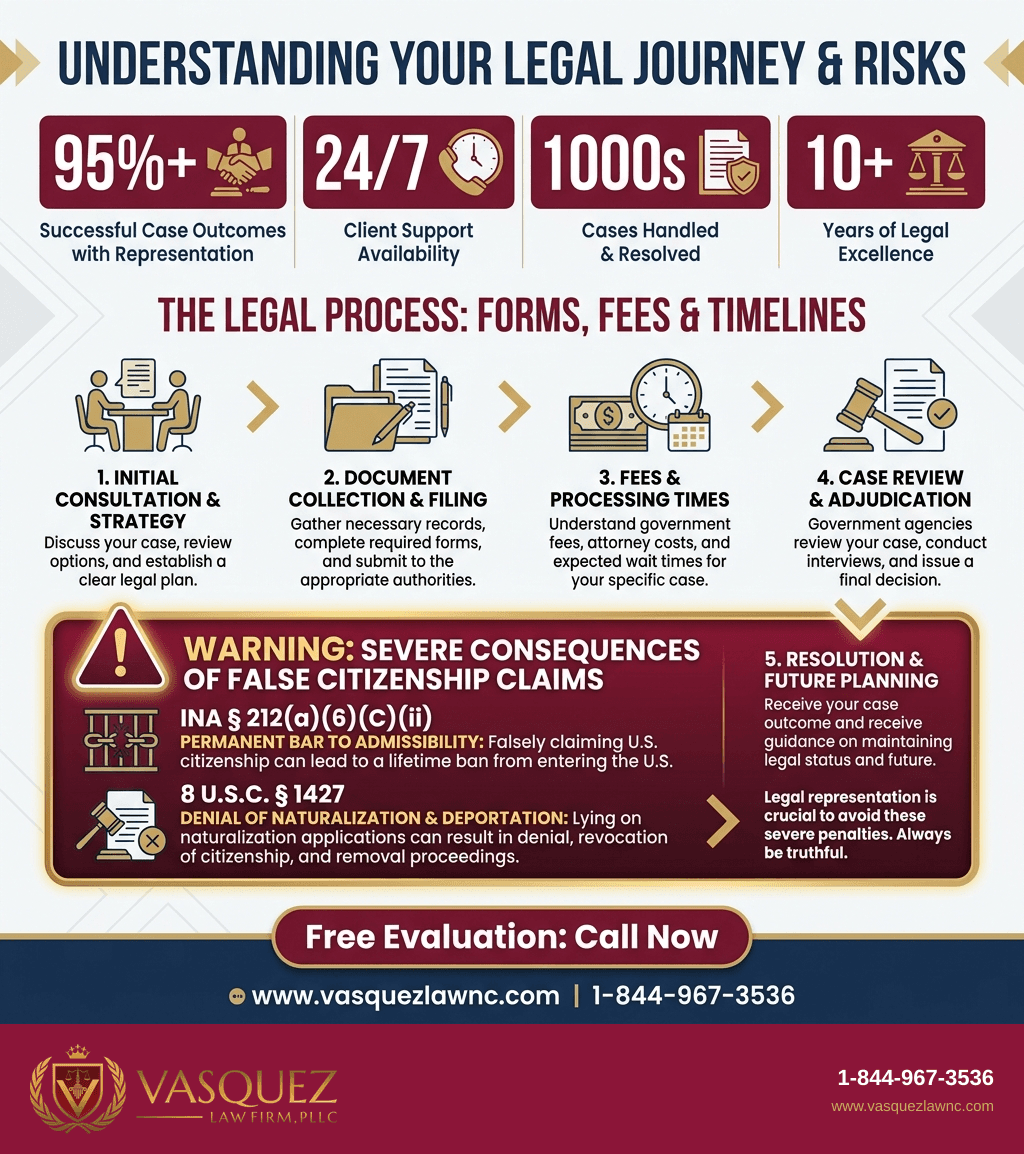
Under federal law, specifically 8 U.S.C. § 1427 and the Immigration and Nationality Act (INA), making a false claim to citizenship is grounds for inadmissibility or removal. For example, INA § 212(a)(6)(C)(ii) states anyone who falsely claims U.S. citizenship after October 1, 1996, can be denied admission or removed.
Claims made before this date are sometimes treated differently, especially for cases where a claim was made as a minor. However, every claim is scrutinized carefully because false statements affect national security and public safety.
Our immigration services in Orlando help individuals navigate these complex standards and evaluate cases involving citizenship claims. Many do not realize the risk of false statements and how they can lead to deportation or denial of immigration benefits.
False Claim vs. Legitimate Claim
It is important to distinguish between a legitimate citizenship claim and a false claim. A legitimate claim involves proving status through birthright, naturalization, or derivation from parents under legal immigration statutes. A false claim occurs when someone knowingly misrepresents status, even if unintentionally using incorrect documents.
Impact of U.S. Policies
Since 1996, laws have tightened around citizenship claims to deter fraud. As noted by USCIS, false claims lead to severe immigration consequences. The policies are enforced nationwide, including in North Carolina and Orlando, Florida, making it essential to understand the local and federal impact.
Why Accurate Claims Matter
Citizenship claims affect eligibility for benefits like Social Security, voting rights, and employment. Improper or false representation compromises trust in the immigration system and can trigger investigations or removal proceedings by the Executive Office for Immigration Review.
Step-by-Step Process for Citizenship Claims
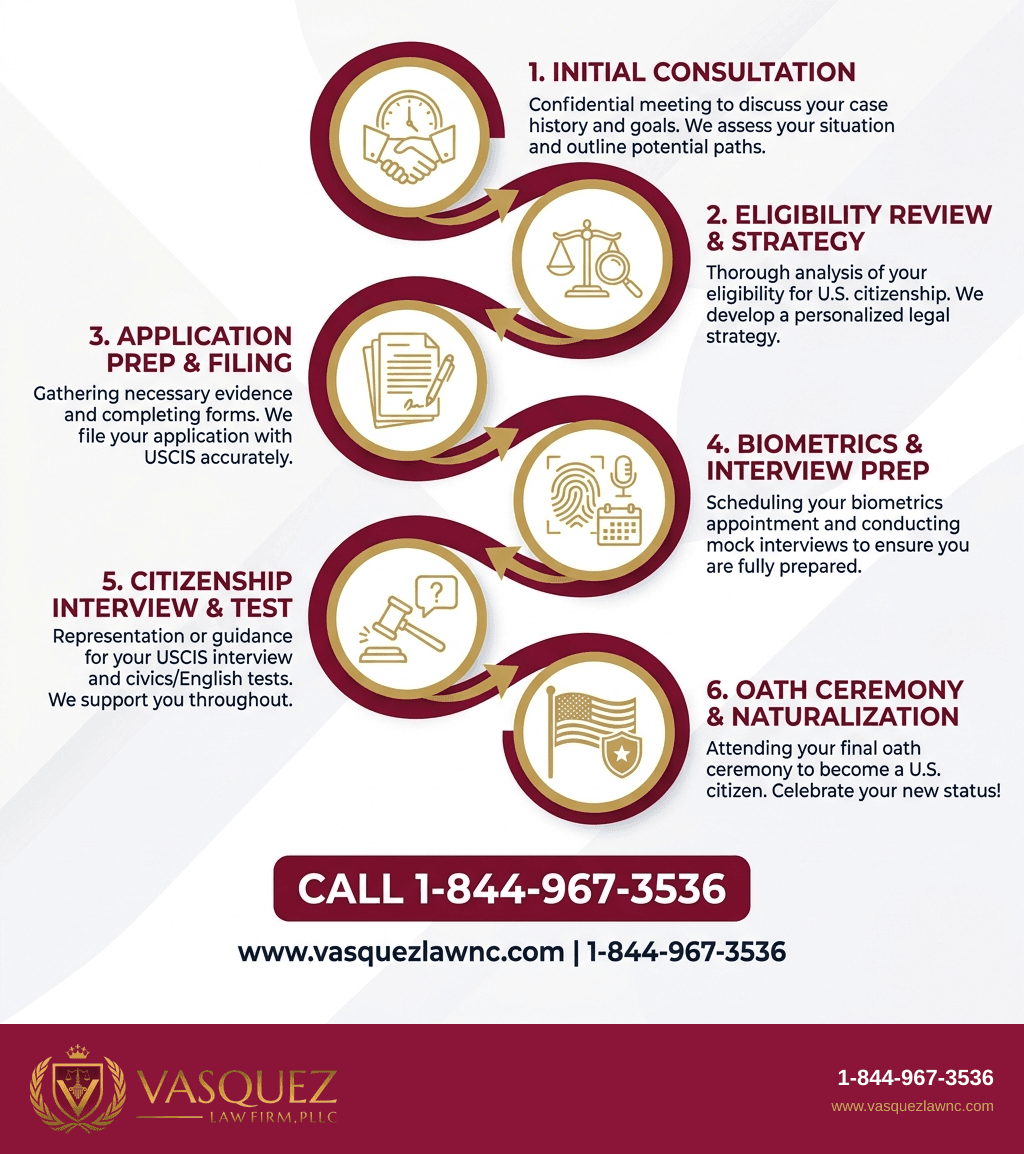
- Assess Your Status: Understand if you have a legal basis for claiming citizenship, such as birth abroad to citizen parents or naturalization eligibility.
- Gather Documentation: Collect birth certificates, passports, naturalization papers, and proof of residence.
- File Proper Forms: Submit Form N-400 for naturalization or other appropriate USCIS forms. Check current USCIS processing times (USCIS Processing Times).
- Attend Biometrics Appointment: USCIS will collect fingerprints and photographs.
- Interview and Examination: Answer questions about your background and knowledge of U.S. civics and history.
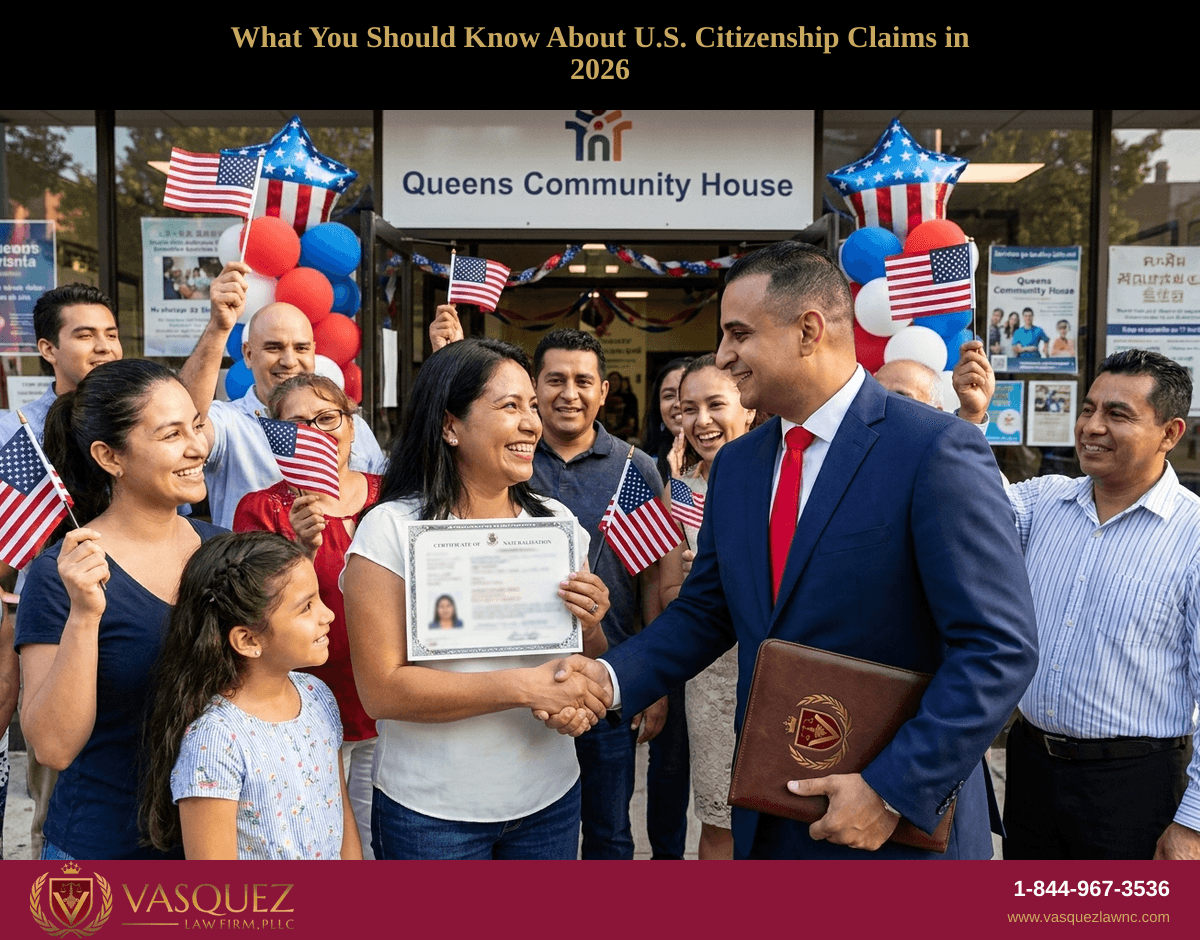
- Decision and Oath Ceremony: If approved, you take the oath of allegiance to claim citizenship officially.
False claims discovered during this process can lead to denial, referral to removal proceedings, or criminal charges.
Attorney Vasquez and our immigration legal team in Orlando specialize in guiding people through each step while avoiding pitfalls.
Steps to Respond to Accusations of False Claims
- Consult an attorney immediately.
- Review all application materials for accuracy.
- Gather evidence disproving false claim allegations.
- Prepare for possible hearings with Immigration Court.
- Consider waiver options if eligibility exists.
Legal Protections During Process
Applicants have rights to legal representation, to appeal adverse decisions, and to seek relief from removal under cancellation of removal provisions like INA § 240A(b).
Common Mistakes to Avoid in Citizenship Claims
- Making a claim without legal basis: Claiming citizenship without proper status can cause removal.
- Using fraudulent documents: Submit only genuine documents; fake papers lead to criminal charges.
- Failing to disclose prior false claims: Omissions can worsen penalties.
- Ignoring deadlines: Missing interviews or requests for evidence delays or denies applications.
- Not seeking legal advice early: Representation helps prevent costly errors.
- Assuming minor or past claims are harmless: Even claims made as minors may have serious effects.
- Misunderstanding waiver eligibility: Waivers are limited and must be carefully applied for.
- Relying on misinformation online: Always consult official USCIS sources or qualified attorneys.
If you only remember one thing: Never present yourself as a U.S. citizen without legal status or proper documentation.
Timeline and What to Expect
- Application preparation: 1-4 weeks to gather documents.
- USCIS processing: Naturalization forms typically take 12-16 months (USCIS Form N-400) as of 2026.
- Biometrics appointment: Scheduled 4-8 weeks after filing.
- Interview and test: Usually within 8-12 months of filing.
- Oath ceremony: Final step after approval; timeframe varies locally.
- Removal proceedings: If false claim issues arise, timeline depends on court schedules, potentially months or years.
Delays can occur due to requests for evidence or changing immigration policies.
Costs and Fees: What Impacts the Price
- USCIS filing fees (e.g., $640 for Form N-400 as of 2026)
- Attorney consultation and representation fees, varying by case complexity
- Potential costs for obtaining certified documents or translations
- Additional fees for biometrics or appeals, if necessary
- Cost increases if removal proceedings are triggered due to false claims
Transparent fee discussion is a priority at Vasquez Law Firm to avoid surprises.
NC, FL, and Nationwide Notes
North Carolina Notes
In North Carolina, USCIS offices and local Immigration Courts serve citizenship applicants and those facing false claim allegations. Vasquez Law Firm’s Raleigh office handles these matters. Local court calendars may affect timelines.
Florida (Orlando) Notes
In Orlando, FL, USCIS field offices and Immigration Courts have jurisdiction. Citizenship claim cases, especially those with complex waiver questions, are common. Local firm offices provide in-person support and guidance.
Nationwide Concepts
Federal immigration law regulates citizenship claims. National policies apply uniformly, but practical enforcement and case loads vary by district. USCIS Policy Manual offers detailed guidelines governing such claims.
When to Call a Lawyer Now
- If you are accused of falsely claiming U.S. citizenship
- If you fear your naturalization application may be denied
- If USCIS requests additional evidence about citizenship claims
- If you receive a Notice to Appear for immigration court proceedings
- If you are unsure how to properly document your citizenship claim
- If you need help filing waivers related to citizenship claims
- If confronted with allegations of fraud or misrepresentation
- If you require preparation for interviews or hearings
About Vasquez Law Firm
At Vasquez Law Firm, we combine compassion with aggressive representation. Our motto "Yo Peleo®" (I Fight) reflects our commitment to standing up for your rights.
- Bilingual Support: Se Habla Español — Spanish-speaking attorneys and staff available
- Service Areas: North Carolina, Florida, and nationwide immigration services
- Experience: Over 30 years helping clients navigate complex legal matters
- Results: Thousands of successful cases across multiple practice areas
Attorney Trust and Experience
William J. Vásquez is admitted to the North Carolina State Bar (2011) and to the U.S. Courts of Appeals for the 4th, 5th, and 11th Circuits. Florida-jurisdiction matters at the firm are handled by Florida Bar attorney Harold Estrada-Rodriguez (FL Bar No. 1041171). The firm has provided dedicated legal representation since 2011, with personalized attention to each client's case.
Don't wait to get the help you deserve. Call us now for immediate assistance.
Se Habla Español
Frequently Asked Questions
What is considered a false claim to U.S. citizenship?
A false claim to U.S. citizenship occurs when a person knowingly depicts themselves as a U.S. citizen when they are not. This includes using false documents or declarations to access benefits or privileges. It can have serious legal consequences such as denial of immigration benefits or deportation.
Can I claim U.S. citizenship if I was born abroad to U.S. citizen parents?
Yes. Under laws like the Child Citizenship Act, children born abroad to U.S. citizen parents may claim citizenship at birth if qualifying conditions are met. These depend on parents’ physical presence and residency in the U.S.
What happens if I falsely claim citizenship before 1996?
Claims before 1996 are evaluated under the laws in effect at that time. While some protections may apply, such claims can still affect immigration status including inadmissibility or removal.
Can a green card holder still be deported based on citizenship claims?
Yes. A green card holder can face deportation if USCIS or immigration courts determine they falsely claimed citizenship or committed fraud related to citizenship claims, based on 8 U.S.C. § 1227(a)(3).
What offenses can cause loss of U.S. citizenship?
Offenses include fraud in naturalization, illegal acts with intent to relinquish citizenship, and false claims. The INA outlines grounds for loss under provisions such as INA § 340.
Is there a waiver for false claims to U.S. citizenship?
Waivers are limited and usually require showing extreme hardship or eligibility under specific immigration provisions. Legal guidance is essential to explore waiver possibilities.
How long does the U.S. citizenship claim process take?
Processing takes 12-16 months on average for naturalization applications (Form N-400). Cases involving disputes or removal can take longer depending on court schedules.
Can minors claim U.S. citizenship differently than adults?
Yes. Minors might acquire citizenship through parents under the Child Citizenship Act, which has distinct requirements from adult naturalization applications.
Sources and References
- U.S. Citizenship and Immigration Services
- Executive Office for Immigration Review
- Legal Information Institute
Take the first step toward justice today. Our team is standing by to help. Se Habla Español.
Start Your Free Evaluation Now
Call us: 1-844-967-3536

William Vasquez
Founder & CEO, Vasquez Law Firm, PLLC
William Vasquez is the founder and CEO of Vasquez Law Firm, PLLC, a results-driven firm specializing in immigration, criminal defense, personal injury, and workers' compensation. A U.S. Air Force veteran and recipient of the Joint Service Achievement Medal, William is dedicated to fiercely fighting for his clients' rights.
Related Legal Services
Need legal help? Learn more about experienced immigration attorneys in Charlotte, or contact us for a free evaluation.
You can also visit immigration attorneys across North Carolina for more information.