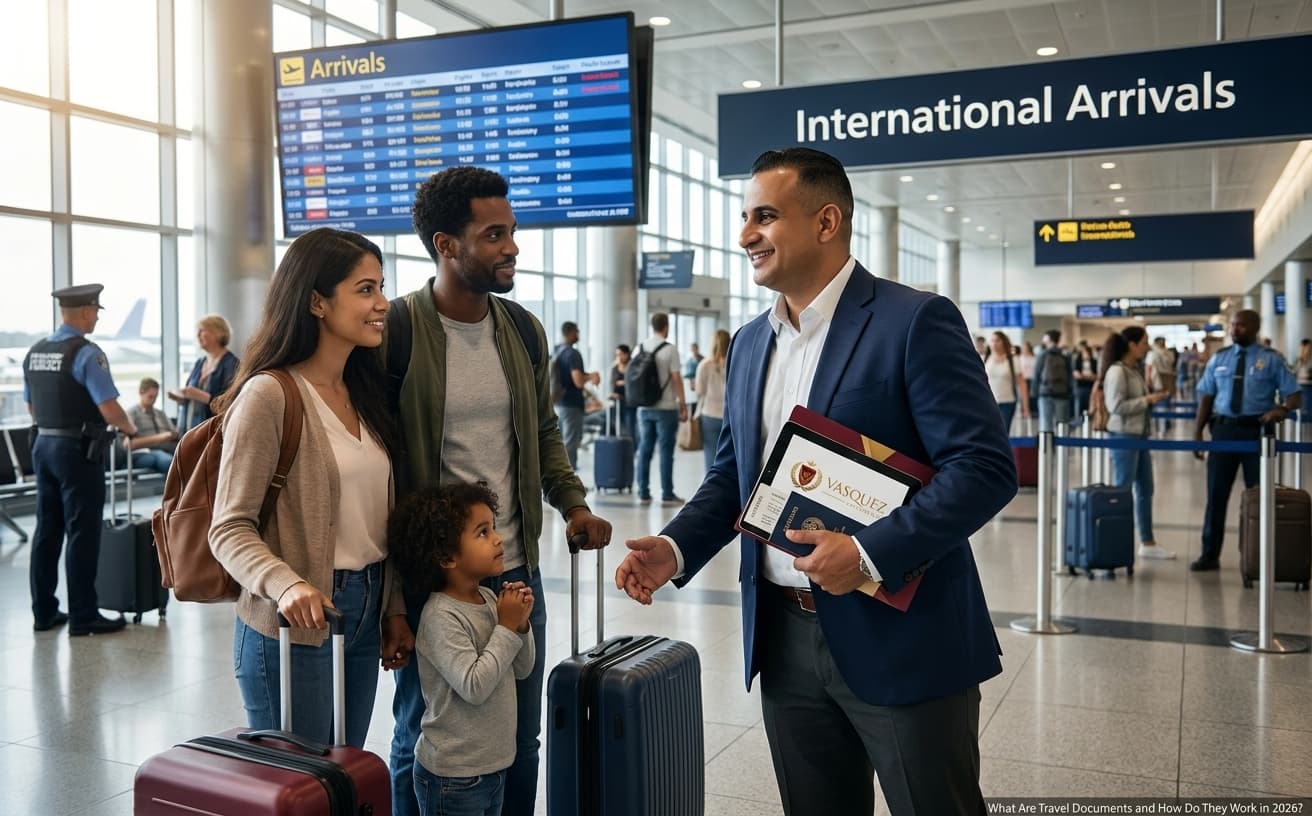
What Are Travel Documents and How Do They Work in 2026?
Wondering what travel documents you need in 2026? Learn how to apply for I-131 and U.S. travel documents. Contact Vasquez Law for a free evaluation.
Published on April 19, 2026
Talk to an immigration attorney
Free call. A clear plan for your case.
Free & confidential · Se habla espanol · 24/7
Have questions? Talk to an attorney - free evaluation.
Call 1-844-967-3536Worried how the latest immigration news affects you?
Schedule a confidential case review with an immigration attorney - know exactly where you stand.
What Are Travel Documents and How Do They Work in 2026?
Travel documents are essential for lawful entry and exit from the United States. Whether you are a Dreamer in Orlando or elsewhere, understanding travel documents like the I-131 travel document is critical in 2026. This guide explains what travel documents are, the application process, common mistakes, checklist items, and when to contact an immigration lawyer. Protect your ability to travel internationally without jeopardizing your immigration status.
Need help with your case? Our experienced attorneys are ready to fight for you. Se Habla Español.
Or call us now: 1-844-967-3536
Quick Answer
Travel documents authorize noncitizens to travel internationally while protecting their U.S. immigration status. Common documents include the I-131 travel document for advance parole. Applying involves submitting forms, supporting evidence, and waiting several months for processing.
- Includes passports, visas, and USCIS-issued documents
- Needed for Dreamers and green card holders
- Application processing can take 3-6 months
- Proper documentation avoids travel entry issues
- Legal help improves success chances during application
Understanding Travel Documents and Their Importance
In 2026, travel documents are a critical part of legal immigration travel. For example, a young Dreamer in Orlando planning to study abroad needs a travel document like the advance parole (I-131 form approval) to return without risking removal. Without such documents, U.S. immigration authorities may block reentry despite legal status.
Travel documents issued by USCIS authorize a noncitizen's lawful international travel. Some common travel documents include advance parole documents, re-entry permits for green card holders, refugee travel documents, and enhanced driver's licenses in some states.
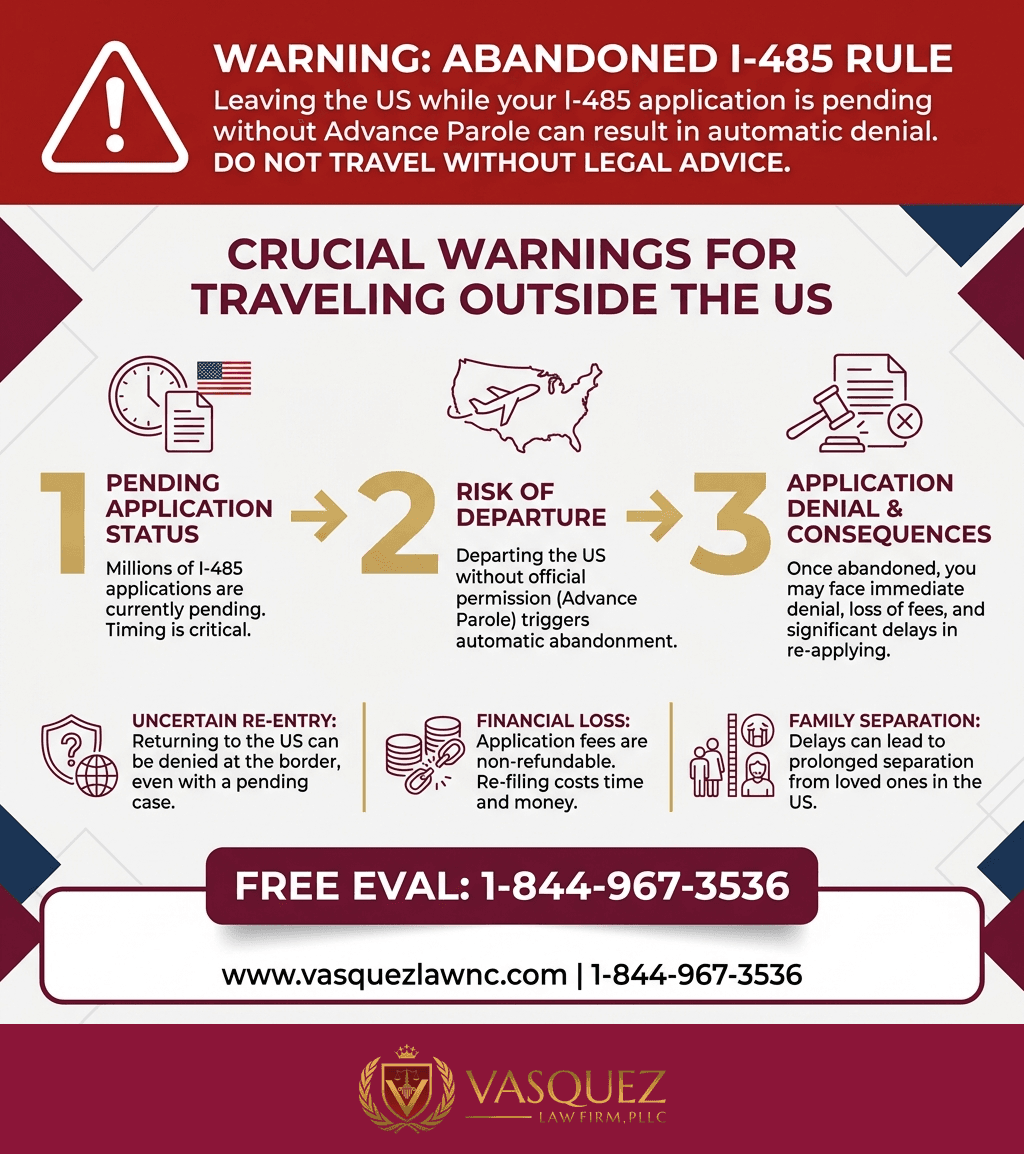
Understanding travel documents helps Dreamers and other immigrants comply with the law while traveling. Traveling incident to adjustment of status applications demands special care; otherwise, one risks abandonment of their application or denials at the border.
For residents of North Carolina and Florida, the rules are federally governed but practical guidance is localized. If you plan to leave the U.S., consulting immigration attorneys in Orlando or Charlotte ensures proper filings related to travel documents and adjustment of status.
Our immigration legal services help clients navigate these complex rules and prepare for smooth travel experiences.
Different Types of Travel Documents
- I-131 Travel Document (Advance Parole): Allows temporary travel outside the U.S. for those with pending immigration benefits applications.
- Re-entry Permit: Available for green card holders planning extended travel abroad to preserve permanent resident status.
- Refugee Travel Document: Enables refugees or asylum recipients to travel internationally safely.
- Enhanced Driver's License: Issued by some states as proof of identity and citizenship for border crossings by land or sea.
Travel Documents Examples
Examples include a TPS holder applying for an advance parole document under Form I-131 before international travel or a green card holder requesting a re-entry permit to avoid loss of permanent residency after long absence abroad.
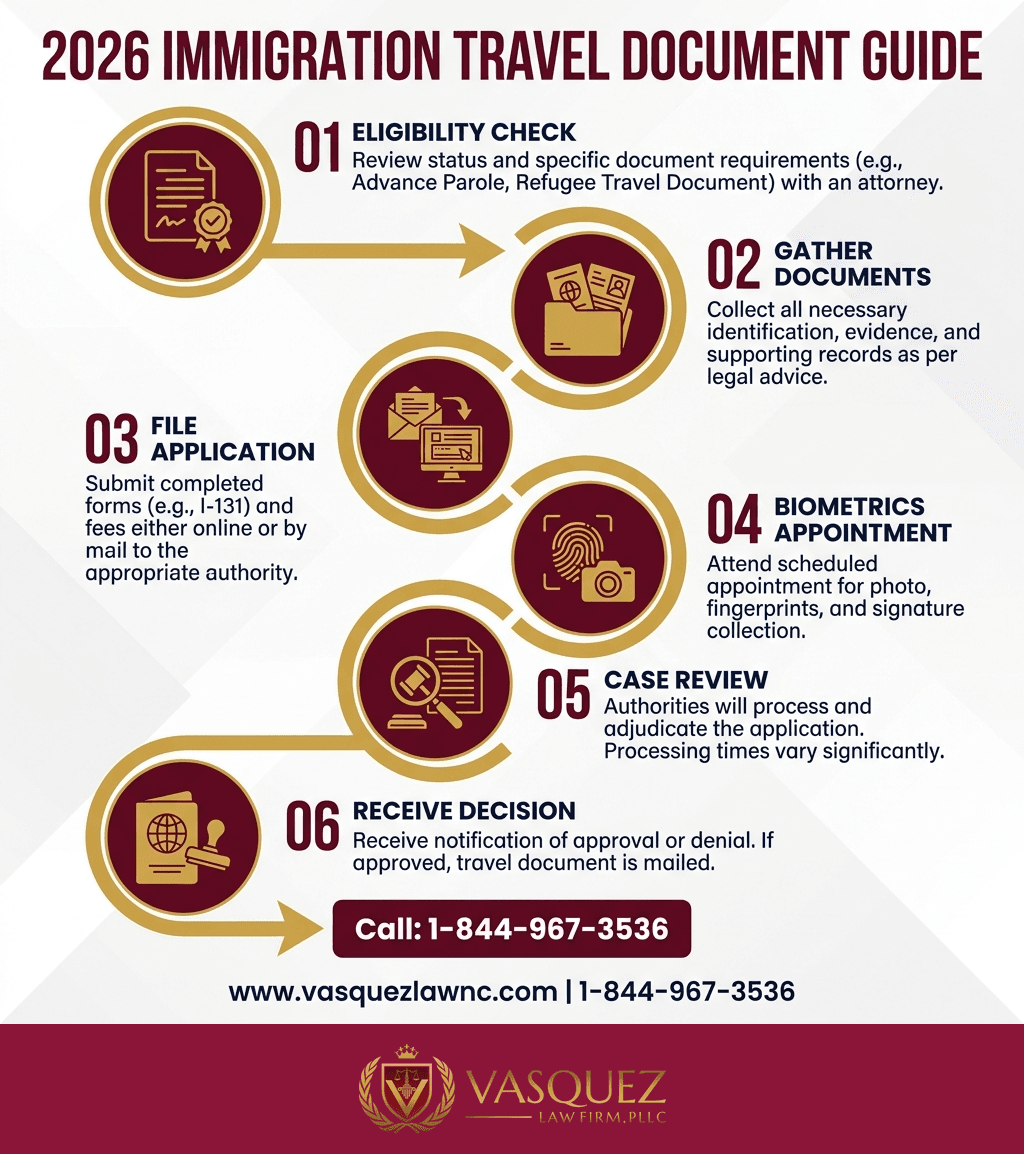
Step-by-Step Guide to Applying for Travel Documents
Consider Maria, a Dreamer from Orlando, who wants to study overseas temporarily. She needs to file Form I-131 to get advance parole. Here is how she and others in similar situations should proceed in 2026:
- Determine Eligibility: Verify if you qualify for a travel document based on immigration status or pending applications.
- Complete Form I-131: Fill the USCIS form carefully, noting your specific travel document type (advance parole, re-entry permit, etc.).
- Gather Supporting Documents: Include copies of current immigration forms, proof of status, passport photos, and explanation for travel.
- Submit Application and Fee: File the application with the correct USCIS address and include the required payment.
- Attend Biometrics Appointment: USCIS may require fingerprints and photo collection depending on your case type.
- Wait for Processing: USCIS typically takes 3 to 6 months; handle urgent travel carefully.
- Receive Approval Notice: This document permits travel. Carry it along with your passport while flying or crossing borders.
Contacting attorneys in Orlando or North Carolina early can help avoid missed steps. Our team at Vasquez Law Firm has experience walking clients through these processes smoothly.
Common Documents to Prepare
- Copy of passport biographical page
- USCIS notices and approval letters
- Proof of lawful status or pending application
- Medical or employment letters supporting travel reason
Important Tips for Filing
- Double-check form accuracy to prevent delays
- Submit all required evidence with initial filing
- Retain copies of everything you send to USCIS
- Consult attorneys before traveling if you have complicated cases
Common Mistakes to Avoid When Applying
Thousands of travelers like you face delays or denials from simple mistakes. Here are the most frequent:
- Missing or Incorrect Documents: Leaving out essential evidence like proof of status or travel reasons can cause denials. Fix by compiling a thorough checklist.
- Traveling Without Approval: Flying before receiving your I-131 travel document approval can bar reentry.
- Failing to Update USCIS Address: Missing notices if you move, leading to lost communications and processing delays.
- Incomplete Forms: Leaving questions blank or providing inconsistent answers will slow down approval.
- Ignoring Biometrics Appointment: Skipping the USCIS appointment results in automatic denial.
- Not Consulting a Lawyer: Especially critical for Dreamers and those with complex cases to safeguard immigration status.
If you only remember one thing: Do not travel without an approved travel document—this protects your legal ability to return to the U.S.
Timeline and What to Expect During the Process
Processing times for travel document applications generally range from 3 months to 6 months. Expedited service may be possible only in very limited emergency cases. The timeline looks like this:
- Week 1-2: Submission and initial review by USCIS
- Week 3-6: Biometrics appointment notice and attendance
- Month 2-5: Case processing and background checks
- Month 3-6: Approval notice sent or request for additional evidence issued
- Upon approval: Receive travel document, ready for use
Patience and preparedness make this timeline manageable. Avoid booking international travel until document approval is in hand.
Costs and Fees: What Impacts the Price
USCIS fees for travel documents vary by type. As of 2026, Form I-131 filing fees typically range from $575 to $1,035 depending on the requested document. Biometrics fees may apply separately.
Additional costs include attorney fees if you seek legal help. Although optional, legal advice can prevent costly mistakes or case denials.
- Filing fees for Form I-131
- Biometrics fees (if applicable)
- Attorney fees for consultations and application assistance
- Costs related to gathering supporting evidence (translations, copies)
NC, FL, and Nationwide Notes
North Carolina Notes
North Carolina follows federal immigration guidelines for travel documents. Our immigration attorneys in Charlotte assist locals with applying for advance parole and other document types to ensure compliance and avoid reentry troubles.
Florida Notes
In Orlando and across Florida, many immigrants rely on travel documents for education, employment, or family visits abroad. Local counsel with Florida Bar admissions provide valuable support to navigate federal requirements tailored to local concerns.
Nationwide Concepts
Immigration travel documents are governed by federal law but individual circumstances may vary. USCIS policies and the Executive Office for Immigration Review (EOIR) rulings impact how travel documents affect your immigration cases nationwide.
When to Call a Lawyer Now
- If you have a pending adjustment of status application and plan international travel
- If you receive a Request for Evidence (RFE) for your travel document application
- If your application is denied or delayed beyond normal processing times
- If you are unsure about eligibility for a travel document
- If you face potential removal or detention at the border without proper documents
- If you need help expediting your travel document application due to emergency
- If you want to review the implications of travel on your immigration status
About Vasquez Law Firm
At Vasquez Law Firm, we combine compassion with aggressive representation. Our motto "Yo Peleo" (I Fight) reflects our commitment to standing up for your rights.
- Bilingual Support: Se Habla Español - our team is fully bilingual
- Service Areas: North Carolina, Florida, and nationwide immigration services
- Experience: Over 30 years helping clients navigate complex legal matters
- Results: Thousands of successful cases across multiple practice areas
Attorney Trust and Experience
Attorney Vasquez holds a Juris Doctor degree and is admitted to practice in both the North Carolina State Bar and Florida Bar. With over 30 years of dedicated legal experience, he has built a reputation for providing personalized attention and achieving favorable outcomes for his clients.
Don't wait to get the help you deserve. Call us now for immediate assistance.
Se Habla Español
Frequently Asked Questions
What are travel documents?
Travel documents are official papers issued by U.S. authorities allowing noncitizens to travel abroad and return legally. Examples include advance parole documents, refugee travel documents, and re-entry permits. They prove your authorization to travel without jeopardizing your immigration status.
Do I need a REAL ID to fly in 2026?
Yes, as of 2026, the REAL ID Act requires most travelers flying domestically to use a REAL ID-compliant identification card or other accepted forms such as passports. This federal security measure affects passengers across the United States, including travelers in Orlando and North Carolina.
How do I apply for an I-131 travel document?
To apply for an I-131 travel document, you must file Form I-131 with USCIS, providing supporting evidence such as proof of your immigration status. This application is necessary for advance parole or re-entry permits. Processing times vary, and legal representation can help ensure the application is complete and avoids delays.
What travel documents do green card holders need?
Green card holders typically need a re-entry permit or their valid green card and passport to travel internationally. If they plan to stay outside the U.S. for extended periods, a travel document like the I-131 re-entry permit helps avoid issues re-entering the country.
What should I include in my travel documents checklist?
Your travel documents checklist in 2026 should include your passport, visa (if applicable), current immigration documents, travel document forms like I-131 approvals, and supporting evidence like employment or school letters. Always carry originals and copies to avoid travel delays.
Can I travel with a pending travel document application?
Traveling while your travel document application is pending is risky. Without an approved document like advance parole, re-entry into the U.S. may be blocked, which can have serious consequences. It is advisable to wait for approval or consult a lawyer for advice tailored to your situation.
How long does it take to get a travel document in 2026?
Processing times for travel documents like the I-131 vary but typically range from 3 to 6 months in 2026. Urgent cases may be expedited in limited situations. Understanding expected timelines helps in planning international travel without risking status or entry delays.
What happens if my travel document application is denied?
If your travel document application is denied, you will receive a notice with reasons and appeal options, if available. A denial can delay or cancel your travel plans. Consulting with an immigration attorney can clarify next steps and help file appeals if warranted.
Sources and References
- U.S. Citizenship and Immigration Services (USCIS)
- Executive Office for Immigration Review
- Legal Information Institute
Take the first step toward justice today. Our team is standing by to help.
Start Your Free Evaluation Now
Call us: 1-844-967-3536
Se Habla Español - Estamos aquí para ayudarle.

William Vasquez
Founder & CEO, Vasquez Law Firm, PLLC
William Vasquez is the founder and CEO of Vasquez Law Firm, PLLC, a results-driven firm specializing in immigration, criminal defense, personal injury, and workers' compensation. A U.S. Air Force veteran and recipient of the Joint Service Achievement Medal, William is dedicated to fiercely fighting for his clients' rights.
Related Legal Services
Need legal help? Learn more about NC immigration legal team, or contact us for a free evaluation.
You can also visit NC immigration legal help for more information.