Ramadan Workers' Compensation Claims: What to Know in 2026
Understanding Ramadan workers' compensation claims in North Carolina for 2026 is crucial. Get legal help to protect your rights. Contact Vasquez Law for a free consultation today.
Published on March 7, 2026
Hurt on the job?
Free review of your workers' comp claim.
Free & confidential · Se habla espanol · 24/7
Have questions? Talk to an attorney - free evaluation.
Call 1-844-967-3536Hurt on the Job? Claim What You Are Owed
A review of your workers' comp claim - we handle the fight.
Ramadan Workers' Compensation Claims: What to Know in 2026
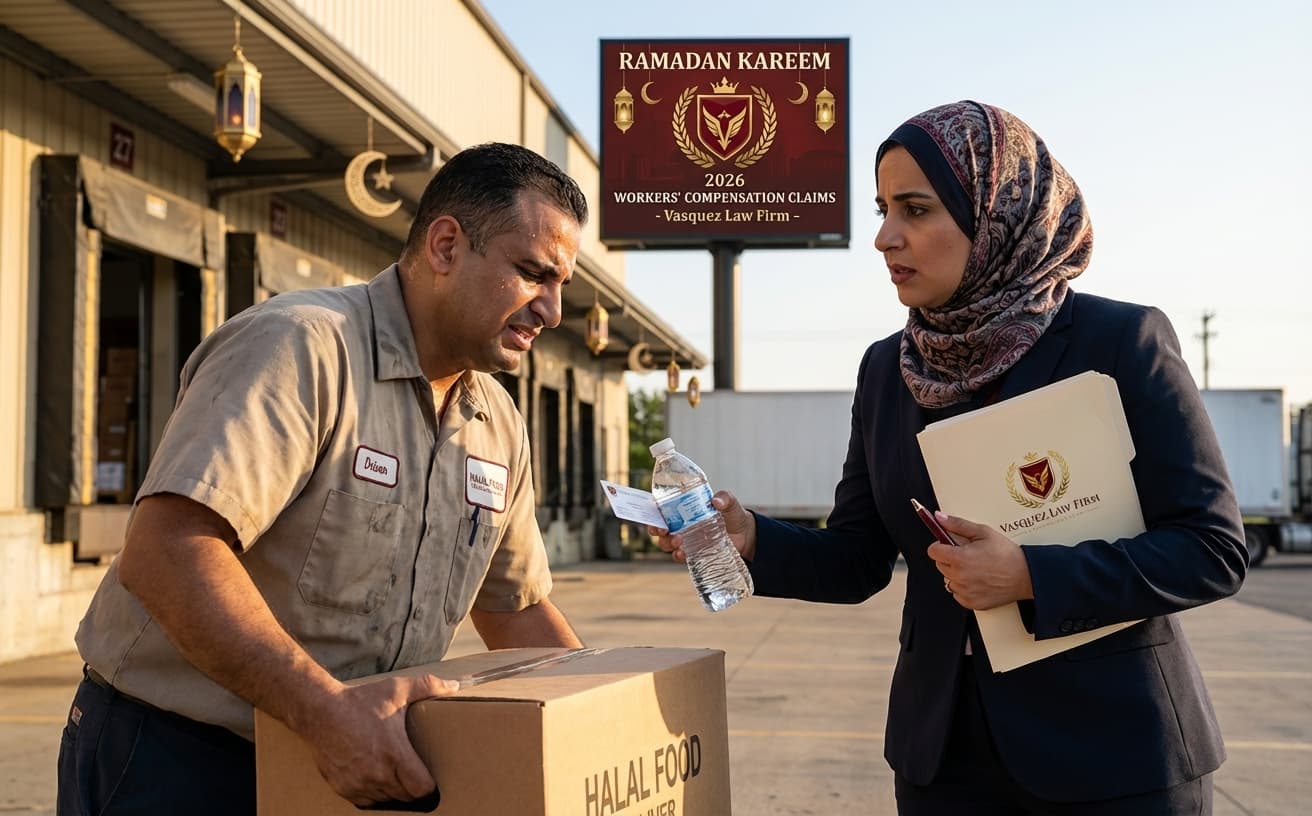
For Muslim workers in North Carolina observing Ramadan in 2026, understanding how fasting and altered routines might interact with workers' compensation claims is essential. The holy month involves significant changes to daily schedules, including fasting from dawn to dusk, which can impact energy levels and focus. If a workplace injury occurs during this time, specific considerations may arise regarding causation, employer accommodations, and the overall claims process. Navigating these nuances requires careful attention to both religious practices and legal requirements.
Need help with your case? Our experienced attorneys are ready to fight for you. Se Habla Español.
Schedule Your Free Case Evaluation
Or call us now: 1-844-967-3536
Quick Answer
Ramadan observance can introduce unique factors into workers' compensation claims in North Carolina. While fasting itself doesn't automatically invalidate a claim, potential fatigue or altered work patterns may be scrutinized. Workers should ensure proper reporting, seek medical attention promptly, and understand their rights regarding workplace accommodations.
- Report injuries immediately, regardless of fasting status.
- Seek prompt medical evaluation for all injuries.
- Understand employer accommodation policies for religious practices.
- Document any fatigue or impact on work performance.
- Consult an attorney if your Ramadan workers' compensation claim faces complications.
Ramadan and Workplace Safety: Understanding the Risks in 2026
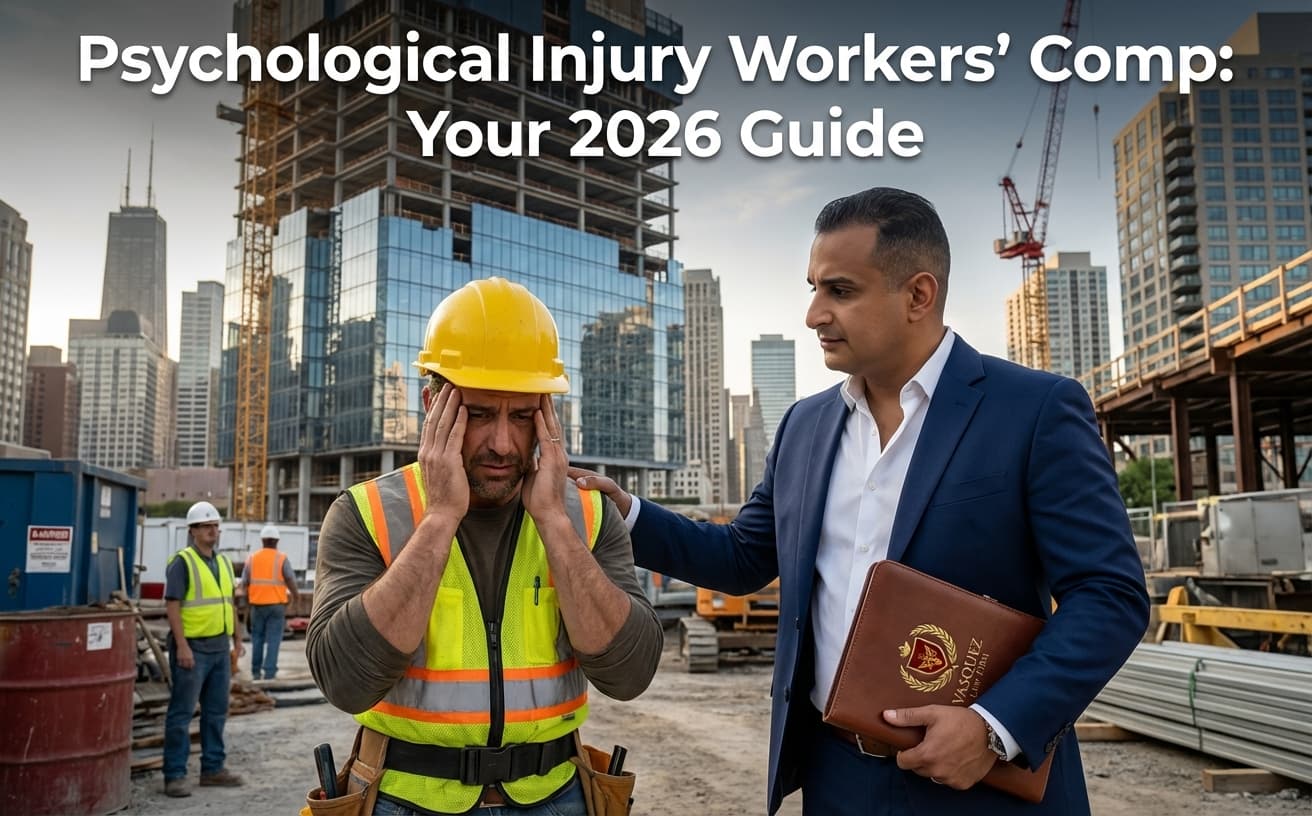
As millions of Muslims observe Ramadan in 2026, workplaces across North Carolina need to be aware of the potential impacts on employee safety. Fasting from pre-dawn to sunset, coupled with altered sleep patterns due to late-night prayers and early morning meals, can lead to reduced concentration, fatigue, and dehydration. These factors, while not inherently causing accidents, can increase the risk of workplace injuries, particularly in physically demanding jobs or those requiring high levels of focus.
For example, a construction worker observing Ramadan might experience decreased stamina during the afternoon, making them more susceptible to falls or machinery accidents. Similarly, a truck driver could face increased risks due to drowsiness on long shifts. Employers have a responsibility to provide a safe working environment, and this includes being mindful of religious observances that may affect an employee's physical and mental state. Open communication between employees and employers about potential adjustments is key to preventing incidents and ensuring a safe Ramadan workers' compensation process.
Employer Duties and Accommodations During Ramadan
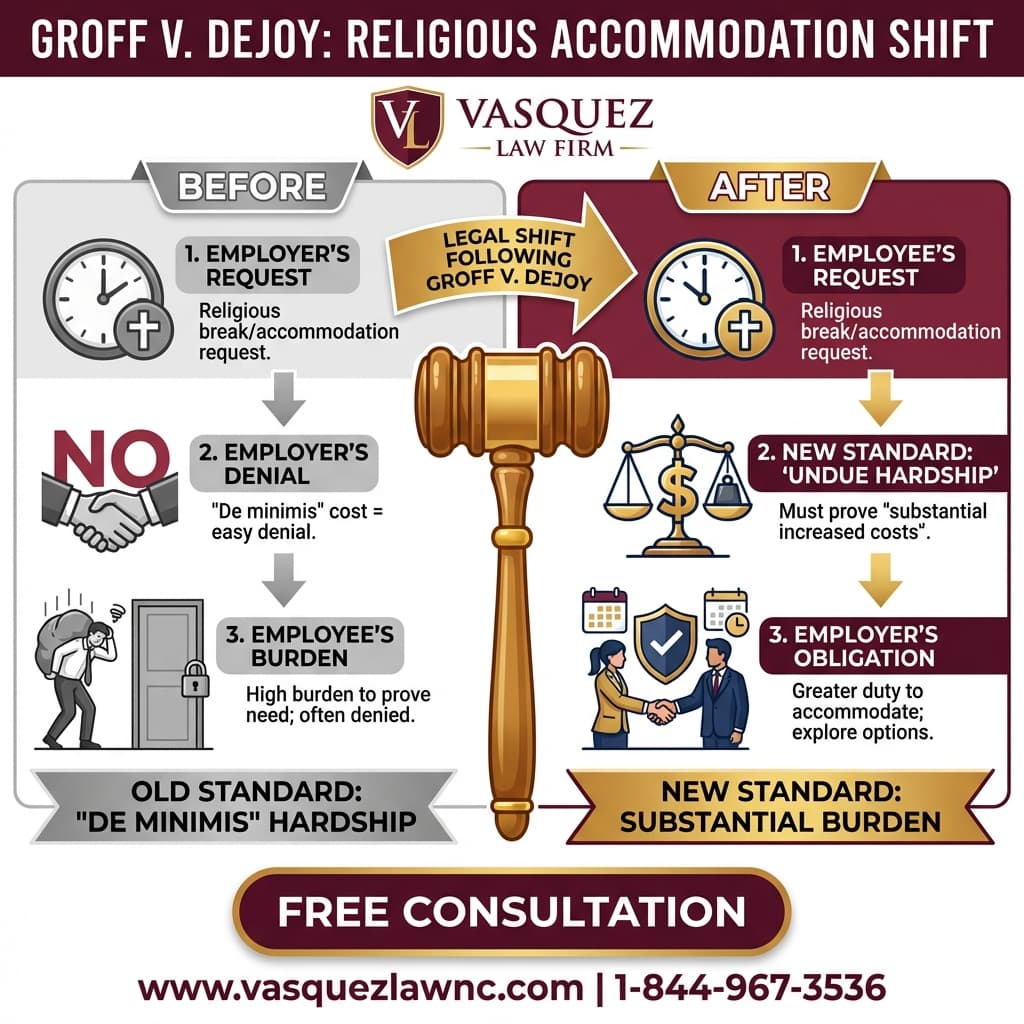
Employers in North Carolina have legal obligations under federal law, specifically Title VII of the Civil Rights Act of 1964, to reasonably accommodate employees' religious practices, including those related to Ramadan. This typically means making adjustments that do not impose an "undue hardship" on the business. For Ramadan, common accommodations might include flexible work hours, adjusted break times for prayer, or even temporary reassignment to less strenuous tasks during peak fasting hours.
Consider a manufacturing plant where an employee requests a modified schedule to start later and end earlier, allowing them to break their fast at home. If this adjustment does not disrupt production or incur significant costs, the employer is generally expected to grant it. Failure to provide reasonable accommodations could lead to claims of religious discrimination, complicating any subsequent Ramadan workers' compensation claim. Employees should formally request accommodations in writing to create a clear record.
What Constitutes Reasonable Accommodation?
A reasonable accommodation is any modification or adjustment to the work environment that enables an employee to practice their religion without undue hardship on the employer. The specific nature of the accommodation depends on the job, the workplace, and the employee's request. It's an interactive process, meaning both the employer and employee should discuss options.
Examples include allowing flexible start and end times, offering alternative break schedules for Iftar (breaking fast) or Suhoor (pre-dawn meal), or providing a quiet space for daily prayers. For some roles, temporary adjustments to job duties to reduce physical exertion might be considered. The goal is to find a solution that respects religious freedom while maintaining operational efficiency.
Filing a Ramadan Workers' Compensation Claim: Key Steps
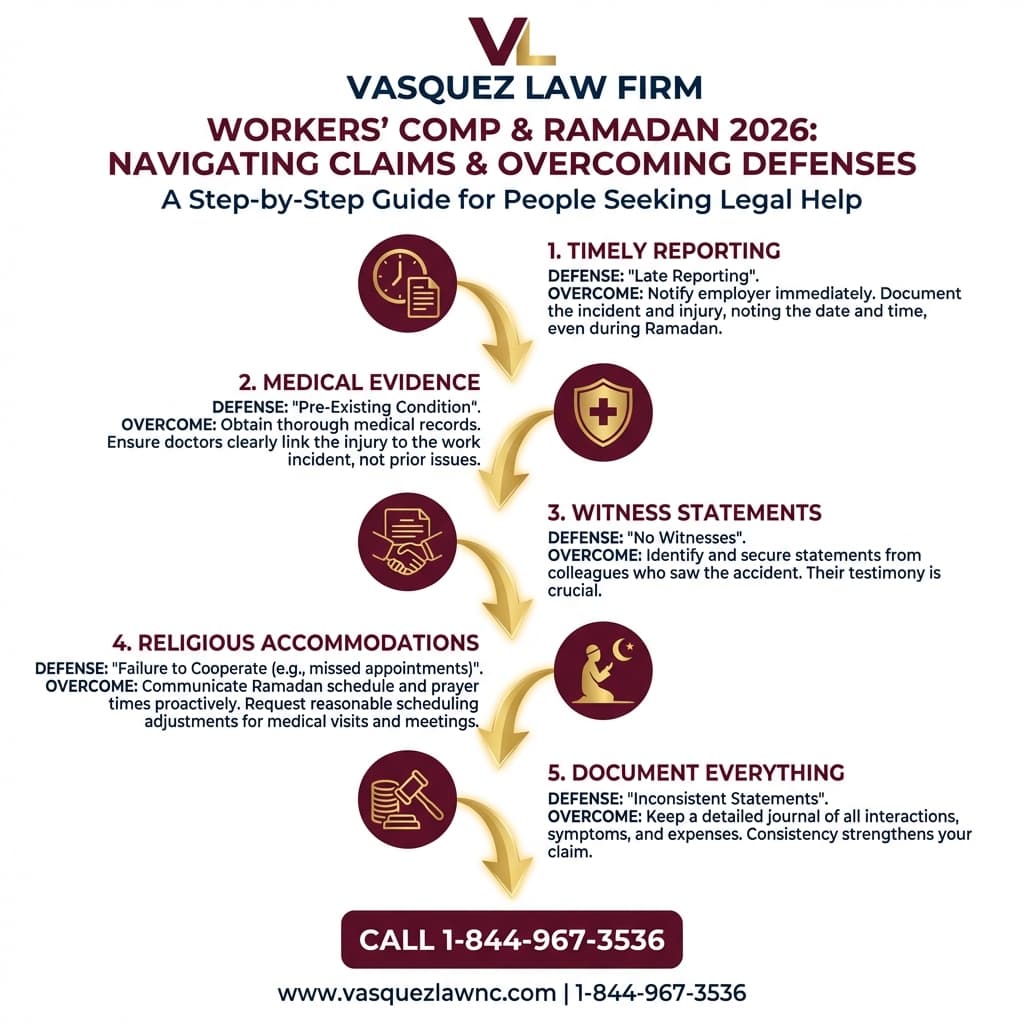
If you suffer a workplace injury in North Carolina while observing Ramadan, the process for filing a workers' compensation claim largely follows standard procedures, but with added layers of consideration. Prompt action is critical. You must notify your employer immediately, ideally within 30 days, as required by N.C. Gen. Stat. § 97-22. Delaying notification can jeopardize your claim.
After notification, seek medical attention from an authorized physician. Make sure to clearly explain to medical professionals that you are observing Ramadan, as this context could be relevant to your physical state at the time of injury or your recovery. Documenting any fatigue, dehydration, or other fasting-related factors present at the time of the accident is crucial for your Ramadan workers' compensation case. An attorney can help ensure all details are properly recorded and presented.
Reporting the Injury
Reporting a workplace injury in North Carolina must be done quickly and in writing. Even if you verbally inform your supervisor, follow up with a written report, keeping a copy for your records. This report should include the date, time, location, and a description of how the injury occurred. Mentioning your fasting status, if you believe it was a contributing factor, should be part of this initial report.
The employer then has obligations, including providing medical treatment and filing a Form 19, Employer's Report of Injury, with the North Carolina Industrial Commission. This official report initiates the workers' compensation process. If your employer fails to file this form, you can file a Form 18, Notice of Accident, yourself to protect your rights.
Challenges and Defenses in Ramadan Workers' Compensation Claims
One of the primary challenges in a Ramadan workers' compensation claim is the potential for employers or their insurance carriers to argue that fasting-induced fatigue or dehydration contributed to the injury, thereby shifting blame or attempting to deny the claim. They might claim the injury was due to the employee's own negligence or an existing condition exacerbated by fasting, rather than a workplace hazard.
For example, if a worker operating heavy machinery makes an error leading to an injury, the employer might suggest that decreased focus due to fasting was the root cause, rather than a faulty machine or inadequate training. To counter such defenses, it is vital to demonstrate that the injury arose out of and in the course of employment, and that any contribution from fasting was incidental or that reasonable accommodations were not provided. Strong medical evidence and witness testimonies are crucial in these situations. Vasquez Law Firm has extensive experience with these types of cases.
Protecting Your Rights: Legal Assistance for Ramadan Workers' Compensation
Navigating a Ramadan workers' compensation claim can be complex, especially when cultural and religious factors intersect with legal requirements. Many workers may feel hesitant to discuss their fasting or its potential impact on their work for fear of negative repercussions or discrimination. However, protecting your rights means being transparent about all relevant circumstances while ensuring your employer fulfills their obligations.
An experienced workers' compensation attorney can provide invaluable guidance. They can help you understand your rights to religious accommodation, assist with proper injury reporting, gather crucial medical evidence, and challenge any attempts by employers or insurers to deny your claim based on your Ramadan observance. Having legal representation ensures your case is presented effectively, maximizing your chances of receiving the compensation you deserve in Raleigh and across North Carolina.
Don't face your legal challenges alone. Our team is here to help you every step of the way.
Call today: 1-844-967-3536 | Se Habla Español
Common Mistakes and How to Avoid Them in Workers' Comp Claims
Several missteps can jeopardize a Ramadan workers' compensation claim. Forgetting to report the injury promptly is a significant error, as delays can lead to denial. Many workers also fail to clearly articulate their fasting status or any related fatigue to medical providers or their employer, which can be critical context for the incident. Not seeking medical attention immediately or following through with prescribed treatments can also weaken your case.
- Delaying Injury Reporting: Report your injury to your employer in writing as soon as possible, ideally within 24 hours, but no later than 30 days.
- Failing to Mention Fasting: Inform your medical provider and employer that you are observing Ramadan, especially if you believe fatigue or dehydration contributed to the incident.
- Ignoring Medical Advice: Always follow your doctor's orders and attend all appointments. Non-compliance can be used against your claim.
- Not Documenting Accommodations: If you requested religious accommodations, keep records of your requests and the employer's response.
- Speaking Without Counsel: Avoid giving recorded statements to insurance adjusters without first consulting with an attorney.
- Accepting a Quick Settlement: Do not sign any settlement agreements without having a lawyer review them. You could be waiving future rights.
- Returning to Work Too Soon: Only return to work when your doctor clears you and your employer offers suitable light duty, if applicable.
If you only remember one thing: Report your injury immediately and seek legal counsel promptly to protect your Ramadan workers' compensation rights.
North Carolina Workers' Compensation Laws and Ramadan
North Carolina's workers' compensation system is governed by the North Carolina Workers' Compensation Act (N.C. Gen. Stat. § 97). This law mandates that employers with three or more employees must carry workers' compensation insurance to cover medical expenses and lost wages for employees injured on the job. The core principle is that the injury must "arise out of" and "in the course of" employment. This means there must be a causal connection between the employment and the injury, and the injury must occur while the employee is engaged in work-related duties.
For a Ramadan workers' compensation claim, the legal framework remains the same. The challenge often lies in proving that the injury was work-related, even if factors like fatigue were present. The NC Industrial Commission oversees these claims, and they expect clear evidence linking the injury to the workplace. Understanding these specific laws is vital, and an attorney familiar with North Carolina workers' compensation can make a significant difference in how your claim is perceived and processed.
When to Call a Lawyer Now for Your Workers' Comp Claim
Experiencing a workplace injury is stressful enough, but when it happens during Ramadan, the complexities can multiply. Knowing when to seek legal counsel can make a critical difference in the outcome of your Ramadan workers' compensation claim. If any of these situations apply to you, it's time to call an attorney immediately:
- Your employer denies your claim, or disputes that your injury is work-related.
- The insurance company delays or denies authorization for necessary medical treatment.
- You are offered a settlement that seems too low or doesn't cover all your expenses.
- Your employer retaliates against you for filing a claim or requesting accommodations.
- You are pressured to return to work before your doctor has cleared you.
- You have pre-existing conditions that the insurance company is using to deny your claim.
- Your employer refuses to provide reasonable religious accommodations during Ramadan.
- You are unsure about the forms, deadlines, or legal steps involved in your claim.
- You need help gathering evidence or witness statements to support your case.
About Vasquez Law Firm
At Vasquez Law Firm, we combine compassion with aggressive representation. Our motto "Yo Peleo" (I Fight) reflects our commitment to standing up for your rights. We understand the unique challenges faced by workers, especially those observing religious practices like Ramadan, and we are dedicated to ensuring their voices are heard and their rights protected.
- Bilingual Support: Se Habla Español - our team is fully bilingual, ensuring clear communication.
- Service Areas: North Carolina, providing dedicated workers' compensation services.
- Experience: Over 15 years helping clients navigate complex legal matters with integrity and skill.
- Results: Thousands of successful cases across multiple practice areas, demonstrating our proven track record.
Attorney Trust and Experience
Attorney Vasquez holds a Juris Doctor degree and is admitted to practice in the North Carolina State Bar. With over 15 years of dedicated legal experience, he has built a reputation for providing personalized attention and achieving favorable outcomes for his clients. His deep understanding of North Carolina workers' compensation law, combined with a compassionate approach, makes Vasquez Law Firm a trusted advocate for those seeking justice.
Frequently Asked Questions
Can I be denied workers' compensation if my injury occurred during Ramadan due to fatigue?
No, observing Ramadan does not automatically disqualify you from workers' compensation in North Carolina. The key is proving the injury arose out of and in the course of employment. While fatigue might be a factor, it generally doesn't negate the employer's responsibility if the injury is work-related. However, the employer might try to argue it as contributory negligence, making legal representation crucial.
Do employers have to accommodate fasting during Ramadan?
Yes, under Title VII of the Civil Rights Act, employers must provide reasonable accommodations for religious practices, including fasting during Ramadan, unless it causes undue hardship. This could involve flexible hours, modified duties, or adjusted break times. Employees should formally request accommodations in writing to establish a clear record.
What should I do immediately after a workplace injury during Ramadan?
First, seek immediate medical attention. Second, report the injury to your employer in writing as soon as possible, ideally within 24 hours, but no later than 30 days. Clearly state how the injury occurred and mention your fasting status if you believe it's relevant. Document everything and consider contacting a workers' compensation attorney.
How can I prove my injury was work-related if my employer blames fasting?
To prove your injury was work-related, gather medical records, witness statements, and evidence of workplace hazards. An attorney can help compile this evidence and argue that the injury arose from your job duties, regardless of your fasting status. They can also counter claims of contributory negligence by demonstrating your employer's duty of care.
Are there specific North Carolina laws regarding Ramadan and workplace injuries?
North Carolina's Workers' Compensation Act (N.C. Gen. Stat. § 97) does not have specific provisions for Ramadan. However, federal anti-discrimination laws protect religious practices. Your claim will be evaluated under standard workers' compensation principles, with potential added considerations for religious accommodation and any employer attempts to attribute the injury to fasting.
What kind of medical documentation is important for a Ramadan workers' compensation claim?
Detailed medical documentation is crucial. Ensure your doctor notes your fasting status, any symptoms related to it (e.g., dehydration, fatigue), and how these might interact with your injury or recovery. Comprehensive records linking your injury to the workplace and outlining your treatment plan will strengthen your claim significantly.
Can my employer fire me for filing a workers' compensation claim during Ramadan?
No, it is illegal for an employer to fire or retaliate against an employee for filing a legitimate workers' compensation claim in North Carolina. This protection extends to injuries occurring during religious observances like Ramadan. If you experience retaliation, contact an attorney immediately as you may have grounds for a separate claim.
How long do I have to file a Ramadan workers' compensation claim in NC?
In North Carolina, you must report your injury to your employer within 30 days of the accident. You then have two years from the date of the accident to file a formal claim (Form 18) with the North Carolina Industrial Commission. Missing these deadlines can result in losing your right to compensation.
What benefits are available in a Ramadan workers' compensation claim?
If your claim is approved, you may be entitled to medical treatment costs, temporary total disability payments for lost wages, permanent partial disability benefits for lasting impairments, and vocational rehabilitation services. The specific benefits depend on the severity of your injury and its impact on your ability to work.
Should I discuss my fasting with my employer after an injury?
Yes, it is generally advisable to discuss your fasting with your employer and medical providers after an injury, especially if you believe it was a contributing factor or if it will impact your recovery. This transparency can help ensure you receive appropriate accommodations and that all relevant context is considered in your Ramadan workers' compensation claim.
Sources and References
- North Carolina Industrial Commission
- Title VII of the Civil Rights Act of 1964
- North Carolina General Statutes Chapter 97 (Workers' Compensation Act)
Hurt at work? Our workers' compensation attorneys can review your claim.
Ready to take the next step? Contact Vasquez Law Firm today for a free, confidential consultation. We're committed to fighting for your rights and achieving the best possible outcome for your case.
Start Your Free Case Evaluation Now
Call us: 1-844-967-3536
Se Habla Español - Estamos aquí para ayudarle.


William Vasquez
Founder & CEO, Vasquez Law Firm, PLLC
William Vasquez is the founder and CEO of Vasquez Law Firm, PLLC, a results-driven firm specializing in immigration, criminal defense, personal injury, and workers' compensation. A U.S. Air Force veteran and recipient of the Joint Service Achievement Medal, William is dedicated to fiercely fighting for his clients' rights.
Related Legal Services
Need legal help? Learn more about experienced work injury attorneys in Charlotte, or contact us for a free evaluation.
You can also visit workers compensation services throughout NC for more information.