How the H-2A Wage Rule Affects Farmworkers in 2026
Learn how the H-2A wage rule affects farmworkers' pay and rights in 2026. Understand wages, taxes, and what to do. Contact Vasquez Law for help.
Published on May 15, 2026· Updated September 11, 2026
Talk to an immigration attorney
Free call. A clear plan for your case.
Free & confidential · Se habla espanol · 24/7
Have questions? Talk to an attorney - free evaluation.
Call 1-844-967-3536Worried how the latest immigration news affects you?
Schedule a confidential case review with an immigration attorney - know exactly where you stand.
USCIS Case Status
Check your USCIS case status
Enter your receipt number and get the official status. Free, no registration.
How the H-2A Wage Rule Affects Farmworkers in 2026
The H-2A wage rule in 2026 determines the minimum pay farmworkers receive under the H-2A visa program, affecting thousands of seasonal workers, including those in Charlotte, NC. Understanding this rule is crucial for employers and workers alike to ensure compliance and fair compensation. This article clarifies the latest adverse effect wage rate updates, what those working on H-2A visas should expect, and how to protect their rights under North Carolina workers' compensation laws. At Vasquez Law Firm, we provide legal guidance tailored for agricultural workers and employers navigating these changes.
Need help with your case? Our experienced attorneys are ready to fight for you. Se Habla Español.
Or call us now: 1-844-967-3536
Quick Answer
The H-2A wage rule in 2026 establishes the minimum wage farmworkers must receive under the Adverse Effect Wage Rate (AEWR). It protects both U.S. and H-2A workers from wage suppression and requires employers in North Carolina and Florida to pay at least this wage. Understanding this rule helps workers and employers ensure legal pay and compensation rights.
- AEWR varies by state and is updated annually
- Minimum wage must meet or exceed AEWR
- H-2A workers pay federal taxes but often exempt from FUTA
- Employers must follow recordkeeping and wage rules
- Workers can claim compensation for wage violations
Understanding the H-2A Wage Rule
In 2026, the H-2A wage rule remains a critical standard setting the minimum pay for foreign agricultural workers temporarily employed in the United States. The key component is the Adverse Effect Wage Rate (AEWR), which the U.S. Department of Labor (DOL) sets annually to safeguard U.S. workers’ wages from being undercut by lower-paid guest workers.
The AEWR is calculated based on average agricultural wages in each state and is updated every year. For example, in North Carolina in 2026, the AEWR is set to $15.20 per hour, while in Florida it is $14.85 per hour. These wages often exceed federal or state minimum wage minima to reflect agricultural labor market realities.
Employers hiring H-2A workers must pay at least the AEWR to all workers. Importantly, the wage rule protects domestic workers from wage depression, as employers are required to pay the higher of the AEWR, federal minimum wage, or state minimum wage.
Consulting with a local workers compensation attorney in North Carolina helps ensure compliance with these wage regulations and protects workers’ rights.
H2A AEWR 2026: What It Means
The AEWR represents the minimum hourly wage rate employers must pay to H-2A workers. It prevents adverse effects on U.S. workers by ensuring consistent pay. This rate varies by state due to agricultural wage differences. In 2026, the rules continue to require employers to adhere strictly to these wage floors.
Adverse Effect Wage Rate Details
The AEWR applies during the entire contract period for H-2A workers. Employers must pay the AEWR or higher and may not pay flat daily rates without accounting for the hourly rate. Failure to do so can result in Department of Labor investigations, fines, or loss of H-2A certification.
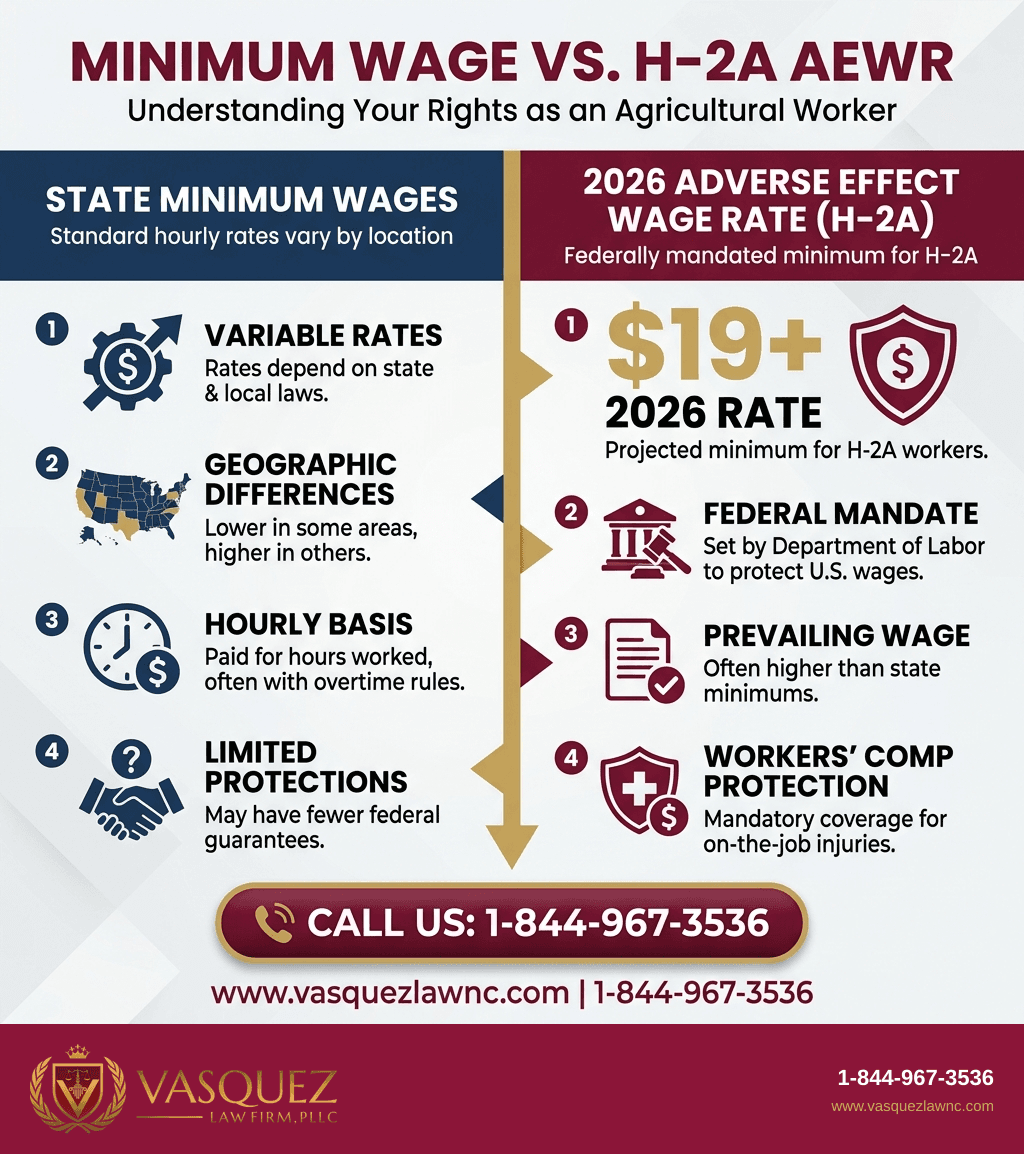
Minimum Wage vs AEWR
While states may set lower minimum wages, the H-2A rule dictates that employers pay the highest relevant wage rate, which often is the AEWR. This ensures farmworkers get compensation aligned with market conditions and federal standards.
Step-by-step Guide to Compliance
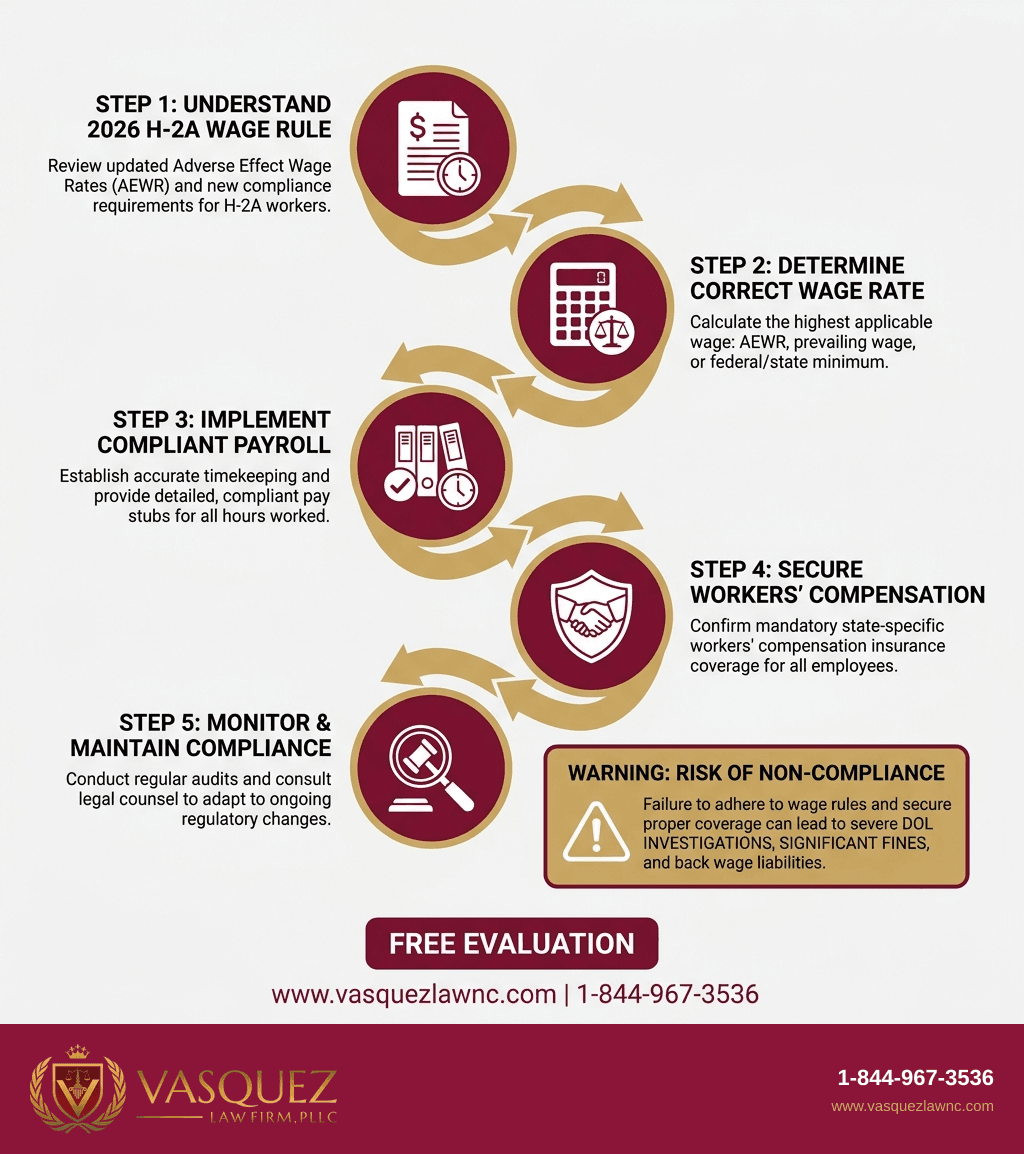
- Identify the applicable AEWR: Check the DOL’s published AEWR for North Carolina or Florida for 2026.
- Calculate wages based on hours worked: Ensure wage payments meet or exceed AEWR for all hours.
- Maintain accurate payroll records: Keep detailed logs of time, pay rates, and payments to prove compliance.
- Comply with the "3 4 rule": Pay no less than AEWR for at least three-quarters of the contract hours.
- Provide written disclosures with pay statements: Include wage rates and hours as legally required.
Following these steps, employers protect themselves from legal violations and ensure H-2A workers receive lawful pay.
The 3 4 Rule Explained
This rule mandates that at least three-fourths of the hours an H-2A worker is employed be compensated at no less than the AEWR or approved prevailing wage. The rule ensures wage consistency despite any scheduling or work hour fluctuations throughout the contract period.
Payroll Compliance for Employers
Payroll staff must carefully calculate wages to align with AEWR and keep thorough records. Transparent pay practices help verify compliance during audits or if workers challenge wage amounts.
Tax Obligations for H-2A Wages
Employers are required to withhold federal income taxes, Social Security, and Medicare taxes from workers’ wages. However, H-2A workers are generally exempt from federal unemployment tax (FUTA). Understanding these requirements helps avoid penalties.
Documents and Wage Calculation Checklist
- AEWR rates from U.S. Department of Labor for 2026
- Employment contracts outlining wage terms
- Time sheets or logs showing hours worked
- Pay statements reflecting hourly wage and total pay
- Tax withholding documents (e.g., W-2, I-9 forms)
- Copies of prior wage determinations and employer compliance reports
Having these documents organized supports legal compliance and assists with workers’ compensation claims if injuries occur on the job.
Timeline: What to Expect in 2026
- January: DOL releases AEWR for the new calendar year by early January.
- Throughout the year: Employers apply the current AEWR rates to all workers employed under H-2A contracts.
- Mid-year review: Employers audit payroll compliance and records to ensure wage payments meet legal requirements.
- End of contract period: Submit required documentation to DOL for certifications and renewals.
- Ongoing: Workers may file complaints or claims regarding wage violations as needed.
Costs and Factors Affecting Wages
- AEWR Level: Higher AEWR rates increase employer wage costs.
- Season Length: Longer contracts mean sustained wage payments at the AEWR.
- Work Hours: Variation in daily hours can affect total wages due.
- Tax Withholdings: Employer responsibility to properly withhold federal taxes.
- Compliance Investments: Payroll system upgrades and legal advice add to costs but reduce risk.
Employers should budget accordingly and workers should understand these wage factors.
Common Mistakes to Avoid
- Failing to pay the AEWR as set by the DOL, risking violations.
- Miscalculating hours worked or excluding required hours from wage calculations.
- Neglecting proper payroll documentation and recordkeeping.
- Not applying the 3 4 rule across contract periods.
- Failing to withhold required taxes or misreporting wages to tax agencies.
- Not updating wage rates according to annual DOL releases.
- Employers confusing federal and state minimum wages with AEWR requirements.
If you only remember one thing: Employers must pay the highest applicable wage rate to all H-2A workers consistently and document payments accurately.
North Carolina and Nationwide Notes
North Carolina Notes
In North Carolina, the AEWR for 2026 is $15.20 per hour. North Carolina workers on H-2A visas who suffer work injuries may be eligible for workers' compensation benefits. If you are a farmworker in Charlotte or elsewhere in NC, understanding your wage and compensation rights is crucial. Our workers compensation services in North Carolina include helping clients recover fair benefits.
Nationwide Concepts (General Only, Rules Vary)
Across the United States, the AEWR is a key protective wage floor for seasonal agricultural workers under H-2A visas. These rules ensure foreign workers contribute fairly to local farm economies while protecting domestic labor markets from wage undercutting. States may have additional laws affecting wages or benefits, so local counsel is advised.
When to Call a Lawyer Now
- If your employer pays less than the AEWR or federal/state minimum wage.
- If you face retaliation for reporting wage violations.
- If you suffer a work injury and your wage is incorrectly reported for compensation.
- If your employer fails to withhold required taxes affecting your paychecks.
- If you do not receive proper pay statements and documentation.
- If wage disputes delay your workers’ compensation claim.
- If you need help understanding complex wage rules as an H-2A worker or employer.
About Vasquez Law Firm
At Vasquez Law Firm, we combine compassion with aggressive representation. Our motto "Yo Peleo®" (I Fight) reflects our commitment to standing up for your rights.
- Bilingual Support: Se Habla Español — Spanish-speaking attorneys and staff available
- Service Areas: Workers compensation in North Carolina; immigration nationwide, including Florida
- Experience: Over 30 years helping clients navigate complex legal matters
- Results: Thousands of successful cases across multiple practice areas
Attorney Trust and Experience
William J. Vásquez is admitted to the North Carolina State Bar (2011) and to the U.S. Courts of Appeals for the 4th, 5th, 6th, and 11th Circuits. Florida-jurisdiction matters at the firm are handled by Florida Bar attorney Alekssandra Lopez. The firm provides personalized attention and has extensive experience in workers compensation cases involving agricultural workers.
Don't wait to get the help you deserve. Call us now for immediate assistance.
Se Habla Español
Frequently Asked Questions
What is the minimum wage for H-2A workers in 2026?
In 2026, the minimum wage is determined by the AEWR for each state. Employers must pay at least this rate, with North Carolina’s AEWR around $15.20/hr and Florida’s about $14.85/hr. This protects both foreign and U.S. workers from wage depression.
Do H-2A workers receive minimum wage under federal law?
Yes, H-2A workers must be paid at least the highest of AEWR, federal, or state minimum wage. This requirement ensures workers are fairly compensated for agricultural labor.
What is the '3 4 rule' for H-2A wages?
The '3 4 rule' requires that at least 75% of work hours under an H-2A contract be paid at or above the AEWR. It ensures consistent wages throughout the employment period.
Are H-2A workers required to pay taxes?
H-2A workers pay federal income, Social Security, and Medicare taxes, but are usually exempt from federal unemployment tax (FUTA). Proper withholding affects net wages and legal compliance.
How does the H-2A wage rule affect workers’ compensation claims?
The rule ensures wages are accurately reported for workers’ compensation calculations. Injured H-2A workers in NC have rights to benefits, depending on correct wage reporting.
Where can employers find the current AEWR for North Carolina in 2026?
The U.S. Department of Labor publishes yearly AEWR rates at dol.gov. Employers must consult this for compliance.
Can employers pay less than the AEWR to H-2A workers?
No. Paying less than the AEWR violates federal wage rules and may result in penalties and legal action against employers.
What should H-2A workers do if they suspect wage violations?
Workers should report suspected violations to the DOL Wage and Hour Division and consider consulting a lawyer to enforce their wage rights.
Sources and References
- U.S. Department of Labor
- Occupational Safety and Health Administration
- North Carolina Industrial Commission
Take the first step toward justice today. Our team is standing by to help.
Start Your Free Evaluation Now
Call us: 1-844-967-3536
Se Habla Español - Estamos aquí para ayudarle.


William Vasquez
Founder & CEO, Vasquez Law Firm, PLLC
William Vasquez is the founder and CEO of Vasquez Law Firm, PLLC, a results-driven firm specializing in immigration, criminal defense, personal injury, and workers' compensation. A U.S. Air Force veteran and recipient of the Joint Service Achievement Medal, William is dedicated to fiercely fighting for his clients' rights.
Related Legal Services
Need legal help? Learn more about our immigration law practice, or contact us for a free evaluation.
You can also visit North Carolina immigration lawyers for more information.