North Carolina Foster Care: What Parents in Raleigh Should Know in 2026
Wondering how North Carolina foster care works in 2026? Learn stipend details, adoption options, and key steps. Contact Vasquez Law for a free consultation today.
Published on July 8, 2026
Have questions? Talk to an attorney - free evaluation.
Call 1-844-967-3536North Carolina Foster Care: What Parents in Raleigh Should Know in 2026
North Carolina foster care helps thousands of children every year by giving them temporary homes. In 2026, foster parents in Raleigh must follow certain rules about certification, payments, and legal steps. This article explains how to become a foster parent in North Carolina. It covers important state rules about bedrooms and payments. It also shows how to handle adoption after fostering. Whether you want to foster or learn about NC adoption photolisting, this guide will help you understand the laws and steps to protect children and families.
Need help with your case? Our experienced attorneys are ready to fight for you. Se Habla Español.
Or call us now: 1-844-967-3536
Quick Answer
North Carolina foster care is a program run by the state. It gives children in need a temporary home. Foster parents in Raleigh must get certified, follow bedroom rules, and may get monthly payments called stipends. The foster care system also helps with adoption options, like NC adoption photolisting, to find permanent homes for children.
- Foster parent certification means training and home checks
- Monthly payments depend on the child’s age and needs
- Bedrooms must meet size and privacy rules
- Adoption often happens after successful foster care
- Legal rules come from N.C. Gen. Stat. §§ 7B-507 and 7B-901
Understanding North Carolina Foster Care
In 2026, more than 12,000 children in North Carolina live in foster care because of neglect, abuse, or family problems. The foster care system places children temporarily with certified foster families. This happens while their birth families work to fix problems. Foster care in Raleigh follows strict laws and procedures in North Carolina General Statutes Chapter 7B.
The main goal of foster care is to give children a safe and stable place. Foster parents provide daily care, schooling, and emotional support. The state requires foster families to meet certification standards. These include training, background checks, and home safety inspections under N.C. Gen. Stat. § 7B-901.
Local county Departments of Social Services in Raleigh and across North Carolina manage the system. But there are challenges. Recent court filings show a crisis in NC foster care due to overcrowding and lack of resources. Despite this, foster families are very important to child welfare in the state.
Learn more about our family law services that help with complex foster care cases in Raleigh.
Foster Care Statistics in North Carolina
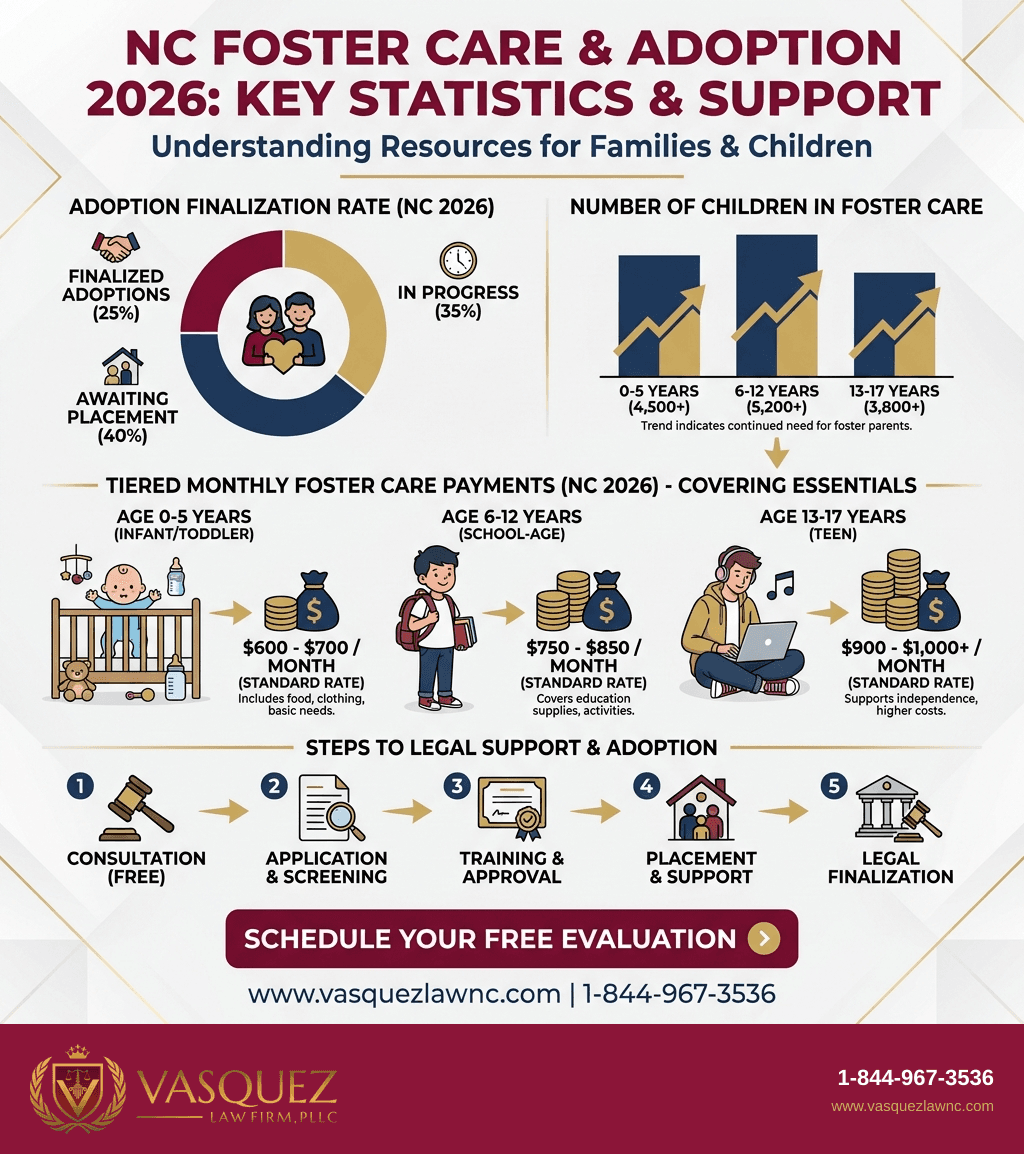
- About 12,000+ children in foster care (2026)
- Average time in foster care: 15 to 24 months
- 35% of foster children adopted within 3 years
- Main reasons for foster care: neglect and parental substance abuse
Types of Foster Care Homes
North Carolina has different foster home types: regular foster care, therapeutic foster care for children with special needs, and respite care homes for short-term help. Each type needs special training and certification.
Legal Basis of Foster Care in North Carolina
North Carolina laws like N.C. Gen. Stat. § 7B-507 set the rules for foster care placement and oversight. They explain how courts handle custody and visitation while children are in foster care.
How to Become a Foster Parent in Raleigh NC
To become a foster parent in Raleigh, you must apply with the county Department of Social Services. You will have background checks, complete required training, and have your home inspected. North Carolina’s foster parent certification process makes sure children go to safe and ready homes.
Training teaches about child development, trauma-informed care (which means understanding how trauma affects children), discipline methods, and legal duties. The home inspection checks safety, bedroom size, and cleanliness to meet state rules.
Foster parenting needs patience and commitment. It plays a key role in helping children during hard times. Vasquez Law Firm can help you understand certification rules to make sure your application follows NC law. You can also find more about certification on the family law practice area page.
Step 1: Submit an Application
You start by filling out paperwork. The county agency checks your criminal history, child abuse registry, and other factors to see if you are suitable.
Step 2: Complete Training
North Carolina requires at least 27 hours of training. This includes pre-service foster parent education called PRIDE (Parent Resources for Information, Development, and Education).
Step 3: Home Study and Inspection
Home visits check bedroom size, safety equipment, and if your home meets NC foster care bedroom rules.
NC Foster Care Stipends and Bedroom Requirements
Foster parents in North Carolina get monthly payments called stipends. These cover basic needs like food, clothing, and transportation. The amount depends on the child's age and needs. In 2026, rates range from about $700 to over $1,200 per month for each child.
The stipend is not income. It reimburses expenses for care. It does not pay for your time or services. This follows federal and state rules. Knowing this helps future foster parents prepare for the commitment.
North Carolina foster care bedroom rules say each child must have a bedroom that is big enough and private. This depends on the child's age, sex, and special needs. Usually, children of different genders over certain ages must have separate bedrooms.
If you do not meet bedroom standards, certification can be delayed. Vasquez Law Firm's family law team can explain these rules and help with inspection issues.
Monthly Stipend Amounts (2026)
- Children age 0-5: About $900
- Children age 6-11: About $950
- Children age 12-18: $1,000 to $1,200 depending on needs
Bedroom Requirements Summary
- Each child over age 5 must have their own bedroom or share with a child of the same gender
- No more than two children per bedroom
- Bedrooms must have good ventilation, heating, lighting, and space
Navigating NC Adoption After Foster Care
Many foster children in North Carolina can be adopted if they cannot return to their birth parents. The NC adoption photolisting service shows photos of children waiting for permanent homes. This helps families find a good match.
Adoption through foster care involves legal steps to end birth parents' rights and finalize adoption. This process needs work with social services, courts, and lawyers. Adoption may be free or cost some money depending on the case.
Vasquez Law Firm offers help with legal steps after fostering. We protect your rights and help make the transition smooth for children.
Steps to Adopt from Foster Care in NC
- Get foster parent certification
- Keep caring and supporting the child
- Work with social services to say you want to adopt
- Attend court hearings to end birth parents’ rights if needed
- File adoption papers and finish the process
NC Adoption Photolisting
The North Carolina Kids Adoption and Foster Care Network posts photos and profiles of children ready for adoption. This helps families find children who need homes.
Cost of Adoption
Adopting from foster care may be free or have small costs. These are often paid by subsidies or tax credits.
Common Mistakes to Avoid in NC Foster Care
- Missing training requirements: Finish all PRIDE and other trainings to avoid delays.
- Ignoring bedroom rules: Not meeting bedroom size and setup rules often causes home inspection failure.
- Misunderstanding stipend uses: Stipends only pay expenses; do not expect income.
- Not consulting a lawyer: Foster care and adoption laws are complex; legal advice is important.
- Delaying legal paperwork: Filing adoption and custody papers on time is very important.
- Underestimating emotional demands: Fostering needs patience and understanding of child trauma.
- Not communicating with DSS: Working with child welfare agencies is essential.
If you remember one thing: Foster care has strict state oversight to protect children’s well-being. Prepare well and get legal help.
Timeline and What to Expect in the Foster Care Process
- Application to certification: Usually 3 to 6 months, depending on training and inspections.
- Child placement: Happens after certification and matching with child’s needs.
- Placement duration: Usually several months to a few years depending on case progress.
- Adoption proceedings: Can take 6 to 12 months or more after ending parental rights.
Knowing this timeline helps foster parents plan and stay patient during the process.
When to Call a Family Law Attorney About Foster Care
- If your license is denied or delayed
- If child custody or visitation is disputed
- If you have questions about adoption rights and legal steps
- If DSS investigates you with allegations
- When negotiating foster care agreements
- If you need help understanding NC foster care stipend or bedroom rules
- If you want to appeal a foster care decision
About Vasquez Law Firm
At Vasquez Law Firm, we mix care with strong representation. Our motto "Yo Peleo®" (I Fight) shows our promise to stand up for your rights. Whether you want to foster or adopt in Raleigh, NC, our team gives experienced legal advice for your situation.
- Bilingual Support: Se Habla Español – Spanish-speaking lawyers and staff available.
- Service Areas: North Carolina, including Raleigh, with deep family law knowledge.
- Experience: Over 30 years helping clients with foster care and adoption legal matters.
- Results: Thousands of successful cases with personal care.
Attorney Trust and Experience
Attorney Vasquez has a JD degree and 15 years of experience. Licensed by the North Carolina State Bar, she knows local family law and foster care well. She helps clients protect children’s best interests.
Don't wait to get the help you need. Call us now for quick assistance.
Se Habla Español
Frequently Asked Questions
How much money do you get for fostering in NC?
Foster parents get monthly payments usually between $700 and $1,200 depending on the child’s age and needs. These payments cover food, clothing, and transportation costs but are not income. Rates can vary by county and child’s situation.
Can you foster if you have schizophrenia?
Having schizophrenia does not automatically stop you from being a foster parent in North Carolina. The state looks at your ability to give a safe, stable home. Your medical history and ability to care for the child are checked during licensing.
How hard is it to become a foster parent in NC?
The process needs application, background checks, training, and home inspection. It can take several months. It is made to keep foster children safe and well, so preparation is important.
Are there newborns in foster care?
Yes, newborns can be placed in foster care if safety is an immediate concern. Foster homes with special approval for infant care are assigned to give needed care and attention.
What are NC foster care bedroom requirements?
Each foster child over age 5 must have their own bedroom or share with a child of the same gender. Bedrooms must have enough space, privacy, and safety features. No more than two children per bedroom are allowed.
How do I find NC adoption photolistings?
North Carolina has a kids adoption and foster care network website with photos and profiles of children needing permanent homes. This helps parents connect with children available for adoption.
Can I foster and then adopt the same child in North Carolina?
Yes, many foster parents adopt children in their care if returning to birth parents is not possible. The law requires ending birth parents' rights before adoption is final.
What mistakes should I avoid in NC foster care?
Common mistakes include missing training deadlines, not meeting bedroom rules, misunderstanding stipend use, and not getting legal advice. Good preparation and help can avoid these problems.
Sources and References
Take the first step toward justice today. Our team is ready to help.
Start Your Free Evaluation Now
Call us: 1-844-967-3536
Se Habla Español - Estamos aquí para ayudarle.


William Vasquez
Founder & CEO, Vasquez Law Firm, PLLC
William Vasquez is the founder and CEO of Vasquez Law Firm, PLLC, a results-driven firm specializing in immigration, criminal defense, family law, personal injury, and workers' compensation. A U.S. Air Force veteran and recipient of the Joint Service Achievement Medal, William is dedicated to fiercely fighting for his clients' rights.