What Is In-State Tuition and How It Works in Orlando 2026
Discover how in-state tuition Florida requirements work in 2026. Learn who qualifies and how to apply. Contact Vasquez Law for a free consultation.
Published on April 11, 2026
Talk to an immigration attorney
Free call. A clear plan for your case.
Free & confidential · Se habla espanol · 24/7

Have questions? Talk to an attorney - free evaluation.
Call 1-844-967-3536Worried how the latest immigration news affects you?
Schedule a confidential case review with an immigration attorney - know exactly where you stand.
What Is In-State Tuition and How It Works in Orlando 2026
In-state tuition can significantly reduce college costs, especially for students in Orlando and across Florida. In 2026, understanding who qualifies for in-state tuition is crucial for Dreamers and other residents. This article explains the meaning of in-state tuition, Florida-specific requirements, and steps to qualify. Whether you’re a North Carolina or Florida resident, this guide helps you learn how to access affordable education and navigate related immigration considerations.
Need help with your case? Our experienced attorneys are ready to fight for you. Se Habla Español.
Or call us now: 1-844-967-3536
Quick Answer
In-state tuition refers to the reduced tuition rate offered to students legally residing in a state for a defined period, often 12 months. In Florida and North Carolina, meeting certain residency and immigration criteria is essential to qualify. Dreamers and other immigrants must provide documentation proving residency and lawful status where applicable.
- In-state tuition means lower college costs
- Florida requires living 12+ months to qualify
- Residency proofs include driver's licenses and tax documents
- Undocumented students have specific pathways in Florida
- Eligibility may differ between NC and FL
Understanding In-State Tuition
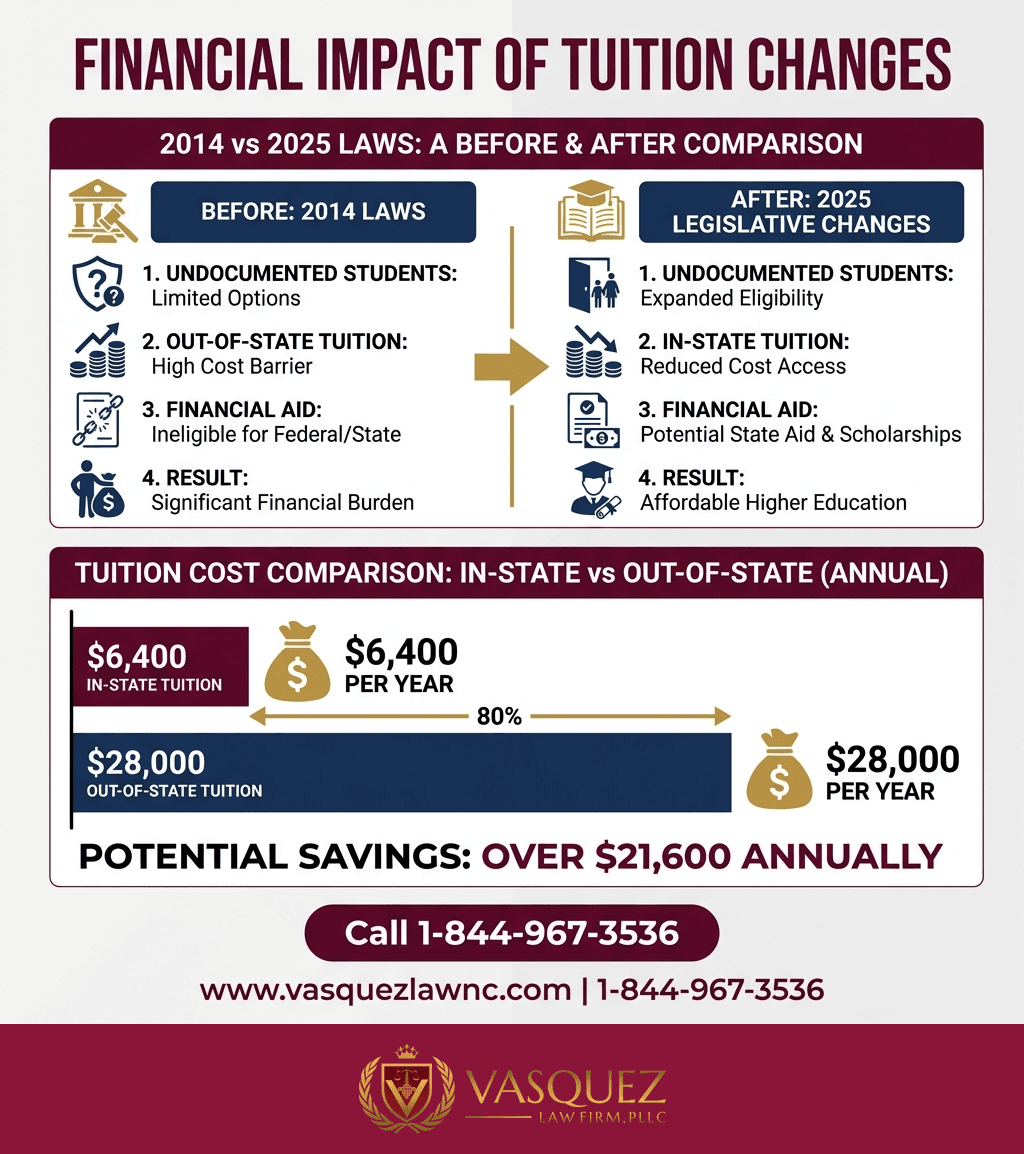
College tuition costs vary widely between in-state and out-of-state rates. For example, the University of Florida’s in-state tuition in 2026 is roughly $6,400 per year, while out-of-state tuition exceeds $28,000. This difference can make or break an aspiring student’s ability to attend college.
The term "in-state tuition" means paying tuition at a rate for residents of a state, which is lower than what out-of-state residents pay. Residency is determined by state laws, which often require living in the state continuously for at least 12 months before enrollment.
In Florida, the concept has specific meanings and exceptions, especially for international students and Dreamers. North Carolina also offers in-state tuition but with its own regulations. Understanding these laws helps students, especially those with immigration concerns, plan their education affordably.
Vasquez Law Firm offers guidance on residency and immigration issues to help you qualify for in-state tuition benefits. Learn more about our immigration services.
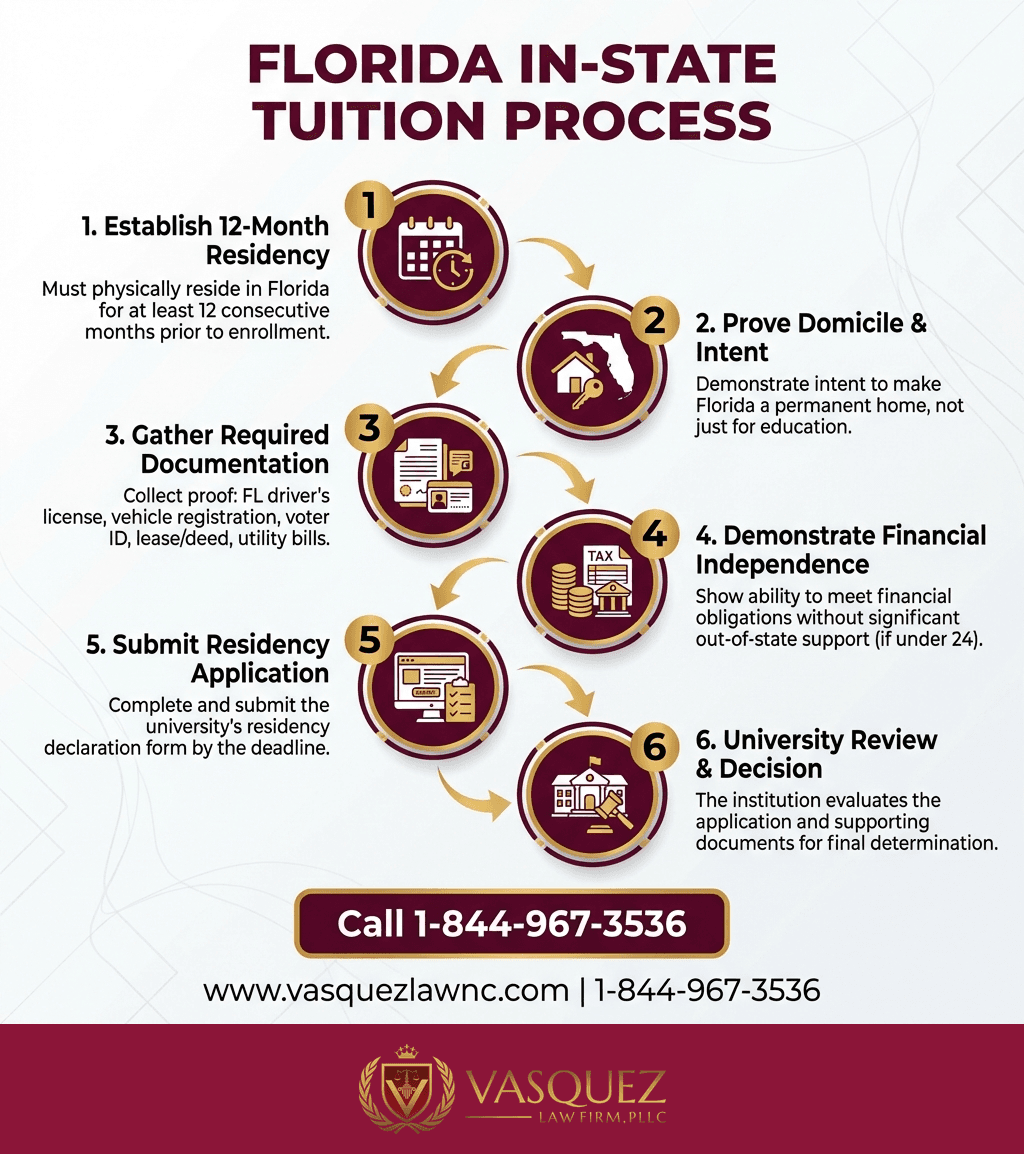
Step-by-step: How to Qualify
- Establish physical presence: Live in the state for at least 12 consecutive months before enrolling.
- Document your residency: Obtain state-issued ID, driver's license, or evidence of lease and tax payments.
- Confirm immigration status: Provide required documents if you are an immigrant, legal resident, or undocumented student under state-specific policies.
- Apply for residency classification: Submit residency forms during college application or enrollment.
- Meet any additional college-specific requirements: Check the university’s procedures for residency.
Additional Factors
Some states consider factors like intention to stay, voter registration, and employment status. Laws for undocumented students vary. In Florida, Senate Bill 1408 (as of 2026) and the Florida Dream Act offer pathways to pay in-state tuition under certain conditions.
University of Central Florida (UCF)
UCF, located in Orlando, follows Florida state rules but may have specific internal policies. If you are a Dreamer or undocumented, UCF requires detailed proof of residence and school attendance.
North Carolina Differences
North Carolina offers different requirements, with stricter immigration status considerations. Consulting with a lawyer like Attorney Vasquez can help clarify eligibility.
Don't wait to get the help you deserve. Call us now for immediate assistance.
Se Habla Español
Documents and Evidence Checklist
- Valid state-issued ID or Florida driver’s license
- Lease or mortgage agreements showing continuous residence
- Utility bills or bank statements with your name and Florida address
- Tax returns or W-2 forms as proof of financial residency
- School attendance records (for minors or Dreamers)
- Immigration documents such as green cards, visa forms, or deferred action papers
- Voter registration and employment records, if applicable
- Completed residency affidavit required by your college or university
Why Proper Documentation Matters
Missing or inconsistent documentation can delay or deny in-state tuition classification, resulting in higher tuition bills. Advanced preparation and legal assistance improve your chances.
Timeline: What to Expect
- 12+ months before enrollment: Establish residency by living in Florida or North Carolina.
- 6 months to enrollment: Gather and organize residency documents.
- At application: Complete residency affidavits and submit documents to college admissions.
- After enrollment: Monitor status notifications; respond promptly to requests.
- Renew residency status: For multi-year programs, periodically confirm residency as required.
Application Deadlines
Each college has deadlines to declare residency. Missing these can mean paying out-of-state rates for the academic year.
Costs and Fees: What Impacts the Price
- Residency classification: In-state tuition can save $10,000 to $20,000 annually.
- Documentation expenses: Fees for obtaining certain records or legal advice.
- Application processing fees: Colleges may charge fees to process residency petitions.
- Legal assistance: Consulting with immigration attorneys may incur costs but often prevents costly mistakes.
- Potential penalties: Failing to maintain residency status can lead to paying retroactive higher tuition.
Common Mistakes and How to Avoid Them
- Waiting too late to establish residency: Begin living in-state at least 12 months prior.
- Incomplete or outdated documents: Keep documents current and consistent.
- Failing to clarify immigration status: Know your eligibility under federal and state laws.
- Missing application deadlines: Track all deadlines carefully.
- Misunderstanding state laws for undocumented students: Consult legal experts.
- Using school attendance alone for residency: Physical presence and intent are key.
- Assuming automatic qualification: Residency is not automatic; requires proof.
- Not reporting changes in residency: Inform colleges of any address or status changes.
If you only remember one thing: Residency documentation must prove both physical presence and intent to remain.
Florida and North Carolina Specifics
Florida Notes
Florida requires a minimum 12-month physical presence before enrollment. Undocumented students may qualify through the Florida Dream Act by graduating from a Florida high school and signing an affidavit for permanent residency application. State ID and tax filing documents greatly support claims of residency.
The University of Florida and UCF follow these guidelines but may have different internal deadlines or supplemental requirements. If you have immigration questions, our immigration lawyers in Orlando can help.
North Carolina Notes
North Carolina requires 12 months of residence and lawful presence to qualify for in-state tuition. Dreamers may find it more difficult to qualify here due to stricter eligibility. State-issued ID and tax records are essential. It is advisable to consult with experienced lawyers before applying.
Nationwide Concepts
Federal immigration status impacts eligibility for in-state tuition. States can have different laws, but continuous state residence and intention to remain are universal criteria. The 8 U.S.C. § 1255 governs adjustment of status, affecting some students’ eligibility. Attorneys at Vasquez Law refer to such federal rules alongside local laws in helping clients.
When to Call a Lawyer Now
- If your residency status is unclear or challenged by the school.
- If you are an undocumented student unsure about in-state tuition eligibility.
- If immigration status affects your ability to prove residency.
- If deadlines for residency classification are approaching.
- If you received an out-of-state tuition bill unexpectedly.
- If you need help with documentation collection or affidavit preparation.
- If you qualify for special programs like the Florida Dream Act and need clarity.
- If you want to appeal a denial of in-state status.
About Vasquez Law Firm
At Vasquez Law Firm, we combine compassion with aggressive representation. Our motto "Yo Peleo" (I Fight) reflects our commitment to standing up for your rights and helping clients access education and immigration solutions.
- Bilingual Support: Se Habla Español - our team is fully bilingual.
- Service Areas: North Carolina, Florida, and nationwide immigration services.
- Experience: Over 30 years helping clients navigate complex legal matters including immigration and residency.
- Results: Thousands of successful cases across multiple practice areas.
Attorney Trust and Experience
Attorney Vasquez holds a Juris Doctor degree and is admitted to practice in both the North Carolina State Bar and Florida Bar. With over 15 years of dedicated legal experience, he has built a reputation for personalized attention and trustworthy representation for students navigating in-state tuition challenges.
Frequently Asked Questions
What is the meaning of in-state tuition?
In-state tuition is a discounted tuition rate offered to students who have established residency in a state, usually for 12 or more months. This rate is lower than that charged to out-of-state students. It saves thousands of dollars annually, but eligibility varies by state and the student’s immigration status.
Who qualifies for in-state tuition in Florida?
Florida residents who have lived in the state at least 12 months before enrollment generally qualify. This includes U.S. citizens, permanent residents, and some undocumented students under the Florida Dream Act. Proof of residency is required, including state ID, tax returns, or school attendance records.
What documents prove you qualify for in-state tuition?
Documents like a state-issued driver's license, lease agreements, utility bills, tax returns, and immigration paperwork help prove residency. Colleges may have checklists for required documents. Consistent and current documentation is essential for approval.
Does having an undocumented status affect eligibility for in-state tuition?
Yes, undocumented students have limited pathways but may qualify in Florida through the Florida Dream Act if they meet residency and school attendance requirements. The laws vary between states, so consulting with an immigration lawyer is beneficial to understand your rights.
Can international students get in-state tuition in Florida?
International students may become eligible if they have legal permanent residence or certain visa types and meet residency duration requirements. Some universities like UCF have additional policies. Permanent physical presence and intent to reside are key factors.
What is the difference between in-state and out-of-state tuition?
In-state tuition rates are lower and reflect residency in the state, often subsidized by state taxes. Out-of-state tuition is higher and charged to non-residents. The difference can amount to tens of thousands per year, affecting a student's ability to afford college.
How does a family income affect tuition eligibility at Harvard?
Harvard provides need-based aid, and families earning under $200,000 may receive significant tuition discounts or free tuition depending on assets and family size. This is not related to in-state tuition but greatly impacts affordability.
What are common mistakes students make with in-state tuition applications?
Common errors include missing deadlines, failing to provide all required documents, misunderstanding residency laws, or assuming eligibility without proof. Legal guidance can prevent these costly mistakes.
Sources and References
- U.S. Citizenship and Immigration Services (USCIS)
- Executive Office for Immigration Review
- Legal Information Institute
- North Carolina Courts
Take the first step toward justice today. Our team is standing by to help you navigate in-state tuition questions and immigration concerns. Contact Vasquez Law Firm for a free case evaluation.
Start Your Free Evaluation Now
Call us: 1-844-967-3536
Se Habla Español - Estamos aquí para ayudarle.

William Vasquez
Founder & CEO, Vasquez Law Firm, PLLC
William Vasquez is the founder and CEO of Vasquez Law Firm, PLLC, a results-driven firm specializing in immigration, criminal defense, personal injury, and workers' compensation. A U.S. Air Force veteran and recipient of the Joint Service Achievement Medal, William is dedicated to fiercely fighting for his clients' rights.
Related Legal Services
Need legal help? Learn more about how our immigration attorneys can help, or contact us for a free evaluation.
You can also visit our NC immigration team for more information.