What Are Immigration Courts and How Do They Work in 2026?
Need to check your immigration court case status or court date? Learn how immigration courts work in 2026 and get expert help. Contact Vasquez Law today.
Published on April 10, 2026
Talk to an immigration attorney
Free call. A clear plan for your case.
Free & confidential · Se habla espanol · 24/7

Have questions? Talk to an attorney - free evaluation.
Call 1-844-967-3536Check your case status now
Look up your immigration case below, then talk to an attorney about what it means — free.
Questions about your result?
Talk to an attorney about your case — free, no obligation.
What Are Immigration Courts and How Do They Work in 2026?
Immigration courts play a central role in deciding cases involving individuals facing removal or other immigration issues. Whether you need to check your immigration court case status or understand how immigration judges operate, knowing how immigration courts work in Smithfield, North Carolina, and Florida in 2026 is crucial. This comprehensive guide explains the immigration court process, how to find your court date, the roles of immigration judges, and what to expect throughout your case. At Vasquez Law Firm, we specialize in immigration services across North Carolina, Florida, and nationwide, offering bilingual support and experienced legal guidance to Dreamers and other immigrant communities.
Need help with your case? Our experienced attorneys are ready to fight for you. Se Habla Español.
Or call us now: 1-844-967-3536
Quick Answer
Immigration courts handle removal and other immigration cases governed by federal law. You can check your immigration court case status online through the EOIR system or by contacting your court. Immigration judges hear cases, make decisions, and are appointed by the U.S. Attorney General.
- Immigration judges oversee removal and relief hearings
- Case status updates are available online via EOIR
- Check hearing dates on official EOIR sites or court offices
- Help from experienced immigration lawyers improves outcomes
- Vasquez Law offers bilingual legal support in NC and FL
Understanding Immigration Courts
In 2026, immigration courts remain a critical part of the U.S. immigration system. They are federal courts separate from state courts and operate under the Executive Office for Immigration Review (EOIR), a division of the U.S. Department of Justice. Immigration courts hear cases primarily involving removal (deportation), asylum applications, cancellation of removal, adjustment of status, and bond hearings. These courts decide whether an individual can remain in the United States legally or must leave.
Immigration courts do not handle all immigration matters. For example, applications for visas, Green Cards, or citizenship are typically managed by U.S. Citizenship and Immigration Services (USCIS), a separate federal agency (USCIS). Immigration courts focus specifically on cases referred for removal or other judicial reviews.
Vasquez Law Firm’s experienced immigration attorneys in Smithfield assist clients at every stage of court proceedings, explaining court terms and helping gather necessary evidence to support their cases. Knowing which immigration court handles your case is the first step toward preparation.
How to Check Your Immigration Court Status
When your removal case is initiated, you receive a "Notice to Appear" outlining the charges and court dates. Staying informed about your immigration court case status is essential. If you miss a hearing, the court may issue a removal order in your absence.
The Executive Office for Immigration Review provides an Automated Case Information system where you can enter your Alien Registration Number (A-Number) to check your court case status, upcoming hearings, and decisions. You may also contact the immigration court clerk’s office directly, especially the court serving Smithfield cases.
Regularly checking your immigration court date is critical to avoid missing hearings. Your attorney can also track this for you and provide guidance on required documents and preparation.
Roles and Appointment of Immigration Judges
Immigration judges play a pivotal role in the removals and immigration relief process. They manage hearings, evaluate evidence, question parties, and issue decisions based on immigration law. These judges work under the EOIR and are federal employees appointed by the U.S. Attorney General, requiring specialized training but serving without a fixed term.
Judges must remain impartial and follow the Immigration and Nationality Act (INA) and other relevant statutes. However, if you feel your judge shows bias, there is a process to file motions for recusal with valid legal grounds. Our immigration legal services include representation in such matters.
Immigration judge rating or performance is not publicly disclosed like other courts, but legal professionals and firms track decisions for internal assessments. Understanding your judge’s tendencies can help prepare an effective case strategy.
What to Expect in Your Immigration Court Case
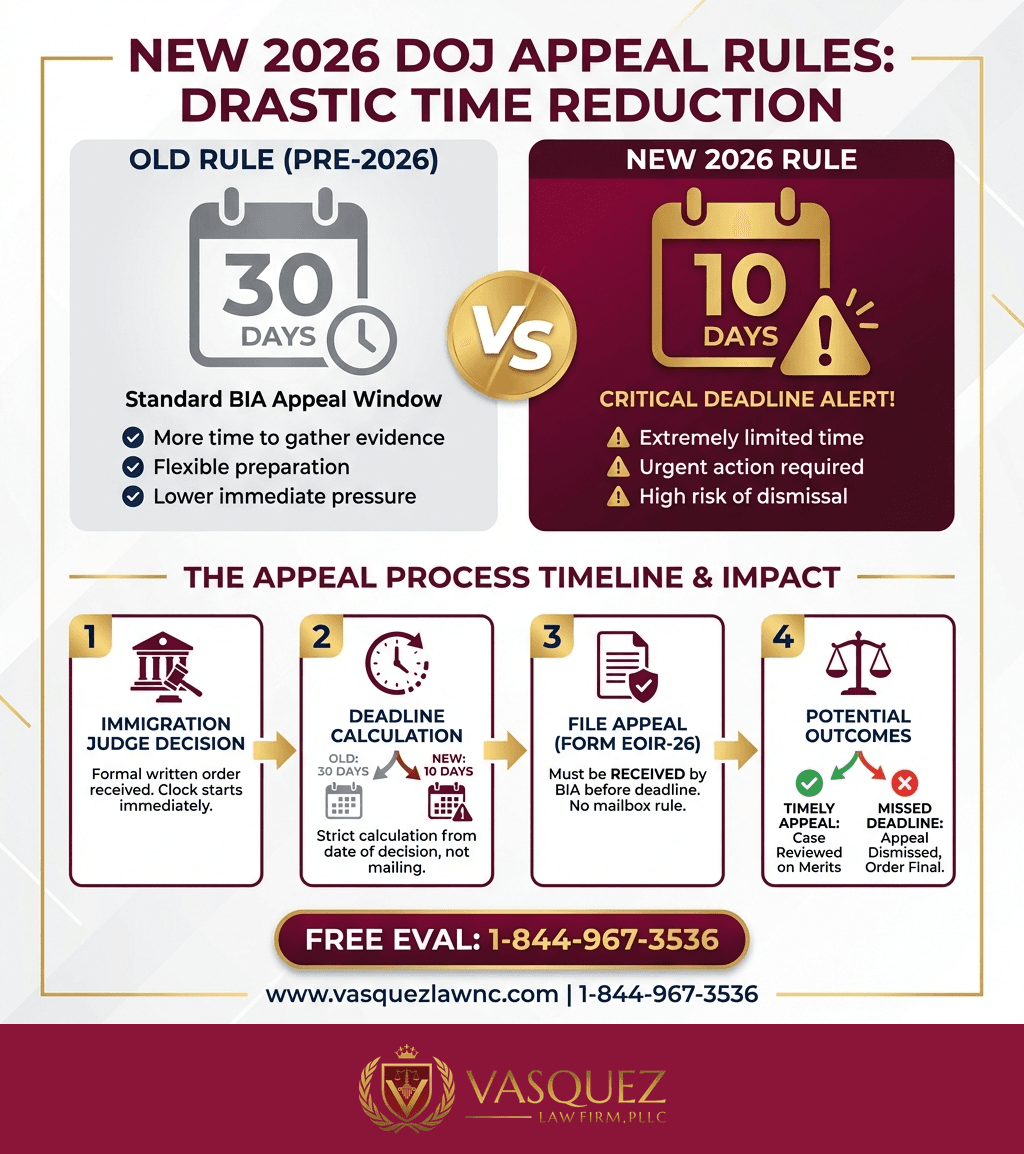
Your immigration court process typically begins with a Master Calendar Hearing, where procedural details are set. Next comes the Individual Hearing, where your case’s facts and merits are thoroughly examined. Immigration judges then issue rulings, which may be appealed to the Board of Immigration Appeals (BIA).
The timeline varies but often spans several months to years depending on case complexity and backlog. Staying organized, attending all hearings, and having legal counsel can help manage this timeline effectively.
Vasquez Law Firm provides detailed preparation assistance, helping clients compile evidence, submit applications for relief, and understand each phase. Our team supports Dreamers and other immigrants navigating these critical steps in Smithfield and throughout North Carolina and Florida.
Common Mistakes and How to Avoid Them
- Missing scheduled hearings: Always check your immigration court date and notify your attorney immediately if you cannot attend
- Failing to submit evidence on time: Gather and submit proof early to strengthen your case
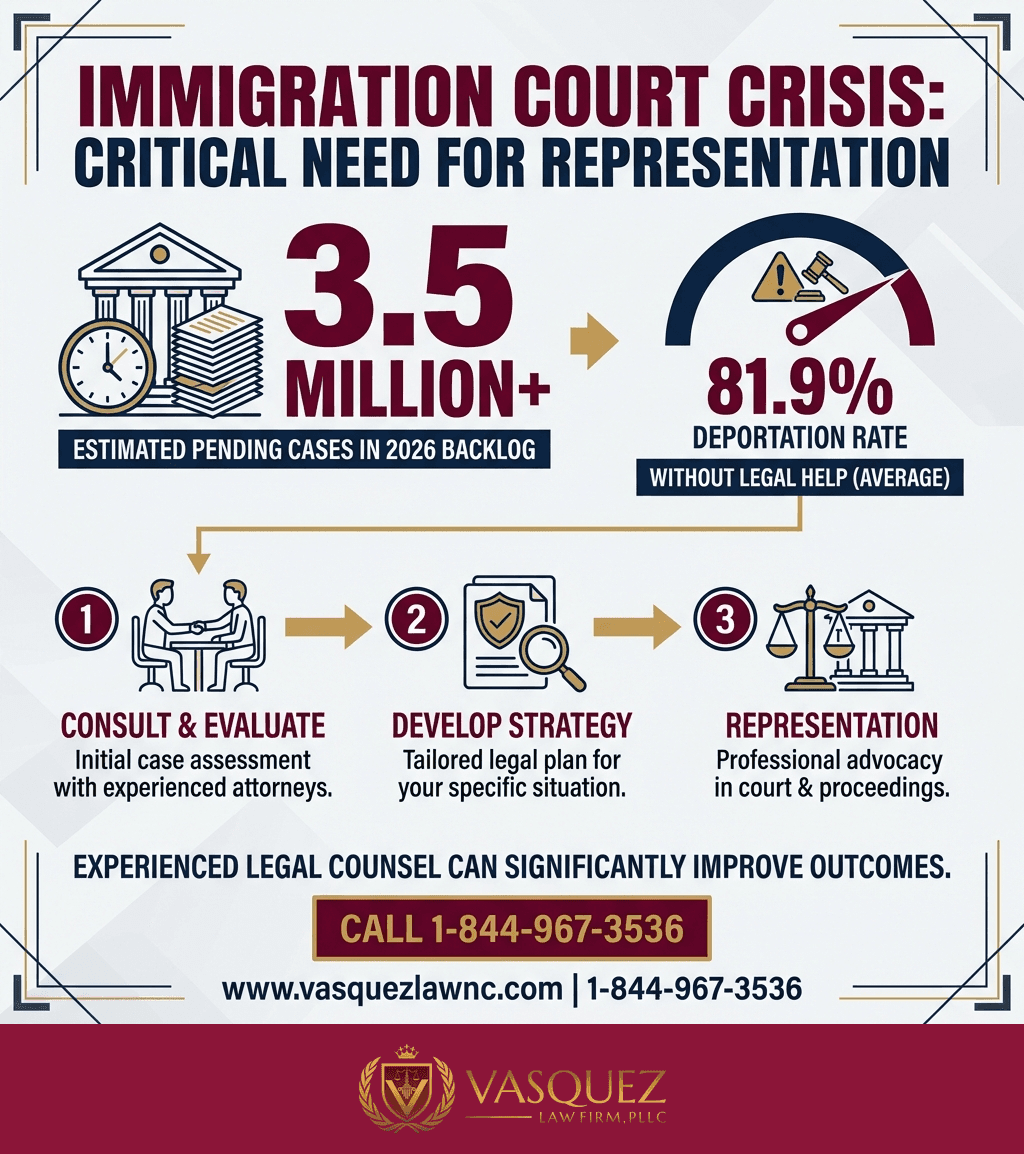
- Not hiring legal representation: Navigating immigration courts alone reduces chances of success
- Ignoring notices or requests from the court: Prompt communication is crucial
- Misunderstanding your rights or procedures: Consult an experienced immigration lawyer to clarify
- Failure to update address with the court: Missing mail can lead to default decisions
- Waiting too long to file motions or appeals: Timely filings are critical for legal remedies
If you only remember one thing: Always stay informed about your hearing dates and consult a qualified immigration attorney early.
North Carolina and Florida Immigration Court Notes
NC notes
North Carolina hosts several immigration court locations under EOIR jurisdiction. Smithfield residents may attend nearby district offices, and understanding local court procedures helps with preparation. Vasquez Law Firm’s immigration attorneys in North Carolina are familiar with these venues.
FL notes
Florida has multiple EOIR immigration courts, including Miami and Orlando. Immigration cases here follow federal methods but with specific operational nuances. Vasquez Law Firm provides bilingual support across Florida to guide clients through these processes.
Nationwide concepts (general only, rules vary)
While immigration law is federal, procedural rules can differ slightly by location. Always confirm local court rules and deadlines. Nationwide, EOIR manages all immigration courts, and USCIS handles benefits applications. Federal statutes like 8 U.S.C. §§ 1229a set uniform procedures.
When to Contact an Immigration Lawyer
- If you received a Notice to Appear or court hearing notice
- If you miss or fear missing a court date
- When preparing to apply for asylum, cancellation of removal, or relief
- If you think your immigration judge is biased or unfair
- To appeal a decision or file motions to reopen or reconsider
- Before responding to any court communication or government notices
- If you want help locating your court or checking your case status
- Facing complex issues like criminal bars or inadmissibility
About Vasquez Law Firm
At Vasquez Law Firm, we combine compassion with aggressive representation. Our motto "Yo Peleo" (I Fight) reflects our commitment to standing up for your rights.
- Bilingual Support: Se Habla Español - our team is fully bilingual
- Service Areas: North Carolina, Florida, and nationwide immigration services
- Experience: Over 30 years helping clients navigate complex legal matters
- Results: Thousands of successful cases across multiple practice areas
Attorney Trust and Experience
Attorney Vasquez holds a Juris Doctor degree and is admitted to practice in both the North Carolina State Bar and Florida Bar. With over 15 years of dedicated immigration legal experience, he has built a reputation for providing personalized attention and guiding clients through complicated immigration court proceedings.
Don't wait to get the help you deserve. Call us now for immediate assistance. Se Habla Español.
Frequently Asked Questions
What is the role of an immigration judge?
An immigration judge oversees removal and relief hearings in immigration court. They evaluate evidence and immigration law to decide if an individual can legally remain in the U.S. or must be removed. Judges aim to conduct fair hearings under federal guidelines.
How long do immigration judges serve?
Immigration judges serve as federal employees without fixed terms. They remain with the Executive Office for Immigration Review until reassigned or removed following federal employment rules, providing consistent oversight of immigration cases.
How are immigration judges appointed?
They are appointed by the U.S. Attorney General and work within the EOIR. Immigration judges receive specialized training to adjudicate complex immigration law matters fairly.
What types of cases do immigration judges handle?
Among others, immigration judges handle removal proceedings, asylum claims, cancellation of removal, adjustment of status, and bond hearings. Their decisions affect an immigrant’s legal status and ability to stay in the U.S.
How can I check my immigration court date?
You can check your court date using the EOIR’s Automated Case Information system or by calling the clerk’s office at your immigration court. Staying aware of your court date is vital to avoid missing hearings or risking removal orders.
Where can I find a list of immigration courts?
The EOIR website provides an official list of all immigration court locations across the U.S., including those in North Carolina and Florida. Knowing your court location helps you prepare and attend hearings on time.
What does the immigration court case status mean?
Case status reflects your current standing in the immigration court process, such as scheduled hearings, pending decisions, or case closure. Regularly checking your status helps you understand your next procedural steps.
Can I request a new judge if I believe mine is biased?
You may file a motion to recuse an immigration judge if you have valid reasons to suspect bias. This process requires careful legal steps, so working with an immigration attorney is recommended.
Sources and References
- U.S. Citizenship and Immigration Services (USCIS)
- Executive Office for Immigration Review (EOIR)
- North Carolina Courts
Take the first step toward justice today. Our team is standing by to help. Se Habla Español.
Start Your Free Evaluation Now
Call us: 1-844-967-3536
Se Habla Español - We're here to help.

William Vasquez
Founder & CEO, Vasquez Law Firm, PLLC
William Vasquez is the founder and CEO of Vasquez Law Firm, PLLC, a results-driven firm specializing in immigration, criminal defense, personal injury, and workers' compensation. A U.S. Air Force veteran and recipient of the Joint Service Achievement Medal, William is dedicated to fiercely fighting for his clients' rights.
Related Legal Services
Need legal help? Learn more about immigration case consultation, or contact us for a free evaluation.
You can also visit statewide immigration legal services for more information.