What Happens When Someone Is in Immigration Custody in 2026
Wondering how to locate someone in immigration custody? Learn about ICE detainee searches, detention centers, and your options in 2026. Get help now.
Published on April 6, 2026
Talk to an immigration attorney
Free call. A clear plan for your case.
Free & confidential · Se habla espanol · 24/7

Have questions? Talk to an attorney - free evaluation.
Call 1-844-967-3536Worried how the latest immigration news affects you?
Get a free, confidential case review with an immigration attorney - know exactly where you stand.
What Happens When Someone Is in Immigration Custody in 2026
If a loved one is in immigration custody, finding and understanding their situation can be confusing. In 2026, immigration custody means being detained by ICE or Border Patrol while immigration proceedings take place. Learn how to use tools like the ICE Detainee Locator and what to expect during detention. This guide explains your rights, the detention process, and how Vasquez Law Firm in Charlotte can assist you in navigating these challenges.
Need help with your case? Our experienced attorneys are ready to fight for you. Se Habla Español.
Schedule Your Free Consultation
Or call us now: 1-844-967-3536
Quick Answer
Immigration custody means being held by federal immigration authorities like ICE or Border Patrol after detention. You can locate someone in custody using the ICE Detainee Locator online or by contacting immigration detention centers. Knowing your loved one’s location and rights is vital to seek help and legal support.
- Immigration detention is federal custody pending immigration proceedings.
- The ICE Detainee Locator is an official online tool to search by name.
- Detention centers vary by region; Charlotte has nearby centers.
- Contacting an immigration attorney quickly can protect rights.
- Vasquez Law Firm offers bilingual support in NC and FL.
Understanding Immigration Custody
Imagine learning that a family member has been taken by immigration agents. In 2026, immigration custody means federal authorities hold someone because of immigration violations or pending deportation hearings. This custody is not criminal jail but a civil detention under agencies like U.S. Immigration and Customs Enforcement (ICE) or Border Patrol.
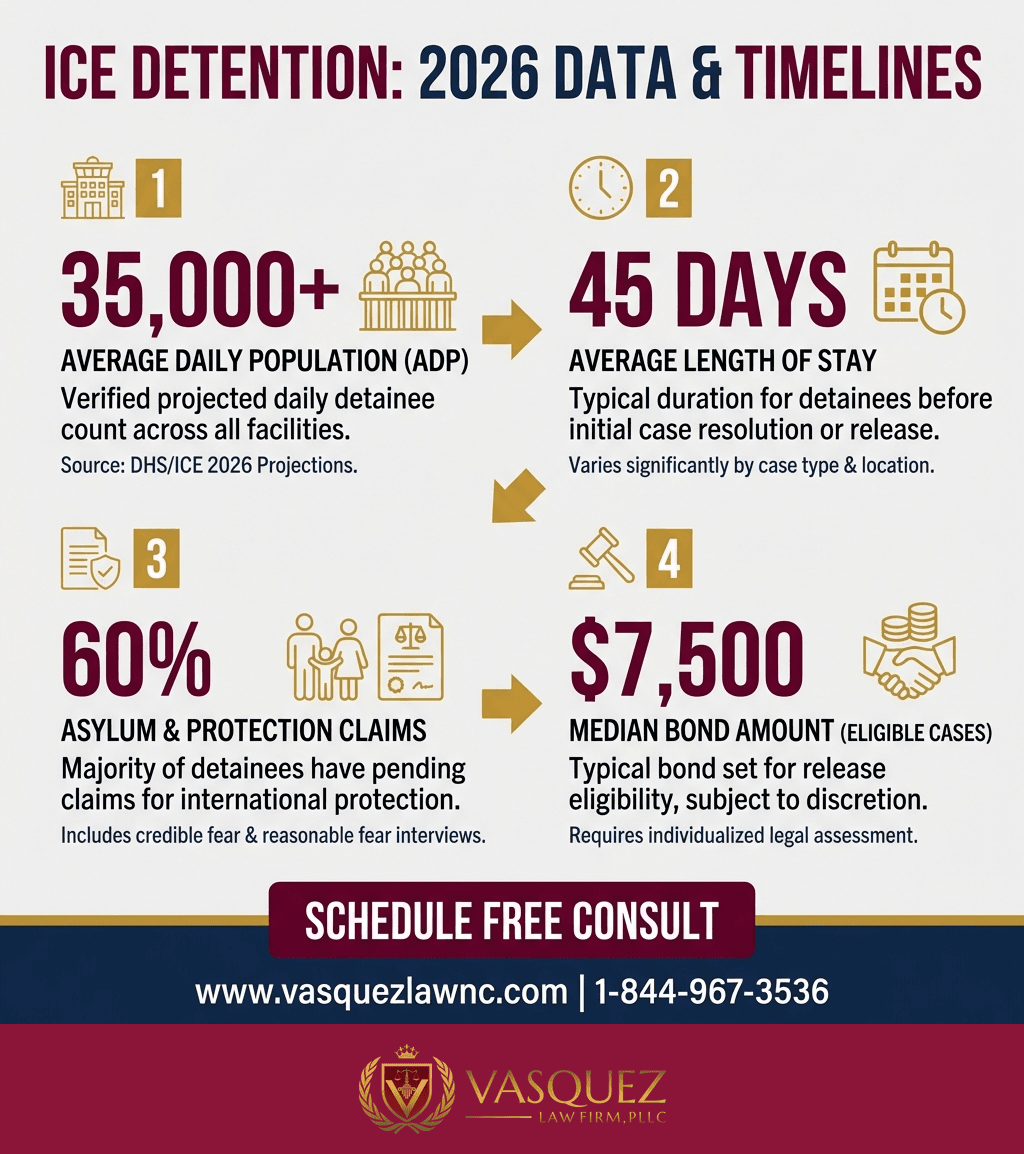
Immigration detention centers hold individuals until an immigration judge decides their status or removal. As of 2026, thousands are in detention nationwide, including many in North Carolina and Florida. Immigration custody can disrupt families and create urgent legal needs.
Immigration custody often follows arrest at the border, workplace raids, or after entering the U.S. without inspection. Detained individuals will appear before immigration courts, but while waiting, they remain in custody at facilities such as the Charlotte location or other regional detention centers.
Using the ICE Detainee Locator allows families to find detainees by name or A-Number. This tool is essential since detainees may be moved between centers. Knowing the exact detention center helps in sending mail, arranging visits, or obtaining legal counsel.
What Is an Immigration Detention Center?
Immigration detention centers are secure facilities managed by ICE or private contractors where non-citizens are held during their immigration case. These centers differ from federal prisons and focus on civil detention. Conditions vary but legal access is guaranteed by law.
Can ICE Detain U.S. Citizens?
Legally, ICE should not detain U.S. citizens; custody is intended for immigrants under removal or custody orders. However, mistaken detentions can occur. Families should act immediately to confirm the person's status and consult attorneys if citizenship is questioned.
Who to Call When ICE Takes Someone?
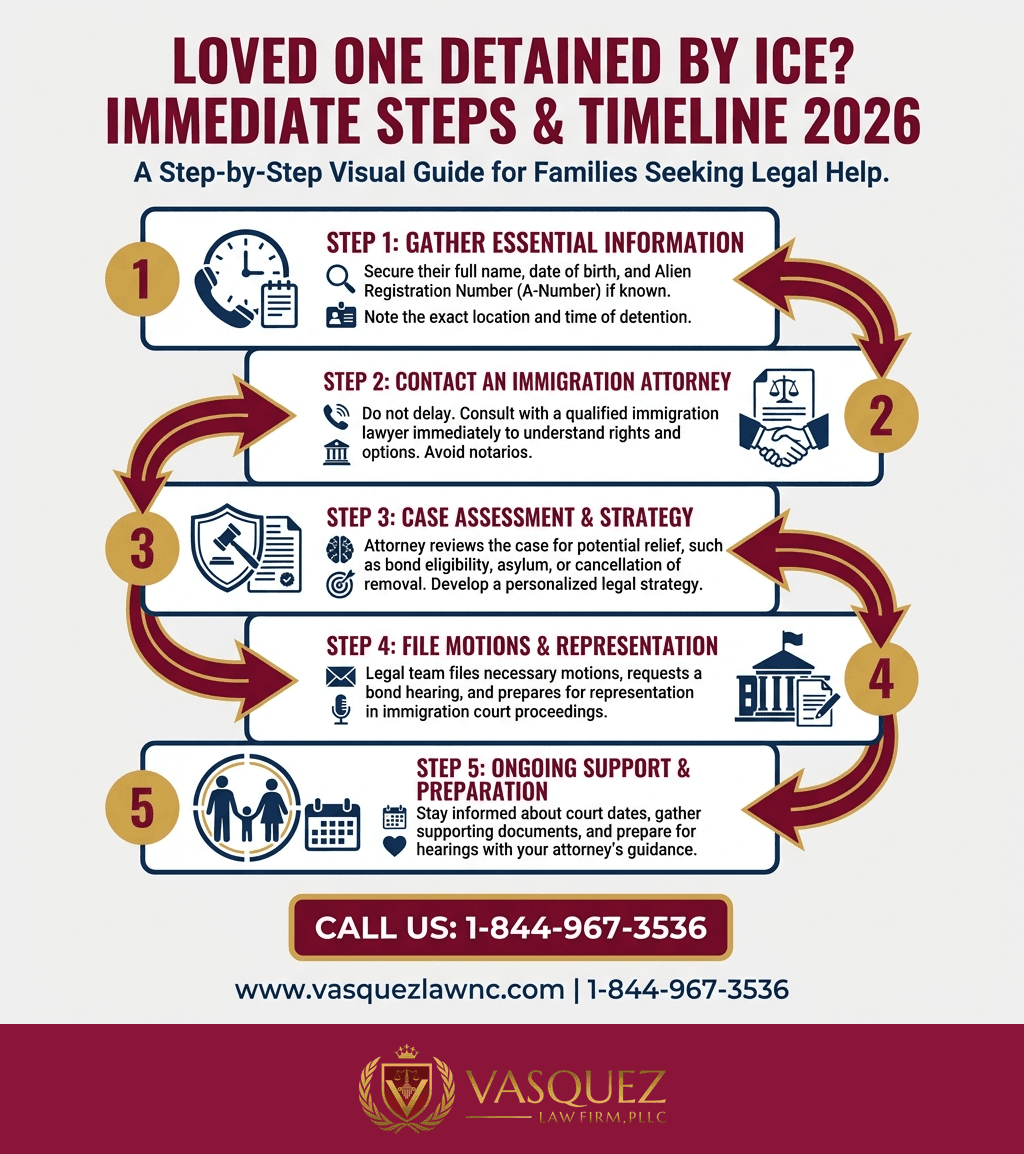
If ICE detains someone, contact an experienced immigration lawyer right away. You can also call the detention center to confirm the location. Vasquez Law Firm in Charlotte provides prompt assistance, guiding families on next steps.
Step-by-step: How to Locate Someone
- Use ICE Detainee Locator: The official tool found at ice.gov allows a search by detainee name or A-number. It lists the current detention center and status.
- Contact Detention Centers: Once you identify the center, call directly to verify information or learn visitation rules.
- Search Immigration Jail Inmate Lookup Databases: Some states may have additional resources for immigration detainees, including lists maintained locally.
- Request ICE Detainee Mugshots: Photos are part of records; families may request them for identification.
- Reach out to Border Patrol Detention Facilities: If detained near the border, check the Border Patrol Detainee Locator to confirm location.
- Consult an Immigration Attorney: Early legal support can protect rights and provide options to challenge detention.
- Keep Detailed Records: Write down all communication, times, names, and dates — important for case-building.
Why Use Immigration Search By Name?
Searching by name or Alien Registration Number is the most straightforward way to find someone. It helps avoid confusion in databases with many inmates and shows the current custody status quickly for immediate action.
Common Mistakes to Avoid
- Waiting to Search: Families often delay locating detainees, losing critical time for bail or legal help. Search immediately.
- Using Non-Official Tools: Relying on unofficial websites or rumors can cause misinformation. Use the ICE Detainee Locator and official sources.
- Ignoring Legal Counsel: Trying to manage custody issues without an attorney may hurt chances of release or legal success.
- Not Documenting Information: Failing to keep records of calls, dates, and officers contacted can hamper case management.
- Missed Deadlines: Immigration court hearing dates and bond requests have strict deadlines. Missing them can cause removals.
- Assuming Detention Is Permanent: Custody can change with legal advocacy. Never giving up hope is key.
- Disclosing Sensitive Information Unsafely: Share detainee info only with trusted legal representatives to avoid scams or misuse.
If you only remember one thing: Always act quickly, use official sources, and get legal help to protect your rights and loved ones in immigration custody.
Timeline: What to Expect in Detention
- Day 1 to 3: Detainment and initial processing; ICE conducts a custody determination and may set bond.
- Week 1: First court hearing, including bond hearing, often scheduled within days depending on location.
- Weeks 2 to 4: Immigration court hearings continue; detainee may remain in detention or be released on bond or parole.
- 1 to 3 Months: Cases vary widely; some detainees receive removal orders, others await further hearings or appeals.
- Ongoing: Detention duration depends on individual case complexity and legal decisions.
Costs and Fees: What Impacts the Price
- Legal Fees: Hiring an immigration attorney can involve consultation fees and case handling costs. Many offer free initial consultations.
- Bond Amounts: Immigration bond amounts vary from a few hundred to several thousand dollars, based on custody risk factors.
- Document Preparation: Costs for obtaining records or preparing applications may add fees.
- Travel and Communication: Visiting detention centers or sending documents can create additional expenses.
- Fee Waivers: Some detainees may qualify for fee waivers or pro bono help depending on income and circumstances.
NC, FL, and Nationwide Notes
North Carolina Notes
North Carolina has several detention facilities used by ICE, including in Charlotte and surrounding counties. Local support groups and immigration attorneys like those at Vasquez Law Firm provide crucial help for families seeking bond or relief.
Florida Notes
Florida serves as a major immigration detention hub with numerous centers, including Miami, where families often must navigate complex logistics to locate or visit loved ones. Legal assistance is essential to protect detainees' rights.
Nationwide Concepts (General Only, Rules Vary)
Immigration custody is governed federally. Detention centers operate under ICE policy set by the Department of Homeland Security. Procedures vary by location, and state laws offer limited roles. Nationwide, detainees retain the right to legal representation, bond hearings, and due process under 8 U.S.C. § 1226.
When to Call a Lawyer Now
- Someone is detained and you don’t know their location.
- Detained individual has a court hearing scheduled.
- You suspect wrongful detention or citizenship errors.
- ICE sets a high bond amount or denies bond.
- Detention conditions are dangerous or mistreatment is reported.
- There is a risk of imminent removal or deportation.
- You need to file for relief such as asylum, DACA, or cancellation of removal.
- Help is needed with detention center visits or communication.
About Vasquez Law Firm
At Vasquez Law Firm, we combine compassion with aggressive representation. Our motto "Yo Peleo" (I Fight) reflects our commitment to standing up for your rights.
- Bilingual Support: Se Habla Español - our team is fully bilingual
- Service Areas: North Carolina, Florida, and nationwide immigration services
- Experience: Over 30 years helping clients navigate complex legal matters
- Results: Thousands of successful cases across multiple practice areas
Attorney Trust and Experience
Attorney Vasquez holds a Juris Doctor degree and is admitted to practice in both the North Carolina State Bar and Florida Bar. With over 15 years of dedicated legal experience, he has built a reputation for providing personalized attention and achieving favorable outcomes for his clients facing immigration custody issues.
Don't wait to get the help you deserve. Call us now for immediate assistance.
Or schedule a free consultation. Se Habla Español.
Frequently Asked Questions
How do you know if someone is in immigration custody?
You can use the ICE Detainee Locator online tool to search for someone by name or Alien Registration Number. Calling local immigration detention centers can also help confirm if an individual is held there. Acting quickly to find the location is important for legal support and communication.
What does immigration custody mean?
Immigration custody involves being detained by ICE or Border Patrol during immigration enforcement or removal procedures. It is civil detention, not criminal jail, where detainees await hearings or deportation decisions.
Can ICE detain U.S. citizens?
Generally, ICE should not detain U.S. citizens. However, mistakes sometimes happen. If you believe a citizen is detained, it is vital to seek immediate legal help to verify status and challenge wrongful detention.
Who should I call when ICE takes someone?
Contact an immigration attorney immediately to understand rights and possible defenses. You can also call the detention center or ICE office to confirm the person's whereabouts and bail options.
What is the ICE Detainee Locator?
The ICE Detainee Locator is an official online database that allows families and attorneys to search for detainees by name or Alien Registration Number, providing information on detention location and status.
How long can someone stay in immigration custody?
Detention length varies widely depending on the immigration case, bond eligibility, and court schedule. Some detainees stay days while others remain months or longer until their case is resolved.
Can an immigration detainee be released on bond?
Many detainees may petition for bond to allow release while their case proceeds. Bond amounts vary and depend on flight risk and danger to the community. An attorney can request bond hearings.
What rights do detainees have during custody?
Detainees have the right to legal representation, bond hearings, humane treatment, and communication with family. They can also apply for immigration relief if eligible.
Sources and References
- U.S. Citizenship and Immigration Services (USCIS)
- Executive Office for Immigration Review
- ICE Detainee Locator
Take the first step toward justice today. Our team is standing by to help.
Start Your Free Consultation Now
Call us: 1-844-967-3536
Se Habla Español - Estamos aquí para ayudarle.
If you need legal assistance, learn more about get immigration legal help today, or call us at 1-844-967-3536 for a free consultation.

William Vasquez
Founder & CEO, Vasquez Law Firm, PLLC
William Vasquez is the founder and CEO of Vasquez Law Firm, PLLC, a results-driven firm specializing in immigration, criminal defense, personal injury, and workers' compensation. A U.S. Air Force veteran and recipient of the Joint Service Achievement Medal, William is dedicated to fiercely fighting for his clients' rights.
Related Legal Services
Need legal help? Learn more about get immigration legal help today, or contact us for a free evaluation.
You can also visit North Carolina immigration lawyers for more information.