What Happens Inside an ICE Facility in 2026?
Learn what an ICE facility is, how detention works, and your rights in 2026. Contact Vasquez Law for expert immigration help and a free consultation.
Published on May 31, 2026
Talk to an immigration attorney
Free call. A clear plan for your case.
Free & confidential · Se habla espanol · 24/7
Have questions? Talk to an attorney - free evaluation.
Call 1-844-967-3536Worried how the latest immigration news affects you?
Schedule a confidential case review with an immigration attorney - know exactly where you stand.
What Happens Inside an ICE Facility in 2026?
An ICE facility is a detention center where individuals suspected of immigration violations are held. In 2026, many immigrants in Raleigh, NC, and Orlando, FL, face challenges inside these centers. Understanding what an ICE facility is, how long people stay, and the rights involved can help you or your loved ones navigate this situation. Vasquez Law Firm provides compassionate immigration help in Raleigh and Orlando and can guide you through detention issues. This article explains ICE detention, visitor rules, timelines, and legal protections for detainees.
Need help with your case? Our experienced attorneys are ready to fight for you. Se Habla Español.
Or call us now: 1-844-967-3536
Quick Answer
An ICE facility is a government or contracted detention center where people suspected of immigration violations are held during processing or removal. Visits are allowed with restrictions, and stays can last weeks or months. Knowing facility rules and detainees' rights is important for legal protection.
- ICE facilities hold immigrants during immigration cases.
- Visits require prior registration and ID.
- Detention length varies by case complexity.
- Detainees have rights including legal representation.
- Conditions and procedures differ by facility.
What Is an ICE Facility?
In 2026, an ICE facility is a detention center operated directly by U.S. Immigration and Customs Enforcement or by private contractors under ICE oversight. These detention facilities hold people suspected of immigration violations, including those awaiting immigration court hearings or removal.
For example, the ICE facility in Arkansas is a notable center with high detainee capacity. Similarly, the ICE facility Broadview, IL, has gained attention for its size and detainee population. These centers differ in resources, security, and rules but share the common purpose of housing detainees during immigration proceedings.
ICE facilities are different from short-term Border Patrol holding centers, focusing on longer detention. These detention facilities can include government-run prisons or privately managed jails under contract. In Raleigh, NC, and Orlando, FL, detainees may be transferred to nearby or regional ICE facilities during their proceedings.
The legal authority for ICE detention arises under 8 U.S.C. § 1226, which allows arrest and detention during removal cases. Regulations under 8 C.F.R. § 236.1 specify detention conditions and release protocols. These laws govern how ICE manages detention and limits release eligibility.
For those seeking help, our immigration services include guidance during detention and removal processes.
Step-by-Step: Visiting Someone in Detention
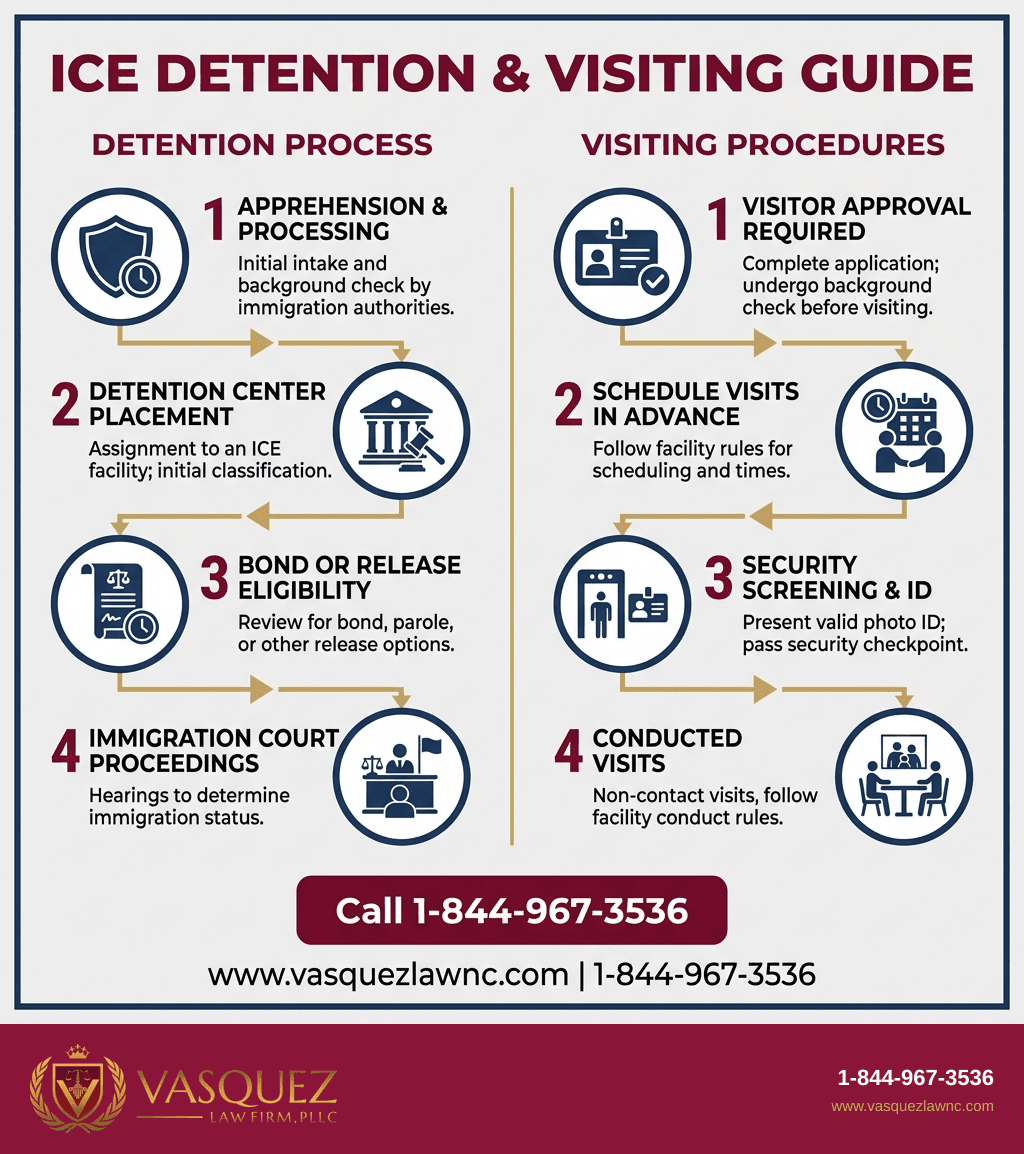
Visiting an ICE facility is not as simple as walking in. Each facility has strict rules. For example, to visit someone in the ICE facility Broadview, IL, you must pre-register and pass through security screenings.
Follow these steps to visit someone detained in an ICE facility:
- Confirm the detainee’s location: Use the ICE detention center inmate search tool to find where the individual is held.
- Check visitor rules: Each ICE facility has different visiting hours and policies. Check with the local facility or their website.
- Register in advance: Most facilities require visitors to request visitation appointments ahead of time.
- Bring official identification: Valid government-issued photo ID is a must.
- Pass security screening: Be prepared for metal detectors and restrictions on allowed items.
- Follow visitation rules: No physical contact, no unauthorized recordings, and limited visit duration.
Visiting someone detained can be crucial for emotional support and maintaining communication. Our team at Vasquez Law Firm can help you understand specific facility rules for Raleigh, NC, and Orlando, FL.
Timeline: How Long Detainees Stay
How long someone stays at an ICE facility varies widely. According to the Executive Office for Immigration Review, average detention times can range from a few weeks to several months. Complex cases involving removal hearings or appeals tend to last longer.
For example, detainees at ICE facilities in North Carolina might wait several months for their hearings, especially if they are seeking bond or relief applications. In contrast, some detainees may be held only for a brief period before release or transfer.
Common factors that affect detention length include:
- Availability of hearings and court dates
- Whether an individual is eligible for bond or release
- Complexity of legal claims and appeals
- Coordination with ICE enforcement and custody officers
- Security classification of detainee
Knowing the approximate timeline can help detainees and families plan legal strategies and visitations. Contacting experienced immigration lawyers in Raleigh and Orlando can provide case-specific timelines and advice.
Common Mistakes When Dealing with ICE Detention
- Failing to locate the detainee promptly: Not using the ICE detention center inmate search early delays help. Use resources to find exact facility location quickly.
- Not understanding facility rules: Each ICE facility has unique visitation, mail, and phone policies. Read and follow these to avoid denied visits or communication blocks.
- Missing bond eligibility: Many detainees qualify for bond but do not know it. Ask a lawyer to explore bonding options.
- Delaying legal representation: Waiting too long to get legal help can reduce success chances. Contact an attorney immediately after detention.
- Ignoring detainees’ rights: Detainees have rights to medical care, legal access, and humane treatment. Report violations promptly.
- Sending prohibited items: Visitors must only bring approved items. Contraband can lead to sanctions or denied visits.
- Believing detention means permanent removal: Detention is part of process; many detainees win relief or release before removal.
If you only remember one thing: early legal help and understanding detention center rules are critical to protect rights.
Jurisdiction Notes: Raleigh, NC and Orlando, FL
North Carolina Notes
In Raleigh and across North Carolina, ICE detainees may be held at regional centers or remote facilities contracted by ICE. Immigration enforcement includes local cooperation but is primarily federal under ICE jurisdiction. Vasquez Law Firm’s immigration attorneys in Charlotte and Raleigh serve detainees needing bond hearings, removal defense, or release assistance.
Florida Notes
Orlando, FL detainees are often held in facilities like the ICE detainee center in Tampa or other Florida regional centers. Facilities have similar federal oversight but may differ in visitation and detention conditions. Virtual consultations are preferred for business immigration cases, but detention cases have in-person support in Orlando.
Nationwide Concepts
ICE facilities across the United States operate under federal laws including 8 U.S.C. § 1226. Detention centers must follow regulations in 8 C.F.R. § 236.1, but apply rules variably. Facilities in Arkansas, Broadview IL, and elsewhere have been scrutinized for conditions. National advocacy and legal standards influence local practices.
When to Call a Lawyer Immediately
- If you or a loved one is detained unexpectedly.
- If you cannot find the detainee’s location using ICE online tools.
- If visitation or communication is denied without clear cause.
- If bond eligibility is unclear or being denied improperly.
- If detainee faces medical emergencies or inhumane conditions.
- If ICE threatens expedited removal without due process.
- If transfer to another facility disrupts legal representation.
- If you receive a notice of hearing or deportation proceedings.
About Vasquez Law Firm
At Vasquez Law Firm, we combine compassion with aggressive representation. Our motto "Yo Peleo®" (I Fight) reflects our commitment to standing up for your rights.
- Bilingual Support: Se Habla Español — Spanish-speaking attorneys and staff available
- Service Areas: North Carolina, Florida, and nationwide immigration services
- Experience: Over 30 years helping clients navigate complex legal matters
- Results: Thousands of successful cases across multiple practice areas
Attorney Trust and Experience
William J. Vásquez is admitted to the North Carolina State Bar (2011) and to the U.S. Courts of Appeals for the 4th, 5th, and 11th Circuits. Florida-jurisdiction matters at the firm are handled by Florida Bar attorney Harold Estrada-Rodriguez (FL Bar No. 1041171). The firm has provided dedicated legal representation since 2011, with personalized attention to each client's case.
Don't wait to get the help you deserve. Call us now for immediate assistance. Se Habla Español.
Frequently Asked Questions
What is an ICE facility?
An ICE facility is a detention center run by U.S. Immigration and Customs Enforcement or a private contractor where individuals suspected of immigration violations are held during proceedings or removal. These facilities provide housing, security, and access to legal resources under federal guidelines.
What does ICE stand for?
ICE stands for Immigration and Customs Enforcement. It is a federal agency tasked with enforcing immigration laws, including arresting and detaining individuals suspected of violating immigration statutes.
Can I visit someone in an ICE facility?
Visits are usually allowed but must be scheduled and follow strict guidelines. Visitors need to register and present valid ID, comply with security checks, and respect facility rules such as visiting hours and conduct.
How long do people stay in ICE detention centers?
Stays vary widely. Some detainees remain only weeks, while others are held for several months depending on case complexity, court schedules, and bond eligibility.
What are the conditions like inside ICE facilities?
Conditions vary but generally include confined living spaces, limited privacy, restricted communications, and basic healthcare. Some facilities have been criticized for poor conditions and inadequate care.
Can detainees get legal help while in an ICE facility?
Detainees can seek legal representation. Attorneys can visit, call, or communicate by mail. Early legal assistance improves chances of relief or bond release.
What happens if an ICE facility is attacked or disturbed?
Incidents like riots or protests disrupt facility operations and detainees’ safety. Authorities respond with security measures. Legal advocates monitor these events to defend detainee rights.
Where can I find a list of ICE detention centers?
The Department of Homeland Security provides information on ICE detention centers nationwide. Legal aid groups and ICE websites also list facility locations, including major centers like those in Arkansas or Broadview, IL.
Sources and References
- U.S. Citizenship and Immigration Services
- Executive Office for Immigration Review
- Legal Information Institute
Take the first step toward justice today. Our team is standing by to help. Se Habla Español.
Start Your Free Evaluation Now
Call us: 1-844-967-3536
Se Habla Español - Estamos aquí para ayudarle.


William Vasquez
Founder & CEO, Vasquez Law Firm, PLLC
William Vasquez is the founder and CEO of Vasquez Law Firm, PLLC, a results-driven firm specializing in immigration, criminal defense, personal injury, and workers' compensation. A U.S. Air Force veteran and recipient of the Joint Service Achievement Medal, William is dedicated to fiercely fighting for his clients' rights.
Related Legal Services
Need legal help? Learn more about NC immigration legal team, or contact us for a free evaluation.
You can also visit NC immigration legal help for more information.