What to Know About ICE Detention Facilities in 2026
Learn about ICE detention facilities in 2026, what to expect, and how to protect your rights. Contact Vasquez Law Firm for a free consultation.
Published on March 11, 2026
Talk to an immigration attorney
Free call. A clear plan for your case.
Free & confidential · Se habla espanol · 24/7

Have questions? Talk to an attorney - free evaluation.
Call 1-844-967-3536Worried how the latest immigration news affects you?
Schedule a confidential case review with an immigration attorney - know exactly where you stand.
What to Know About ICE Detention Facilities in 2026
ICE detention facilities are a critical part of the immigration enforcement system in the United States. In 2026, these centers hold thousands of immigrants facing deportation or awaiting bond hearings. Understanding how ICE detention facilities operate, the rights of detainees, and how to navigate this challenging process is essential for anyone affected. This guide covers the important facts about ICE detention centers in Raleigh and beyond, explains detention timelines, and shares steps you can take to protect yourself or a loved one. Whether you are a Dreamer or a detained immigrant, knowing your rights can make a difference.
Need help with your case? Our experienced attorneys are ready to fight for you. Se Habla Español.
Schedule Your Free Case Evaluation
Or call us now: 1-844-967-3536
Quick Answer
ICE detention facilities hold individuals suspected of immigration violations while their cases are processed. They include government-run and contracted centers, vary in size and conditions, and detainees have rights including legal representation and bond hearings.
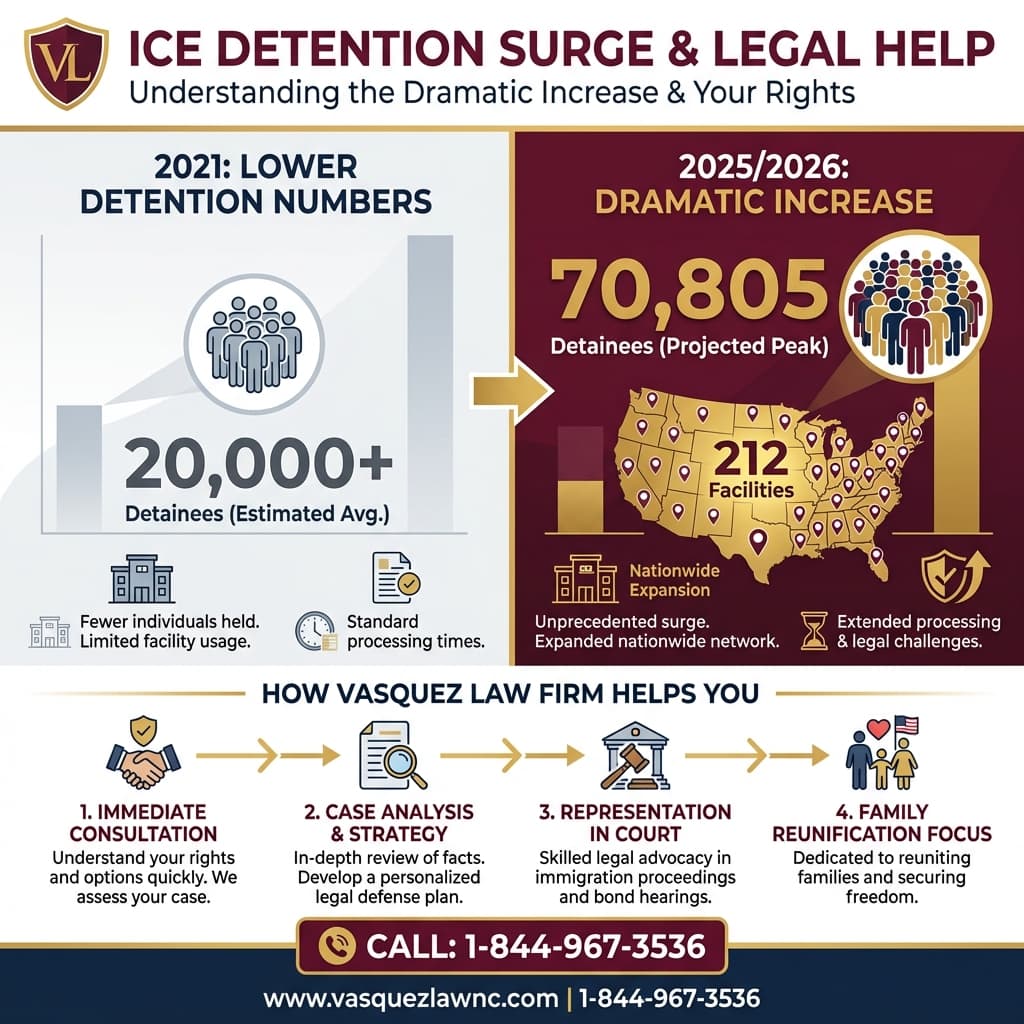
- Over 130 ICE detention facilities exist nationwide
- Detention lengths vary from days to over a year
- Detainees have rights to visitations, phone calls, and legal counsel
- Conditions vary widely between centers
- Legal help is essential for protecting detainee rights
Overview of ICE Detention Facilities
In 2026, ICE detention facilities across the United States include more than 130 locations. These centers range from large dedicated sites to smaller facilities contracted from local jails or converted warehouses. In Raleigh and North Carolina, detainees may be held in state or federally contracted centers. ICE detention centers primarily house individuals who face possible deportation or are awaiting immigration hearings.
ICE detention centers have different operational models. Some are directly managed by the federal agency, while others are run by private companies or local government entities under contract. This results in varying facility conditions, inmate populations, and access to services. Some centers hold families together temporarily, while others are limited to adult detainees. Understanding where a loved one is detained can be challenging but is critical for providing support.
Besides holding detainees, these facilities serve as processing hubs for immigration court appointments and bond evaluations. Knowing the location and the type of your loved one’s detention center is essential.
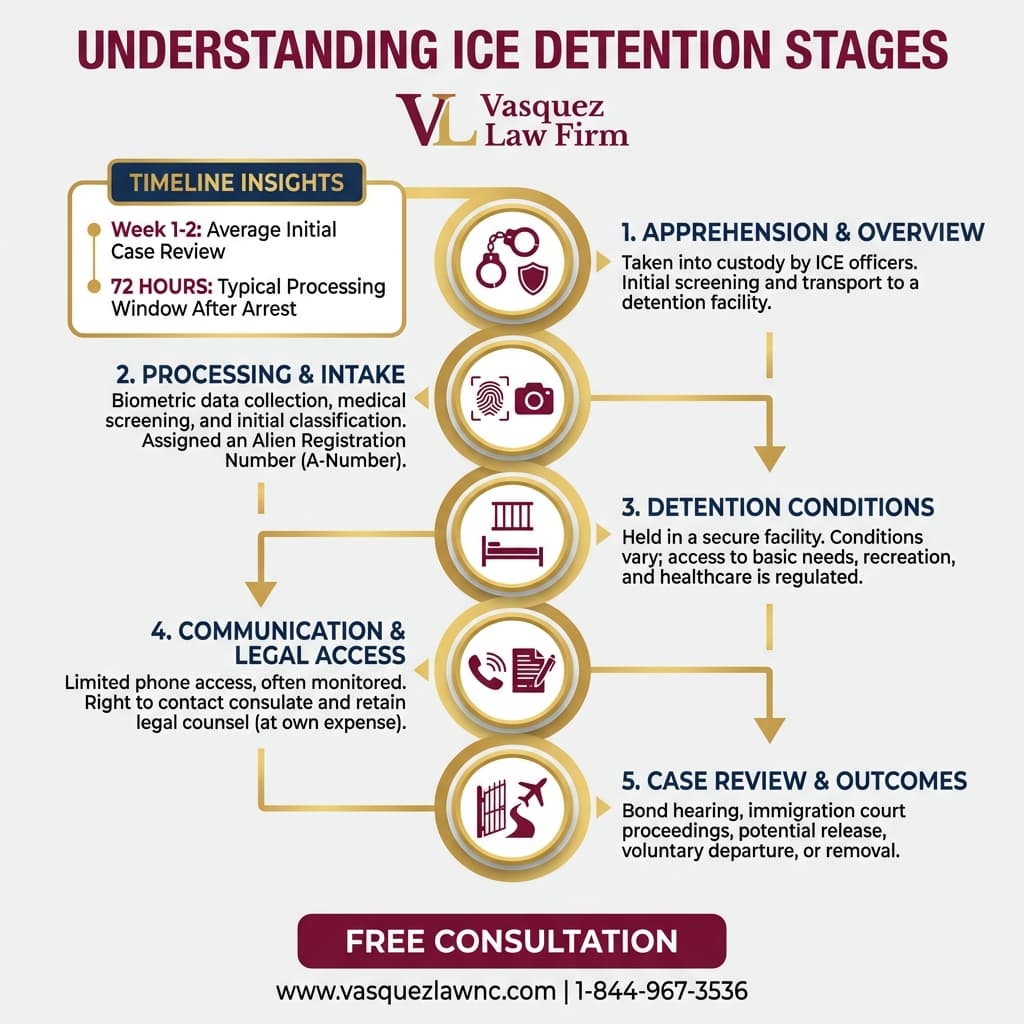
Step-by-Step: What Happens in Detention
- Initial Detention and Custody Screening: After ICE apprehends an individual, they conduct a custody screening within 72 hours to evaluate health, criminal history, and other risk factors.
- Transfer to Detention Facility: The individual is moved to an ICE facility or contracted center for holding.
- Detention Intake Process: The facility officials document personal and case information, conduct health and security screenings, and assign housing.
- Initial Immigration Court Hearing: Within one to two weeks, the detainee attends a hearing, often via video, where Immigration Court Judge reviews the case.
- Bond Hearing Eligibility: If applicable, detainees may request a bond hearing; decisions depend on criminal history and flight risk.
- Ongoing Case Processing: Cases proceed through the immigration court system, which may include multiple hearings, appeals, and legal filings.
- Final Decision: Detainees may be released, granted relief, or subjected to removal based on case outcomes.
Detention Facility Communication
Detainees may receive phone and video call privileges, but rules differ by facility. Visitation policies typically require scheduling and approval. Family and legal counsel should stay informed about facility rules to maintain contact effectively.
ICE Detention Center Locator and Inmate Search
ICE offers an online detainee locator to find detained individuals. This tool helps families identify where a detainee is held and obtain contact information. It is vital for detainee support and coordination of legal assistance.
Immigration Detention Conditions
Detention centers vary in physical conditions, medical care, and available services. Some have faced criticism for inadequate healthcare and overcrowding. Awareness of facility conditions helps advocates push for detainee rights and proper treatment.
Rights and Legal Protections in ICE Detention
Detainees have certain rights protected by law and policy, though these can vary by jurisdiction and facility. Understanding these rights allows detained individuals and their families to act proactively to safeguard legal protections.
- Right to Legal Representation: Detainees can hire attorneys or seek pro bono legal services. Representation improves case outcomes significantly.
- Right to Receive Visits and Communications: Family, friends, and legal representatives may visit or communicate following facility rules.
- Right to Bond Hearings: Many detainees qualify for bond hearings to request release during case processing.
- Right to Medical Care: Adequate healthcare is required, though access and quality vary.
- Right to Challenge Detention: Defensive legal actions can seek release or contest immigration charges.
Recognizing these rights early in detention is critical. Legal counsel can help enforce these protections and monitor for violations.
Common Legal Terms Explained
- Bond: Money paid to secure a detainee's release pending immigration proceedings.
- Custody Review: Judge reviews whether detention is justified or bail can be set.
- Removal Proceedings: Court procedures to determine a person's eligibility to remain legally in the U.S.
Common Challenges and How to Avoid Mistakes
- Missing Hearings: Failing to appear can lead to deportation orders. Stay informed of all hearing dates.
- No Legal Representation: Proceeding without a lawyer reduces chances of favorable outcomes.
- Not Requesting Bond: Many detainees qualify but miss this chance due to lack of information.
- Poor Communication: Delays in contacting legal counsel or family hinder preparation and support.
- Ignoring Medical or Safety Issues: Report any health or abuse concerns promptly to facility staff or attorney.
- Disclosing Sensitive Information: Be cautious sharing sensitive personal information without legal advice.
- Assuming Temporary Detention: Detention length can be unpredictable — plan accordingly.
If you only remember one thing: Obtaining skilled legal representation immediately improves your chances in detention and court.
Timeline: Detention Lengths and Processes
- Week 1-2: Custody screening and first court hearing.
- Week 3-4: Bond hearings for eligible detainees.
- 2-6 Months: Ongoing hearings, adjustments, or appeals.
- 6+ Months: Possible final orders of removal or release, depending on case progress.
Understand your case timeline and communicate regularly with your attorney. Delays in courts or procedural changes can extend detention, so remain informed.
Jurisdiction Notes: Raleigh, NC, FL, and Nationwide
North Carolina Notes
In Raleigh and North Carolina, detainees are often held in regional ICE centers or local jails under contract. North Carolina does not have sanctuary policies, so ICE operates with broad authority. Legal aid and nonprofit support exist but may be limited by funding.
Florida Notes
Florida features multiple ICE detention centers and a busy immigration court system. Detainees benefit from several nonprofit legal clinics and experienced immigration lawyers familiar with local procedures. ICE enforcement is active, but community resources may offer assistance.
Nationwide Concepts
ICE detention operates under federal law, primarily through the Immigration and Nationality Act. Decisions and policies can change with administration priorities, so national trends affect local practices. Contact an immigration attorney familiar with 2026 regulations and policy changes.
When to Call a Lawyer Immediately
- If detained by ICE unexpectedly
- If you are unsure of your detention center or location
- If you face criminal charges alongside immigration issues
- If you have upcoming court or bond hearings
- If you experience denial of rights, medical neglect, or abuse
- If you want to apply for relief or adjustment of status
- If confusing paperwork or legal documents are presented
- Any time you feel overwhelmed or need legal advice
About Vasquez Law Firm
At Vasquez Law Firm, we combine compassion with aggressive representation. Our motto "Yo Peleo" (I Fight) reflects our commitment to standing up for your rights.
- Bilingual Support: Se Habla Español - our team is fully bilingual
- Service Areas: North Carolina, Florida, and nationwide immigration services
- Experience: Over 15 years helping clients navigate complex legal matters
- Results: Thousands of successful cases across multiple practice areas
Attorney Trust and Experience
Attorney Vasquez holds a Juris Doctor degree and is admitted to practice in both the North Carolina State Bar and Florida Bar. With over 15 years of dedicated legal experience, he has built a reputation for providing personalized attention and achieving favorable outcomes for his clients.
Don't wait to get the help you deserve. Call us now for immediate assistance.
Se Habla Español
Frequently Asked Questions
Can I sue ICE for detaining me if I am a U.S. citizen?
Generally, ICE detains individuals suspected of immigration violations, not citizens. If a U.S. citizen is mistakenly detained, they may have grounds to pursue a legal claim for wrongful detention, but these cases are complex and require swift legal action. Contact a lawyer immediately if you believe you or a loved one was detained wrongly.
How long are people typically held at ICE detention centers?
Detention lengths vary widely. Some detainees are held for a few days while others remain for months or over a year depending on case complexity, court schedules, and bond decisions. ICE aims to detain only as long as necessary, but delays are common.
What nationality is ICE deporting the most in 2026?
As of 2026, ICE continues to deport migrants from Mexico alongside Central American countries like Guatemala, Honduras, and El Salvador. Deportation rates fluctuate with immigration patterns and enforcement priorities.
Can you visit people in ICE detention centers?
Visits are allowed at many ICE detention centers but rules vary by location. Visitors generally need to be on an approved list and follow strict scheduling and conduct policies. Phone calls and video visits may be available alternatives. Check with the specific facility for details.
How many ICE detention centers are there in the United States?
As of 2026, ICE operates or contracts with over 130 detention centers across the U.S. These range from large centers to smaller facilities, some run by private companies or local jails. The locations can change based on enforcement needs.
What do ICE detention centers look like?
ICE detention centers often resemble correctional facilities with secured fences, cells or rooms, and controlled access points. Some are converted warehouses or local jails. Conditions and amenities vary by center and have been subject to ongoing scrutiny and reform efforts.
What is the process after being detained by ICE?
After detention, individuals go through a custody screening, followed by an initial immigration court hearing. They may be eligible for bond or release. Legal representation is crucial to navigate these steps and protect rights during processing.
Are detainees allowed to make phone calls from ICE facilities?
Yes, detainees usually have the right to make phone calls, though often on a limited basis and at their own expense. Communication policies differ by facility, and legal calls may have special provisions. Family and legal support can use these calls to stay connected.
Sources and References
- U.S. Citizenship and Immigration Services (USCIS)
- Executive Office for Immigration Review (EOIR)
- U.S. Customs and Border Protection Immigration Detention
Need immigration help? Our immigration attorneys can review your case.
Take the first step toward justice today. Our team is standing by to help. Se Habla Español.
Start Your Free Case Evaluation Now
Call us: 1-844-967-3536
Se Habla Español - Estamos aquí para ayudarle.

William Vasquez
Founder & CEO, Vasquez Law Firm, PLLC
William Vasquez is the founder and CEO of Vasquez Law Firm, PLLC, a results-driven firm specializing in immigration, criminal defense, personal injury, and workers' compensation. A U.S. Air Force veteran and recipient of the Joint Service Achievement Medal, William is dedicated to fiercely fighting for his clients' rights.
Related Legal Services
Need legal help? Learn more about get immigration legal help today, or contact us for a free evaluation.
You can also visit North Carolina immigration lawyers for more information.