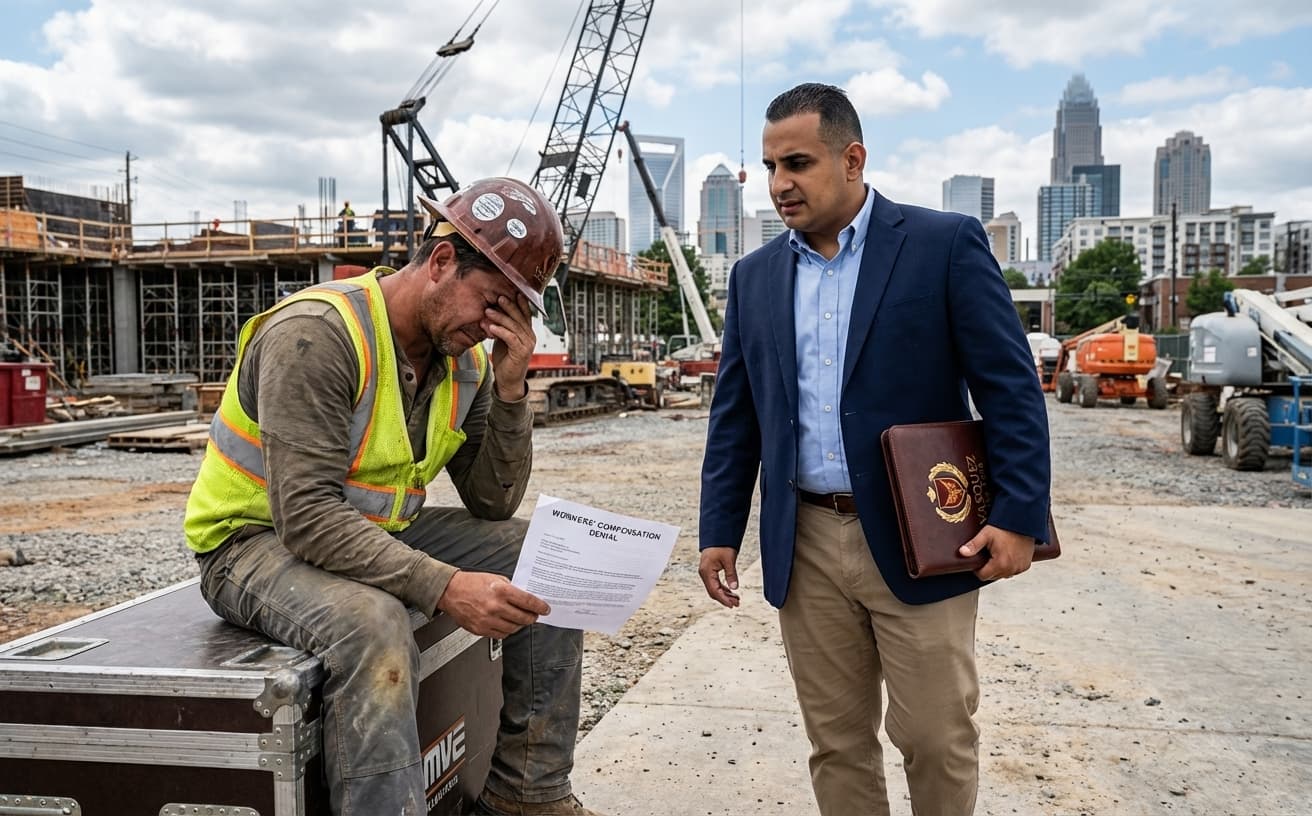
COIDA Regulations in North Carolina: What You Need to Know in 2026
Understand COIDA regulations and how they impact workers' compensation claims in North Carolina for 2026. Protect your rights; contact Vasquez Law Firm for a free consultation today.
Published on March 10, 2026
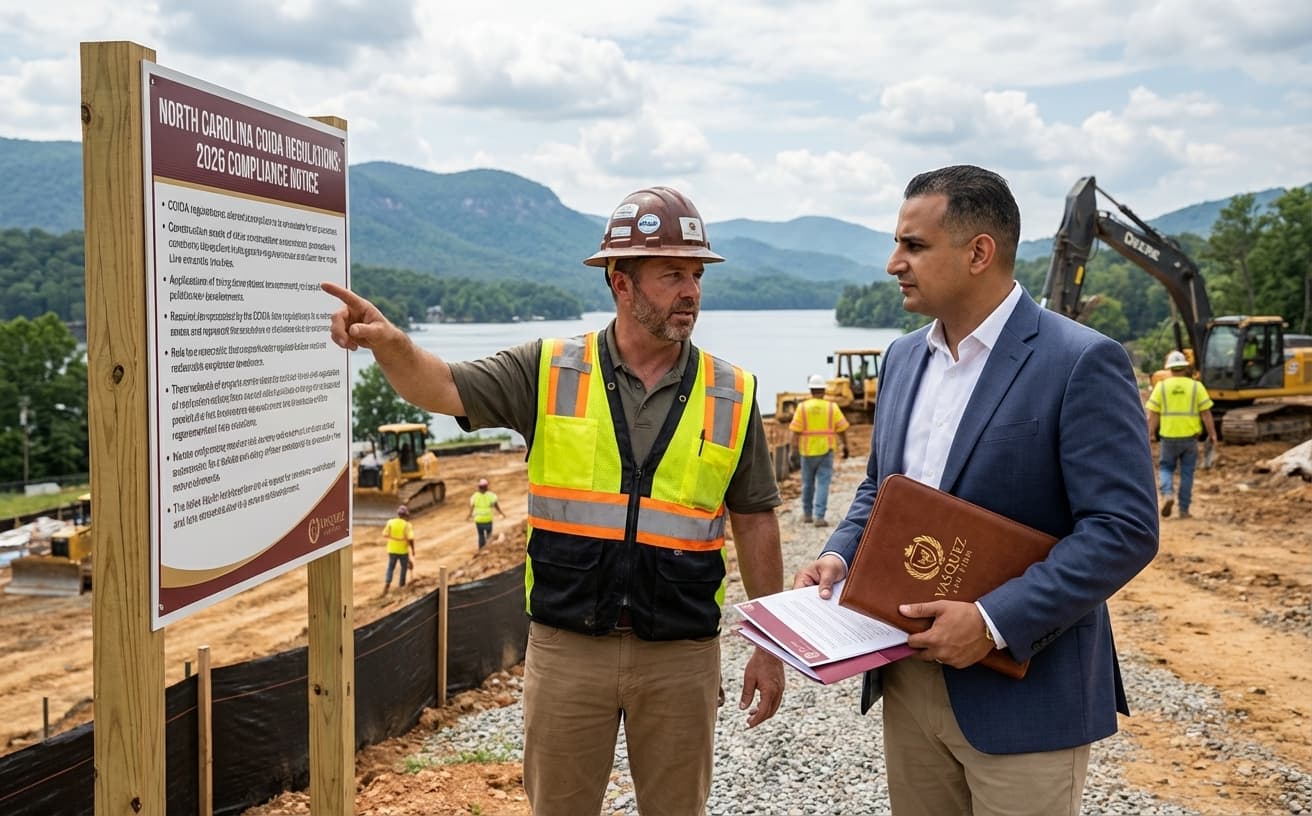
Have questions? Talk to an attorney - free evaluation.
Call 1-844-967-3536Hurt on the Job? Claim What You Are Owed
Free review of your workers' comp claim - we handle the fight.
COIDA Regulations in North Carolina: What You Need to Know in 2026
Workers' compensation laws are designed to protect employees who suffer injuries or illnesses on the job. In North Carolina, understanding the specific regulations governing these claims, including any that may seem similar to COIDA regulations found elsewhere, is crucial for securing the benefits you deserve. As of 2026, the landscape for workers' compensation continues to evolve, making it essential for injured workers in Raleigh and across the state to be informed. This guide will clarify the North Carolina Industrial Commission's role and how state-specific laws ensure your rights are protected after a workplace accident.
Need help with your workers' compensation case in North Carolina? Our experienced attorneys are ready to fight for you. Se Habla Español.
Schedule Your Free Consultation
Or call us now: 1-844-967-3536
Quick Answer
While COIDA (Compensation for Occupational Injuries and Diseases Act) is a specific South African law, North Carolina has its own comprehensive workers' compensation system to protect injured employees. This system, overseen by the NC Industrial Commission, provides benefits for medical treatment, lost wages, and disability. Understanding these state-specific regulations is vital for any worker injured on the job in 2026.
- All North Carolina employers with 3+ employees must carry workers' compensation insurance.
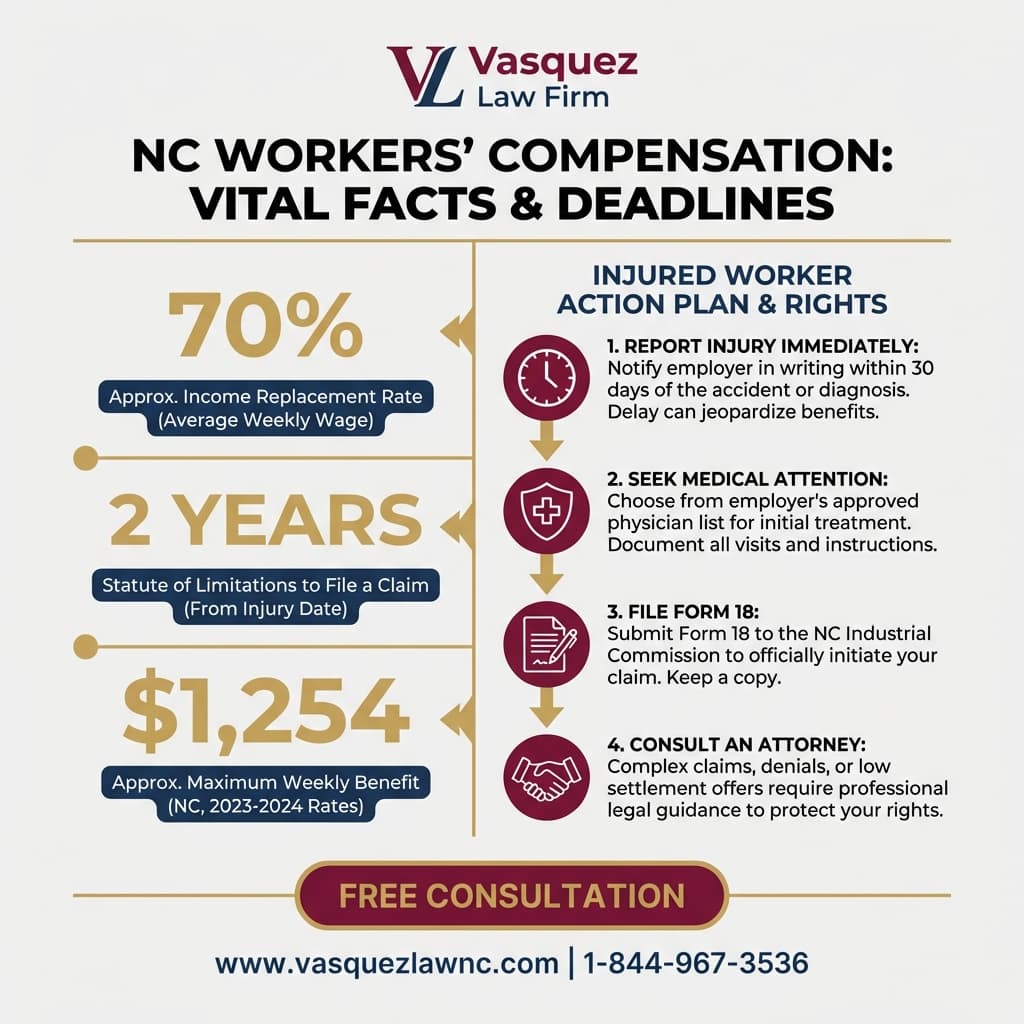
- Injured workers must report injuries promptly, typically within 30 days.
- Benefits can include medical care, temporary disability, and permanent disability payments.
- Claims are filed with the NC Industrial Commission, not a federal agency.
- Legal representation significantly increases the chances of a successful claim.
Understanding North Carolina Workers' Compensation Laws
In 2026, if you are injured on the job in North Carolina, your claim will fall under the North Carolina Workers' Compensation Act, not COIDA regulations. This state-specific law dictates how workplace injuries and occupational diseases are handled. For instance, an employee working at a manufacturing plant in Raleigh who suffers a back injury due to lifting heavy machinery would file a claim with the North Carolina Industrial Commission (NCIC).
The NC Workers' Compensation Act ensures that employees receive medical treatment for their injuries, compensation for lost wages during recovery, and benefits for any resulting permanent impairment. Unlike traditional personal injury claims, workers' compensation is a no-fault system. This means you generally do not need to prove your employer was negligent to receive benefits, as long as your injury occurred in the course and scope of your employment.
The primary agency responsible for administering these laws is the NC Industrial Commission. They oversee the entire process, from initial claim filing to dispute resolution and appeals. Employers in North Carolina with three or more employees are legally required to provide workers' compensation insurance, with some exceptions for agricultural workers and domestic employees. This mandatory coverage ensures that funds are available to compensate injured workers without placing the full burden on the employer directly.
Eligibility for Workers' Compensation Benefits in NC
Many injured workers wonder if their specific situation qualifies for benefits under North Carolina law. For example, a construction worker who falls from scaffolding and breaks an arm is clearly covered. However, what about an office worker who develops carpal tunnel syndrome from repetitive computer use? The North Carolina Workers' Compensation Act covers both sudden accidents and occupational diseases that arise out of and in the course of employment.
To be eligible, an injury must generally meet two criteria: it must 'arise out of' employment, meaning there's a causal connection between the employment and the injury, and it must occur 'in the course of' employment, meaning it happened during work hours and activities. Occupational diseases, such as asbestosis for a former shipyard worker or hearing loss for a factory employee, are also covered. These conditions are typically defined as diseases due to causes and conditions characteristic of and peculiar to a particular trade, occupation, or employment.
There are certain exceptions where benefits might be denied. For instance, injuries sustained while engaging in horseplay, injuries caused by intoxication or drug use, or injuries that occur during a commute to or from work are often not covered. It's crucial for any employee to understand these nuances, especially when dealing with complex cases that might involve pre-existing conditions or injuries that develop over time. Consulting with a legal professional can help clarify your eligibility and strengthen your claim.
Reporting Injuries and Filing a Claim in NC
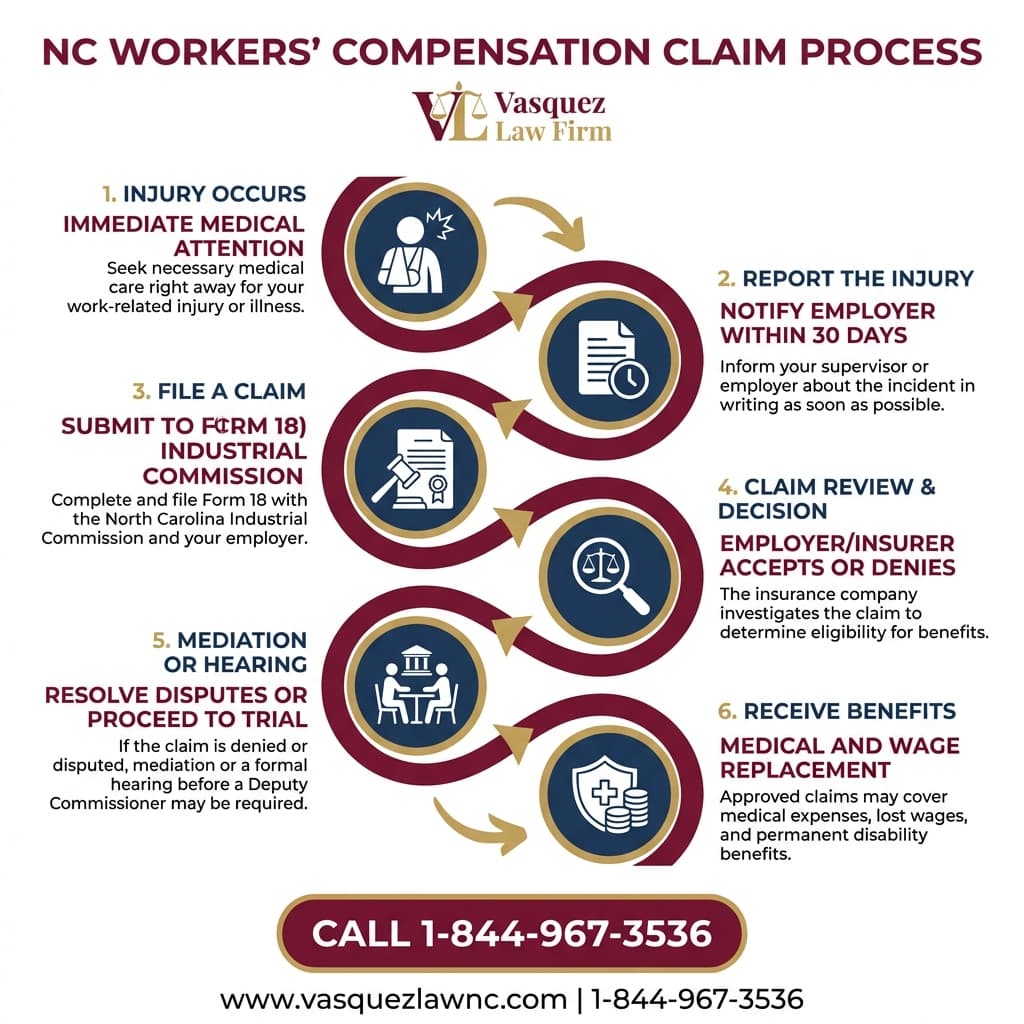
Imagine you're a retail worker in Raleigh and slip on a wet floor, injuring your knee. The first critical step is to report the incident to your employer immediately. North Carolina law generally requires you to notify your employer within 30 days of the accident or of receiving a diagnosis for an occupational disease. Failing to do so can jeopardize your claim.
After reporting, your employer should provide you with necessary forms and information about filing a claim. The official claim form, Form 18, must be filed with the NC Industrial Commission. This form formally notifies the Commission and your employer that you are seeking workers' compensation benefits. It is important to fill this out accurately and completely, detailing the date, time, location, and nature of your injury.
Once Form 18 is filed, the employer's insurance carrier will investigate the claim. They may approve benefits, deny them, or accept the claim with a reservation of rights. If your claim is denied, you have the right to appeal this decision through the NC Industrial Commission. This process can involve mediation, hearings, and potentially appeals to higher courts. Navigating these steps effectively is often best done with the guidance of an attorney.
Benefits Available for Injured Workers in North Carolina
When a warehouse worker in North Carolina suffers a severe leg injury, their immediate concern is often how they will pay for medical care and cover living expenses while unable to work. North Carolina's workers' compensation system provides several types of benefits to address these needs.
Medical Treatment Coverage
The law mandates that all necessary and reasonable medical treatment related to the workplace injury or occupational disease be covered. This includes doctor visits, hospital stays, surgeries, prescription medications, physical therapy, and even mileage reimbursement for travel to medical appointments. Your employer or their insurance carrier typically has the right to direct your medical care, meaning they may choose the doctor or facility you see. However, you can petition the NC Industrial Commission to change your authorized treating physician if you have good reason.
Wage Replacement Benefits
If your injury prevents you from working, you may be eligible for temporary disability benefits. These benefits replace a portion of your lost wages, typically two-thirds of your average weekly wage, up to a state-determined maximum. There are two main types: temporary total disability (TTD) for when you cannot work at all, and temporary partial disability (TPD) for when you can work but earn less due to your injury. These payments continue until you reach maximum medical improvement (MMI) or return to your pre-injury wage.
Permanent Disability Benefits
Upon reaching MMI, if your injury results in a permanent impairment to a body part, you may be entitled to permanent partial disability (PPD) benefits. These benefits are calculated based on a schedule of compensation for specific body parts, as outlined in N.C. Gen. Stat. § 97-31. For example, the loss of an arm or leg has a specific number of weeks of compensation assigned. In cases of severe, permanent disability that prevents you from earning any wages, permanent total disability (PTD) benefits may be awarded, often for life.
Common Mistakes to Avoid in Your NC Workers' Comp Claim
Even with clear regulations, many injured workers in North Carolina make errors that can jeopardize their claims. For instance, delaying reporting an injury for several weeks can make it difficult to prove the injury was work-related. Here are crucial mistakes to avoid:
- Delaying Injury Reporting: Not reporting your injury to your employer immediately, or at least within 30 days, can lead to your claim being denied. Prompt notification is key.
- Failing to Seek Medical Attention: Neglecting to see a doctor or follow prescribed treatment protocols can be seen as an indication that your injury is not serious, or that you are not cooperating with your recovery, impacting your benefits.
- Not Filing Form 18: Relying solely on your employer to file paperwork is a mistake. You must ensure Form 18, Notice of Accident, is filed with the NC Industrial Commission within two years of the injury.
- Giving Recorded Statements Without Counsel: Insurance adjusters may ask for a recorded statement. Providing one without legal advice can inadvertently harm your case by leading to inconsistent statements.
- Returning to Work Too Soon or Against Doctor's Orders: Going back to work before your doctor clears you, or performing tasks beyond your medical restrictions, can worsen your injury and complicate your claim for benefits.
- Posting About Your Injury on Social Media: Insurance companies frequently monitor social media. Photos or posts that contradict your injury claims can be used as evidence against you.
- Not Understanding Your Rights: Many workers are unaware of the full scope of benefits they are entitled to or their right to appeal a denied claim. This lack of knowledge can lead to accepting inadequate settlements.
- Failing to Consult an Attorney: Trying to navigate the complex workers' compensation system alone often results in lower compensation or outright denial. An attorney protects your interests.
If you only remember one thing: Always report your workplace injury to your employer immediately and seek medical attention, then consult an experienced workers' compensation attorney in North Carolina to protect your rights.
Don't face your legal challenges alone. Our team is here to help you every step of the way.
Call today: 1-844-967-3536 | Se Habla Español
When to Call a Lawyer for Your NC Workers' Comp Claim
A worker in Raleigh who has just had their workers' compensation claim denied by the insurance company faces a critical decision point. This is often when legal counsel becomes indispensable. If your employer or their insurance carrier disputes any aspect of your claim, from the cause of injury to the extent of disability, an attorney can advocate on your behalf.
Here are urgent triggers indicating you should contact a North Carolina workers' compensation lawyer immediately:
- Your workers' compensation claim has been denied, or benefits have been terminated.
- Your employer or the insurance company is pressuring you to return to work before your doctor has cleared you.
- You are not receiving your temporary disability payments on time or at all.
- The insurance company is disputing the need for specific medical treatments or denying authorization for a recommended procedure.
- You are being asked to give a recorded statement to the insurance company.
- Your injury is severe, permanent, or involves a high degree of disability, making future benefits complex.
- You suspect your employer is retaliating against you for filing a claim.
- You have a pre-existing condition that the insurance company is using to deny your claim.
- You are considering a lump-sum settlement offer and want to ensure it is fair and covers all future needs.
- The insurance company is attempting to direct your medical care to a doctor who seems to be minimizing your injuries.
About Vasquez Law Firm
At Vasquez Law Firm, we combine compassion with aggressive representation. Our motto "Yo Peleo" (I Fight) reflects our commitment to standing up for your rights. We understand the physical, emotional, and financial toll a workplace injury can take on you and your family. That's why we dedicate ourselves to providing personalized, diligent legal services.
- Bilingual Support: Se Habla Español - our team is fully bilingual, ensuring clear communication and understanding throughout your legal journey.
- Service Areas: We proudly serve injured workers across North Carolina, including Raleigh, Charlotte, and surrounding areas. While workers' compensation is state-specific to NC, our firm also handles immigration cases nationwide.
- Experience: Attorney Vasquez has over 15 years of dedicated legal experience, successfully navigating complex legal matters for thousands of clients.
- Results: We have a proven track record of achieving favorable outcomes, fighting tirelessly to secure maximum compensation and justice for those we represent.
Attorney Trust and Experience
Attorney Vasquez holds a Juris Doctor degree and is admitted to practice in both the North Carolina State Bar and Florida Bar. With over 15 years of dedicated legal experience, he has built a reputation for providing personalized attention and achieving favorable outcomes for his clients. His commitment to justice and his deep understanding of North Carolina workers' compensation law make him a formidable advocate for injured workers.
Frequently Asked Questions
Is COIDA applicable to North Carolina workers' compensation claims?
No, COIDA (Compensation for Occupational Injuries and Diseases Act) is specific to South Africa. In North Carolina, workers' compensation claims are governed by the North Carolina Workers' Compensation Act, administered by the NC Industrial Commission. This state-specific law outlines all procedures, benefits, and eligibility requirements for employees injured on the job within North Carolina. It is crucial to understand these local regulations.
Which employees are covered by North Carolina workers' compensation?
Most employees in North Carolina are covered if their employer regularly employs three or more people. This includes full-time, part-time, and seasonal workers. There are some exceptions, such as certain agricultural workers, domestic employees, and federal government employees who fall under federal workers' compensation laws. Your employment status and employer's size determine coverage under NC law.
What exactly is the North Carolina Industrial Commission's role?
The NC Industrial Commission (NCIC) is the state agency responsible for administering and enforcing the North Carolina Workers' Compensation Act. The NCIC oversees the entire claim process, from initial filing to approving settlements and hearing appeals. They ensure that injured workers receive appropriate benefits and that employers comply with the law. They are the central authority for all workers' compensation disputes in North Carolina.
What is required for a workers' compensation claim to be reopened in NC?
To reopen a workers' compensation claim in North Carolina, you typically need to file a Form 33 Request for Hearing or Form 24 Application to Reinstate Benefits, demonstrating a change in condition since the last award or agreement. This change must be related to the original injury and affect your ability to work or require further medical treatment. There are specific time limits for reopening claims, often two years from the last payment of compensation.
What is the maximum payout for a workers' compensation claim in NC?
The maximum payout for a workers' compensation claim in North Carolina varies significantly based on the type of benefit. For temporary total disability, the maximum weekly benefit is adjusted annually. For permanent partial disability, payouts are based on a statutory schedule for specific body parts. There isn't a single maximum claim value, as total compensation depends on medical costs, lost wages, and the extent of permanent impairment.
How long do I have to report a workplace injury in North Carolina?
You must report your workplace injury to your employer as soon as practicable, and generally no later than 30 days after the accident or diagnosis of an occupational disease. While 30 days is the legal limit, prompt reporting is always advised to avoid disputes about whether the injury occurred at work. Delaying notification can significantly weaken your claim.
Can I choose my own doctor for a workers' compensation injury in NC?
Generally, in North Carolina, your employer or their workers' compensation insurance carrier has the right to direct your medical treatment. This means they can choose the authorized treating physician. However, if you are dissatisfied with the care or believe it is inadequate, you can petition the NC Industrial Commission for a change of physician. It's important to follow the authorized care unless a change is approved.
What happens if my North Carolina workers' comp claim is denied?
If your workers' compensation claim is denied in North Carolina, you have the right to appeal the decision. You must file a Form 33 Request for Hearing with the NC Industrial Commission to initiate the appeals process. This typically involves mediation, followed by a formal hearing before a deputy commissioner. An attorney can represent you throughout this complex appeals process to fight for your benefits.
Are psychological injuries covered under NC workers' compensation?
Yes, psychological injuries can be covered under North Carolina workers' compensation, but they are often more challenging to prove than physical injuries. To be covered, the psychological injury must typically arise directly from a physical injury or an unusual and extraordinary work-related event. Mental stress alone, without a physical component, is generally not compensable. Consulting an attorney is crucial for these complex cases.
What is the statute of limitations for NC workers' compensation claims?
In North Carolina, you generally have two years from the date of the accident to file a formal claim (Form 18) with the NC Industrial Commission. For occupational diseases, the two-year period typically runs from the date of diagnosis or when you reasonably should have known the disease was work-related. Missing this deadline can result in your claim being permanently barred.
Sources and References
- North Carolina Industrial Commission (NCIC)
- North Carolina General Statutes Chapter 97 (Workers' Compensation Act)
Ready to take the next step? Contact Vasquez Law Firm today for a free, confidential consultation. We're committed to fighting for your rights and achieving the best possible outcome for your case.
Start Your Free Consultation Now
Call us: 1-844-967-3536
Se Habla Español - Estamos aquí para ayudarle.


William Vasquez
Founder & CEO, Vasquez Law Firm, PLLC
William Vasquez is the founder and CEO of Vasquez Law Firm, PLLC, a results-driven firm specializing in immigration, criminal defense, personal injury, and workers' compensation. A U.S. Air Force veteran and recipient of the Joint Service Achievement Medal, William is dedicated to fiercely fighting for his clients' rights.
Related Legal Services
Need legal help? Learn more about how our work injury attorneys can help, or contact us for a free evaluation.
You can also visit North Carolina workers compensation lawyers for more information.