How Long Does It Take to Become an Immigration Lawyer in 2026?
Wondering how long does it take to become an immigration lawyer? Learn the process, timeline, and what to expect in 2026. Contact Vasquez Law for help.
Published on June 5, 2026
Talk to an immigration attorney
Free call. A clear plan for your case.
Free & confidential · Se habla espanol · 24/7

Have questions? Talk to an attorney - free evaluation.
Call 1-844-967-3536Worried how the latest immigration news affects you?
Schedule a confidential case review with an immigration attorney - know exactly where you stand.
How Long Does It Take to Become an Immigration Lawyer in 2026?
How long does it take to become an immigration lawyer? In 2026, aspiring attorneys in Orlando, FL, and Raleigh, NC can expect a journey of around 7 to 9 years, including college, law school, and gaining experience. This timeline covers educational requirements, licensing, and practical training necessary to serve clients effectively in immigration law.
Need help with your case? Our experienced attorneys are ready to fight for you. Se Habla Español.
Or call us now: 1-844-967-3536
Quick Answer
Becoming an immigration lawyer typically takes about 7 to 9 years from starting college to gaining practical experience.
- 4 years for a bachelor's degree
- 3 years of law school
- Bar exam preparation and passing
- Several months to years gaining immigration law experience
- Continuous legal education thereafter
Understanding the Path to Immigration Lawyer
Considering becoming an immigration lawyer means committing to rigorous education and training. The process begins with earning an undergraduate degree, usually taking 4 years, which provides foundational knowledge in critical thinking, writing, and research.
After college, attending an accredited law school is required, which takes about 3 years full-time. Law students focus on various legal subjects, but to specialize in immigration law, they should take elective courses related to immigration statutes, federal regulations, and refugee law.
Passing the bar exam in the state(s) where you wish to practice is essential. This exam tests knowledge of state and federal law, ethics, and procedure. For immigration lawyers in Orlando, FL, and Raleigh, NC, passing the Florida Bar or North Carolina State Bar is necessary respectively.
Once licensed, new lawyers often gain experience through internships, clerkships, or working with immigration law firms. This practical experience is vital to understand how USCIS, immigration courts, and enforcement agencies operate. The timeline to become fully competent varies but generally adds 1 to 2 years.
Throughout their career, immigration lawyers must complete continuing legal education to stay current with changing laws and policies.
Our immigration legal services team in Orlando and Raleigh supports this pathway and can inspire those entering the field.
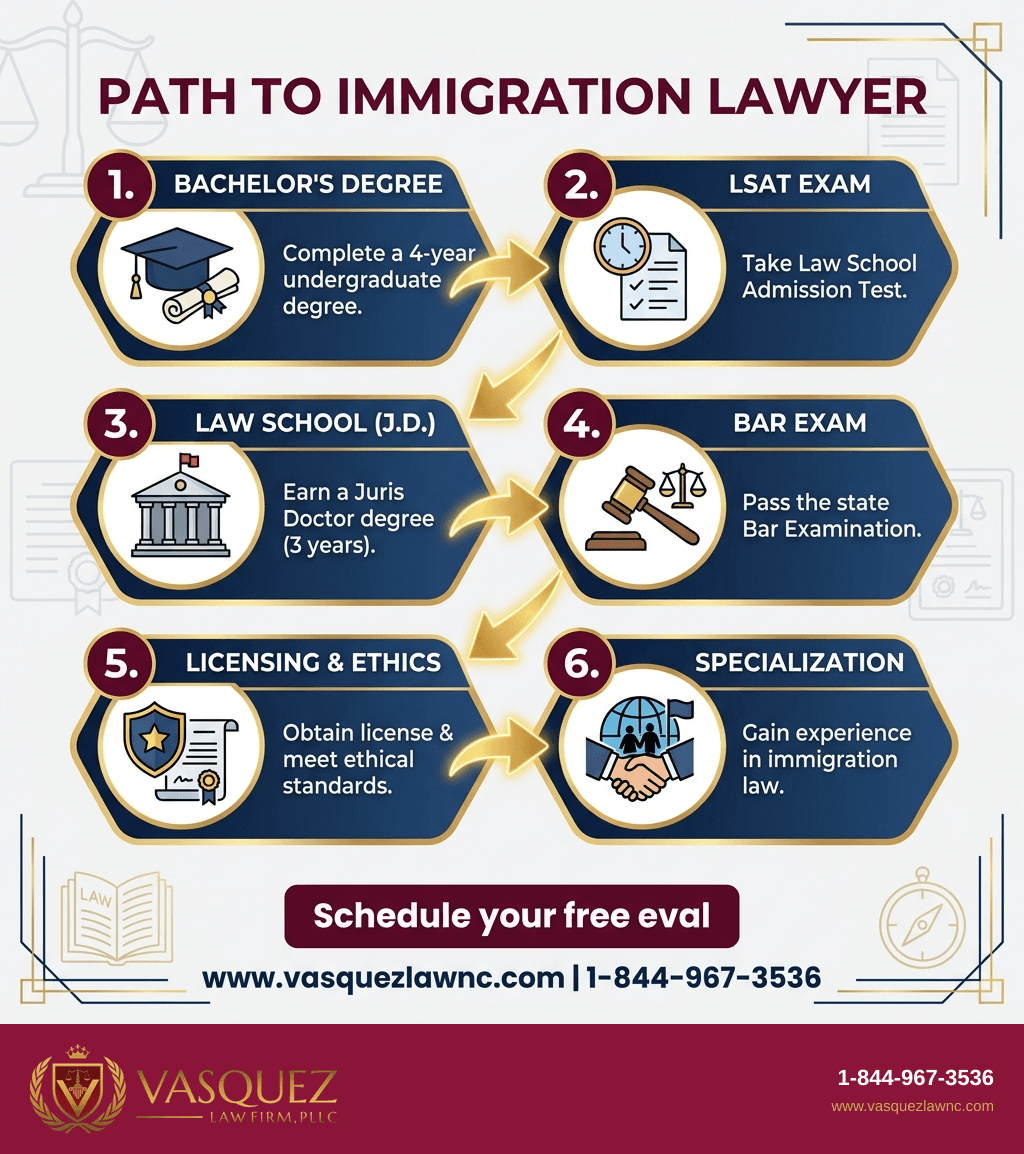
Step-by-Step: What It Takes to Become an Immigration Lawyer
- Earn a Bachelor’s Degree (4 years): Focus on liberal arts, political science, international relations, or pre-law courses.
- Take the LSAT and Apply to Law Schools: The Law School Admission Test (LSAT) is mandatory for law school admissions.
- Complete Law School (3 years): Study foundational and elective courses including immigration law, administrative law, and human rights law.
- Pass the State Bar Exam: Prepare for and pass the bar to practice law in Florida or North Carolina.
- Gain Legal Experience (1-2 years): Work with immigration-focused firms or government agencies, such as USCIS or EOIR, to understand practices firsthand.
- Continuing Legal Education: Attend seminars and courses to keep up-to-date with immigration law changes.
LSAT Details and Preparation
The LSAT is a standardized test assessing logic, reasoning, and reading comprehension. Preparing usually takes months and good scores improve law school admission chances.
Work Experience Types
- Internship with immigration nonprofits or legal aid organizations in Orlando or Raleigh
- Clerkship with immigration judges at EOIR
- Entry level attorney roles under experienced immigration lawyers
Licensing Requirements
Passed the state's bar exam and admitted to practice law in Florida or North Carolina are mandatory before practicing immigration law.
Timeline: How Long It Takes to Become an Immigration Lawyer
The timeline can vary from person to person. Here's a general overview:
- College: 4 years earning a bachelor's degree
- Law School: 3 years full-time
- Bar Exam Preparation: 6 to 12 months including studying and passing
- Gaining Experience: 1 to 2 years working in immigration law environments
This adds up to approximately 7 to 9 years before practicing independently as an immigration lawyer in Orlando or Raleigh.
During law school and after, some students gain experience through internships, which can shorten the learning curve. The actual time to become skilled varies but continuous education remains essential.
You can also explore ways to specialize or pursue further certifications to enhance your expertise.
Common Mistakes in Pursuing Immigration Law Career
- Failing to plan finances early: Law school and prep costs are high; budgeting and scholarships are crucial.
- Neglecting immigration law electives: Missing specialized courses can delay understanding specific laws.
- Not passing the bar on the first attempt: Additional exam attempts extend the timeline.
- Limiting experience: Avoid only broad legal work, pursue targeted immigration internships.
- Ignoring continuing education: Immigration laws change often; failure to update knowledge harms career growth.
- Skipping networking: Connections with immigration professionals can open job opportunities.
- Overlooking jurisdiction differences: Immigration law is federal but practice nuances exist in Orlando and Raleigh.
If you only remember one thing: Success requires long-term commitment to education, experience, and staying updated with immigration rules.
Costs and Factors Affecting Becoming an Immigration Lawyer
The cost varies widely depending on the colleges and law schools chosen. Typical expenses include:
- Undergraduate tuition: Between $40,000 and $120,000 total depending on school type
- Law school tuition: Can range from $60,000 to $150,000 for three years
- Bar exam fees: Usually $1,500 to $3,000 including prep courses
- Living expenses: Rent, food, and other costs can add tens of thousands over several years
- Continuing legal education: Annual costs for seminars or courses to maintain license
Financial aid, scholarships, and payment plans can help mitigate these expenses.
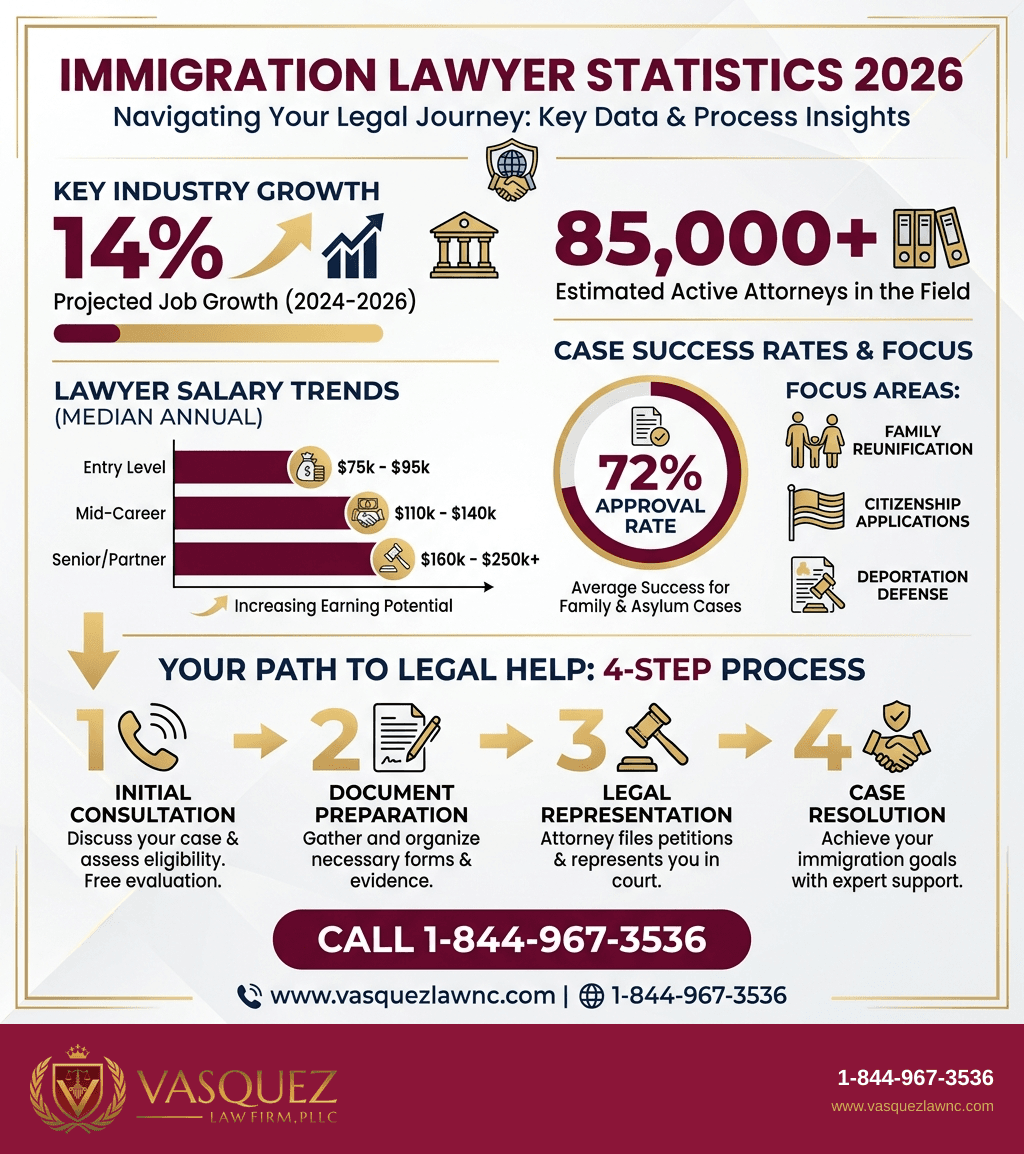
Lawyers' salaries can also vary; according to the U.S. Bureau of Labor Statistics, lawyers earned a median annual wage of around $127,990 in 2024. Top immigration lawyers in major metro areas like Orlando may earn significantly more, but $500,000 a year is rare and requires extraordinary experience or specialization.
When to Call a Lawyer Now
- If you want advice on starting a legal career in immigration law
- Before applying to law schools for immigration specialization
- When preparing for the LSAT and need guidance
- After law school when choosing specialization or job options
- If you face difficulties passing the bar exam
- To explore internships or clerkships in Orlando or Raleigh
- If you are considering immigration law licensing in multiple states
- When trying to understand federal vs. state immigration practices in Florida and North Carolina
NC, FL, and Nationwide Notes for Aspiring Immigration Lawyers
North Carolina Notes
Immigration law practice in North Carolina requires admission to the North Carolina State Bar. While immigration is federal law, local offices in Raleigh provide services and legal support. North Carolina has seen growth in immigrant populations needing legal help. Lawyers should stay familiar with USCIS processing times relevant to NC field offices (USCIS Processing Times).
Florida Notes
Florida, especially Orlando, is a major hub for immigration legal services. Attorneys must pass the Florida Bar. Immigration law firms there often handle diverse cases involving business visas, asylum claims, and DACA renewals (USCIS DACA). Virtual consultations are common for business immigration cases. Florida's diverse immigrant communities demand lawyers skilled in multiple languages and cultures.
Nationwide Concepts
Immigration law is governed federally by the Immigration and Nationality Act (INA) and regulated by USCIS, ICE, and the Executive Office for Immigration Review (EOIR). An immigration lawyer anywhere in the U.S. must understand statutes like 8 U.S.C. § 1255 that control adjustment of status. Licensing and bar admissions, however, are state-specific. Continuing education remains critical nationwide because of ongoing changes in immigration policy.
About Vasquez Law Firm
At Vasquez Law Firm, we combine compassion with aggressive representation. Our motto "Yo Peleo®" (I Fight) reflects our commitment to standing up for your rights.
- Bilingual Support: Se Habla Español — Spanish-speaking attorneys and staff available
- Service Areas: North Carolina, Florida, and nationwide immigration services
- Experience: Over 30 years helping clients navigate complex legal matters
- Results: Thousands of successful cases across multiple practice areas
Attorney Trust and Experience
William J. Vásquez is admitted to the North Carolina State Bar (2011) and to the U.S. Courts of Appeals for the 4th, 5th, and 11th Circuits. Florida-jurisdiction matters at the firm are handled by Florida Bar attorney Harold Estrada-Rodriguez (FL Bar No. 1041171). The firm has provided dedicated legal representation since 2011, with personalized attention to each client's case.
Don't wait to get the help you deserve. Call us now for immediate assistance. Se Habla Español.
Frequently Asked Questions
How long does it take to become an immigration lawyer in the USA?
The typical path requires about 7 to 9 years: 4 years for undergraduate studies, 3 years for law school, and 1 to 2 years gaining legal experience. Passing the bar exam and obtaining practical immigration law experience are essential. These timelines apply to Florida and North Carolina where Vasquez Law Firm operates.
Is it hard to be an immigration lawyer?
Immigration law is complex and ever-changing, requiring dedication to continued learning and adaptation. As a specialized field, it demands strong research, communication, and advocacy skills. Lawyers must navigate federal regulations, USCIS policies, and immigration courts while meeting clients' needs.
What is the average salary of an immigration lawyer in the US?
In 2026, immigration lawyers earn a median salary around $125,000 annually, with variations depending on experience, location, and firm size. In Orlando and Raleigh, starting salaries may be lower, but experienced immigration attorneys can earn significantly more, though earning $500,000 per year is uncommon.
Does law school specialize in immigration law?
Law schools offer elective courses to focus on immigration law, but no separate degree exists. Aspiring immigration lawyers should select those electives and participate in related internships to prepare for this specialty effectively.
What bar exam do I need to pass to practice immigration law in Florida or NC?
You must pass the Florida Bar Exam to practice in Orlando, FL, or the North Carolina Bar Exam for Raleigh, NC. Immigration law is federal but state licensing is mandatory to represent clients officially.
Can I practice immigration law nationwide after passing one state bar?
While immigration laws apply federally, you must be admitted in each state where you wish to work as a lawyer. Many immigration lawyers choose multi-state admission, but you must comply with each state's rules.
How do I gain experience after law school in immigration law?
New lawyers typically work with immigration law firms, non-profits, government agencies, or legal clinics. Internships before and during law school help build experience and professional networks in Orlando and Raleigh.
Are there alternatives to law school to work in immigration?
While paralegals and legal assistants can assist with immigration cases, only licensed attorneys may represent clients in court or before USCIS. Becoming a lawyer remains essential for full practice rights and advocacy.
Sources and References
- U.S. Citizenship and Immigration Services
- Executive Office for Immigration Review
- Legal Information Institute
Take the first step toward justice today. Our team is standing by to help. Se Habla Español.
Start Your Free Evaluation Now
Call us: 1-844-967-3536
Se Habla Español - Estamos aquí para ayudarle.


William Vasquez
Founder & CEO, Vasquez Law Firm, PLLC
William Vasquez is the founder and CEO of Vasquez Law Firm, PLLC, a results-driven firm specializing in immigration, criminal defense, personal injury, and workers' compensation. A U.S. Air Force veteran and recipient of the Joint Service Achievement Medal, William is dedicated to fiercely fighting for his clients' rights.
Related Legal Services
Need legal help? Learn more about immigration lawyers in North Carolina, or contact us for a free evaluation.
You can also visit immigration attorneys across North Carolina for more information.

![Report: DHS Finds Criminal Histories in SIJ Benefits [2026]](/_next/image?url=https%3A%2F%2Fvuuyorlsmhunqektprqy.supabase.co%2Fstorage%2Fv1%2Fobject%2Fpublic%2Fblogs%2Fimmigration-header-1782500860607.png&w=1920&q=75)