What Are Due Process Rights and How They Work in 2026
Wondering what due process rights mean in 2026? Learn how these rights protect you in immigration cases and when to seek legal help. Free consultation.
Published on September 3, 2026
Talk to an immigration attorney
Free call. A clear plan for your case.
Free & confidential · Se habla espanol · 24/7
Have questions? Talk to an attorney - free evaluation.
Call 1-844-967-3536Worried how the latest immigration news affects you?
Schedule a confidential case review with an immigration attorney - know exactly where you stand.
What Are Due Process Rights and How They Work in 2026
Due process rights protect your fair treatment when dealing with immigration or legal matters. In 2026, these rights are more crucial than ever, especially in places like Raleigh, NC, and Orlando, FL. This article explains what due process means, provides examples, outlines violations, and guides Dreamers and immigrants on protecting these legal safeguards. Understanding due process can impact your case outcome, so knowing your rights is essential.
Need help with your case? Our experienced attorneys are ready to fight for you. Se Habla Español.
Or call us now: 1-844-967-3536
Quick Answer
Due process rights ensure you receive fair legal procedures before the government can restrict your liberty or property, including immigration cases. These rights include notice of charges, a chance to respond, and a fair hearing. Violations can affect your case outcome and may be grounds for appeal in 2026.
- Guarantees fair treatment in legal proceedings
- Applies to immigrants in Raleigh, NC and Orlando, FL
- Requires notice, hearing, and impartial decision
- Violations include denial of counsel or biased hearings
- Critical in immigration detention and removal cases
Understanding Due Process Rights
Imagine being detained by immigration authorities with no explanation or chance to defend yourself. Due process rights prevent this by ensuring the government follows fair procedures. Rooted in the 14th Amendment’s Due Process Clause, these rights protect "life, liberty or property" from arbitrary government action (U.S. Const. Amend. XIV, §1).
Due process means the government must provide:
- Notice: Informing you of what action is taken and why.
- Opportunity to be heard: This means a fair chance to present your side, evidence, and objections.
- Fair procedure: An impartial tribunal and unbiased decision-makers.
This applies in immigration court, deportation proceedings, and most legal actions affecting immigrants in Raleigh, NC and Orlando, FL. Knowing your due process rights helps you ensure the government respects these rules.
Both U.S. citizens and non-citizens within U.S. borders have due process rights, though there can be differences based on specific immigration laws (Mathews v. Eldridge, 424 U.S. 319 (1976)).
Due Process Definition
Due process is a constitutional principle that protects you from unfair treatment by requiring the government to follow established legal procedures before depriving you of life, liberty, or property. It includes procedural due process (fair steps) and substantive due process (fundamental fairness).
Why Is Due Process Important?
Due process rights safeguard basic fairness. Without them, immigration authorities could detain or deport individuals arbitrarily. In 2026, these protections are vital for Dreamers and immigrants facing complex legal challenges in Raleigh and Orlando, where federal immigration enforcement operates.
Protecting your right to due process can be the difference between remaining lawfully in the U.S. and being unlawfully removed.
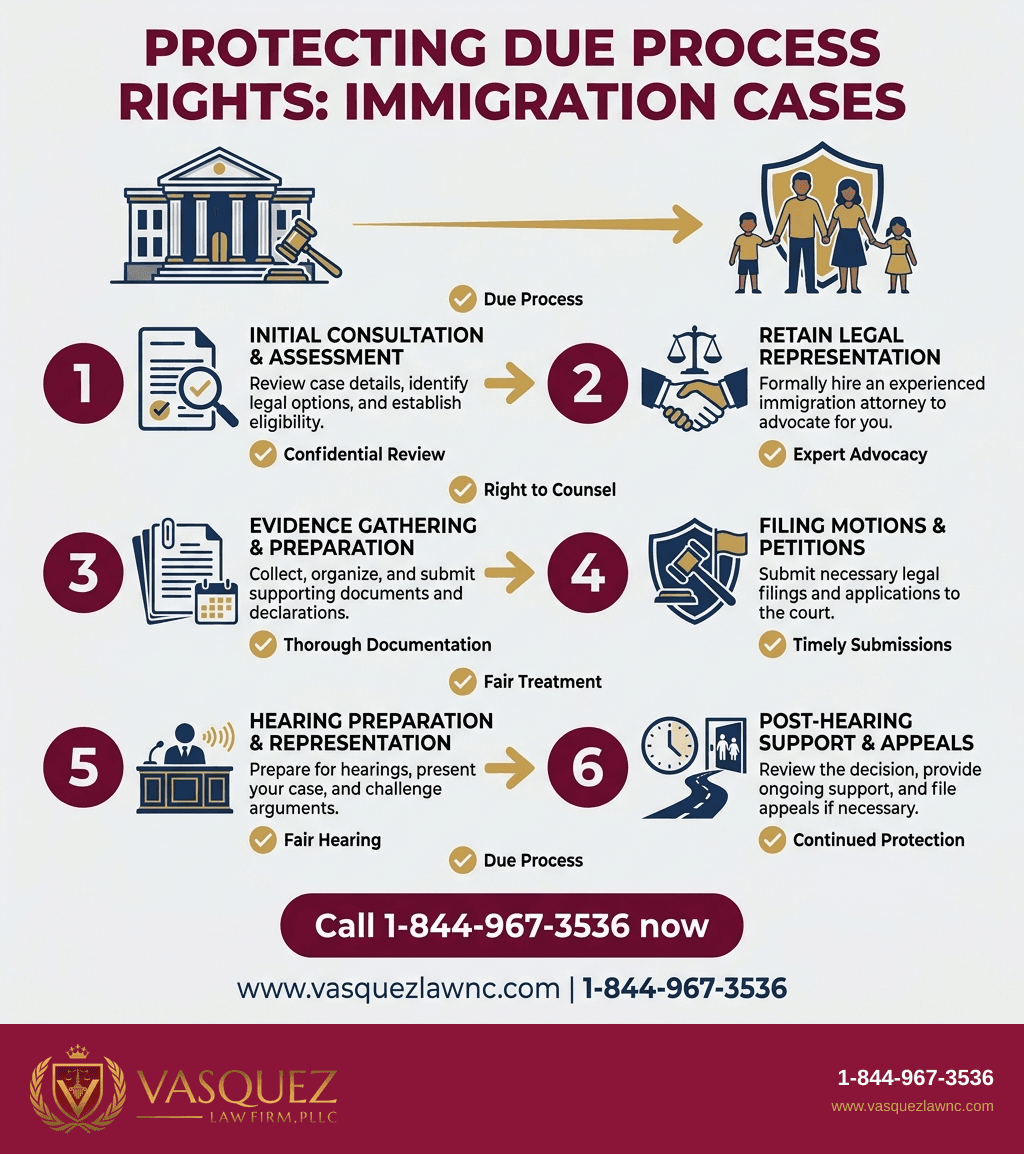
Step-by-Step: Protecting Your Due Process Rights
Consider Maria, a Dreamer detained in Raleigh without clear charges. Knowing her due process rights means she can demand notice, seek legal counsel, and request a hearing. Here are steps to protect your rights:
- Request a clear explanation: Always ask what charges or reasons the government has for detention or action.
- Seek legal counsel: You have the right to be represented during immigration proceedings. Our immigration attorneys in Raleigh and Orlando can help protect your rights.
- Prepare your case: Gather documents like visas, work permits, or evidence of residency. This supports your defense.
- Attend all hearings: Missing hearings can lead to deportation orders by default. Stay attentive to all notices.
- File appeals or motions: If you believe your due process rights were violated, appeal the decision or request a review promptly.
When to Call a Lawyer
Call an immigration lawyer immediately if you are detained, denied entry, or face deportation proceedings. Early legal guidance helps ensure your due process rights are enforced.
Common Examples and Violations of Due Process
An example of due process is receiving timely written notice of deportation charges and a scheduled hearing date. An example violation is denying you your right to a hearing or refusing to let you present evidence.
Typical due process violations in immigration cases include:
- Failure to provide language interpreters
- Denial of access to legal counsel
- No opportunity to review evidence against you
- Biased or prejudiced judges or officials
- Unexplained or delayed hearings
Such violations can undermine your defense and may allow you to challenge the process in court.
Due Process Examples in Immigration
For example, the government must follow procedures under 8 U.S.C. § 1229 (Notice to Appear) by informing you properly of removal charges. USCIS provides clear steps for applications like adjustment of status under 8 U.S.C. § 1255. The Executive Office for Immigration Review (EOIR) oversees immigration court hearings to ensure fairness.
Timeline and What to Expect in Immigration Cases
Processing times vary. For example, adjustment of status can take 6 to 12 months or longer, depending on USCIS workload.
- Initial notice and filing: You receive notice of charges or application receipt within weeks.
- Preparation: Collect evidence and secure legal representation.
- Hearing scheduling: Immigration courts typically schedule hearings several months after filings (EOIR stats).
- Hearing and decision: Judge reviews evidence and issues a decision, usually within days or weeks after.
- Appeals: If your rights were violated, appeals may extend timelines significantly.
Reliable tracking of your case through USCIS and EOIR portals can help you stay informed (see USCIS processing times).
Costs, Mistakes, and When to Call a Lawyer
Costs for immigration cases vary widely based on complexity, filing fees, and legal assistance. Legal fees can range from $1,000 to several thousand dollars or more. Filing fees by USCIS vary by form; for example, Form I-485 adjustment fees are currently around $1,140 plus biometrics.
Common mistakes to avoid include:
- Missing deadlines or hearings — can result in automatic removal.
- Filing inaccurate or incomplete documents — may cause delays or denials.
- Failing to request or understand your due process rights.
- Not seeking legal representation early enough.
If you only remember one thing: Timely action and legal help are critical to protect your due process rights.
Jurisdiction Notes for Raleigh and Orlando Immigration
Immigration law is federal, so due process rights are nationally protected under 8 U.S.C. and 8 C.F.R. However, practical issues vary by location.
North Carolina Notes
In Raleigh, NC, immigration cases proceed in local immigration courts under EOIR jurisdiction. The Vasquez Law Firm office there provides direct support for detained immigrants facing removal proceedings, emphasizing due process enforcement.
Florida Notes
In Orlando, FL, immigration enforcement is robust, and the office assists clients with due process matters, including bond hearings and asylum applications. Due process rights in detention remain critical as courts review cases.
Nationwide Note
Due process protections apply wherever immigration proceedings occur across the U.S., but the Vasquez Law Firm focuses on Raleigh, NC and Orlando, FL as local points of contact.
Don't wait to get the help you deserve. Call us now for immediate assistance. Se Habla Español.
Frequently Asked Questions
What are 5 due process rights?
Key due process rights include notice of the action, the right to a hearing, legal counsel access, opportunity to present evidence, and an impartial decision-maker. These apply in immigration court and protect individuals from unfair government actions.
What are examples of violations of due process?
Examples include detaining someone without notice or charges, denying the right to an attorney, skipping hearings, biased judges, or failure to allow evidence presentation. Such violations can be challenged legally.
What are due process rights in simple terms?
Due process means fair treatment by the government. You must be told what’s happening, allowed to give your side of the story, and have an impartial judge decide. It ensures justice before you lose important rights.
What are the three requirements of due process?
The three essentials are notice (you must be told), hearing (a chance to respond), and a fair process (neutral decision-makers). Without these, legal decisions may be unfair or invalid.
Who is entitled to due process?
All persons in the U.S., including non-citizens, are entitled to due process under the Constitution before losing liberty or property. Specific applications vary by immigration status and case type.
Is due process a human right?
Due process protects fundamental fairness and is recognized as a core principle of justice, aligning with human rights protections internationally and within U.S. constitutional law.
Is due process only for citizens?
No. Due process applies to everyone on U.S. soil, citizens and non-citizens alike. However, specific immigration laws may create exceptions or different procedures for some non-citizens.
What happens if due process rights are violated in immigration cases?
If due process is violated, you may challenge the decision through appeals or motions to reopen your case. Courts can overturn unfair rulings or require the government to follow proper procedures.
About Vasquez Law Firm
At Vasquez Law Firm, we combine compassion with aggressive representation. Our motto "Yo Peleo®" (I Fight) reflects our commitment to standing up for your rights.
- Bilingual Support: Se Habla Español — Spanish-speaking attorneys and staff available
- Service Areas: North Carolina, plus Florida and nationwide for immigration
- Experience: Over 30 years helping clients navigate complex legal matters
- Results: Thousands of successful cases across multiple practice areas
Attorney Trust and Experience
William J. Vásquez is admitted to the North Carolina State Bar (2011) and to the U.S. Courts of Appeals for the 4th, 5th, and 11th Circuits. The firm has provided dedicated legal representation since 2011, with personalized attention to each client's case.
Take the first step toward justice today. Our team is standing by to help. Se Habla Español.
Start Your Free Evaluation Now
Call us: 1-844-967-3536
Se Habla Español - Estamos aquí para ayudarle.
Sources and References
- U.S. Citizenship and Immigration Services (USCIS)
- Executive Office for Immigration Review
- Legal Information Institute
If you need legal assistance, learn more about how our immigration attorneys can help, or call us at 1-844-967-3536 for a free evaluation.


William Vasquez
Founder & CEO, Vasquez Law Firm, PLLC
William Vasquez is the founder and CEO of Vasquez Law Firm, PLLC, a results-driven firm specializing in immigration, criminal defense, personal injury, and workers' compensation. A U.S. Air Force veteran and recipient of the Joint Service Achievement Medal, William is dedicated to fiercely fighting for his clients' rights.
Related Legal Services
Need legal help? Learn more about how our immigration attorneys can help, or contact us for a free evaluation.
You can also visit our North Carolina immigration practice for more information.