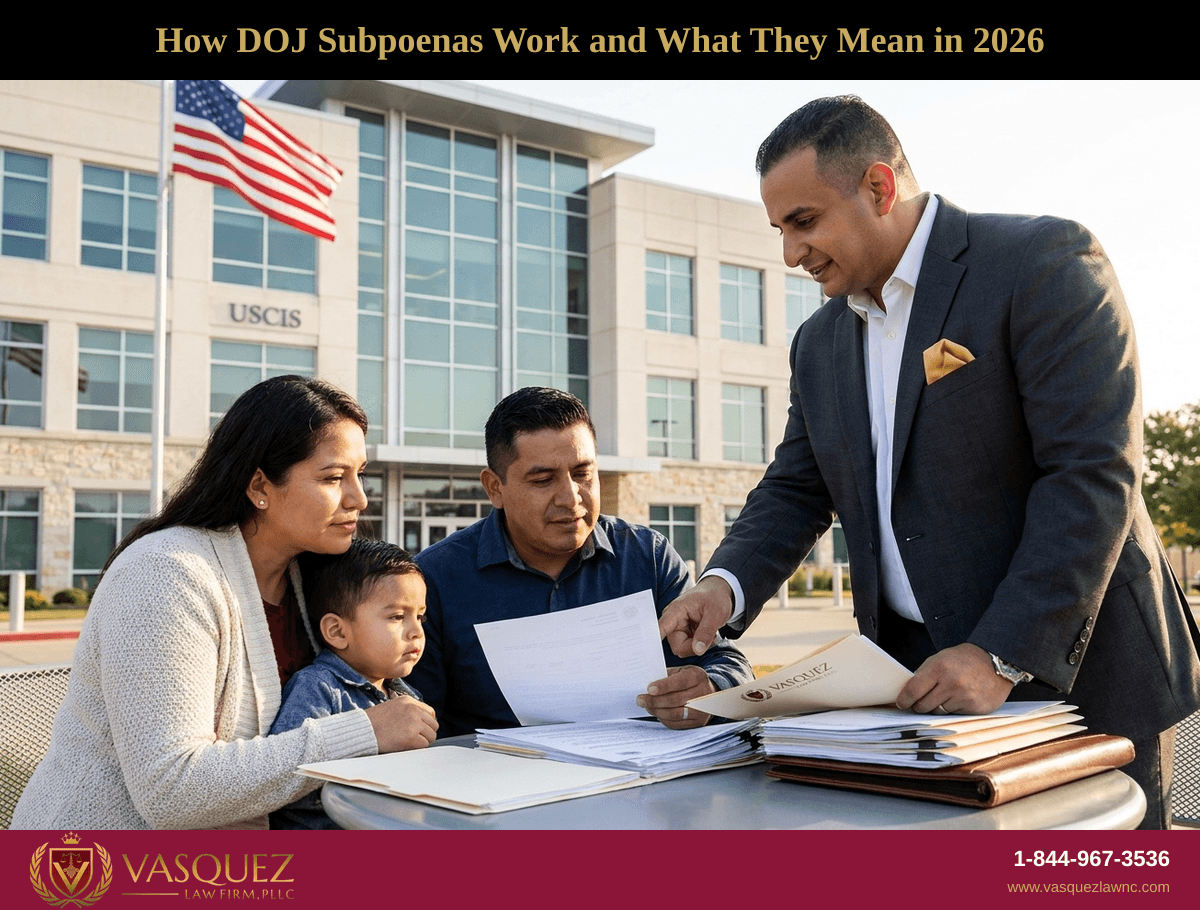
How DOJ Subpoenas Work and What They Mean in 2026
Wondering what DOJ subpoenas mean for you? Learn how they work, types, and steps to protect yourself in 2026. Contact Vasquez Law for a free consultation.
Published on June 22, 2026
Talk to an immigration attorney
Free call. A clear plan for your case.
Free & confidential · Se habla espanol · 24/7
Have questions? Talk to an attorney - free evaluation.
Call 1-844-967-3536Worried how the latest immigration news affects you?
Schedule a confidential case review with an immigration attorney - know exactly where you stand.
USCIS Case Status
Check your USCIS case status
Enter your receipt number and get the official status. Free, no registration.
How DOJ Subpoenas Work and What They Mean in 2026
DOJ subpoenas play a critical role in federal investigations, including immigration cases affecting residents in Raleigh, NC, and Orlando, FL. In 2026, understanding the types of DOJ subpoenas and your rights can prevent serious legal consequences. This article explains what DOJ subpoenas mean, the different types issued, and steps to take if you receive one. With federal enforcement evolving, especially in immigration matters, knowledge is your best defense. The Vasquez Law Firm offers trusted guidance to help you navigate these complex legal requests safely.
Need help with your case? Our experienced attorneys are ready to fight for you. Se Habla Español.
Or call us now: 1-844-967-3536
Quick Answer
DOJ subpoenas are legal orders to provide documents or testimony related to federal investigations, including immigration. They can be administrative, grand jury, or judicial subpoenas. It is critical to respond correctly to protect your rights and avoid penalties.
- DOJ subpoenas demand documents or testimony
- Types include administrative, grand jury, and judicial
- Ignoring a subpoena can lead to legal penalties
- Consulting an attorney immediately is essential
- Subpoenas may impact immigration and criminal cases
Understanding DOJ Subpoenas
Imagine receiving a government notice demanding you produce important personal records. This is a subpoena, and the U.S. Department of Justice (DOJ) issues these to collect evidence in investigations ranging from immigration enforcement to criminal prosecutions. In Raleigh, NC, and Orlando, FL, where many face immigration matters, knowing how DOJ subpoenas work is vital.
DOJ subpoenas come in three main types. An administrative subpoena requests documents without court involvement and is often used in immigration or regulatory investigations. A grand jury subpoena requires testimony or evidence for criminal investigations. Judicial subpoenas are court-ordered directives issued during legal proceedings.
The authority for many DOJ subpoenas is rooted in federal statute 28 U.S.C. § 1783, which governs issuance and enforcement. The DOJ Justice Manual PDF outlines internal policies guiding when and how subpoenas are used. For an immigration case, subpoenas may seek evidence relating to visa applications, employment history, or criminal misconduct.
Subpoenas differ in scope and weight. Administrative subpoenas offer less judicial oversight but still require compliance. Grand jury subpoenas often accompany serious criminal probes, including immigration fraud or deportation-related offenses. Judicial subpoenas carry the force of court orders and failure to comply can result in contempt sanctions.
In recent years, well-known cases involving DOJ subpoenas—such as those linked to investigations like the Epstein probe—have drawn public attention, clarifying the subpoena's reach and limits. Online discussion forums like DOJ subpoenas reddit provide anecdotal experiences but can be misleading without legal context.
If you receive any DOJ subpoena, understanding the type and your rights under the law is crucial before taking any action.
Key Steps to Take When Receiving a Subpoena
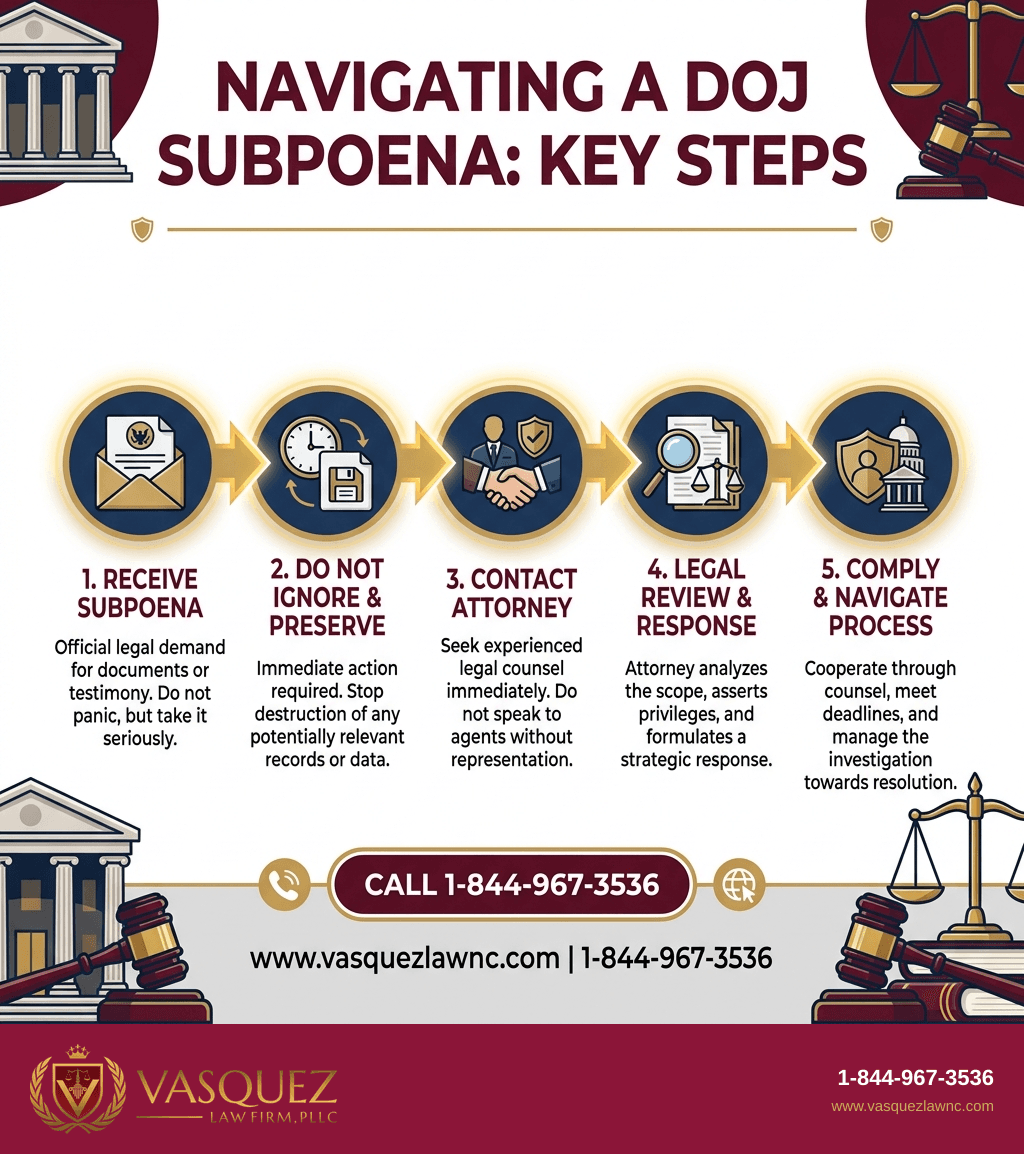
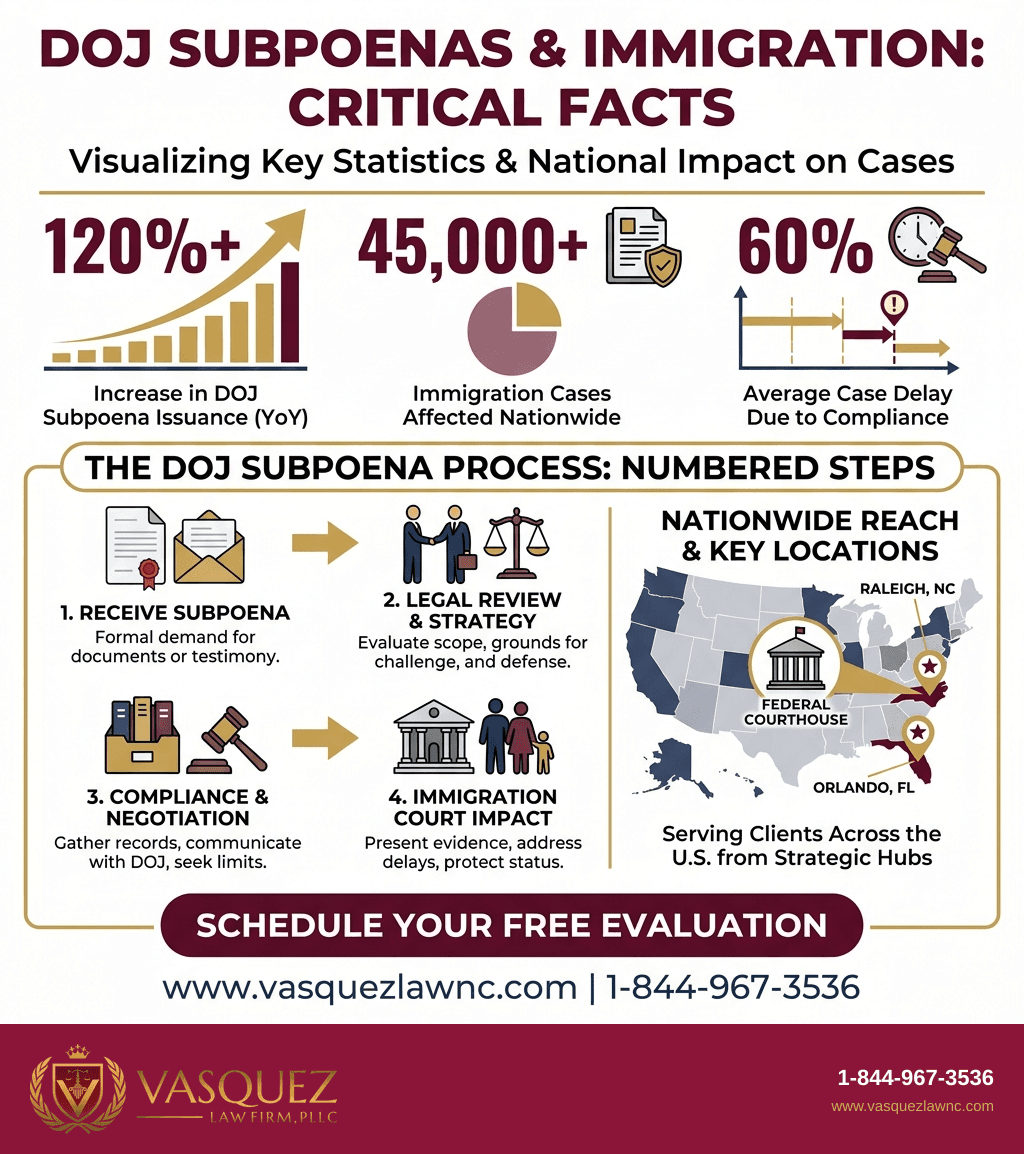
Facing a DOJ subpoena can be intimidating. Here is a clear, step-by-step guide to follow if you receive one in Raleigh, NC or Orlando, FL:
- Carefully review the subpoena documents. Note deadlines, what is requested, and whether it's an administrative, grand jury, or judicial subpoena.
- Do not ignore the subpoena. Ignoring can lead to legal consequences such as fines or arrest for contempt.
- Contact an experienced immigration attorney immediately. Vasquez Law Firm offers confidential consultations to explain your obligations and help protect your rights.
- Collect and preserve all requested documents. Avoid deleting or hiding anything related to the subpoena.
- Prepare a response with legal guidance. Your attorney can help negotiate deadlines, object to improper requests, or file motions to quash if appropriate.
- Comply fully with lawful subpoenas. Cooperation, handled prudently, reduces risks.
- Stay informed about your case progress. Immigration cases tied to DOJ subpoenas often involve complex timelines.
Taking these steps lowers the risk of mistakes that can jeopardize your rights or immigration status.
Common Mistakes to Avoid with DOJ Subpoenas
Many individuals mishandle DOJ subpoenas due to unfamiliarity. Avoid these frequent errors:
- Ignoring the subpoena or missing deadlines. This can result in contempt citations.
- Responding without legal advice. Uninformed responses may waive important rights.
- Destroying or concealing evidence. This is illegal and leads to severe penalties.
- Confessing or answering questions without counsel. Anything you say may be used against you, especially in criminal or immigration contexts.
- Failing to track communication records. Keep documented correspondence for your defense.
- Assuming an administrative subpoena does not require legal attention. Legal obligations still apply.
If you only remember one thing: Always seek legal counsel the moment you receive a DOJ subpoena.
Timeline and What to Expect
When you receive a DOJ subpoena, timelines vary by type but generally involve prompt response requirements.
- Administrative subpoenas usually allow 10 to 30 days to comply, but deadlines can be shorter or extended by agreement.
- Grand jury subpoenas may demand immediate testimony, sometimes within days.
- Judicial subpoenas often come with specific court dates and deadlines tied to legal proceedings.
Delays or failure to respond can escalate legal action quickly. In immigration contexts, the investigation timeline may affect visa applications or immigration court hearings.
Vasquez Law Firm in Raleigh, NC, and Orlando, FL provides ongoing support throughout subpoena responses and can help track USCIS processing times related to immigration benefits at USCIS Processing Times.
Costs and Legal Fees Related to Subpoenas
Responding to DOJ subpoenas can involve direct and indirect costs. Legal fees vary based on case complexity, type of subpoena, and negotiation efforts.
- Initial consultation fees may be waived by firms like Vasquez Law for immigration cases.
- Document gathering and review requires time and resources.
- Disputes over subpoena scope or motions to quash incur additional legal expenses.
- Failure to respond properly risks fines or sanctions that increase costs exponentially.
- Costs related to immigration status impact, such as bond payments or court fees, may arise.
Consult your attorney early to understand expected expenses and payment options. Usually, preserving legal rights outweighs costs.
Jurisdiction Notes: Raleigh NC, Orlando FL, and Nationwide
Raleigh, NC Notes
In Raleigh, DOJ subpoenas often relate to immigration enforcement, workplace investigations, or criminal probes involving federal agencies. North Carolina residents typically work with local counsel experienced in federal immigration and criminal law to ensure proper response and coordination with USCIS.
Orlando, FL Notes
Orlando serves a diverse immigration population where DOJ subpoenas may intersect with federal immigration and criminal cases. Local attorneys provide bilingual services and virtual consultations for visa holders and immigrants facing investigations tied to DOJ subpoenas.
Nationwide Concepts
DOJ subpoena authority extends nationwide under statutes like 28 U.S.C. § 1783. Immigration laws and investigations are federally governed, though practical procedures may differ by district. Rights and obligations remain consistent, requiring timely, accurate responses no matter your location.
When to Call a Lawyer Immediately
- You receive a DOJ subpoena demanding documents or testimony
- You are unsure of the subpoena type or its legal implications
- You want to claim privilege or object to the scope
- You are involved in an ongoing immigration court case
- You have been contacted by federal agents or investigators
- You fear criminal charges related to immigration or other matters
- You need assistance to coordinate response and protect status
- You want to understand your legal rights and risks clearly
- You need bilingual support to understand complex legal language
About Vasquez Law Firm
At Vasquez Law Firm, we combine compassion with aggressive representation. Our motto "Yo Peleo®" (I Fight) reflects our commitment to standing up for your rights.
- Bilingual Support: Se Habla Español — Spanish-speaking attorneys and staff available
- Service Areas: North Carolina, Florida, and nationwide immigration services
- Experience: Over 30 years helping clients navigate complex legal matters
- Results: Thousands of successful cases across multiple practice areas
Attorney Trust and Experience
William J. Vásquez is admitted to the North Carolina State Bar (2011) and to the U.S. Courts of Appeals for the 4th, 5th, 6th, and 11th Circuits. Florida-jurisdiction matters at the firm are handled by Florida Bar attorney Alekssandra Lopez. The firm has provided dedicated legal representation since 2011, with personalized attention to each client's case.
Don't wait to get the help you deserve. Call us now for immediate assistance. Se Habla Español.
Frequently Asked Questions
Does the DOJ issue subpoenas?
Yes, the U.S. Department of Justice (DOJ) issues subpoenas to collect evidence during investigations. These may require testimony or documents. Different types exist, including administrative, grand jury, and judicial subpoenas, each with its own legal procedures and protections.
What does a DOJ subpoena mean?
A DOJ subpoena is a legal order compelling you to provide documents or appear to give testimony. Ignoring it can lead to penalties. It means you are part of or connected to an investigation by federal authorities.
What are the three types of subpoenas?
The three main types are administrative subpoenas (no court involvement), grand jury subpoenas (criminal investigation), and judicial subpoenas (court ordered). Each type has different rules and implications for recipients.
What is a John Doe subpoena?
A John Doe subpoena is used when the exact person or entity's name is unknown. It's often issued to third parties to gather information or identify unknown subjects in investigations.
How should I respond to a DOJ administrative subpoena?
Review the request carefully and consult an experienced attorney before responding. Provide documents that are requested while protecting legal rights and objecting if necessary to overbroad demands.
Can a DOJ subpoena affect my immigration case?
Yes, subpoenas may relate to investigations impacting immigration status or eligibility. Legal counsel in Raleigh and Orlando can help evaluate how a subpoena might affect your case and advise on protective steps.
What legal protections do I have against improper subpoenas?
You can challenge subpoenas that are overbroad, irrelevant, or violate privileges. Courts can limit or quash improper subpoenas. Knowing your legal rights and engaging counsel promptly is essential.
Where can I find more information about DOJ subpoena policies?
The DOJ Justice Manual PDF and USCIS websites offer guidance on subpoena use and federal investigative procedures related to immigration.
Sources and References
- U.S. Citizenship and Immigration Services
- Executive Office for Immigration Review
- Legal Information Institute
Take the first step toward justice today. Our team is standing by to help. Se Habla Español.
Start Your Free Evaluation Now
Call us: 1-844-967-3536
Se Habla Español - Estamos aquí para ayudarle.
If you need legal assistance, learn more about speak with an immigration lawyer, or call us at 1-844-967-3536 for a free evaluation.


William Vasquez
Founder & CEO, Vasquez Law Firm, PLLC
William Vasquez is the founder and CEO of Vasquez Law Firm, PLLC, a results-driven firm specializing in immigration, criminal defense, personal injury, and workers' compensation. A U.S. Air Force veteran and recipient of the Joint Service Achievement Medal, William is dedicated to fiercely fighting for his clients' rights.
Related Legal Services
Need legal help? Learn more about speak with an immigration lawyer, or contact us for a free evaluation.
You can also visit our North Carolina immigration practice for more information.