How DHS Deportation Works and What to Do in 2026
Learn how DHS deportation works in 2026, key steps if facing removal, and how to protect your rights. Contact Vasquez Law for a free evaluation.
Published on September 3, 2026
Talk to an immigration attorney
Free call. A clear plan for your case.
Free & confidential · Se habla espanol · 24/7
Have questions? Talk to an attorney - free evaluation.
Call 1-844-967-3536Check your case status now
Look up your immigration case below, then talk to an attorney about what it means — free.
Questions about your result?
Talk to an attorney about your case — free, no obligation.
How DHS Deportation Works and What to Do in 2026
DHS deportation affects thousands of immigrants every year. This includes people with and without legal status. In 2026, it is important to understand the deportation process if you face removal proceedings. This article explains how DHS carries out deportations, who is affected, and what rights you have. We explain the steps to take if you or a loved one is at risk. We also clarify who can get relief and describe important legal protections in Raleigh, NC, Orlando, FL, and across the country. Protect your rights by learning what to expect from the DHS deportation system.
Need help with your case? Our experienced attorneys are ready to fight for you. Se Habla Español.
Or call us now: 1-844-967-3536
Quick Answer
DHS deportation is the process where the Department of Homeland Security removes non-citizens who break immigration laws. Deportations happen after legal hearings unless relief is given. Knowing your rights and getting legal help early can protect you from wrongful removal.
- DHS focuses on deporting serious criminals and recent border crossers.
- Green card holders can be deported for some crimes.
- Voluntary self-deportation may include payments and needs specific forms.
- ICE cannot deport U.S. citizens, but sometimes they detain them by mistake.
- Having a lawyer is very important in immigration court hearings.
Understanding DHS Deportation in 2026
Every year, the U.S. Department of Homeland Security (DHS) enforces immigration laws by removing people who do not have legal status or who break immigration rules. In 2025, DHS deported more than 250,000 people. This shows the ongoing priorities set by federal policy.
DHS deportation involves several agencies, including Immigration and Customs Enforcement (ICE) and Customs and Border Protection (CBP). ICE finds, arrests, and holds people inside the country for removal. CBP works at the borders and handles voluntary self-deportation programs.
Who Can DHS Deport?
DHS can deport:
- People who are not citizens and do not have valid visas or legal status in the U.S.
- Green card holders who are convicted of certain crimes (called aggravated felonies or crimes involving moral turpitude, which means crimes showing bad character).
- People with final removal orders from immigration courts.
It is important to know that U.S. citizens cannot be legally deported under federal law. But sometimes, people are detained by mistake. If this happens, you need legal help right away.
Legal Basis for Deportation
The Immigration and Nationality Act (INA) controls deportation under 8 U.S.C. A7 1229a. It sets the rules for removal hearings. Regulations at 8 C.F.R. A7 208.31 explain the reasons for deportation and when people can get relief called withholding removal. Deportation usually happens after a hearing before an immigration judge. At this hearing, the person can fight the removal or ask for relief.
In Raleigh, NC and Orlando, FL, knowing these federal laws is very important to protect immigrant rights and handle local DHS enforcement properly.
Lawyers at our immigration legal services help clients through this complex process. They look for ways to get relief and stop wrongful removal.
Step-by-Step: What To Do if Facing Deportation
Facing DHS deportation can feel overwhelming. Taking the right steps quickly can improve your chances to fight removal or get legal relief.
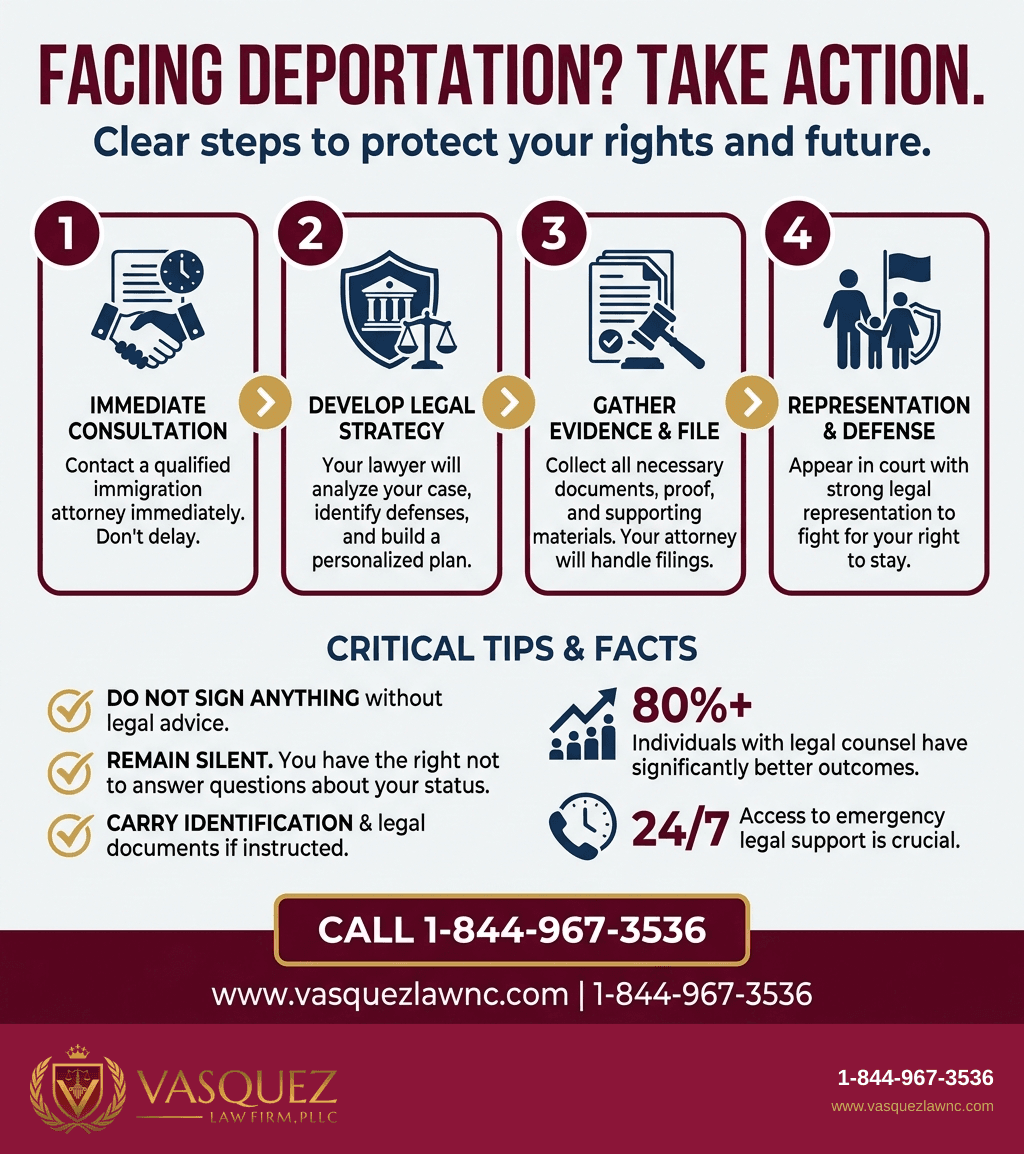
1. Understand Your Situation
If ICE or CBP arrests or detains you, ask clearly why you were taken. Ask for copies of any notices to appear in court or removal orders.
2. Contact an Immigration Lawyer Immediately
Immigration cases have strict deadlines. Contacting a lawyer in Raleigh or Orlando right away helps you get advice on your rights and possible defenses. These may include asylum, cancellation of removal, or changing your status. Attorney Vasquez has experience with these cases.
3. Attend All Immigration Court Hearings
If you miss a hearing, the court usually orders deportation by default. Know your court dates and bring a lawyer if you can.
4. Gather Evidence for Relief
Collect documents that show your family ties in the U.S., hardship you or your family would face, work history, or eligibility for relief. Submit this evidence on time.
5. Explore Voluntary Departure or Self-Deportation
Some people qualify for voluntary departure or CBPs self-deportation program. This program may include a payment to help with moving. Using the Self-deportation Form correctly and knowing the rules helps avoid legal problems.
If you or a loved one faces deportation, contact our Raleigh and Orlando offices today for a free evaluation. We will help you understand your options and next steps.
Common Mistakes to Avoid in Deportation Cases
Many people facing DHS deportation hurt their cases by making common mistakes. Avoiding these mistakes can improve your chances.
- Ignoring Notices: Missing court dates or not answering DHS letters usually leads to deportation orders by default.
- No Legal Representation: Trying to handle removal hearings without a lawyer risks losing chances for relief or your legal rights.
- Failing to Collect Evidence: Not giving proof of your U.S. ties or legal reasons to stay leaves you open to removal.
- Giving Inconsistent Information: Giving wrong or conflicting statements to DHS or courts hurts your credibility.
- Not Understanding Voluntary Departure: Voluntary return can help avoid formal removal records but you must follow all rules carefully.
- Assuming Citizens Cannot Be Detained: Citizens cannot be deported, but ICE sometimes detains them by mistake. You must act quickly if this happens.
If you remember one thing: Get a skilled lawyer right away to protect your case from the start.
Timeline and What to Expect During Deportation
DHS deportation timelines vary but usually follow these steps after arrest:
- Day 1-5: Detention and processing, and issuance of Notice to Appear (NTA).
- Week 2-6: First immigration court hearings to set the schedule.
- Month 2-12: Hearings on your eligibility for relief, gathering evidence, and submitting documents.
- Month 12+: Final order is given; if removal is ordered, ICE arranges transportation for deportation.
Sometimes, appeals or reviews can make this timeline longer. Always go to your hearings and talk to an immigration lawyer to stay informed.
You can check DHS processing times and policy updates for 2026 on the USCIS processing times page.
Costs and Fees: What Affects the Price of Deportation Defense
Legal fees for deportation cases depend on:
- How complex your case is, including any criminal history or eligibility for relief.
- Whether you need appeals or motions to reopen your case.
- Time needed to prepare documents and attend court.
- Where you live; fees in Raleigh, NC, and Orlando, FL may be different.
Some people can get fee waivers or free legal help. Vasquez Law Firm offers clear fee information and free first consultations to talk about your case and money options.
Jurisdiction Notes
North Carolina Notes
In Raleigh, NC, DHS deportation cases are handled by federal immigration agencies. State courts do not handle deportation. But local resources and legal aid may help detained immigrants.
Florida Notes
Orlando, FL is a major center for immigration enforcement. DHS actions in Florida follow federal priorities. Knowing about local detention centers and ICE procedures is important.
Nationwide Notes
DHS deportation laws are federal and the same across all states. But local differences in enforcement and court backlogs affect how long cases take and the results. Across the country, ICE focuses on people with criminal records and recent border crossers.
When to Call a Lawyer Now
- If you get a Notice to Appear or removal order.
- If ICE or CBP detains or arrests you.
- If you have a green card and face criminal charges.
- If you want to apply for relief like asylum or cancellation of removal.
- If someone you know was wrongly deported or detained.
- If you need help with voluntary departure or self-deportation forms.
- If your right to a hearing or due process is denied.
- If you fear mistaken identity or wrongful detention by DHS.
- If you want help following immigration court orders.
About Vasquez Law Firm
At Vasquez Law Firm, we mix caring with strong representation. Our motto "Yo Peleo" (I Fight) shows our promise to stand up for your rights.
- Bilingual Support: Se Habla Espaol Spanish-speaking lawyers and staff are available.
- Service Areas: North Carolina, plus Florida and nationwide for immigration cases.
- Experience: Over 30 years helping clients with complex legal issues.
- Results: Thousands of successful cases in many practice areas.
Attorney Trust and Experience
William J. Vsquez is licensed by the North Carolina State Bar (2011) and the U.S. Courts of Appeals for the 4th, 5th, and 11th Circuits. The firm has given dedicated legal help since 2011, with personal attention to each clients case.
Don't wait to get the help you need. Call us now for fast assistance. Se Habla Espaol.
Frequently Asked Questions
Can ICE deport you if you are a U.S. citizen?
No, Immigration and Customs Enforcement (ICE) cannot legally deport U.S. citizens. Deportation applies only to non-citizens. However, mistaken arrests or detentions can happen. If you believe you were wrongfully detained by ICE, contact an immigration lawyer immediately to protect your rights and clarify your status.
What is the DHS deportation list 2025?
The DHS deportation list 2025 refers to the official tally of individuals prioritized for removal by the U.S. Department of Homeland Security. It includes those with final removal orders, certain criminal convictions, or those recently apprehended at the border. This list changes yearly based on enforcement priorities and legal developments.
Is the self-deportation stipend $3,000?
Yes, as of 2026, there is a $3,000 stipend offered to certain individuals who volunteer for self-deportation through U.S. Customs and Border Protection's voluntary return program. This stipend helps cover travel and resettlement expenses, but eligibility requirements and procedures must be followed carefully.
How does ICE decide who to deport?
ICE prioritizes deportations based on factors such as criminal convictions, immigration status, threat to public safety, and legal finality of removal orders. Enforcement policies in 2026 continue to focus on those posing security risks, recent border crossers, and reentry violators. Those without serious offenses may have relief options.
Can a green card holder be deported?
Yes, lawful permanent residents (green card holders) can be deported if they violate certain immigration laws or commit serious crimes. Grounds for removal include some criminal offenses, fraud in immigration applications, or extended absence from the U.S. Consulting an immigration attorney in Raleigh or Orlando is essential if you face this risk.
What is the self-deportation form?
The self-deportation form is a document issued by U.S. Customs and Border Protection to individuals opting for voluntary return to their home country. It outlines the terms of voluntary departure and any benefits like stipends. Using this form properly can avoid formal removal proceedings but requires legal guidance.
What are DHS deportation numbers by year?
DHS reports deportation numbers annually, with totals varying based on policy and enforcement changes. For example, in 2024, over 250,000 removals were recorded. Tracking these numbers helps understand enforcement trends and impacts on immigrant communities in Raleigh, Orlando, and nationally.
Is there a phone number for DHS self-deportation help?
Yes, individuals seeking help with the DHS self-deportation process can contact the U.S. Customs and Border Protection at designated hotlines. While not a comprehensive legal resource, the self-deportation phone number facilitates access to voluntary return information. For personal legal advice, contact an immigration attorney.
Sources and References
- U.S. Citizenship and Immigration Services
- Executive Office for Immigration Review
- Legal Information Institute
Take the first step toward justice today. Our team is standing by to help. Se Habla Espaol.
Start Your Free Evaluation Now
Call us: 1-844-967-3536
Se Habla Espaol - Estamos aqu para ayudarle.


William Vasquez
Founder & CEO, Vasquez Law Firm, PLLC
William Vasquez is the founder and CEO of Vasquez Law Firm, PLLC, a results-driven firm specializing in immigration, criminal defense, personal injury, and workers' compensation. A U.S. Air Force veteran and recipient of the Joint Service Achievement Medal, William is dedicated to fiercely fighting for his clients' rights.
Related Legal Services
Need legal help? Learn more about immigration lawyers in North Carolina, or contact us for a free evaluation.
You can also visit statewide immigration legal services for more information.