Can U.S. Citizens Be Stripped of Citizenship in 2026?
Can U.S. citizens be stripped of citizenship? Learn the legal grounds, risks, and protections around citizenship stripping with expert advice. Call for a free consultation.
Published on June 9, 2026
Have questions? Talk to an attorney - free evaluation.
Call 1-844-967-3536Free Tool
Check Your USCIS Case Status Now
Enter your receipt number - get the official USCIS status in English or Spanish. No registration.
Can U.S. Citizens Be Stripped of Citizenship in 2026?
Citizenship stripping involves legally revoking someone's U.S. citizenship, often through a process called denaturalization. In 2026, this remains a rare but serious risk, especially for naturalized citizens accused of crimes. This article explains how citizenship stripping works, under what conditions it happens, and what residents in Orlando, FL and Raleigh, NC should know to protect their rights.
Need help with your case? Our experienced attorneys are ready to fight for you. Se Habla Español.
Or call us now: 1-844-967-3536
Quick Answer
Citizenship stripping, known as denaturalization, is a legal process where naturalized U.S. citizens lose citizenship due to fraud, crimes, or other serious violations. Native-born citizens are rarely stripped except in extreme cases. Denaturalization cases require court proceedings and are typically followed by deportation risks.
- Typically affects naturalized citizens
- Requires fraud or serious crime proof
- Federal court process with strong protections
- May lead to deportation after revocation
- Native-born citizens are almost always protected
What Is Citizenship Stripping?
In 2026, citizenship stripping refers to the U.S. government's legal action to revoke citizenship from individuals, primarily naturalized citizens. This happens through a process called denaturalization. It is not the same as losing citizenship by renouncing it voluntarily or losing permanent resident status.
Denaturalization usually follows when the government discovers that an individual concealed important facts, lied during the naturalization application, or committed serious offenses such as terrorism or immigration fraud. Native-born citizens are protected under the 14th Amendment, and stripping their citizenship is exceptionally rare and requires very specific circumstances.
If you live in Orlando, Florida or Raleigh, North Carolina, understanding citizenship stripping is vital since these are areas with large immigrant populations where citizenship applications and disputes often arise.
Learn more about our immigration legal services and how Vasquez Law Firm can assist you if you face these challenges.
Legal Grounds for Citizenship Revocation
The government can revoke citizenship under strict legal grounds set by federal law. Key reasons include:
- Fraud or Misrepresentation: Deliberately lying or concealing material information during the naturalization process can trigger denaturalization. For example, hiding a criminal record or membership in banned organizations.
- Membership in Prohibited Organizations: Joining terrorist groups or organizations that advocate the overthrow of the government can be grounds for revocation.
- Criminal Conduct: Serious crimes such as terrorism, espionage, or war crimes committed before or after naturalization can lead to citizenship loss.
- Denaturalization Due to Crime: If citizenship was obtained despite the applicant's ineligibility due to past crimes, it can later be revoked.
Legally, these grounds are enforced through 8 U.S.C. § 1451, which details process and conditions for revocation of naturalization. According to the U.S. Code § 1451, denaturalization requires clear and convincing evidence in federal court.
Denaturalization is different from other immigration enforcement actions. The Executive Office for Immigration Review (EOIR) oversees immigration court removal proceedings, often following a citizenship revocation decision.
Step-by-Step: What to Do If Facing Citizenship Stripping
- Receive Formal Notice: You will receive court papers or government notification alleging grounds for denaturalization.
- Contact an Experienced Attorney: Immediately reach out to experienced immigration attorneys such as Attorney Vasquez for legal advice and representation.
- Review Case Details: Collect and review all documentation, including your naturalization application, police records, and court documents.
- Prepare Your Defense: Your lawyer will help gather evidence, witnesses, and legal arguments proving your eligibility and good character.
- Attend Federal Court Hearings: Denaturalization requires a court trial. Attend all hearings with counsel present.
- Appeal if Necessary: If citizenship is revoked, options for appeal may exist to higher federal courts.
- Discuss Post-Denaturalization Options: If citizenship is lost, your attorney can explore relief from removal or other immigration benefits.
Avoid self-representation. Citizenship stripping is complex and has long-term consequences that require expert defense tailored for your situation in Orlando or Raleigh.
Common Mistakes to Avoid During Denaturalization
- Ignoring court notices: Missing deadlines can severely harm your defense. Always respond promptly.
- Failing to hire an experienced attorney: Citizenship stripping requires specialized knowledge; general immigration lawyers might lack the expertise.
- Not disclosing full information: Withholding facts or documents can lead to adverse court rulings.
- Delaying defense preparation: The defense needs time to collect evidence and expert testimony.
- Misunderstanding the difference between citizenship stripping and deportation: Both have different legal procedures and rights.
- Not attending court hearings: Absences can result in default rulings against you.
- Underestimating the emotional and financial impact: Prepare yourself for the process's demands.
If you only remember one thing: always seek legal help immediately upon citizenship stripping allegations to protect your rights.
Timeline: What to Expect in Citizenship Stripping Cases
- Weeks 1-4: Initial government investigation and issuance of a complaint.
- Weeks 5-12: Preparation of your defense, document gathering, and attorney consultation.
- Months 3-6: Scheduling and attending federal court hearings.
- Months 6-12: Court decision on denaturalization; possible appeals can extend timelines.
- After decision: Potential initiation of removal (deportation) proceedings if citizenship is revoked.
This timeline varies widely based on case complexity and court schedules, especially in busy jurisdictions such as Orlando and Raleigh.
Costs and Fees Associated with Defense
- Attorney fees: Vary depending on case complexity; expect fees for consultations, court appearances, and appeals.
- Court filing fees: Certain motions or appeals may require fees.
- Document preparation costs: Including certified records and translations if necessary.
- Travel and expert witness fees: In complex cases, you may need expert testimony for your defense.
Discuss fees upfront with your attorney to avoid surprises. At Vasquez Law Firm, we strive for transparent and reasonable billing tailored to your case needs.
Jurisdiction Notes: Orlando, Raleigh, and Nationwide
Citizenship is a federal issue governed by U.S. immigration laws; therefore, denaturalization cases are heard in federal courts regardless of location.
North Carolina Notes
In Raleigh, citizenship stripping cases proceed in the U.S. District Court for the Eastern District of North Carolina. Immigration attorneys in Raleigh must understand local court procedures and work closely with clients for in-person meetings.
Florida Notes
Orlando-area cases fall under the Middle District of Florida federal courts. Orlando's large immigrant population means these cases arise more frequently. Vasquez Law Firm's Orlando-based immigration lawyers provide in-person and virtual support.
Nationwide Concepts (General Only, Rules Vary)
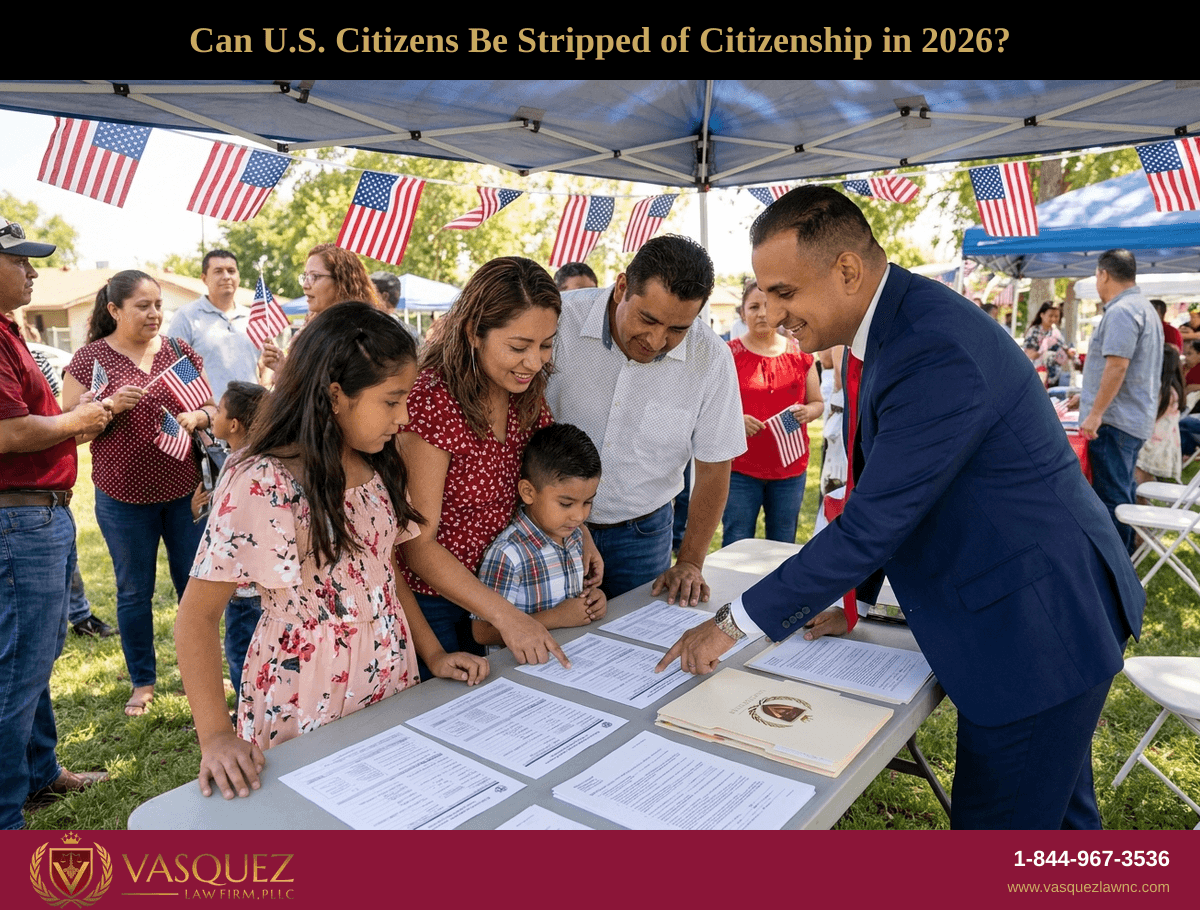
Nationally, the Department of Justice prosecutes citizenship stripping cases under clear federal statutes. The process requires judicial oversight to protect due process rights. Citizenship stripping remains rare compared to the large naturalized community but cases are rising due to increased government scrutiny following policy changes in recent years.
When to Call a Lawyer Now
- Immediate receipt of denaturalization notice or court summons
- Accusations of citizenship fraud or misrepresentation
- Criminal conviction that could affect citizenship
- ICE or federal agents visit or arrest related to citizenship status
- Plans to travel abroad under threat of citizenship review
- Questions about eligibility for citizenship or defense options
- Concerns about family members facing denaturalization
- Need for help preparing court hearings or appeals
About Vasquez Law Firm
At Vasquez Law Firm, we combine compassion with aggressive representation. Our motto "Yo Peleo®" (I Fight) reflects our commitment to standing up for your rights.
- Bilingual Support: Se Habla Español — Spanish-speaking attorneys and staff available
- Service Areas: North Carolina, Florida, and nationwide immigration services
- Experience: Over 30 years helping clients navigate complex legal matters
- Results: Thousands of successful cases across multiple practice areas
Attorney Trust and Experience
William J. Vásquez is admitted to the North Carolina State Bar (2011) and to the U.S. Courts of Appeals for the 4th, 5th, and 11th Circuits. Florida-jurisdiction matters at the firm are handled by Florida Bar attorney Harold Estrada-Rodriguez (FL Bar No. 1041171). The firm has provided dedicated legal representation since 2011, with personalized attention to each client's case.
Don't wait to get the help you deserve. Call us now for immediate assistance.
Call Now: 1-844-967-3536 | Se Habla Español
Frequently Asked Questions
Can U.S. citizens be stripped of citizenship?
Yes, but mostly naturalized citizens. The process is called denaturalization and involves proving fraud or serious criminal behavior. Native-born citizens are almost always protected under the Constitution.
What crimes can revoke U.S. citizenship?
Serious offenses like terrorism, war crimes, espionage, or immigration fraud can lead to citizenship revocation when proven in court.
Is citizenship stripping the same as deportation?
No. Citizenship stripping removes citizenship; deportation is removal from the U.S. Usually, denaturalized individuals are vulnerable to deportation.
Can the president strip citizenship from someone?
No, revoking citizenship requires a court order. The president cannot unilaterally strip citizenship due to constitutional protections.
What is a denaturalization example?
Individuals hiding criminal history or involvement in banned groups who become citizens may later lose citizenship through court orders.
Can naturalized citizens be deported after losing citizenship?
Yes, losing citizenship means losing protections, and deportation proceedings may follow if there are grounds for removal.
Under what circumstances can citizenship be revoked?
Fraud during naturalization, serious crimes, terrorism, or prohibited organization membership can all be grounds for revocation.
Has anyone ever been stripped of U.S. citizenship?
Yes, though it is rare. Cases have increased with government scrutiny on immigration fraud and national security concerns.
Sources and References
- U.S. Citizenship and Immigration Services
- Executive Office for Immigration Review
- Legal Information Institute
Take the first step toward justice today. Our team is standing by to help.
Start Your Free Evaluation Now
Call us: 1-844-967-3536
Se Habla Español - Estamos aquí para ayudarle.



William Vasquez
Founder & CEO, Vasquez Law Firm, PLLC
William Vasquez is the founder and CEO of Vasquez Law Firm, PLLC, a results-driven firm specializing in immigration, criminal defense, personal injury, and workers' compensation. A U.S. Air Force veteran and recipient of the Joint Service Achievement Medal, William is dedicated to fiercely fighting for his clients' rights.
Related Legal Services
Need legal help? Learn more about immigration case consultation, or contact us for a free evaluation.
You can also visit statewide immigration legal services for more information.