Carroll Twp ICE: What It Means for Immigrants in 2026
Understand how Carroll Twp ICE cooperation impacts immigrants in 2026. Learn your rights and options. Contact Vasquez Law Firm for a free consultation today. Se Habla Español.
Published on March 6, 2026
Talk to an immigration attorney
Free call. A clear plan for your case.
Free & confidential · Se habla espanol · 24/7
Have questions? Talk to an attorney - free evaluation.
Call 1-844-967-3536Worried how the latest immigration news affects you?
Schedule a confidential case review with an immigration attorney - know exactly where you stand.
Carroll Twp ICE: What It Means for Immigrants in 2026
Recent developments regarding Carroll Twp ICE cooperation are a significant concern for immigrant communities across North Carolina and Florida in 2026. Understanding the implications of local law enforcement working with federal immigration authorities is crucial for protecting your rights and ensuring family stability. This guide provides essential information on what these partnerships mean, what immigrants should know about their interactions with law enforcement, and how to prepare for potential encounters with ICE agents.
Need help understanding your rights regarding Carroll Twp ICE cooperation? Our experienced immigration attorneys are ready to fight for you. Se Habla Español.
Schedule Your Free Case Evaluation
Or call us now: 1-844-967-3536
Quick Answer
Carroll Twp ICE cooperation refers to local law enforcement agencies collaborating with U.S. Immigration and Customs Enforcement (ICE) to identify and detain individuals suspected of immigration violations. This can lead to increased arrests and deportations, making it vital for non-citizens to understand their constitutional rights and seek legal counsel.
- Local police may share information with ICE.
- You have the right to remain silent.
- Do not open your door to ICE without a warrant.
- Always consult an immigration attorney if contacted by ICE.
- Knowing your rights can protect you from unlawful detention.
Understanding Carroll Twp ICE Cooperation
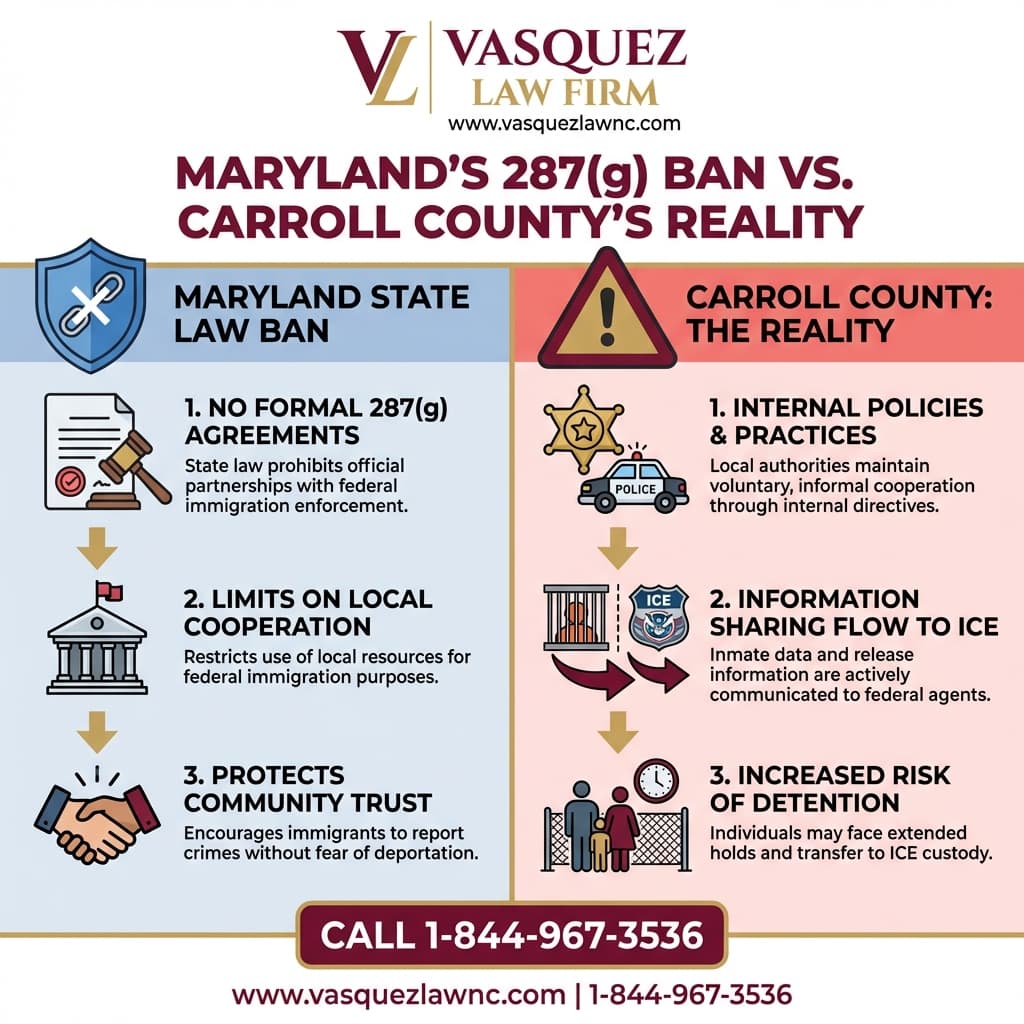
In 2026, concerns about local law enforcement agencies, like those in Carroll Township, partnering with U.S. Immigration and Customs Enforcement (ICE) continue to grow within immigrant communities. These partnerships often involve programs like 287(g) agreements, which deputize local officers to act as federal immigration agents. For instance, a traffic stop could escalate into an immigration detention if the local officer identifies a non-citizen without legal status, particularly in areas like Raleigh, North Carolina, or across Florida.
Such cooperation means that individuals who might otherwise only face minor local charges could find themselves in federal immigration custody. The legal landscape surrounding these agreements is complex, requiring a clear understanding of both state and federal laws. When local police act as immigration agents, the lines between criminal enforcement and civil immigration enforcement become blurred, creating significant anxiety and legal challenges for many families. It's essential for individuals and families to be aware of these dynamics and how they might impact their daily lives and legal standing.
The impact extends beyond individual arrests, affecting community trust in local police and potentially discouraging immigrants from reporting crimes or seeking assistance. Vasquez Law Firm recognizes these challenges and stands ready to assist those impacted by Carroll Twp ICE policies. We believe everyone deserves to know their rights and have strong legal representation, especially when facing the formidable power of federal agencies.
Your Rights During ICE Encounters
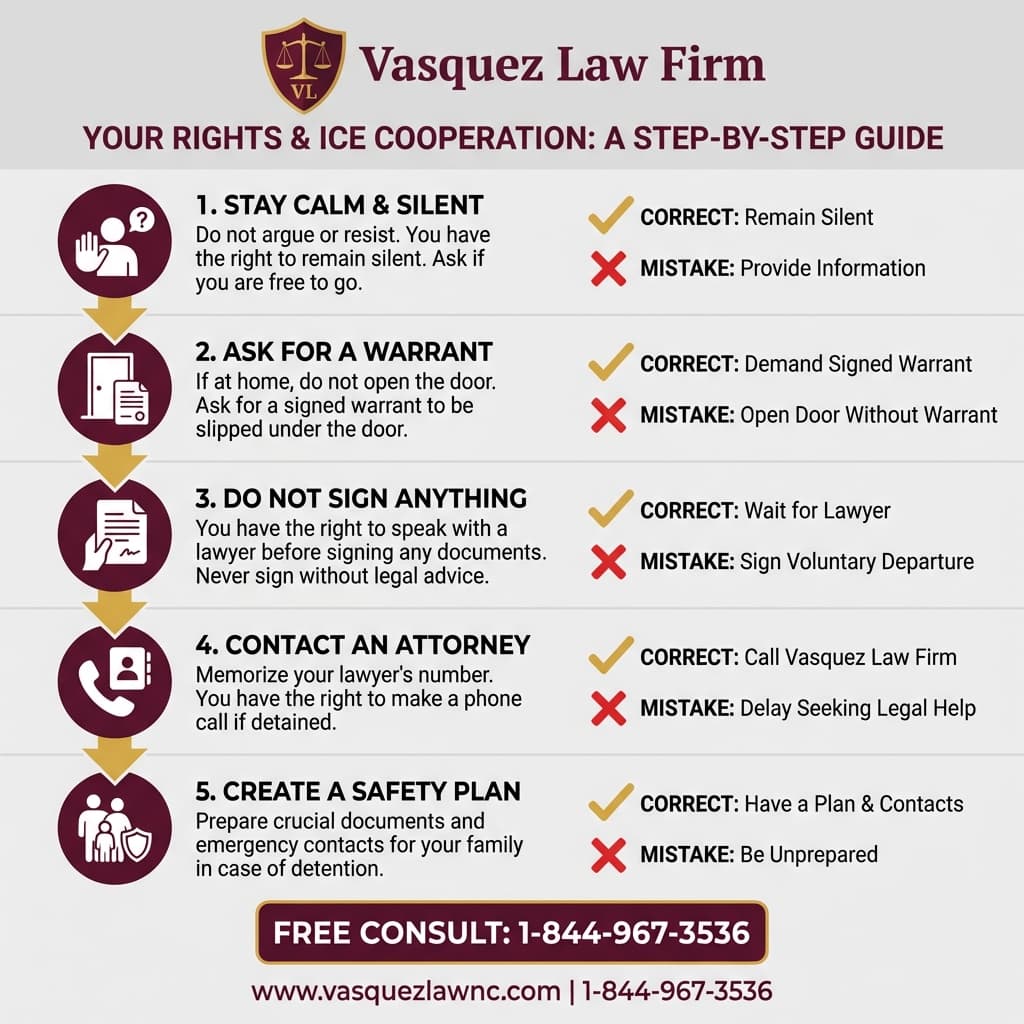
If you or a loved one are ever approached by an ICE agent, knowing your constitutional rights is paramount. For example, if an agent knocks on your door, you are not required to open it unless they present a warrant signed by a judge. A warrant for arrest (Form I-200) or a warrant for administrative removal (Form I-205) are different from a judicial search warrant, and you should not open your door for them without consulting an attorney.
You have the right to remain silent. Anything you say can be used against you in immigration proceedings. It is always advisable to state that you wish to remain silent and request to speak with an attorney. Do not sign any documents without first understanding their content and consulting with legal counsel. Furthermore, you have the right to refuse a search of your property unless agents have a warrant signed by a judge. This applies whether you are in your home, car, or on the street.
Always carry a 'Know Your Rights' card that clearly states your intention to remain silent and your request for an attorney. These cards, often provided by immigrant rights organizations, can be handed to agents, ensuring your rights are asserted without requiring you to speak. Remember, asserting your rights is not an admission of guilt; it is a fundamental protection under U.S. law for everyone, regardless of immigration status.
How ICE Identifies Undocumented Individuals
Many people wonder, "How does ICE know if someone is illegal?" ICE employs various methods to identify individuals who may be undocumented, extending beyond direct encounters. For instance, data sharing agreements between federal and local law enforcement can provide ICE with information from traffic stops, minor arrests, or even routine identification checks. These agreements are often central to programs like the 287(g) initiative, which deputizes local officers to perform immigration functions.
Another common source is information provided by informants or tips from the public. While some tips may be valid, others can be based on misinformation or discriminatory intent. ICE also utilizes databases that cross-reference information from various government agencies, including the Department of Motor Vehicles (DMV), to identify individuals whose records suggest an immigration violation. This means that a simple interaction with local authorities in Raleigh, NC, or anywhere in Florida, could potentially trigger an ICE investigation.
Moreover, individuals who have had previous encounters with immigration authorities, such as prior deportations or visa overstays, are often already in ICE's system. Understanding these pathways is crucial for individuals who are concerned about potential interactions with Carroll Twp ICE or other local agencies cooperating with federal immigration enforcement. Proactive legal consultation can help assess risks and develop strategies to protect your status.
Responding to ICE at Home or in Public
Knowing how to respond if ICE agents approach you, whether at your home or in a public place, is critical. If agents come to your door without a warrant signed by a judge, you are not obligated to open it. You can speak to them through the door or a window. Politely ask them to slide the warrant under the door or hold it up to the window so you can review it. If they do not have a judicial warrant, you can tell them you do not consent to a search or entry and will not open the door.
In a public setting, such as a traffic stop or a pedestrian encounter, you have the right to remain silent. You are not required to answer questions about your immigration status, nationality, or how you entered the country. Simply state, "I choose to remain silent." Do not lie or present false documents. If asked to show identification, you may show a valid state ID or driver's license, but you are not required to carry immigration documents at all times unless you are a lawful permanent resident (Green Card holder) over 18 years old. This is codified in 8 U.S.C. § 1304(e).
Always remember that you have the right to consult with an attorney before answering any questions or signing any documents. If you are detained, clearly state your desire to speak with a lawyer immediately. Contact Vasquez Law Firm for urgent legal assistance if you or a family member are detained by Carroll Twp ICE or other agencies in North Carolina or Florida.
Common Mistakes and How to Avoid Them with ICE
Navigating an encounter with ICE can be fraught with peril, and certain missteps can severely jeopardize your immigration case. A primary mistake is opening your door to ICE agents without a judicial warrant. This can grant them access to your home, potentially leading to immediate detention. Always ask agents to slide any warrant under the door or hold it up to a window for review before taking any action.
Another common error is answering questions about your immigration status or nationality. You have the right to remain silent, and exercising this right is crucial. Any information you volunteer can be used against you, even if you believe it to be harmless. Politely state that you wish to speak with an attorney and will not answer questions without legal counsel present.
Signing documents without understanding their implications is also a significant mistake. ICE agents may present documents that waive your rights, such as voluntary departure forms, which could lead to immediate deportation without a hearing. Never sign anything you do not fully comprehend, especially without an attorney's review. Finally, failing to seek legal advice promptly after an ICE encounter can be detrimental. An experienced immigration attorney can assess your situation, explain your options, and advocate on your behalf.
If you only remember one thing: Do not open your door without a judicial warrant, and do not speak to ICE without an attorney.
Immigration Laws: NC, FL, and Nationwide Notes
Immigration law in the United States is primarily federal, meaning the core statutes and regulations apply nationwide. This includes the Immigration and Nationality Act (INA) and regulations promulgated by agencies like USCIS, ICE, and the Executive Office for Immigration Review (EOIR). However, the practical impact and enforcement of these federal laws can vary significantly at the state and local levels, particularly concerning Carroll Twp ICE cooperation.
Nationwide Federal Framework
The U.S. federal government holds exclusive authority over immigration policy. This means that whether you are in North Carolina, Florida, or any other state, the fundamental rules for visas, green cards, naturalization, and deportation proceedings are set by federal law. For example, 8 U.S.C. § 1229a outlines the procedures for removal (deportation) proceedings, which are consistent across the country. Agencies like USCIS handle benefits applications, while ICE is responsible for enforcement and removals. The Executive Office for Immigration Review (EOIR) manages the immigration courts, ensuring a uniform judicial process.
North Carolina Local Impact
In North Carolina, local law enforcement agencies may enter into 287(g) agreements with ICE, allowing trained local officers to perform certain immigration enforcement functions. This means that a routine traffic stop in Raleigh or any other part of NC could potentially lead to an immigration hold. The presence of these agreements, or similar cooperation, can increase the risk of detention for undocumented individuals. It's crucial for residents in North Carolina to understand which local agencies cooperate with ICE and how those partnerships operate within their communities. Vasquez Law Firm stays informed on these local nuances to better serve our clients.
Florida Local Impact
Florida also has a complex relationship with federal immigration enforcement, with some counties and jurisdictions actively cooperating with ICE, while others adopt more limited roles. State laws, such as those requiring local law enforcement to cooperate with federal immigration authorities, can significantly influence how ICE operates within the state. For instance, certain state statutes in Florida mandate that local jails hold individuals for ICE if requested, even without a judicial warrant. This can create a challenging environment for immigrants in Florida, making legal guidance essential. Understanding these state-specific enforcement mechanisms is vital for non-citizens throughout Florida.
When to Call a Lawyer Now
Waiting to seek legal counsel can have severe consequences, especially when facing immigration issues related to Carroll Twp ICE. If you experience any of the following situations, it's crucial to contact an immigration attorney immediately:
- ICE agents or local police acting as immigration agents approach you at home or work.
- You or a family member are detained by ICE or local law enforcement for immigration reasons.
- You receive any official notice or letter from ICE, USCIS, or EOIR.
- You are asked to sign any document by an immigration official.
- You have a pending immigration case and experience a change in circumstances (e.g., marriage, birth of a child, criminal charges).
- You are concerned about a potential 287(g) agreement in your local area.
- You have a prior deportation order or a criminal record, even if minor.
- You believe your rights were violated during an encounter with ICE or local law enforcement.
- You are seeking to understand your options for legal status or protection from deportation.
Prompt legal intervention can make a significant difference in the outcome of your case, potentially preventing deportation or securing release from detention. Our team at Vasquez Law Firm is prepared to provide immediate assistance.
Don't face your legal challenges alone. Our team is here to help you every step of the way. Se Habla Español.
Call today: 1-844-967-3536
About Vasquez Law Firm
At Vasquez Law Firm, we combine compassion with aggressive representation. Our motto "Yo Peleo" (I Fight) reflects our commitment to standing up for your rights. We understand the fear and uncertainty that immigration issues, particularly those involving Carroll Twp ICE interactions, can bring to families in North Carolina and Florida.
- Bilingual Support: Se Habla Español - our team is fully bilingual, ensuring clear communication and understanding.
- Service Areas: We proudly serve clients throughout North Carolina, Florida, and provide nationwide immigration services.
- Experience: With over 15 years of dedicated legal experience, Attorney Vasquez has a proven track record of helping clients navigate complex legal matters.
- Results: We are committed to achieving favorable outcomes, handling thousands of successful cases across multiple practice areas, including complex immigration defense.
Attorney Trust and Experience
Attorney Vasquez holds a Juris Doctor degree and is admitted to practice in both the North Carolina State Bar and Florida Bar. With over 15 years of dedicated legal experience, he has built a reputation for providing personalized attention and achieving favorable outcomes for his clients. He understands the nuances of federal immigration law and the localized impacts of policies like Carroll Twp ICE cooperation, making him a trusted advocate for immigrant communities. Our experienced attorneys are dedicated to protecting your future.
Frequently Asked Questions
What is a 287(g) agreement and how does it relate to Carroll Twp ICE?
A 287(g) agreement is a partnership between ICE and a state or local law enforcement agency, allowing deputized local officers to perform certain immigration enforcement functions. In areas like Carroll Twp, this means local police can identify, process, and detain individuals for immigration violations, significantly increasing local immigration enforcement. This can lead to more immigrants being placed in deportation proceedings after routine encounters.
Can I refuse to answer questions from an ICE agent?
Yes, you have the right to remain silent when questioned by an ICE agent. You are not required to answer questions about your immigration status, nationality, or how you entered the country. Politely state that you wish to remain silent and would like to speak with an attorney. Do not lie or present false documents.
What should I do if ICE agents come to my home?
If ICE agents come to your home, do not open the door unless they show you a warrant signed by a judge. Ask them to slide the warrant under the door or hold it up to a window. If they do not have a judicial warrant, you can tell them you do not consent to a search or entry. Always try to record the interaction if possible and contact an attorney immediately.
How can I tell if someone is a legitimate ICE agent?
Legitimate ICE agents will typically be in uniform and present official credentials. However, it can be difficult to verify in the moment. The most important thing is to assert your rights: ask for a warrant, remain silent, and request an attorney. Do not rely solely on their appearance to determine their authority or your rights.
What is the difference between a judicial warrant and an administrative warrant?
A judicial warrant is signed by a judge and allows law enforcement to enter your home or arrest you. An administrative warrant (like an I-200 or I-205) is issued by an immigration officer, not a judge, and does not grant agents permission to enter your home without your consent. It's crucial to distinguish between these two types of warrants.
What if I am detained by Carroll Twp ICE?
If detained, immediately state that you wish to speak with an attorney. Do not sign any documents without legal review. You have the right to make a phone call; use it to contact a trusted family member or an immigration lawyer. Remember your Alien Registration Number (A-number) if you have one, as it will be essential for your attorney.
Are there any protections for victims of crimes who are undocumented?
Yes, certain visas like the U-visa and T-visa are available for victims of crimes or human trafficking who cooperate with law enforcement investigations. Reporting a crime should not automatically lead to deportation. However, it is always best to consult with an immigration attorney to understand your specific protections and options before interacting with law enforcement.
How can an immigration lawyer help with Carroll Twp ICE issues?
An immigration lawyer can provide crucial assistance by explaining your rights, advising you on how to interact with ICE, representing you in immigration court, and exploring options for relief from deportation. They can also help you understand local enforcement practices, such as those related to Carroll Twp ICE, and prepare a defense strategy tailored to your situation.
What are the potential consequences of an ICE encounter for my family?
An ICE encounter can lead to detention and potential deportation, which can separate families and cause severe emotional and financial hardship. If a parent is deported, it can leave U.S. citizen children without primary caregivers. Proactive legal planning and understanding your rights are vital steps to protect your family from these devastating consequences.
Are there any changes to immigration policy expected in 2026?
Immigration policies are subject to ongoing changes, influenced by legislative actions, executive orders, and judicial rulings. As of 2026, the political landscape continues to evolve, potentially impacting enforcement priorities and pathways to legal status. Staying informed through reputable legal sources and consulting an attorney is the best way to understand how any new policies might affect you.
Sources and References
- U.S. Citizenship and Immigration Services (USCIS)
- Executive Office for Immigration Review (EOIR)
- 8 U.S. Code § 1304 - Forms and procedure for registration
- 8 U.S. Code § 1229a - Removal proceedings
Need immigration help? Our immigration attorneys can review your case.
Ready to take the next step? Contact Vasquez Law Firm today for a free, confidential consultation. We're committed to fighting for your rights and achieving the best possible outcome for your case.
Start Your Free Case Evaluation Now
Call us: 1-844-967-3536
Se Habla Español - Estamos aquí para ayudarle.


William Vasquez
Founder & CEO, Vasquez Law Firm, PLLC
William Vasquez is the founder and CEO of Vasquez Law Firm, PLLC, a results-driven firm specializing in immigration, criminal defense, personal injury, and workers' compensation. A U.S. Air Force veteran and recipient of the Joint Service Achievement Medal, William is dedicated to fiercely fighting for his clients' rights.
Related Legal Services
Need legal help? Learn more about immigration case consultation, or contact us for a free evaluation.
You can also visit immigration legal services throughout NC for more information.