What to Do After a Car Accident in Charlotte NC
Need a car accident lawyer Charlotte NC residents trust? Learn steps, evidence, timelines, and mistakes to avoid. Call 1-844-967-3536 or start now.
Published on January 31, 2026
Injured? Get what your case is worth
Free review.
Free & confidential · Se habla espanol · 24/7
Have questions? Talk to an attorney - free evaluation.
Call 1-844-967-3536Get What Your Injury Is Worth
Schedule your consultation.
What to Do After a Car Accident in Charlotte NC
A crash can flip your life in seconds. If you are dealing with pain, missed work, medical bills, or just constant stress, you are not alone. This guide explains what a car accident lawyer Charlotte NC residents turn to typically looks for, what you can do right now to protect yourself, and how the process usually works in North Carolina.
If you want to talk through your options with a real person, Vasquez Law Firm can help you understand the next steps. Call 1-844-967-3536 or request a consult here: /contact. Se Habla Español.
Disclaimer: This article is general legal information, not legal advice for your specific case. Car accident rules can vary by state and by the facts of the crash. For advice about your situation, speak with a licensed attorney.
Quick answer: After a crash, focus on safety, medical care, and preserving evidence. In North Carolina, time limits can apply, and insurance statements can be used against you. If injuries or fault are disputed, a lawyer can help gather records, calculate damages, and communicate with insurers while you focus on healing.
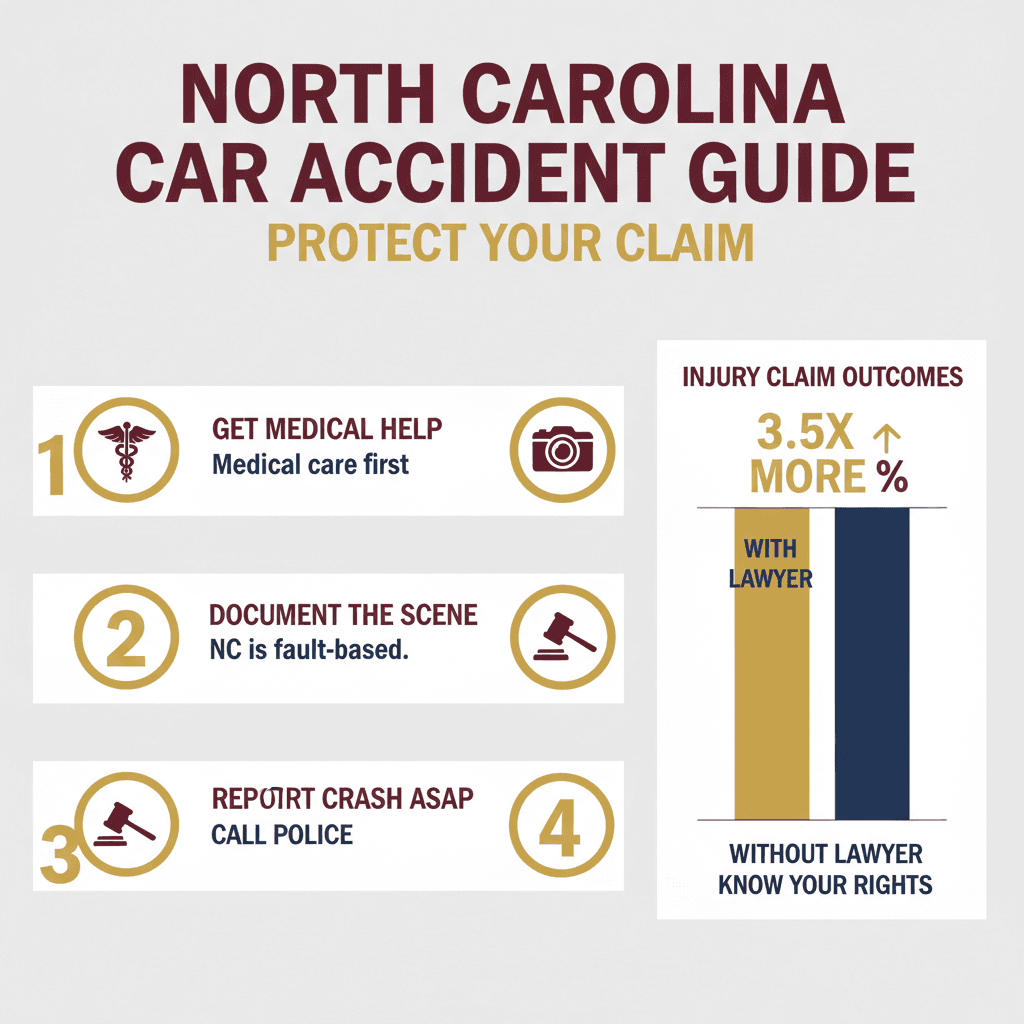
- Get medical care the same day when possible.
- Call law enforcement and request a crash report.
- Take photos, get witness names, save receipts.
- Be careful with recorded statements and social media.
- Track missed work, symptoms, and treatment.
- Talk to a lawyer before signing a release.
1) The first 48 hours after a crash (your survivor checklist)
When you are in survival mode, it is easy to miss steps that later matter to an insurance company. This section is about protecting your health first, then protecting your claim.
Get medical care, even if you feel “mostly okay”
Some injuries show up later, including concussions, whiplash, and back injuries. Getting checked also creates medical records that connect your pain to the wreck.
If you went to an ER or urgent care, follow up with your doctor. If you did not go anywhere, consider getting evaluated promptly, especially if symptoms start within a day or two.
Ask for a report and write down what you remember
In most situations, you want a law enforcement report because it helps document the basic facts. While your memory is fresh, write down what happened, where you were hit, and what you felt right after.
- Date, time, and location
- Weather and road conditions
- What the other driver said
- Any pain or symptoms, even mild
Preserve evidence before it disappears
Cars get repaired, video gets overwritten, and witnesses get hard to reach. If you can, take photos and save documents right away. A car accident lawyer Charlotte NC injury victims contact often starts here, building the proof early.
2) What evidence usually makes or breaks a claim
Insurance companies pay attention to what can be proven. Evidence is not about being dramatic, it is about being clear.
Documents and evidence checklist
- Crash report or incident number
- Photos of vehicle damage, road marks, and the scene
- Contact info for witnesses
- Medical records, discharge papers, and diagnosis codes
- Medical bills and pharmacy receipts
- Proof of missed work (pay stubs, employer letter, time sheets)
- Tow bill, rental car receipts, repair estimates
- Insurance policy information (yours and theirs)
A simple pain and recovery journal can help
Write short daily notes: pain level, sleep, activities you could not do, and appointments. This can help explain how the injury affects real life, not just paperwork.
Texts, dashcams, and video
Save texts or messages about the crash. If you have dashcam footage, back it up. If there may be nearby business video, act fast because many systems overwrite within days.
3) How car accident claims usually work (timelines, settlement, and court)
Most cases follow a similar path, but timing varies based on injuries, treatment, and whether the insurer disputes fault or damages.
Typical timeline expectations (varies by case)
- Days 1 to 14: medical evaluation, crash report, opening the claim.
- Weeks 2 to 12: treatment, follow ups, gathering records and bills.
- Months 2 to 9: negotiation may start once your condition is clearer.
- Longer cases: serious injuries, surgery, or disputed fault can take many months, sometimes longer if litigation is needed.
What a settlement usually covers
Many claims include both economic and non economic losses. Economic losses are the bills and lost wages you can add up. Non economic losses are often called pain and suffering, meaning the human impact.
- Medical expenses (past and sometimes future)
- Lost income and reduced ability to work
- Property damage related costs
- Pain, suffering, and loss of normal life
When a lawsuit becomes part of the plan
If the insurer refuses to be reasonable, a lawsuit may be considered. That does not always mean a trial. Many cases still settle after filing, but filing can protect deadlines and increase leverage.
4) Costs, fees, and common mistakes to avoid
After a wreck, money stress is real. Understanding fee structures and common traps can help you make calmer decisions.
How fees and costs typically work
Many personal injury firms use a contingency fee, meaning the fee is a percentage of a recovery if there is one. The percentage and case costs can vary, and you should ask for the fee agreement in writing.
Factors that can affect cost and time include the severity of injuries, the amount of medical treatment, number of insurers involved, and whether a lawsuit is needed.
Common mistakes (and how to avoid each)
- Waiting too long to get medical care. Get evaluated quickly, and follow medical advice.
- Giving a recorded statement without preparation. Be cautious, and consider speaking to counsel first.
- Posting on social media. Even “I am fine” posts can be used against you.
- Accepting the first offer. Early offers can come before the full injury picture is known.
- Signing a release too soon. A release can end your claim permanently.
- Not tracking missed work. Save pay stubs and employer notes.
- Gaps in treatment. If you cannot afford care, document why and ask about options.
- Repairing the car before photos. Take thorough photos first, keep estimates.
- Not getting witness information. Witnesses can disappear fast.
- Assuming the adjuster is “on your side.” Adjusters work for the insurer, not for you.
If you only remember one thing: do not sign anything that ends your rights, and do not downplay your injuries before you understand them.
5) North Carolina vs Florida vs nationwide concepts (jurisdiction matters)
Personal injury law is state specific. The basics may feel similar nationwide, but the rules that control deadlines, fault, and damages can differ a lot.
North Carolina notes (general information)
North Carolina has specific time limits to file certain lawsuits, and missing a deadline can end a case. For many injury claims, the statute of limitations is often three years, and wrongful death is often two years, but exceptions can apply.
Another important point is fault. North Carolina is known for strict fault rules in many situations, so small details can matter. If you are looking for a car accident lawyer Charlotte NC drivers can call for help, ask how fault issues may affect your options.
Florida notes (general information)
Florida has different insurance and fault concepts than North Carolina, and those differences can affect how claims are handled. Florida also has its own statutes and deadlines. If your crash involves drivers, vehicles, or insurance policies tied to Florida, it is worth raising that early.
Nationwide concepts that still apply (in general)
- Evidence matters, especially medical records and photos.
- Insurance companies evaluate risk and proof, not fairness.
- Deadlines exist in every state, but the length and exceptions vary.
- Injuries can evolve, so premature settlement can be risky.
Feeling stuck or overwhelmed after a wreck in Charlotte? You can ask questions without pressure. Call 1-844-967-3536 or request a consultation at /contact. Se Habla Español.
6) When to call a lawyer now (urgent triggers)
Some situations are easier to handle with legal help right away. These triggers often mean higher risk, higher medical needs, or a higher chance the insurer will fight.
Red flags that should prompt a call
- Any ambulance transport, ER visit, or diagnosed concussion
- Back, neck, or shoulder pain that limits daily activity
- You missed work, or your job duties changed
- The other driver denies fault, or the report is unclear
- You were hit by a commercial vehicle (delivery, trucking, rideshare)
- You are asked for a recorded statement
- The insurer pressures you to settle fast
- There are multiple vehicles or multiple injured people
- You suspect the other driver was impaired or uninsured
What a lawyer can do that you should not have to do alone
- Gather records, bills, and proof of lost income
- Coordinate communication with insurers
- Identify all potential coverages and responsible parties
- Help value the claim based on medical evidence and impacts
- File a lawsuit if needed to protect deadlines (when appropriate)
How to choose the right fit
Look for clear communication and a plan you understand. Ask who will handle your case day to day, and how often you will get updates.
7) FAQ: car accident claims in North Carolina
Do I need a lawyer for a minor car accident?
Not always. If there are no injuries and property damage is small, you may handle it directly. If you have pain, medical care, missed work, or a fault dispute, talking with a car accident lawyer Charlotte NC residents rely on can help you avoid costly mistakes.
How long do I have to file a lawsuit in North Carolina?
Often, personal injury claims must be filed within three years, and wrongful death claims within two years, but exceptions can apply. Deadlines are strict, so it is safer to confirm timing with a lawyer based on your facts.
Should I give the other driver’s insurance a recorded statement?
Be careful. A recorded statement can be used to minimize your injuries or shift fault. It may be wise to get legal guidance before you agree to recorded questions, especially if you are still in pain or unsure what happened.
What if I did not go to the doctor the same day?
You can still have a valid claim, but delays can make it harder to prove the injury was caused by the crash. Get evaluated as soon as you can, and be honest about when symptoms began.
How is pain and suffering calculated?
There is no single formula that applies to every case. Insurers often look at the type of injury, length of treatment, limitations, and consistency of medical documentation. Your daily impact and missed activities matter too.
What if the other driver has no insurance?
You may still have options through your own policy, such as uninsured motorist coverage. Coverage rules and claim steps depend on the policy language and state law, so review your policy carefully and consider legal help.
Can I settle my car damage and keep my injury claim open?
Sometimes yes, but you must read every document. Some releases cover both property damage and injuries. If you are unsure, do not sign until you understand what you are giving up.
Will I have to go to court in Charlotte?
Many cases settle without a trial. If a lawsuit is filed, it is typically handled through the North Carolina court system. Procedures can vary by county, so confirm local practice with your attorney.
What should I bring to a consultation?
Bring your crash report number, photos, insurance info, medical discharge papers, and a list of providers. If you have wage loss documents, bring those too. Even partial information can be enough to start.
About Vasquez Law Firm (Yo Peleo) and how we support survivors
At Vasquez Law Firm, we know a crash is not only paperwork. It is pain, fear, disruption, and a constant stream of calls and letters. Our team focuses on clear communication and strong advocacy, so you can focus on recovery. Yo Peleo. Se Habla Español.
Attorney Vasquez, JD, has 15 years of experience and is admitted to the North Carolina State Bar. Learn more about our team here: /attorneys.
If you want to read more about injury cases we handle, visit our personal injury page: /practice-areas/personal-injury.
Disclaimer: This content is for general education only and does not create an attorney client relationship. For advice about your specific facts, contact a qualified lawyer.
Ready to take the next step?
If you are looking for a car accident lawyer Charlotte NC families can call when life changes fast, we are here to listen. Call 1-844-967-3536 or request a consultation at /contact. Se Habla Español.
Sources


William Vasquez
Founder & CEO, Vasquez Law Firm, PLLC
William Vasquez is the founder and CEO of Vasquez Law Firm, PLLC, a results-driven firm specializing in immigration, criminal defense, personal injury, and workers' compensation. A U.S. Air Force veteran and recipient of the Joint Service Achievement Medal, William is dedicated to fiercely fighting for his clients' rights.
Related Legal Services
Need legal help? Learn more about how our injury attorneys can help, or contact us for a free evaluation.
You can also visit North Carolina personal injury law firm for more information.