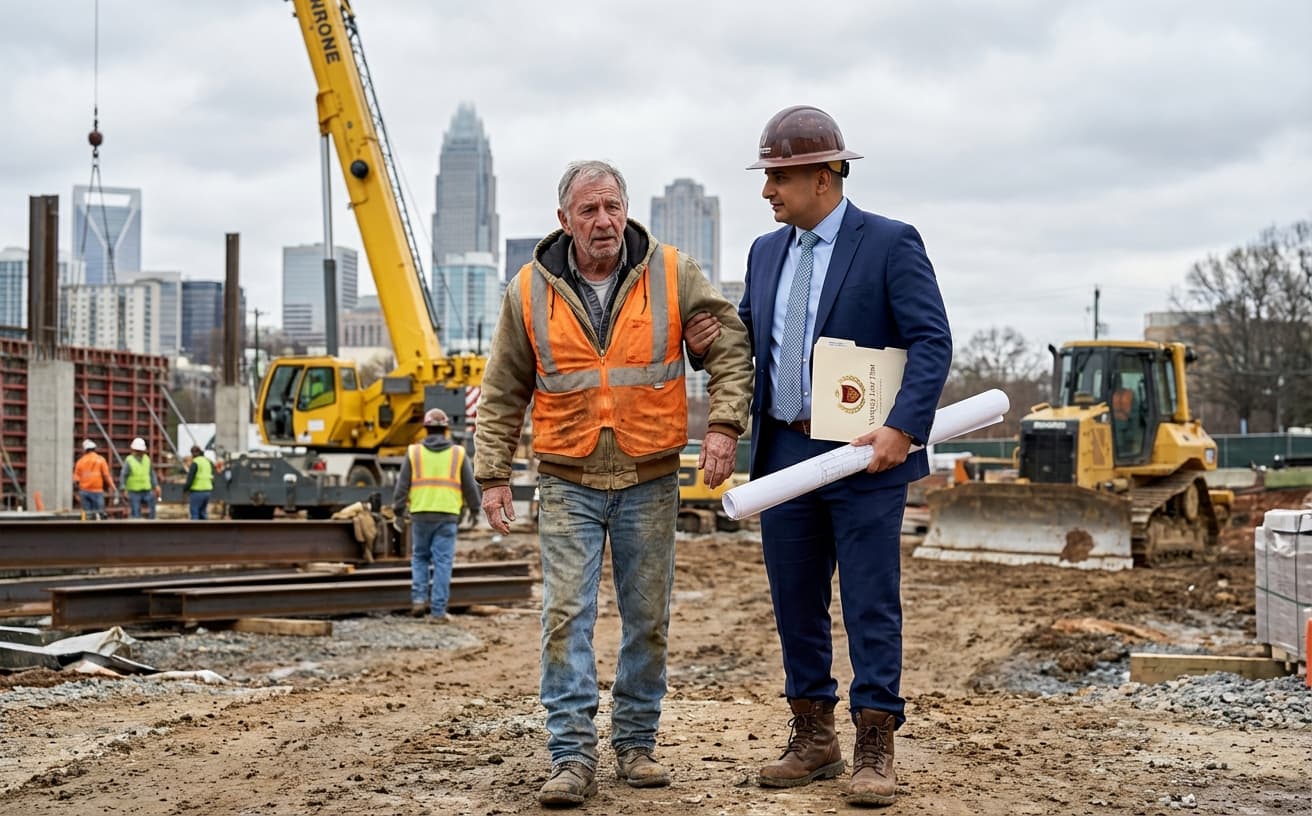
Your Rights After a Workplace Amputation Injury in North Carolina
Suffered a workplace amputation in NC? Learn your rights and how to pursue workers' compensation. Contact Vasquez Law Firm for a free consultation today.
Published on March 5, 2026
Hurt on the job?
Free review of your workers' comp claim.
Free & confidential · Se habla espanol · 24/7
Have questions? Talk to an attorney - free evaluation.
Call 1-844-967-3536Hurt on the Job? Claim What You Are Owed
A review of your workers' comp claim - we handle the fight.
Your Rights After a Workplace Amputation Injury in North Carolina
Suffering a workplace amputation is a devastating event that can change your life forever. In North Carolina, workers who experience such severe injuries due to unsafe conditions or equipment failures are generally entitled to workers' compensation benefits. As of 2026, understanding your rights and the steps to take after a workplace amputation is crucial for securing the financial and medical support you need. This guide will walk you through the complexities of workers' compensation claims for these life-altering injuries, ensuring you know what to expect and how to protect your future.
Need help with your case? Our experienced attorneys are ready to fight for you. Se Habla Español.
Schedule Your Free Case Evaluation
Or call us now: 1-844-967-3536
Quick Answer
If you suffer a workplace amputation in North Carolina, you are generally entitled to workers' compensation benefits covering medical expenses, lost wages, and permanent impairment. You must report the injury promptly to your employer and seek immediate medical attention. Consulting a workers' compensation attorney is vital to navigate the complex claims process and protect your rights.
- Report the injury to your employer immediately.
- Seek emergency medical care for the amputation.
- File a Form 18 or Form 18B with the NC Industrial Commission.
- Document all evidence, including photos and witness statements.
- Consult an experienced North Carolina workers' compensation lawyer.
Understanding Workplace Amputations and Their Impact
Workplace amputations are among the most severe and life-altering injuries a worker can sustain. These injuries often result from accidents involving machinery, power tools, or other hazardous equipment, leading to the loss of a limb or a part of a limb. The immediate aftermath involves not only excruciating physical pain but also significant emotional trauma and profound financial strain. For individuals in North Carolina, understanding the full scope of these injuries and their long-term consequences is the first step toward seeking justice and appropriate compensation.
The impact of a workplace amputation extends far beyond the initial medical treatment. Victims often face multiple surgeries, extensive rehabilitation, and the need for prosthetic devices, all of which incur substantial costs. Furthermore, the ability to return to the same job or any job at all may be severely compromised, leading to a permanent loss of earning capacity. These factors highlight the critical importance of a robust workers' compensation claim to cover all present and future needs arising from such a catastrophic injury. Vasquez Law Firm is dedicated to helping you through this challenging time.
Common Causes of Workplace Amputations
Several factors contribute to workplace amputations, many of which are preventable. Understanding these common causes can help in identifying negligence and building a strong case. Machine guarding failures are a primary culprit, where safety mechanisms on equipment like presses, saws, and conveyors are either absent, bypassed, or improperly maintained. Lack of proper training is another significant factor, as workers may not be fully aware of the dangers or correct operating procedures for hazardous machinery.
Other common causes include inadequate lockout/tagout procedures, which are meant to prevent unexpected startup of machines during maintenance or repair. Electrical accidents, falls from heights into machinery, and vehicle accidents can also lead to severe crush injuries necessitating amputation. Employers have a legal and ethical responsibility to provide a safe working environment, and failure to do so can have devastating consequences for their employees. If you suspect unsafe conditions led to your injury, contact Vasquez Law Firm immediately.
North Carolina Workers' Comp for Amputations
In North Carolina, the workers' compensation system is designed to provide benefits to employees injured on the job, regardless of fault. For workplace amputations, these benefits are particularly crucial due to the severity and long-term nature of the injury. The North Carolina Workers' Compensation Act, specifically N.C. Gen. Stat. § 97-29, outlines the framework for these claims, ensuring injured workers receive medical treatment, lost wage compensation, and benefits for permanent impairment. Navigating this system can be daunting, especially while recovering from a severe injury.
The NC Industrial Commission, which oversees workers' compensation claims, requires specific procedures and documentation. You generally have two years from the date of the accident to file a claim, but prompt reporting is always advisable. Benefits typically include 100% coverage for reasonable and necessary medical expenses related to the amputation, including prosthetics, rehabilitation, and modifications to your home or vehicle. Additionally, you may receive temporary total disability benefits for lost wages while you are unable to work, usually two-thirds of your average weekly wage, up to a maximum set by the Commission for 2026. For specific guidance on your claim, reach out to Vasquez Law Firm.
Specific Benefits for Loss of Use or Amputation
North Carolina law provides specific scheduled benefits for the loss of use or amputation of certain body parts. N.C. Gen. Stat. § 97-31 details these benefits, assigning a specific number of weeks of compensation for each type of loss. For example, the loss of an arm or hand carries a certain number of weeks of benefits, separate from temporary disability. These permanent partial disability benefits are paid once your medical condition has stabilized and you have reached maximum medical improvement (MMI). The amount you receive depends on the body part affected and the extent of the loss.
It is important to note that these scheduled benefits are in addition to compensation for medical expenses and lost wages during your recovery. An attorney can help ensure that the correct impairment rating is assigned by your doctor and that you receive the maximum compensation allowed under North Carolina law for your specific injury. The complexity of these calculations makes legal representation invaluable in securing your future financial stability after a workplace amputation.
Step-by-step: What to do After a Workplace Amputation in NC
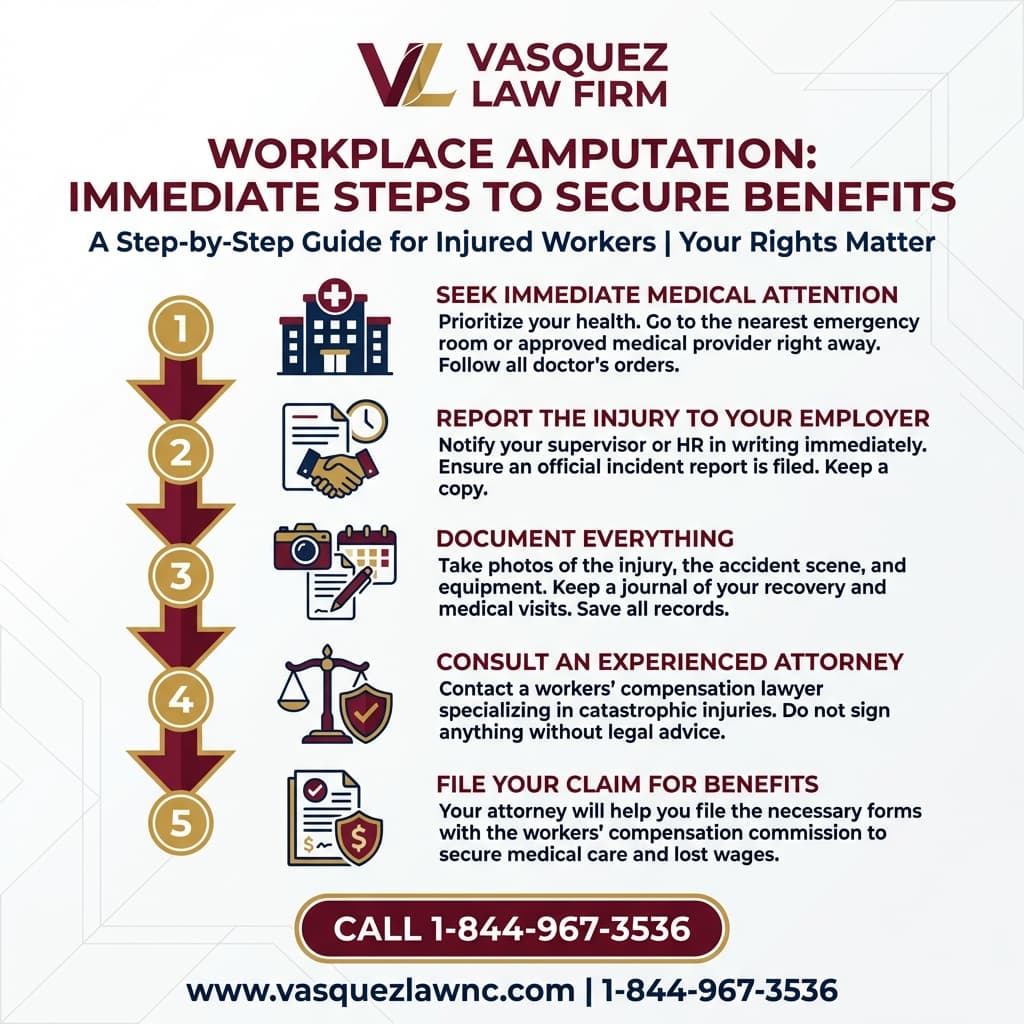
The moments following a workplace amputation are critical, both for your health and your legal claim. Taking the right steps immediately can significantly impact the success of your workers' compensation case. Here is a step-by-step guide to help you navigate the initial aftermath and subsequent legal process in North Carolina:
- Seek Immediate Medical Attention: Your health is the absolute priority. Get emergency medical care for your amputation injury. Ensure all medical professionals understand it is a work-related injury.
- Report the Injury to Your Employer: Notify your employer verbally and in writing as soon as possible, ideally within 30 days of the incident. This is a crucial legal requirement under N.C. Gen. Stat. § 97-22. Include the date, time, location, and nature of the injury.
- Document Everything: Take photos of the accident scene, the machinery involved, and your injuries. Collect contact information for any witnesses. Keep a detailed journal of your symptoms, medical appointments, and how the injury impacts your daily life.
- Do Not Give Recorded Statements Without Legal Counsel: Your employer's insurance company may contact you for a recorded statement. Politely decline until you have spoken with a workers' compensation attorney. Anything you say can be used against you.
- File a Claim with the NC Industrial Commission: Complete and file Form 18, "Notice of Accident to Employer and Claim of Employee," or Form 18B for occupational diseases, with the NC Industrial Commission. This officially starts your claim and protects your right to benefits.
- Consult an Experienced Workers' Compensation Attorney: A lawyer specializing in North Carolina workers' compensation can explain your rights, help you gather evidence, negotiate with the insurance company, and represent you if your claim is denied. Vasquez Law Firm offers free case evaluations to discuss your specific situation.
Documents and Evidence Checklist for Your Claim
Building a strong workers' compensation claim for a workplace amputation requires comprehensive documentation. Organizing and submitting the right evidence can make a significant difference in the outcome of your case. Here’s a checklist of essential documents and evidence you should aim to collect and preserve:
- Accident Report: A copy of the formal accident report filed by your employer.
- Medical Records: All records related to your amputation, including emergency room reports, surgical notes, rehabilitation records, doctor's notes, and prescriptions.
- Wage Statements: Pay stubs or wage statements from before and after the injury to demonstrate lost earning capacity.
- Witness Statements: Contact information and written statements from anyone who witnessed the accident or can attest to the unsafe conditions.
- Photographs and Videos: Pictures of the accident scene, the equipment involved, and your injuries immediately after the incident and during recovery.
- Communication Records: Copies of all correspondence with your employer, their insurance company, and medical providers.
- OSHA Reports: If applicable, any reports from the Occupational Safety and Health Administration regarding the accident or workplace safety violations.
- Prosthetic and Rehabilitation Bills: Documentation of all costs associated with prosthetics, physical therapy, occupational therapy, and any necessary home modifications.
Timeline: What to Expect in a NC Amputation Claim
Understanding the general timeline for a North Carolina workers' compensation claim, especially for a severe injury like an amputation, can help manage expectations. While every case is unique, here's a typical sequence of events:
- Immediately After Injury: Seek emergency medical care.
- Within 30 Days: Report the injury to your employer in writing. (N.C. Gen. Stat. § 97-22)
- Within 2 Years: File Form 18 or Form 18B with the NC Industrial Commission. This is the statute of limitations (N.C. Gen. Stat. § 97-24).
- Employer/Insurer Response (within 14-30 days): Your employer's insurance company must respond to your claim, either accepting it, denying it, or requesting more information.
- Medical Treatment & Rehabilitation: Ongoing for months or even years, including surgeries, physical therapy, and fitting for prosthetics.
- Maximum Medical Improvement (MMI): Your doctor determines when your condition has stabilized. This can take months to over a year.
- Impairment Rating: Once at MMI, a doctor will assign a permanent partial impairment rating, which determines part of your compensation.
- Settlement Negotiations or Hearing: If the claim is accepted, you may negotiate a settlement. If denied, you may proceed to a hearing before the NC Industrial Commission.
- Appeals Process: If dissatisfied with the hearing outcome, you have the right to appeal to the Full Commission and potentially to the North Carolina Court of Appeals.
Costs and Fees: What Impacts the Price of a Claim
When pursuing a workers' compensation claim for a workplace amputation in North Carolina, one of the primary concerns for injured workers is the cost of legal representation. Fortunately, most North Carolina workers' compensation attorneys, including those at Vasquez Law Firm, work on a contingency fee basis. This means you do not pay any upfront legal fees. Instead, the attorney's fees are a percentage of the compensation you receive, typically approved by the NC Industrial Commission.
The specific percentage can vary but is generally capped at 25% of the compensation awarded. This arrangement allows injured workers to access experienced legal counsel without financial burden during a time of crisis. Other costs that may impact your claim include medical record retrieval fees, expert witness fees if necessary, and court filing fees if your case goes to a hearing. Your attorney will typically advance these costs and then be reimbursed from your settlement or award. Understanding this fee structure provides peace of mind, allowing you to focus on your recovery while your legal team handles the financial complexities.
Don't face your legal challenges alone. Our team is here to help you every step of the way.
Call today: 1-844-967-3536 | Se Habla Español
Common Mistakes and How to Avoid Them
Navigating a workers' compensation claim for a workplace amputation can be fraught with pitfalls. Avoiding common mistakes is paramount to protecting your rights and maximizing your compensation. Here are key errors to watch out for and how to steer clear of them:
- Delaying Reporting the Injury: Waiting to report your amputation to your employer can jeopardize your claim. Always report it immediately, in writing, to comply with the 30-day statutory limit.
- Failing to Seek Prompt Medical Attention: Delays in treatment can be used by the insurance company to argue that your injury was not severe or not work-related. Go to the ER or a doctor right away.
- Not Documenting Everything: Failing to collect photos, witness statements, and detailed medical records weakens your case. Be meticulous in gathering all evidence.
- Giving a Recorded Statement Without an Attorney: Insurance adjusters are trained to minimize payouts. A recorded statement without legal counsel can provide them with ammunition to deny or reduce your claim.
- Accepting the First Settlement Offer: Initial offers are often low and do not account for long-term needs like future medical care, prosthetics, or lost earning capacity. Never accept without legal review.
- Returning to Work Too Soon: Going back to work before your doctor clears you can complicate your claim and worsen your injury. Follow your medical provider's advice.
- Not Consulting a Workers' Compensation Attorney: The system is complex. Without an attorney, you risk making critical errors, missing deadlines, and not receiving the full benefits you deserve.
- Failing to Follow Doctor's Orders: Not adhering to your treatment plan can be used by the insurance company to deny benefits, claiming you are not cooperating with your recovery.
If you only remember one thing: After a workplace amputation, prioritize immediate medical care and contact a North Carolina workers' compensation attorney at Vasquez Law Firm before making any statements or decisions regarding your claim.
When to Call a Lawyer Immediately for Workplace Amputations
While it is always advisable to consult an attorney after a serious workplace injury, certain situations make immediate legal intervention absolutely essential for workplace amputations. Recognizing these triggers can help you protect your rights and ensure your claim is handled correctly from the outset. Don't hesitate to reach out to Vasquez Law Firm if any of these apply to your situation:
- Your employer denies your workplace amputation claim or disputes that the injury is work-related.
- The insurance company is delaying payments for medical treatment or lost wages.
- You are pressured by your employer or the insurance company to return to work before your doctor clears you.
- You are offered a lump-sum settlement that seems too low or does not cover your long-term needs.
- Your doctor's medical opinion or impairment rating is being challenged by the insurance company.
- You are unsure about the proper forms to file or deadlines to meet with the NC Industrial Commission.
- You believe your employer was negligent or violated safety regulations, contributing to your injury.
- You are facing retaliation from your employer for filing a workers' compensation claim.
- You need help understanding your rights to specific scheduled benefits for the loss of a limb.
About Vasquez Law Firm
At Vasquez Law Firm, we combine compassion with aggressive representation. Our motto "Yo Peleo" (I Fight) reflects our commitment to standing up for your rights. We understand the profound challenges that come with severe workplace injuries like amputations, and we are dedicated to providing the unwavering legal support you need during these difficult times. Our team is equipped to handle complex workers' compensation cases throughout North Carolina, from initial claim filing to appeals.
- Bilingual Support: Se Habla Español - our team is fully bilingual, ensuring clear communication and understanding for all our clients.
- Service Areas: We primarily serve clients across North Carolina, including Smithfield, and also offer nationwide immigration services.
- Experience: With over 15 years of dedicated legal experience, Attorney Vasquez has a proven track record of helping clients navigate complex legal matters and achieve favorable outcomes.
- Results: We are committed to securing maximum compensation for medical expenses, lost wages, and permanent disability, fighting tirelessly for your future.
Attorney Trust and Experience
Attorney Vasquez holds a Juris Doctor degree and is admitted to practice in both the North Carolina State Bar and Florida Bar. With over 15 years of dedicated legal experience, he has built a reputation for providing personalized attention and achieving favorable outcomes for his clients. He understands the profound impact a workplace amputation can have on an individual and their family, and he is committed to fighting for the justice and compensation you deserve. His extensive experience in workers' compensation law means he is well-versed in the tactics insurance companies use to deny or minimize claims and knows how to counter them effectively.
Frequently Asked Questions
Can I sue my employer for a work injury in North Carolina?
In North Carolina, workers' compensation is generally an exclusive remedy, meaning you cannot sue your employer directly for a work injury if they are covered by workers' comp. However, exceptions exist, such as intentional misconduct by the employer or if a third party (not your employer) caused the injury. A lawyer can assess if a third-party claim or other exception applies to your workplace amputation case.
Do partial amputations need to be reported to OSHA?
Yes, OSHA requires employers to report all work-related inpatient hospitalizations, amputations, and losses of an eye. This includes partial amputations. Employers must report an amputation to OSHA within 24 hours of learning about it. This reporting is separate from your workers' compensation claim but can provide valuable evidence regarding workplace safety violations.
What are 5 examples of unsafe conditions in the workplace?
Five examples of unsafe conditions include unguarded machinery, faulty electrical wiring, lack of proper lockout/tagout procedures, slippery floors without warning signs, and inadequate fall protection. These conditions often lead to severe injuries like workplace amputations. Identifying and documenting these hazards is crucial for your workers' compensation claim.
Which workplace hazard is most likely to cause amputations?
Machinery without proper guarding is the most likely workplace hazard to cause amputations. Equipment such as power presses, saws, sheers, and conveyors pose significant risks if safety mechanisms are bypassed, removed, or improperly maintained. Employers must ensure all machinery is adequately guarded to protect workers from severe injuries.
How long do I have to file a workers' compensation claim in NC?
In North Carolina, you typically have two years from the date of your workplace amputation injury to file a workers' compensation claim with the NC Industrial Commission. This is a strict deadline, and missing it can result in the loss of your right to benefits. It's best to file as soon as possible after reporting the injury to your employer.
What benefits can I receive for a workplace amputation?
For a workplace amputation in North Carolina, you can receive benefits for 100% of reasonable and necessary medical expenses, temporary total disability for lost wages (two-thirds of your average weekly wage), and permanent partial disability benefits based on the specific body part lost or impaired. These benefits are outlined in the NC Workers' Compensation Act.
Will I need a prosthetic limb, and will workers' comp cover it?
Yes, if medically necessary, workers' compensation in North Carolina will cover the cost of prosthetic limbs, including initial fitting, replacements, maintenance, and any necessary training to use them. The NC Industrial Commission ensures that injured workers receive comprehensive medical care, which includes these essential devices for recovery and functionality.
What if my employer denies my amputation claim?
If your employer or their insurance company denies your workplace amputation claim, you have the right to appeal this decision. You can request a hearing before the NC Industrial Commission. This process is complex, and having an experienced workers' compensation attorney from Vasquez Law Firm can significantly improve your chances of success in overturning the denial.
Can I choose my own doctor after a workplace amputation?
In North Carolina, your employer typically has the right to direct your medical treatment for a workers' compensation claim. However, you can request a change of physician from the NC Industrial Commission if you are dissatisfied with your employer's choice or feel your treatment is inadequate. An attorney can help you navigate this process and advocate for your right to appropriate medical care.
How long does it take to settle an amputation workers' comp case?
The timeline for settling a workers' compensation case involving a workplace amputation varies widely, depending on the severity of the injury, the need for ongoing medical treatment, and whether the claim is disputed. Some cases settle within months, while complex or denied claims can take several years to resolve through hearings and appeals. An attorney can provide a more accurate estimate for your specific situation.
Sources and References
- North Carolina Industrial Commission (NCIC)
- Occupational Safety and Health Administration (OSHA)
- North Carolina General Statutes Chapter 97 (Workers' Compensation Act)
Hurt at work? Our workers' compensation attorneys can review your claim.
Ready to take the next step? Contact Vasquez Law Firm today for a free, confidential consultation. We're committed to fighting for your rights and achieving the best possible outcome for your case.
Start Your Free Case Evaluation Now
Call us: 1-844-967-3536
Se Habla Español - Estamos aquí para ayudarle.


William Vasquez
Founder & CEO, Vasquez Law Firm, PLLC
William Vasquez is the founder and CEO of Vasquez Law Firm, PLLC, a results-driven firm specializing in immigration, criminal defense, personal injury, and workers' compensation. A U.S. Air Force veteran and recipient of the Joint Service Achievement Medal, William is dedicated to fiercely fighting for his clients' rights.
Related Legal Services
Need legal help? Learn more about our workers comp law practice, or contact us for a free evaluation.
You can also visit our NC work injury attorneys for more information.