How COVID Hazard Pay Affects Workers in Charlotte in 2026
Wondering who qualifies for COVID hazard pay in Charlotte? Learn your rights and next steps for claims in 2026. Contact Vasquez Law for a free consult.
Published on May 11, 2026
Hurt on the job?
Free review of your workers' comp claim.
Free & confidential · Se habla espanol · 24/7
Have questions? Talk to an attorney - free evaluation.
Call 1-844-967-3536Hurt on the Job? Claim What You Are Owed
A review of your workers' comp claim - we handle the fight.
How COVID Hazard Pay Affects Workers in Charlotte in 2026
COVID hazard pay became a critical issue during the pandemic for essential workers in Charlotte and across North Carolina. This article explains who qualifies for hazard pay, the legal requirements, and what COVID hazard pay means in 2026. Many workers who continued duties during COVID faced additional risk, so understanding potential compensation and claims is important. We cover key steps and timelines that protect workers’ rights under North Carolina laws and beyond. Whether you’re currently working through pandemic risks or wondering if you missed your opportunity for hazard pay in prior years, this guide provides important insights to help you protect your rights today.
Need help with your case? Our experienced attorneys are ready to fight for you. Se Habla Español.
Or call us now: 1-844-967-3536
Quick Answer
COVID hazard pay refers to extra compensation paid to workers who faced higher risk during the COVID-19 pandemic. In North Carolina, hazard pay eligibility depends on employer policies or negotiated agreements since there is no statewide mandate. Workers in Charlotte should gather proof of hazardous duty and consult a workers compensation attorney to explore claims and protect rights.
- Hazard pay rewards workers for elevated COVID exposure risks
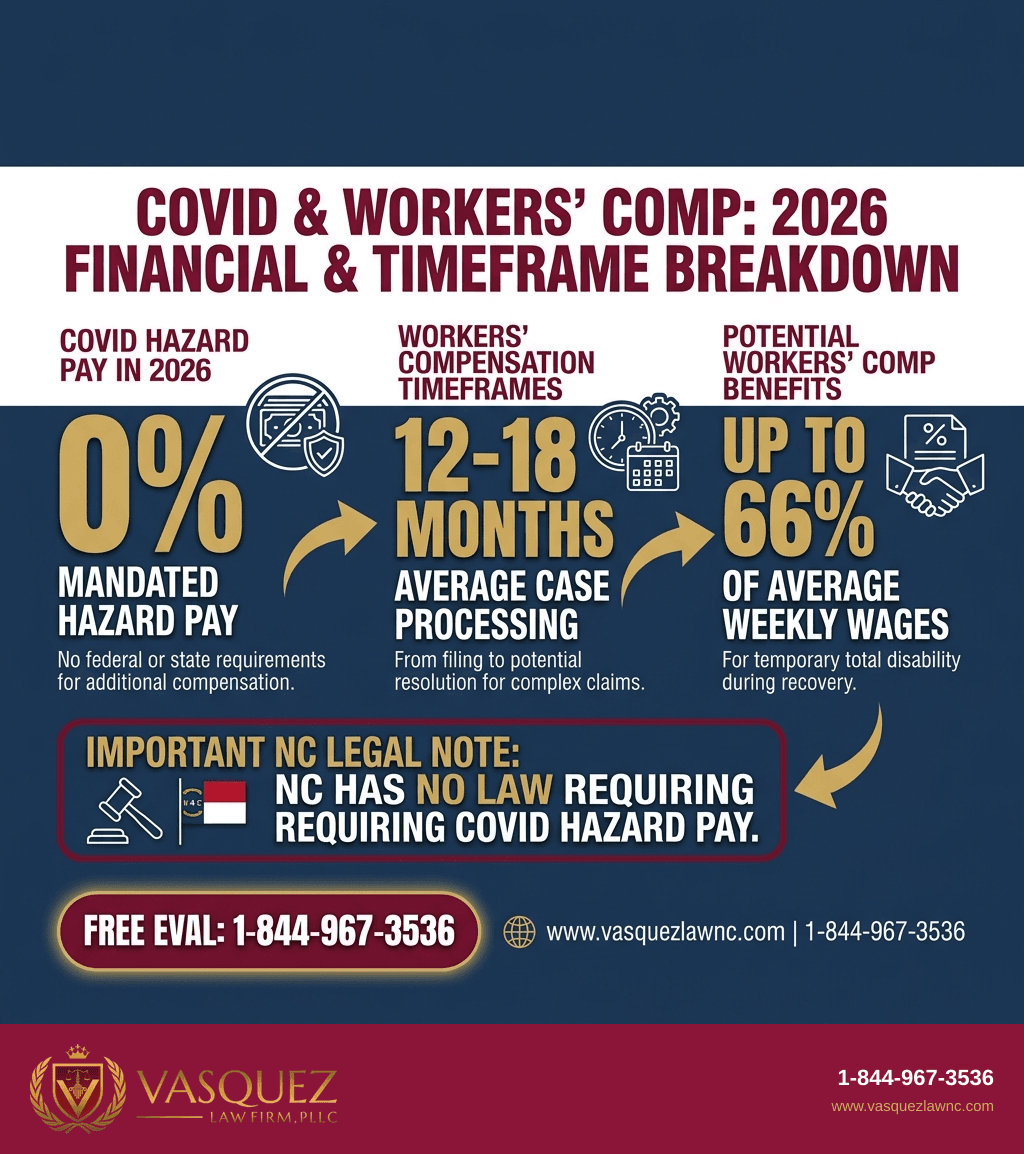
- North Carolina lacks mandatory hazard pay laws as of 2026
- Claims depend on employer policies or workers compensation regulations
- Recent court decisions require hazard pay inclusion in overtime calculations
- Legal assistance improves claim outcomes in NC and Florida
Understanding COVID Hazard Pay
When COVID-19 began spreading across the US in early 2020, many essential workers continued working on the frontlines despite significant health risks. Hazard pay emerged as an additional wage premium employers used to recognize these risks and keep crucial workers financially supported. For example, a grocery store clerk working daily during the pandemic faced exposure risk from customers. Hazard pay is intended to compensate for this hazard beyond normal wages.
In North Carolina, however, no law requires employers to provide hazard pay related to COVID-19. Unlike some states such as California or Michigan, which enacted specific COVID hazard pay mandates—like the California COVID-19 Supplemental Paid Sick Leave or Michigan hazard pay laws in 2024—North Carolina relies on workers’ compensation laws and employer discretion.
Workers’ compensation may cover COVID-19 illness or injuries if contracted in the workplace under N.C. Gen. Stat. § 97-2 when proving causation is possible. Hazard pay specifically refers to extra pay for hazardous work duties rather than injury compensation. Many employers implemented voluntary hazard pay, but for many workers, no extra compensation was provided. For these reasons, understanding your options and rights in Charlotte is critical if you believe you should have received hazard pay during your COVID duties.
What Is Hazardous Duty Pay?
Hazardous duty pay is an extra amount paid to employees performing jobs with increased safety risks. During COVID, hazardous duty meant roles with higher chances of virus exposure. This pay helps compensate for added health threats and morale risks. The U.S. Department of Labor explains that hazardous duty pay differs from overtime or regular wages by recognizing risk above normal job functions. (Source: U.S. Department of Labor)
Federal and State Law Landscape
The Fair Labor Standards Act (FLSA) regulates wage and hour issues, including overtime calculations. The 11th Circuit Court's 2026 decision required that COVID hazard pay must be included when calculating overtime pay premiums for affected workers, clarifying prior uncertainty. While this ruling applies directly to Florida and neighboring states with 11th Circuit jurisdiction, it highlights how hazard pay can affect wage calculations nationwide. (29 U.S.C. § 201 et seq., 29 C.F.R. § 778.207)
North Carolina’s Industrial Commission handles workers’ compensation claims, which remain a primary tool for COVID-related workplace injury claims. For workers injured or suffering illness from COVID-19 contracted on the job, this system provides benefits, but it does not mandate additional hazard pay in normal wages.
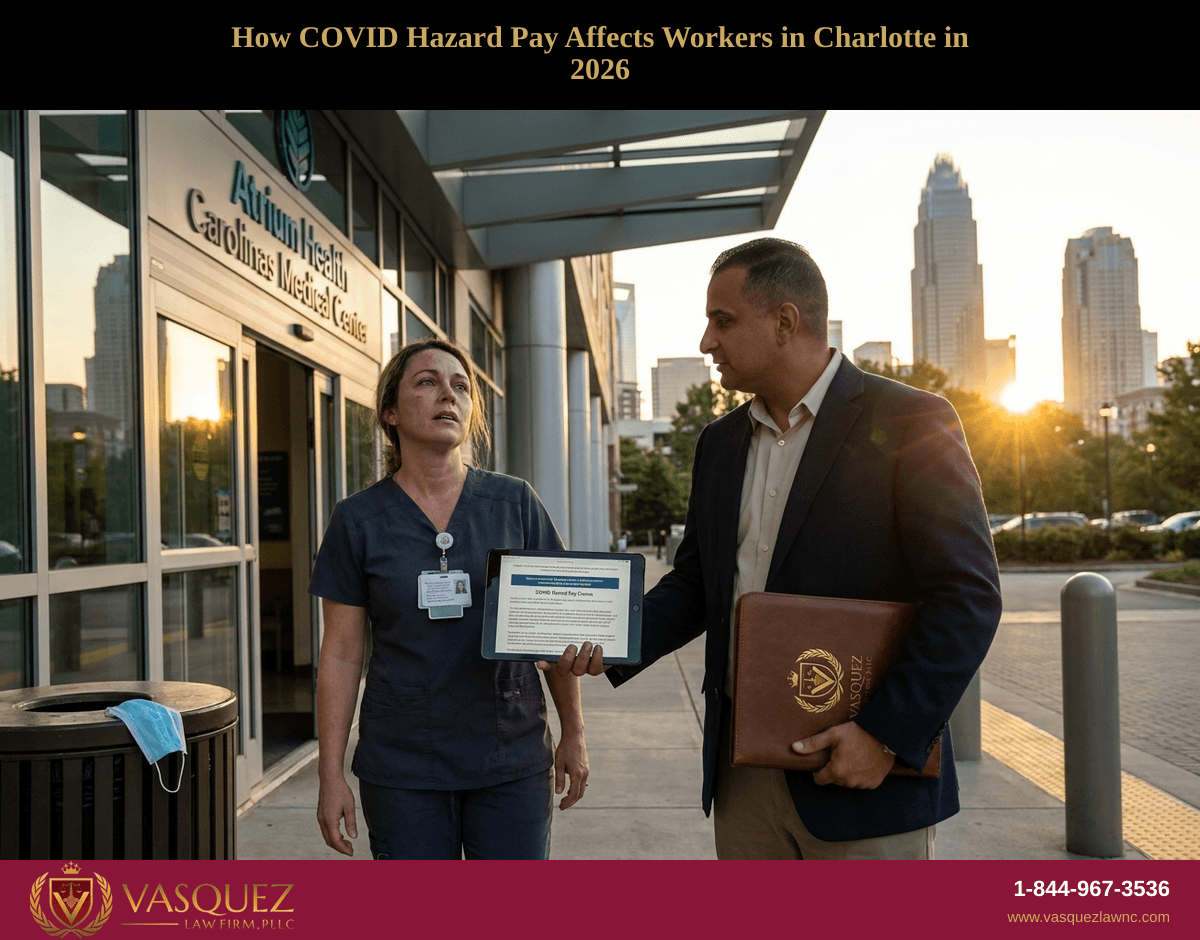
Step-by-Step: How to Claim COVID Hazard Pay
- Confirm Eligibility: Document your work duties during the COVID period to prove exposure to hazardous conditions. Collect pay stubs, schedules, and duties reflecting onsite presence.
- Check Employer Policies or Contracts: Review any employer agreements or union contracts addressing COVID hazard pay or bonuses.
- File a Workers Compensation Claim for COVID Exposure: If you contracted COVID-19 at work, file a claim with North Carolina Industrial Commission. This is a common step when hazard pay is unavailable.
- Consult a Workers Compensation Attorney: Reach out to specialists in workers compensation law in Charlotte to assess your claim's strength and explain hazard pay legal options.
- Submit Evidence and Follow Up: Provide documentation and follow the process required. Meet deadlines and prepare for medical reviews or hearings if necessary.
- Consider Appeals if Denied: Many COVID-related claims face initial denial. Appeal decisions administratively with legal guidance to improve success chances.
Why Early Action Matters
COVID hazard pay claims and workers compensation claims require prompt filings. In North Carolina, the statute of limitations often restricts how long claims can be filed—usually within two years of injury or exposure under N.C. Gen. Stat. § 97-24. Delaying could result in loss of benefits.
Common Mistakes to Avoid When Filing Claims
- Failing to Document Hazardous Duties: Without proof of working in risky conditions, claims weaken. Keep detailed records of your work during the pandemic.
- Not Understanding Eligibility: Mistaking hazard pay entitlement under state law can waste time and resources. Know North Carolina’s absence of mandate and focus on compensation claims.
- Missing Filing Deadlines: Statutory time limits can bar claims. Always file promptly and consult an attorney.
- Ignoring Employer Policies: Some employers had voluntary hazard pay programs or bonuses. Know and utilize them if available.
- Not Seeking Legal Help Early: Self-filing claims or appeals can be complicated and result in denials or delays.
- Assuming Hazard Pay Covers Illness: Hazard pay is often separate from workers’ compensation. File appropriate claims for illness or injury sustained on job.
If you only remember one thing: Promptly gather evidence, understand employer policies, and consult an experienced workers compensation attorney in Charlotte to protect your rights for COVID hazard pay or compensation claims.
Timeline and What to Expect for COVID Hazard Pay Claims
- Week 1: Gather documents including work schedules, pay records, and employer policies. Submit your claim to the North Carolina Industrial Commission if seeking compensation for illness or hazard pay.
- Weeks 2-6: Employers review claims, respond, or may contest eligibility. You may be asked to provide further documentation.
- Weeks 6-12: Medical examinations or investigations occur if illness is claimed. Hearings or settlement discussions may begin.
- Week 13+: Claim resolution may result in payment approval or denial. If denied, the appeal process starts with deadlines for submissions.
Keep in mind timelines can vary widely depending on case complexity and disputes. Legal professionals can help manage this timeline effectively.
North Carolina and Nationwide Notes
North Carolina Notes
North Carolina does not have a COVID hazard pay law, but workers compensation covers COVID infections contracted on duty under N.C. Gen. Stat. § 97-2. Claimants should act quickly within statutes of limitations. Vasquez Law Firm offers specialized legal help for COVID-related claims in Charlotte and across NC.
Nationwide Concepts (General Only, Rules Vary)
Several states adopted specific COVID hazard pay laws. The U.S. Department of Labor and OSHA guidelines help protect worker safety. Laws vary, so it is essential to review local jurisdiction and employer policies to understand rights and options nationwide.
When to Call a Lawyer Now
- If your COVID hazard pay claim was denied or delayed
- If you contracted COVID at work and need workers compensation representation
- If you’re unsure about your eligibility for hazard pay in Charlotte
- If your employer refuses to pay hazard pay or compensations
- If you need help gathering documentation or filing claims properly
- If you want to understand how recent court rulings affect your rights
- If you are facing retaliation or discrimination after requesting hazard pay
- If your case involves complex medical or wage disputes
About Vasquez Law Firm
At Vasquez Law Firm, we combine compassion with aggressive representation. Our motto "Yo Peleo®" (I Fight) reflects our commitment to standing up for your rights.
- Bilingual Support: Se Habla Español — Spanish-speaking attorneys and staff available
- Service Areas: Workers compensation in North Carolina; immigration nationwide, including Florida
- Experience: Over 30 years helping clients navigate complex legal matters
- Results: Thousands of successful cases across multiple practice areas
Attorney Trust and Experience
William J. Vásquez is admitted to the North Carolina State Bar (2011) and to the U.S. Courts of Appeals for the 4th, 5th, 6th, and 11th Circuits. Florida-jurisdiction matters at the firm are handled by Florida Bar attorney Alekssandra Lopez. The firm has provided dedicated legal representation since 2011, with personalized attention to each client's case.
Don't wait to get the help you deserve. Call us now for immediate assistance.
Se Habla Español
Frequently Asked Questions
Who qualifies for COVID hazard pay in North Carolina?
Essential workers with duties involving increased exposure risk may qualify if their employer provides hazard pay or if state law applies. North Carolina has no mandate for hazard pay as of 2026, so most claims depend on employer policies or workers compensation claims related to COVID-19 workplace illness or injury.
How much hazard pay was provided during COVID?
Amounts varied widely. Some states mandated $2 to $5 extra per hour. Many employers paid bonuses or no extra pay. In North Carolina, hazard pay amounts depend on employer discretion since there is no statewide law requiring it.
What are the requirements to get COVID hazard pay?
Workers generally must provide proof of hazardous work duties, onsite presence during the pandemic, and employer policy allowing hazard pay. In NC lacking a mandate, claims often rely on workers compensation benefits for COVID illness or negotiated agreements.
Can COVID hazard pay be included in overtime calculations?
Yes, according to a 2026 11th Circuit ruling, hazard pay given for hazardous work must be included in overtime pay calculations under the FLSA, ensuring fair compensation for extra work during the pandemic.
What documents do I need to file a COVID hazard pay claim?
Gather work schedules, pay stubs including hazard pay details, employer hazard pay policies, and any medical records linking illness to work exposure. Proper documentation supports your claim.
Is COVID hazard pay mandatory in North Carolina?
No, North Carolina does not currently require employers to pay COVID hazard pay. It may be provided voluntarily or through contracts. Workers can explore claims via workers compensation if they contracted COVID at work.
How long does it take to get a COVID hazard pay claim processed?
Claims typically take weeks to several months, depending on case complexity and disputes. Prompt filing and legal assistance can help speed the process.
Can I appeal if my COVID hazard pay claim is denied?
Yes. In North Carolina, workers can appeal through the Industrial Commission or other administrative bodies. Legal representation increases the chance of a successful appeal by properly presenting evidence and arguments.
Sources and References
- Occupational Safety and Health Administration
- U.S. Department of Labor
- North Carolina Industrial Commission
Take the first step toward justice today. Our team is standing by to help. Se Habla Español.
Start Your Free Evaluation Now
Call us: 1-844-967-3536
Se Habla Español - Estamos aquí para ayudarle.
If you need legal assistance, learn more about workers comp lawyers in North Carolina, or call us at 1-844-967-3536 for a free evaluation.

William Vasquez
Founder & CEO, Vasquez Law Firm, PLLC
William Vasquez is the founder and CEO of Vasquez Law Firm, PLLC, a results-driven firm specializing in immigration, criminal defense, personal injury, and workers' compensation. A U.S. Air Force veteran and recipient of the Joint Service Achievement Medal, William is dedicated to fiercely fighting for his clients' rights.
Related Legal Services
Need legal help? Learn more about workers comp lawyers in North Carolina, or contact us for a free evaluation.
You can also visit statewide workers compensation attorneys for more information.