Workers' Compensation Insurance: How It Protects in 2026
Learn how workers' compensation insurance protects you in 2026. Understand costs, coverage, and your rights. Contact Vasquez Law for a free consultation.
Published on April 6, 2026

Have questions? Talk to an attorney - free evaluation.
Call 1-844-967-3536Hurt on the Job? Claim What You Are Owed
A review of your workers' comp claim - we handle the fight.
Workers' Compensation Insurance: How It Protects in 2026
Workers' compensation insurance provides critical protection for employees injured on the job and safeguards employers from costly lawsuits. As of 2026, understanding workers' compensation insurance in NC, including costs, providers, and coverage limits, is essential for employers and workers alike. This guide explains key aspects, timelines, common mistakes, and when to consult a Charlotte workers' compensation attorney to navigate claims effectively.
Need help with your case? Our experienced attorneys are ready to fight for you. Se Habla Español.
Schedule Your Free Consultation
Or call us now: 1-844-967-3536
Quick Answer
Workers' compensation insurance protects employees injured at work by covering medical costs and lost wages. It limits employer liability and ensures injured workers receive benefits without lengthy lawsuits.
- Required for most NC employers
- Covers workplace injuries and occupational diseases
- Costs vary by industry and payroll size
- Claims must be reported quickly to qualify
- Legal help improves claim success rates
Understanding Workers' Compensation Insurance NC
Imagine a construction worker in Charlotte slips and fractures a wrist on site. Without workers' compensation insurance, the employer might face a lawsuit for medical bills and lost income. Workers' compensation insurance creates a no-fault system where injured employees receive timely benefits, and employers avoid costly legal battles. In North Carolina, most businesses with three or more employees are legally required to carry this coverage.
Workers' compensation insurance covers medical treatment for injuries and illness from occupational exposure, including conditions like carpal tunnel syndrome from repetitive tasks. It also provides wage replacement benefits during recovery. Insurers base costs on your business type, safety record, and payroll. Some providers popular in the region include national carriers and local agents specialized in North Carolina laws.
For example, a warehouse employee who develops a back injury from lifting heavy boxes repeatedly can file a claim for medical treatment and compensation. Similarly, an office worker exposed to hazardous chemicals might qualify for coverage under occupational disease provisions.
Besides physical injuries, stress-related conditions linked directly to job duties may also be covered if documented by medical professionals. However, mental health claims often require more thorough investigation to establish work-related causation.
For more details on how our workers compensation legal services help clients in Charlotte, visit our practice area page.
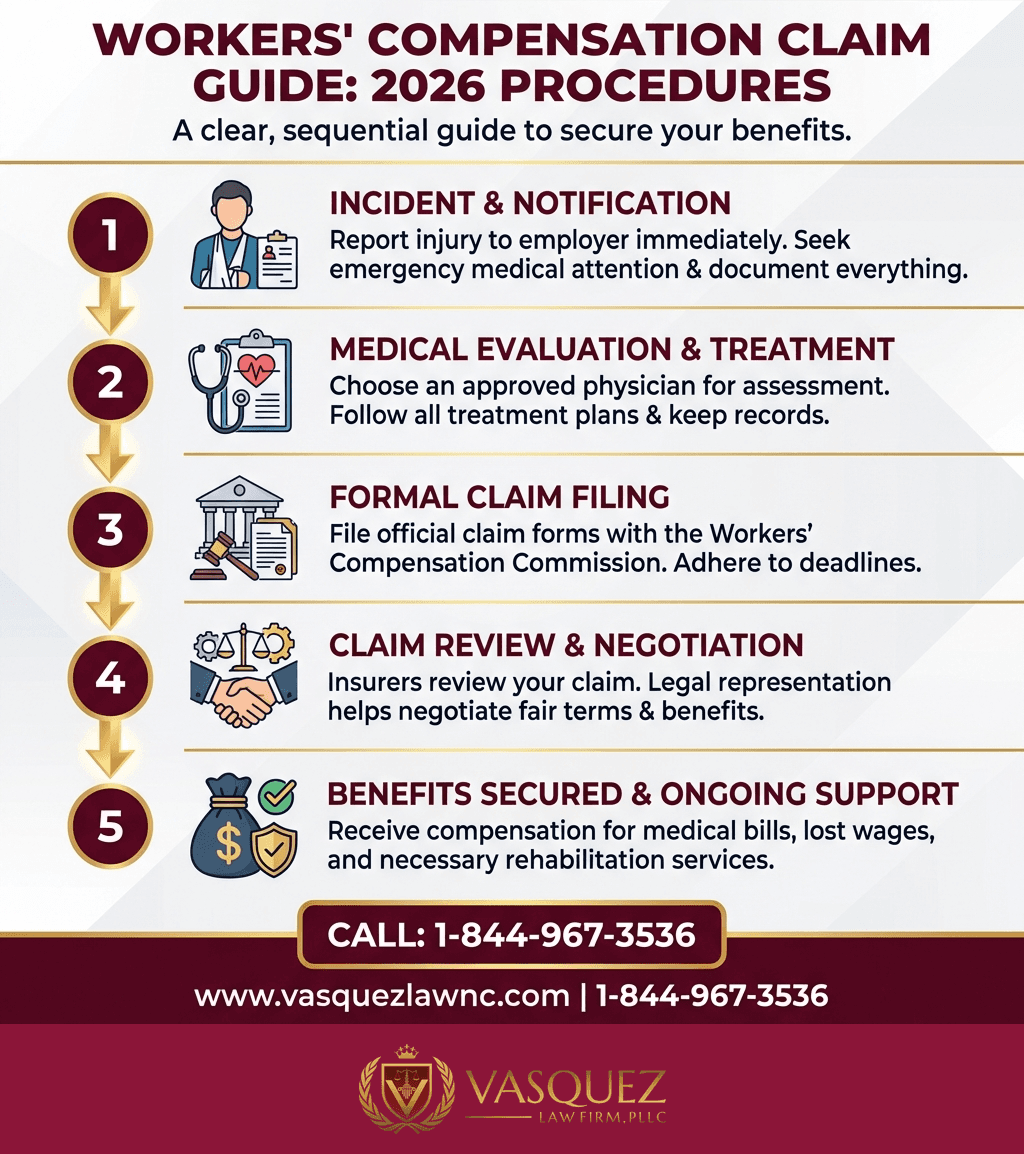
Step-by-Step: Filing a Workers' Compensation Claim
- Report the injury immediately. Notify your employer or supervisor as soon as the injury occurs or you realize symptoms.
- Seek medical treatment. Get prompt care from an authorized medical provider to document the injury and receive necessary treatment.
- File a claim. Your employer or insurance provider will need formal claim paperwork filed to begin benefits.
- Claim investigation. The insurance company reviews evidence to accept or deny the claim based on circumstances and coverage rules.
- Receive benefits. If approved, you’ll get medical bill coverage and wage replacement depending on injury severity.
- Appeal if denied. Denials can be appealed through the North Carolina Industrial Commission with legal assistance.
Attorney Vasquez has helped many clients navigate this process successfully. Contact Attorney Vasquez for personalized guidance.
Practical Example: Reporting and Filing a Claim
Consider an employee who slips in a warehouse and injures their knee. Immediate reporting to the supervisor ensures the injury is documented. Prompt medical evaluation confirms the severity, and the employer files a claim with the insurance provider. This process typically leads to faster approval and benefit disbursement.
Investigation and Approval Process
During investigation, the insurer may request medical records, witness statements, and accident reports. For example, if an employer disputes the injury's work-relatedness, they might challenge the claim. Legal counsel can assist in gathering evidence and advocating for the employee's rights during this phase.
Appealing a Denied Claim
If a claim is denied, the employee can appeal through the North Carolina Industrial Commission. This may involve hearings where medical experts testify. Having an experienced attorney increases the likelihood of a successful appeal and ensures the employee receives entitled benefits.
Common Mistakes to Avoid with Workers' Compensation
- Delayed reporting: Waiting too long to report your injury can result in claim denial. Report injuries immediately.
- Ignoring medical advice: Follow prescribed treatments to support your claim and recovery.
- Providing inaccurate information: Be honest and accurate when explaining how the injury occurred.
- Missing paperwork deadlines: Submit all required forms on time to avoid procedural rejection.
- Failing to keep records: Maintain copies of medical reports, bills, and employer communications.
- Accepting early settlement offers: Evaluate future medical needs before agreeing to settlements.
- Not consulting a lawyer: Early legal help increases chances of full benefits and successful appeals.
If you only remember one thing: report injuries immediately to protect your claim.
Example: Consequences of Delayed Reporting
An employee who delays reporting a repetitive strain injury by several months may face denial for failing to meet timely notice requirements. This can result in out-of-pocket medical expenses and lost wage compensation.
Importance of Medical Compliance
Ignoring prescribed physical therapy or failing to attend follow-up appointments can weaken your claim. Insurers may argue the injury is not severe or unrelated to work, leading to denial or reduced benefits.
Documentation and Record-Keeping
Keeping detailed records of all communications, medical visits, and expenses helps clarify your case if disputes arise. For instance, saving emails with your employer about your injury can provide evidence of timely reporting and cooperation.
Timeline and What to Expect in a Workers' Compensation Case
- Week 1: Injury occurs and is reported; medical evaluation begins.
- Weeks 2-4: Claim paperwork is submitted; insurer begins investigation.
- 1-3 Months: Benefits typically start for medical bills and temporary wage loss.
- 3-6 Months: Treatment and recovery continue; possible return to work or permanent disability evaluation.
- 6+ Months: Claim closure or ongoing benefits if disability persists; appeals proceed if needed.
This timeline varies based on injury severity and claim complexity.
Scenario: Minor Injury Claim
For minor injuries such as a sprain or cut requiring minimal treatment, the claim process may resolve within a few weeks to a couple of months. Benefits cover medical bills and short-term wage replacement, with the employee returning to work quickly.
Scenario: Severe Injury Claim
Severe injuries like fractures or permanent disabilities often involve longer treatment and rehabilitation. Claims can extend beyond six months, with ongoing evaluations for permanent impairment ratings and potential settlement negotiations.
Appeals and Delays
If disputes arise, such as denial or disagreement over the extent of disability, the process may prolong due to appeals. Legal assistance helps navigate hearings and evidence submission, aiming for quicker resolution.
Costs and Factors Affecting Workers' Compensation Insurance
- Industry risk level: High-risk sectors like construction pay more.
- Payroll size: Larger payrolls increase premiums proportionally.
- Claims history: Frequent past claims raise rates.
- Safety programs: Good workplace safety can lower costs.
- State regulations: Local laws influence minimum requirements and pricing.
For a detailed look at your business’s cost factors, speak with workers compensation insurance providers in Charlotte or consult our team.
Industry Risk Examples
A roofing company will pay higher premiums than a bookkeeping firm due to the increased risk of falls and injuries. Similarly, manufacturing plants with heavy machinery face higher costs than retail stores with lower physical hazards.
Impact of Payroll and Claims History
A business with a large payroll naturally pays more in premiums, but maintaining a low claims history can prevent premium spikes. For instance, a company with zero claims over several years may receive discounts or lower rates.
Safety Programs and Cost Reduction
Implementing comprehensive safety training, regular equipment maintenance, and hazard assessments can reduce workplace injuries and insurance costs. Insurers often reward businesses that demonstrate proactive risk management.
When to Call a Workers’ Compensation Lawyer in Charlotte
- Your claim has been denied by the insurer.
- You are facing delays in benefits payment.
- You have a serious or permanent injury requiring long-term care.
- Your employer is disputing the injury’s work connection.
- You are unsure about your medical provider options or treatment plans.
- You want help negotiating a settlement offer.
- You need assistance navigating the claims or appeal process.
Attorney Vasquez offers trusted, aggressive representation in Charlotte workers’ compensation cases. Contact our office today for expert assistance.
Example: Denied Claim Assistance
If your claim is denied because the insurer disputes the injury’s cause, a lawyer can collect necessary evidence, including medical opinions and witness statements, to challenge the denial and advocate for your rights.
Negotiating Settlements
Lawyers can assess settlement offers to ensure they fairly compensate for medical expenses, lost wages, and future care. Accepting a low early offer without legal review may leave you undercompensated.
Handling Complex or Permanent Injuries
Cases involving permanent disabilities require knowledge of impairment ratings and long-term benefits eligibility. Legal counsel can help secure appropriate compensation and ongoing medical coverage.
About Vasquez Law Firm
At Vasquez Law Firm, we combine compassion with aggressive representation. Our motto "Yo Peleo" (I Fight) reflects our commitment to standing up for your rights.
- Bilingual Support: Se Habla Español - our team is fully bilingual
- Service Areas: North Carolina, Florida, and nationwide immigration services
- Experience: Over 15 years helping clients navigate complex legal matters
- Results: Thousands of successful cases across multiple practice areas
Attorney Trust and Experience
Attorney Vasquez holds a Juris Doctor degree and is admitted to practice in both the North Carolina State Bar and Florida Bar. With over 15 years of dedicated legal experience, he has built a reputation for providing personalized attention and achieving favorable outcomes for his clients.
His approach combines thorough case evaluation with aggressive negotiations and litigation when necessary. Clients appreciate his clear communication and dedication to protecting their interests throughout the workers’ compensation process.
Additionally, the firm stays current with evolving workers’ compensation laws and insurance regulations to provide the most effective representation possible.
Don't wait to get the help you deserve. Call us now for immediate assistance.
Se Habla Español
Frequently Asked Questions
How much does workers' compensation insurance cost per month?
The monthly cost of workers' compensation insurance varies based on your industry, number of employees, and workplace risk. Rates in North Carolina range from a few hundred to thousands of dollars per month depending on payroll size. Insurance providers evaluate your business history and job types to set premiums. Contact local providers for specific quotes suitable for your Charlotte business. Small offices with minimal risk might pay less, while high-risk industries like construction face higher premiums.
Can carpal tunnel syndrome be covered under workers' compensation?
Yes, carpal tunnel syndrome caused or worsened by repetitive workplace tasks can qualify for workers' compensation benefits. Medical documentation linking the condition to your job duties is key. Benefits usually include medical treatment costs and wage replacement during recovery. Early reporting improves claim chances. For example, assembly line workers who develop symptoms from repeated hand motions should notify their employer promptly and seek medical evaluation to support their claim.
What does workers' compensation insurance not cover?
It does not cover injuries outside of work, self-inflicted injuries, or those caused by intoxication or willful misconduct. Non-economic damages like pain and suffering are also excluded. Knowing these limits helps manage expectations about available benefits and possible additional legal remedies. For instance, if an employee is injured while commuting or engaging in personal activities during breaks, those injuries usually aren't covered.
How soon should I report a workplace injury?
Report injuries immediately or within 24 hours to protect your claim. In North Carolina, failing to report within 30 days may cause denial of benefits. Early reporting helps document the injury accurately and starts the claim process promptly. For example, if you experience symptoms of an injury but delay reporting, it could be harder to prove the injury is work-related, risking claim denial.
How long does a workers’ compensation claim take to resolve?
Simple claims can resolve in a few months, while complex cases may take years. The timeline depends on injury severity, treatment needed, and any disputes or appeals. Understanding typical timelines helps you plan financially and emotionally. For example, a minor injury with straightforward treatment might close quickly, whereas a permanent disability claim could involve lengthy hearings and negotiations.
Are all employers required to have workers’ compensation insurance?
In North Carolina, most employers with three or more employees must have workers’ compensation insurance. Exceptions exist in certain industries or for sole proprietors without employees. Noncompliance leads to penalties and risk of lawsuits. For instance, a small family business with only two employees might be exempt, but most medium to large businesses are required to carry coverage.
What happens if my workers’ compensation claim is denied?
You can appeal the denial through the North Carolina Industrial Commission. The process may involve hearings and submitting additional proof. Legal assistance greatly improves the chance of overturning a denial and securing benefits. For example, an attorney can help gather medical evidence and advocate for your claim at a hearing to demonstrate that your injury is work-related.
How does workers’ compensation insurance protect employers?
It covers medical bills and wage losses for injured workers. This reduces the employer's risk of costly lawsuits and ensures compliance with law. Employers without insurance expose themselves to fines and liabilities. For example, having workers’ compensation insurance protects a business from being sued directly by employees over workplace injuries, providing financial predictability and legal protection.
Sources and References
- North Carolina Industrial Commission
- Occupational Safety and Health Administration (OSHA)
- U.S. Department of Labor on Workers' Compensation
- North Carolina General Statutes Chapter 97 - Workers' Compensation Act
- 29 CFR Part 1904 - OSHA Injury Reporting
Take the first step toward justice today. Our team is standing by to help. Se Habla Español.
Start Your Free Consultation Now
Call us: 1-844-967-3536


William Vasquez
Founder & CEO, Vasquez Law Firm, PLLC
William Vasquez is the founder and CEO of Vasquez Law Firm, PLLC, a results-driven firm specializing in immigration, criminal defense, personal injury, and workers' compensation. A U.S. Air Force veteran and recipient of the Joint Service Achievement Medal, William is dedicated to fiercely fighting for his clients' rights.
Related Legal Services
Need legal help? Learn more about experienced work injury attorneys in Charlotte, or contact us for a free evaluation.
You can also visit workers compensation services throughout NC for more information.